

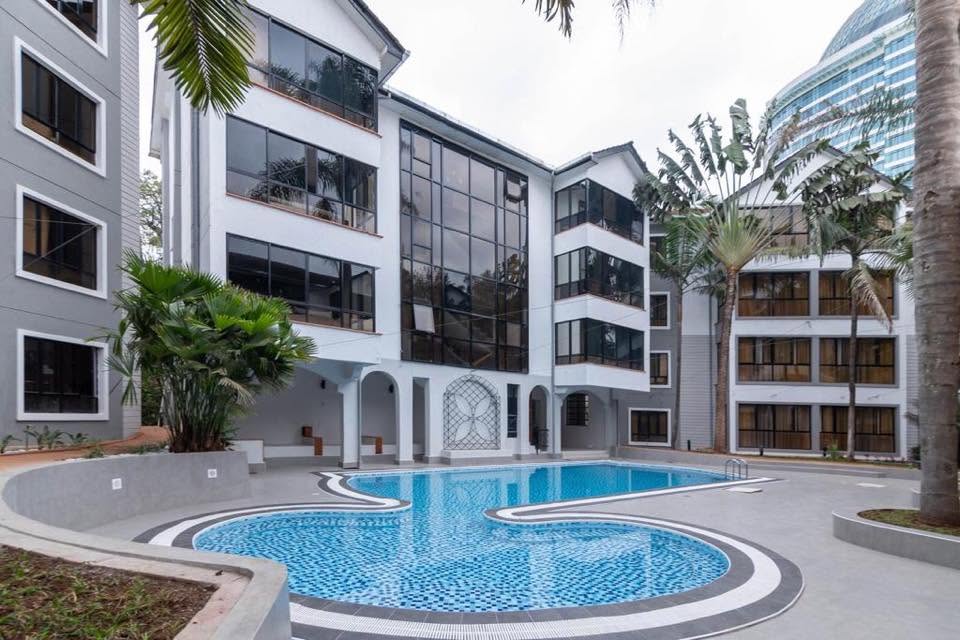
KCB Group has been given the greenlight by the High Court to proceed with the auctioning of a real estate property that is owned by Cytonn Investments. Following the greenlight, the bank will now auction Cytonn’s Cysuites Hotel over a Sh425.6 million loan that was defaulted by the firm.
In the ruling, the High Court declared that Cytonn Investments had no legal standing to block the auctioning of the property because it was not the registered owner. According to the ruling that was issued by Justice Fridah Mugambi, the property’s registered owner is Wasini Resorts Limited.
In the case, Cytonn had protested the auction by KCB Group, arguing that it was a shareholder of Wasini Resorts Ltd through the Cytonn Investment Partners Twenty LLP.
However, Justice Mugambi ruled that a shareholder cannot stop a lender from recovering the debt owed by the company.

The suit showed that Cytonn Investment Partners Twenty LLP had acquired one million shares in the company under a 2018 share purchase agreement. These shares were acquired with Sh1 billion that was taken from Cytonn’s special purpose investment vehicle that was dubbed as Cytonn High Yields Solutions (CHYS LLP) on April 11, 2018.
After this acquisition, Cytonn had then gone on to establish Cysuites Apartment Hotel on the land. The title for this land was used to secure a Sh425 million that was taken by Wasini Resorts Ltd.
Cytonn acknowledged that it was not the borrower of the money. However, the firm claimed that by acquiring the high number of shares in Wasini gave it the right to challenge the auction as a beneficial owner of the property.
In addition, Cytonn told the court that it had negotiated with KCB Group to restructure the debt. The firm had claimed that it was still willing to continue making payments to the bank. Court documents showed that as of September 24, 2024, the outstanding debt was Sh425.6 million.
James Sang: Unanswered questions that saved me from investing in Cytonn
However, this was opposed by the bank which argued that only the actual borrower could seek relief from the court against the recovery and the auctioning. The bank argued Wasini Resorts remained a separate legal entity whose assets and liabilities could not be claimed by Cytonn on the basis of shareholding.
The High Court agreed with the lender.
“Shareholders are entitled only to a share in the profits while the company is a going concern, and to a distribution of surplus assets upon winding up. They cannot arrogate to themselves ownership rights over the company’s assets during its subsistence,” Justice Mugambi ruled.
“It is manifest that the share purchase agreement between the applicant and Wasini was neither noted in the charge document nor was the bank a party to it.”
In addition, Justice Mugambi ruled that a borrower could not force a lender to restructure the terms of a facility.
“A chargor cannot compel a chargee to accept a restructuring arrangement in lieu of repayment,” ruled Justice Mugambi.
“The right to restructure is not a statutory entitlement but a matter of contractual negotiation.”