

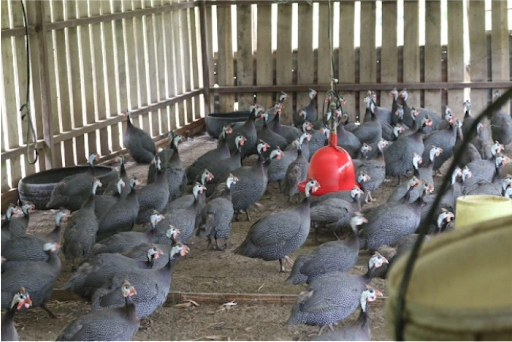
Guinea fowl often generate mixed emotions, but apart from die-hard enthusiasts, anyone who has lived in close proximity to a bunch of guineas may well go with the second opinion.
There’s no denying that guinea fowl are relatively easy to keep, providing you have plenty of space and no near neighbours. They are independent birds, self-sufficient foragers who will find much of their own food.
Throughout all seasons, they are productive layers. These birds lay anywhere and everywhere, particularly favoring large clumps of nettles. The eggs are deeply flavoured, with large golden yolks and surprisingly tough shells.

Guinea fowl are often kept for their meat eggs which are regarded as healthy supplements. Nicholas, a farmer in Eldoret says guinea fowls take less feed almost half of what chickens consume.
Additionally, guineas are said to have a low mortality rate compared to chickens. According to experts, guinea fowl farming can be profitable if done correctly. As such, farmers need to observe the following:
Shelter
Provide a safe, spacious shelter that protects your guinea fowl from predators, wind, rain, and cold. The shelter should have roosts, nesting boxes, and absorbent litter. Guinea fowl like to roost high up, so include high roosts in their coop.
Food
Guinea fowl need a higher protein feed than chickens. You can start them on a 28 percent game-bird/turkey ration, then switch to an 18 percent feed for weeks 5–8, and then a 16 percent layer mash after week 8.
You can also supplement their diet with mealworms, insects, and greens like leafy alfalfa.
Water
Provide clean water at all times, and make sure it’s lukewarm. Cold water can make them very sick.
Space
Guinea fowl need space to roam during the day, such as an enclosed run. They also need a sturdy fence to keep them safe from predators.
Dust bathing
Provide a dust bathing area with loose dirt where the guinea fowl can bathe together. Dust bathing is a natural way to control external parasites.
Eggs
If you want to collect guinea eggs, provide one nesting box for every four to five guinea hens. Keep the hens in their coop until noon each day to encourage them to lay eggs inside.
Health
Guinea fowl are generally hardy and disease-free, but they can get sick from poor hygiene or bacterial infections. Be on the lookout for common health issues like mites, lice, respiratory infections, and coccidiosis.
Climate
Guinea fowl adapt to most climates, but they don’t like wet or cold snow. They prefer warm temperatures.
ALSO READ: Shamir Odhiambo: Why ornamental birds are more profitable than chicken farming