The Kenyan government has defended its decision to sell a 15 per cent stake in Safaricom to Vodacom, arguing that the move will protect the State from future share dilution, unlock maximum value from a long-held investment, and provide much-needed non-tax revenue to finance critical infrastructure projects.
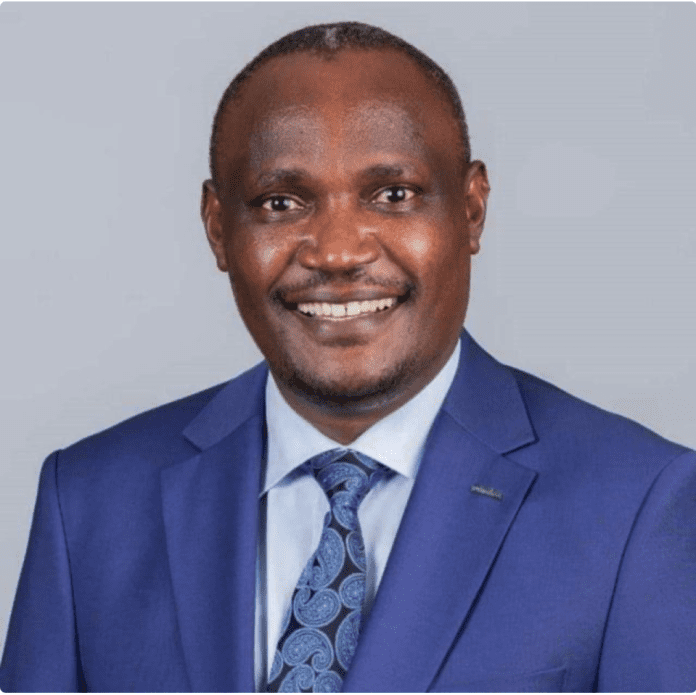
Appearing before a joint committee of the National Assembly, Treasury Cabinet Secretary John Mbadi explained that the proposed transaction, already approved by the Cabinet, is part of a broader fiscal strategy aimed at strengthening public finances while safeguarding the long-term success of Kenya’s most profitable company.
According to Mbadi, the government will retain a “material investment” in Safaricom even after the sale, holding a 20 per cent stake that allows it to continue exercising oversight without bearing the financial risks associated with future capital requirements.
“The key benefit that the Government of Kenya shall derive from the divestiture is to mitigate the risk of future dilution due to capital requirements by the business,” Mbadi told MPs. He noted that shrinking fiscal space and rising public debt have limited the State’s ability to inject capital into companies it controls, even when such investments could deliver clear economic returns.
Safaricom, East Africa’s largest telecoms firm, operates in a highly competitive and capital-intensive industry that requires continuous investment in technology, infrastructure and innovation. Mbadi warned that without a strong private-sector partner capable of taking long-term risks, the government could face dilution of its stake in the future if it is unable to participate in capital raising.
USSD codes for banks and Micro Finance Institutions (MFIs) in Kenya
The joint parliamentary committee, comprising members of the Departmental Committee on Finance and National Planning and the Select Committee on Public Debt and Privatisation, is currently scrutinising the proposed sale. The committee is also expected to hear from other stakeholders as part of the public participation process.
Mbadi said Vodacom, which is 65 per cent owned by global telecoms giant Vodafone, was the preferred buyer because of its financial strength, strategic fit and long-standing relationship with Safaricom. Vodafone entered the Kenyan market in 1998 and has remained invested for over 25 years, unlike Safaricom’s main competitor, which has changed ownership multiple times over the same period.
“With Vodacom, the Government is guaranteed hard cash, minimal disruption to the business, continuity in the success of Safaricom, and a long-term partner that can take higher and long-term risks,” Mbadi said. He added that the transaction eliminates settlement risk due to Vodacom’s proven track record in completing similar investments.
Despite reducing its shareholding, the government insists it will retain sufficient influence over Safaricom, which it considers a strategic national asset. Mbadi pointed out that regulatory oversight by institutions such as the Communications Authority, the Central Bank of Kenya, the Office of the Data Protection Commissioner and the Competition Authority remains robust.
“This is one business area where commercial and regulatory functions are very distinct, hence shareholding is no longer a material Government tool of control,” he said.
How EIB-backed finance is bridging the financing gap for Africa’s young innovators
To address public concerns, the Treasury negotiated a series of safeguards as part of the deal. These include the retention of two government-appointed seats on the Safaricom board, continuity in corporate governance, preservation of the Safaricom name and brand, and a guarantee of no acquisition-related redundancies for at least three years. The agreement also ensures that the chairman, CEO and independent directors remain Kenyan, and that support for the Safaricom Foundation continues.
On pricing, Mbadi defended the agreed price of KSh34 per share, saying it was the outcome of extensive valuation exercises conducted by Treasury advisers, including KCB Investment Bank. Various valuation methods were used, taking into account Safaricom’s net assets, earnings, dividends and discounted cash flows, as well as its status as a listed company.
The assessments produced a wide range of values, with earnings-based valuation at KSh26, price-to-earnings at KSh17, discounted cash flow at KSh18.51, discounted dividend model at KSh23.61, and a six-month weighted average price of KSh27.50. Leading investment banks provided an average valuation of KSh30.82 per share. Mbadi said the final negotiated price of KSh34 represents a premium, yielding total proceeds of KSh204.3 billion (about $1.576 billion).
In addition, the government will receive a dividend advance of KSh40 billion, instead of the KSh55 billion it would have earned over the next six years. Mbadi argued that when discounted at market rates, the future dividends are worth only KSh29.3 billion today, meaning the advance offers better value. He added that investing the KSh40 billion now could grow it to around KSh75 billion over six years, making the transaction more attractive both in present and future value terms.
The Treasury CS said the proceeds from the Safaricom stake sale will play a critical role in funding priority projects in energy, roads, aerospace, water and digital transformation, without increasing the tax burden on Kenyans.
“Our economy is at a critical turning point,” Mbadi said. “To sustain the gains made in inflation control, interest rates, currency stabilisation and GDP growth, we must turn to innovative financing mechanisms to fund infrastructure and public service projects.”
As parliamentary scrutiny continues, the Safaricom-Vodacom deal is shaping up as one of the most significant privatisation-related transactions in Kenya’s recent history, with far-reaching implications for public finance, capital markets and the telecommunications sector.