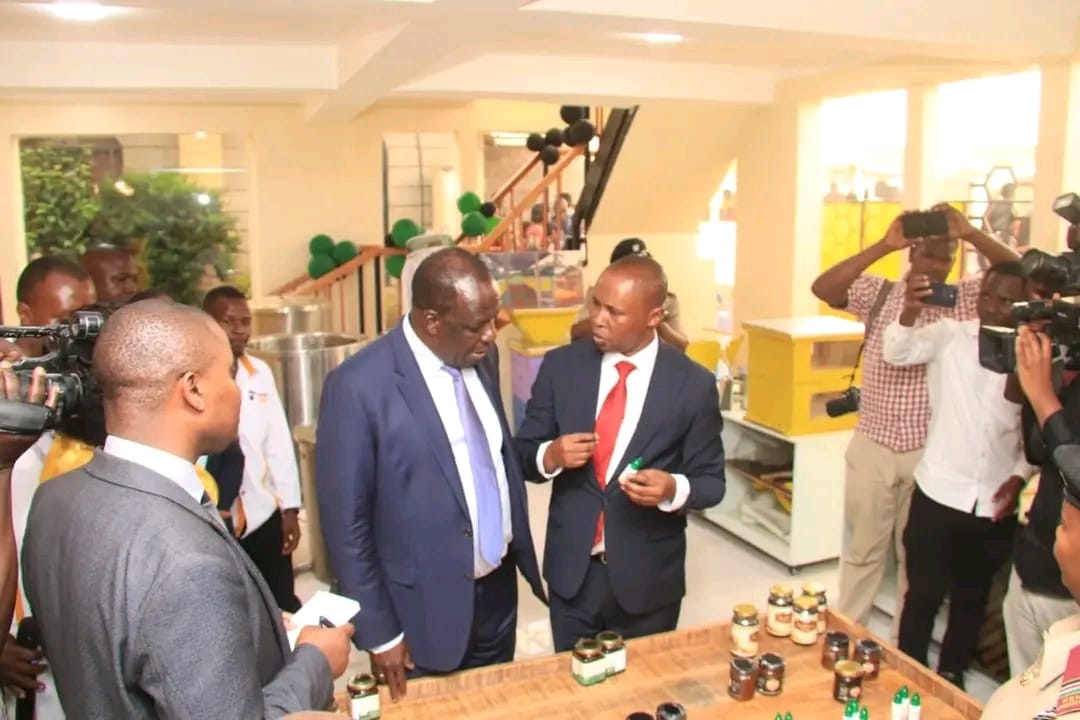


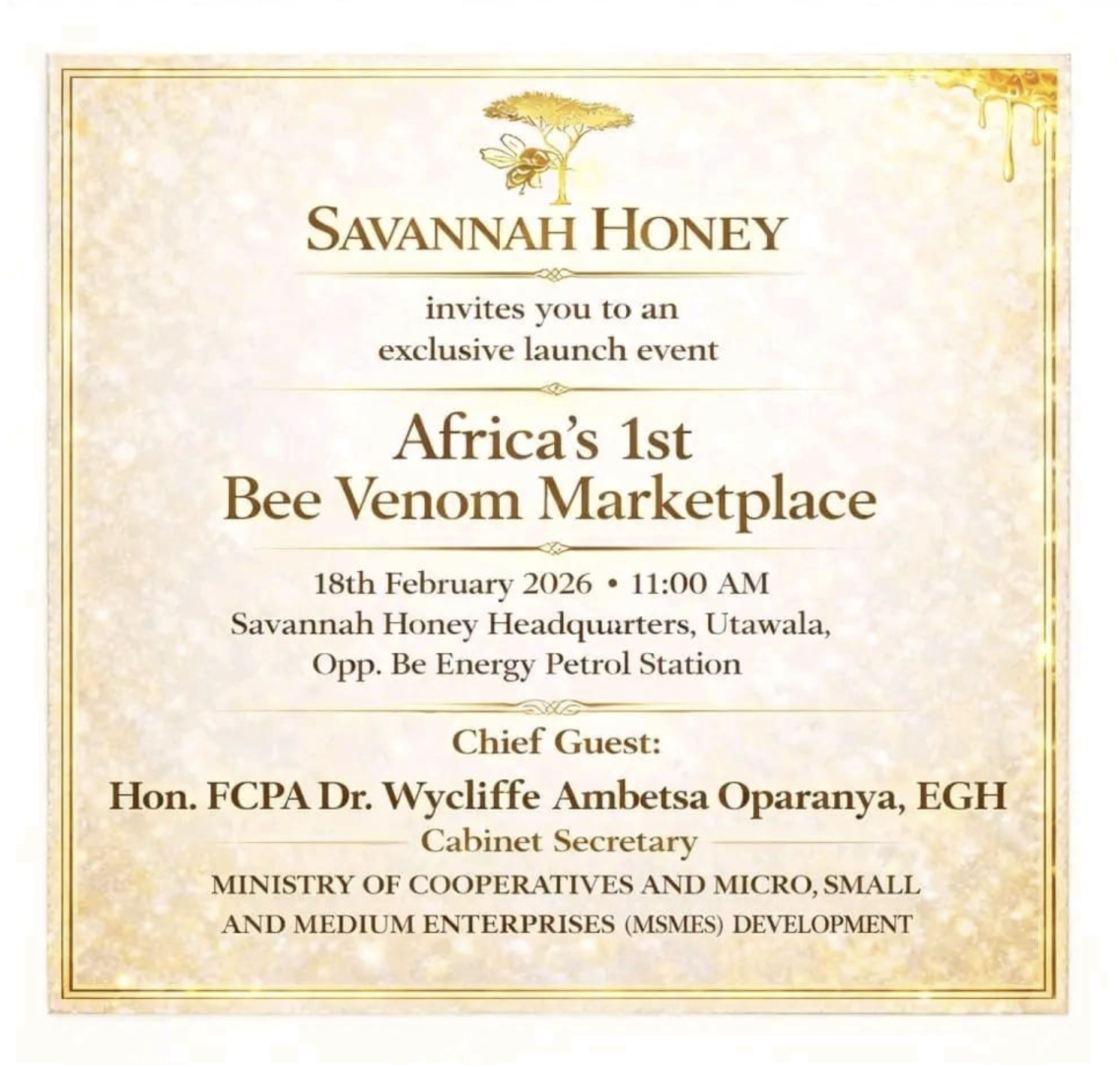
Kenya has marked a major milestone in agricultural value addition with the launch of Africa’s first Bee Venom Marketplace, positioning the country at the forefront of a fast-growing global bio-economy. The pioneering facility was officially unveiled on 18 February 2026 by Savannah Honey, a regional leader in the bee economy, in an event officiated by Wycliffe Ambetsa Oparanya, Cabinet Secretary for Cooperatives and MSMEs Development.
The marketplace introduces structured production, quality standards, and a guaranteed market for bee venom—one of the highest-value products in modern apiculture.
From honey to high-value bio-products
For decades, beekeeping in Africa has largely focused on honey and wax. Savannah Honey’s initiative expands this scope by mainstreaming non-traditional bee products, with bee venom at the center. Bee venom is widely used in pharmaceuticals, cosmetics, medical research, and alternative health therapies due to its anti-inflammatory and bioactive properties.

Speaking during the launch, Savannah Honey CEO Paul Kyalo Mutua noted that the company was founded 13 years ago with a clear mandate: to transform the bee sector through innovation, higher standards, and inclusive business models. Today, Savannah Honey operates across seven African countries and works with 15,780 contracted farmers, supported by more than 130 staff and over 700 community-based mobilizers and field officers.
A market with strong global demand
The global bee venom and extract market is valued at approximately USD 438 million in 2026 and is projected to grow beyond USD 700 million by the mid-2030s. Demand is driven by pharmaceutical research, cosmetic applications, and wellness products.
Savannah Honey crowned among Africa’s 100 Most Dependable Brands
Under the new marketplace, Savannah Honey is offering a ready market for bee venom at about KSh 4 million per kilogram. To meet confirmed international orders, the company plans to contract farmers to supply venom from 10,000 hives within six months. This pricing fundamentally redefines the income potential of beekeeping, especially in arid and semi-arid regions.
Farmer-centric and inclusive model
A defining feature of the marketplace is its inclusive value chain. Contracted farmers receive beekeeping education, modern hives and equipment, free technical support, farm inspections, and guaranteed off-take. Savannah Honey is also investing in advanced practices such as colony division, colony strengthening, and re-queening to improve productivity and sustainability.
This model shifts beekeeping from a peripheral activity to a serious agribusiness capable of delivering consistent, high-margin returns.
Alignment with Kenya’s MSME and value-addition agenda
In his keynote address, Cabinet Secretary Oparanya emphasized that the Bee Venom Marketplace aligns closely with Kenya’s Bottom-Up Economic Transformation Agenda. He highlighted value addition, MSME growth, job creation, and climate-smart enterprises as national priorities.
Beekeeping, he noted, supports biodiversity and pollination while offering income opportunities without competing for land. With over 80 per cent of Kenya classified as arid or semi-arid, apiculture presents a scalable solution for rural livelihoods, youth employment, and women-led enterprises.
Positioning Kenya as a regional leader
By operationalising Africa’s first dedicated bee venom production and marketing centre, Savannah Honey is positioning Kenya as a regional hub for high-value bee products. The initiative demonstrates how private-sector innovation, supported by enabling public policy, can unlock new export-oriented industries.
Conclusion
The launch of Africa’s first Bee Venom Marketplace marks a strategic shift in how agriculture, MSMEs, and value addition intersect in Kenya. It signals a move from volume-driven farming to knowledge-intensive, high-value production. For farmers, investors, and policymakers, bee venom is no longer a niche concept—it is a commercially viable frontier.
The broader lesson is clear: sustainable growth will come from enterprises that combine innovation, inclusive value chains, and long-term stewardship. That is how agricultural sectors mature—and how economies build durable prosperity.