

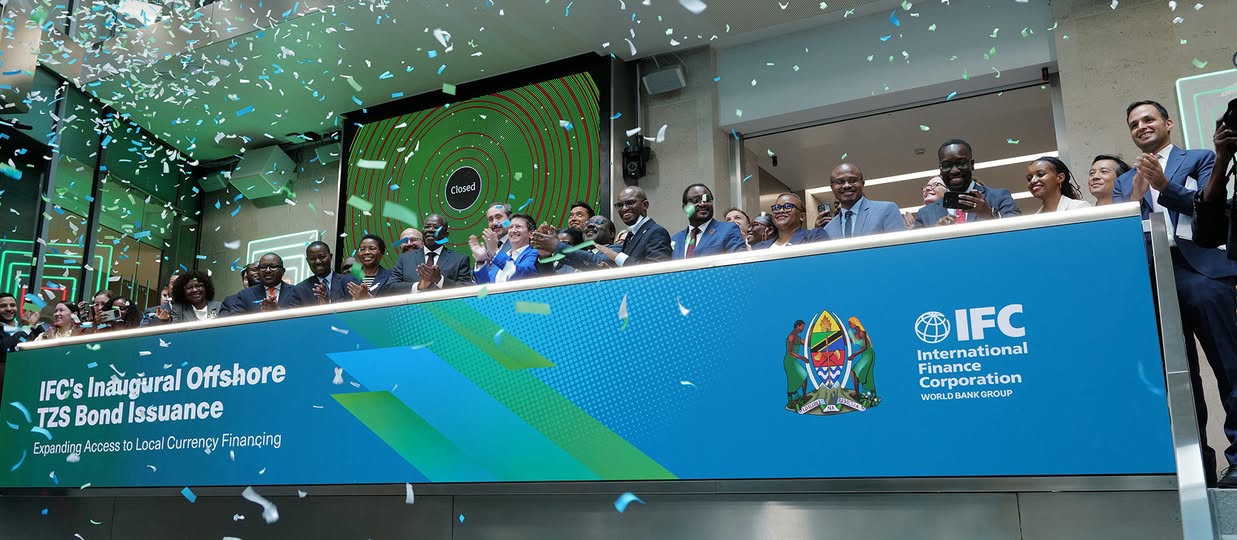
NMB Bank: Tanzania has achieved a major milestone in its financial sector after the International Finance Corporation (IFC) listed the country’s first offshore Tanzanian Shilling-denominated bond on the London Stock Exchange (LSE), with the proceeds earmarked for NMB Bank Plc. The transaction marks the first offshore Tanzanian Shilling bond for both Tanzania and the wider East African region.
The five-year bond raised TZS 262.5 billion (approximately US$100 million) and will provide NMB Bank with long-term local currency financing to expand lending to micro, small and medium enterprises (MSMEs), women-owned businesses, farmers and entrepreneurs across Tanzania. Twenty percent of the financing has been allocated specifically to women-owned MSMEs.
A Milestone for Tanzania’s Capital Markets
The transaction represents the largest Tanzanian Shilling-denominated bond ever issued in international capital markets and demonstrates Tanzania’s growing ability to attract global investors through innovative local currency financing.

Unlike conventional foreign currency borrowing, the bond provides financing in Tanzanian Shillings, helping businesses avoid foreign exchange risk while accessing longer-term capital to finance expansion, investment and job creation.
For Tanzania, the successful listing sends a strong signal that the country’s financial markets are becoming increasingly sophisticated and capable of attracting international institutional investors.
Tanzanian businessman Rostam Azizi buys Nation Media Group
NMB Bank Strengthens Its Leadership Position
As Tanzania’s largest bank by customer base, NMB Bank will deploy the proceeds to increase lending to productive sectors of the economy, reinforcing its role in supporting private sector development and financial inclusion.
The transaction also demonstrates the Bank’s ability to mobilise international capital in support of national economic priorities, further strengthening its reputation as one of East Africa’s leading financial institutions.
Speaking during the listing ceremony in London, NMB Bank Managing Director and Chief Executive Officer Ruth Zaipuna described the transaction as a defining moment for Tanzania’s financial sector, noting that it creates a new pathway for international investment while expanding access to long-term local currency financing for businesses.
Supporting Tanzania Development Vision 2050
The bond aligns with Tanzania Development Vision 2050, which prioritises private sector-led growth, industrialisation, innovation and sustainable economic transformation.
Access to long-term domestic currency financing is expected to improve investment by SMEs while reducing financing risks associated with exchange rate volatility. The transaction also demonstrates how development finance institutions and commercial banks can work together to deepen domestic capital markets.
Uganda, Rwanda agree to take deportees from United States
A Regional First for East Africa
The listing establishes a new benchmark for East Africa’s financial markets.
By successfully issuing an offshore local currency bond, Tanzania joins a growing group of emerging economies that are accessing international investors without increasing foreign currency exposure.
The transaction is expected to encourage similar capital market innovations across the region while broadening financing options for banks and businesses.
Boost for SMEs and Employment
The financing is expected to significantly increase credit availability for MSMEs, which remain the backbone of Tanzania’s economy.
Greater access to affordable long-term financing could enable businesses to expand operations, invest in productive assets, improve competitiveness and create employment opportunities. Women-owned enterprises, which often face greater barriers in accessing finance, are also expected to benefit through the dedicated allocation under the programme.
What This Means for African Banking
The successful listing highlights the growing maturity of African financial institutions and demonstrates that local currency capital market solutions can attract international investors.
For other African banks, the transaction provides a blueprint for accessing global capital while minimising foreign exchange risk for borrowers. It also underscores the increasing role of innovative financial instruments in financing inclusive economic growth across the continent.
As governments pursue ambitious industrialisation and economic transformation agendas, partnerships between multilateral institutions such as IFC and leading African banks could become increasingly important in expanding access to long-term development finance.