


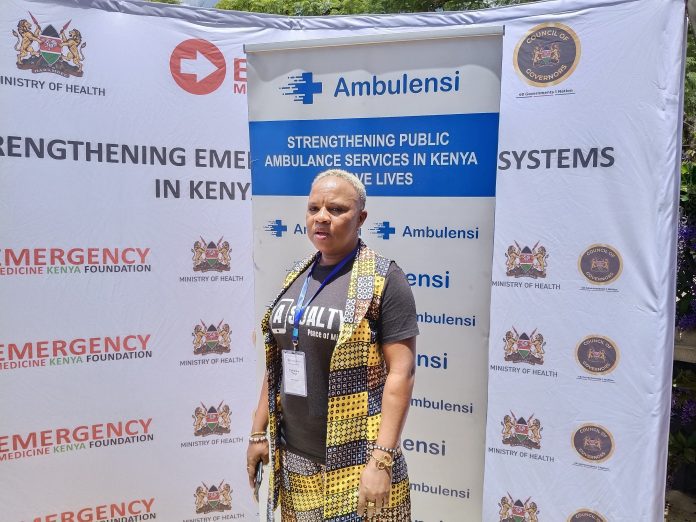
These developments were highlighted during a conference organized by the Emergency Medicine Foundation and held at The Heron Portico. The forum brought together county health leaders, emergency care professionals, and policymakers to share experiences and explore strategies for improving emergency response systems across the country.
Participants emphasized the urgent need for counties to establish coordinated emergency response systems that can deliver timely medical care during emergencies such as road accidents, sudden illnesses, and other life-threatening situations.
One of the major issues discussed was the transition from fragmented ambulance services to centralized and coordinated systems. In the past, many ambulances were attached to specific health facilities and could only respond to emergencies within the areas served by those facilities. This often resulted in delays when the closest ambulance belonged to a different facility or when the assigned ambulance was already in use.

To address this challenge, some counties have begun restructuring their EMS systems. One county official explained that in 2020 the county established an Ambulance Dispatch Centre within its Emergency Operations Centre. The dispatch centre now serves as the main command hub for coordinating emergency responses across the county.
Through the centralized system, dispatch officers receive emergency calls, identify the closest available ambulance, and direct it to the scene of the incident. The model also allows multiple ambulances to respond to major incidents such as road traffic accidents, improving coordination and ensuring faster patient care.
Conference participants also stressed the importance of trained personnel in delivering effective emergency services. In the past, many counties relied mainly on nurses or clinical officers who had limited training in emergency medical response.
To strengthen pre-hospital care, several counties have started recruiting Emergency Medical Technicians (EMTs). One county representative noted that when the new EMS model was introduced, the county recruited five EMTs who now work alongside trained nurses during emergency responses
Pilot dies in cockpit mid-air, plane forced to make emergency landing
Although the number of EMTs remains relatively small, officials said their presence has significantly improved the quality of care provided before patients reach the hospital. Emergency responders are now better equipped to stabilize patients at the scene and provide critical interventions during transportation.
Speakers at the conference also highlighted the vital role ambulances play in delivering immediate medical care. They described ambulances as “moving hospitals,” where treatment begins at the scene of an incident and continues during the journey to a health facility. This form of care, known as pre-hospital care, is crucial in reducing deaths and complications, particularly in cases involving road accidents, cardiac emergencies, and childbirth complications.
County officials also discussed efforts to expand and maintain ambulance fleets to improve coverage. One county reported operating 16 ambulances, with 14 currently functional. The fleet includes four-wheel-drive vehicles used in remote areas with difficult terrain and standard ambulance vans deployed in urban and semi-urban areas.
In addition, the county has budgeted for the purchase of three Advanced Life Support ambulances equipped with specialized medical equipment designed to handle critical emergencies.
Technology is also playing an increasingly important role in strengthening emergency response systems. A new digital platform introduced through a partnership with the Emergency Medicine Foundation enables dispatch teams to track ambulance locations in real time, dispatch the nearest available unit, monitor response times, and share patient information with hospitals while the ambulance is en route.
Despite these improvements, officials acknowledged that challenges remain, particularly in rural areas where some locations are not accurately mapped on digital platforms. In such cases, dispatch teams often rely on local knowledge and nearby health facilities to help guide ambulances to patients.
Participants agreed that strengthening EMS systems will require sustained investment in training, infrastructure, technology, and policy development. With continued collaboration between county governments, health organizations, and policymakers, officials believe more communities will gain access to faster and more effective emergency medical care.