

Kenya’s banking sector delivered a broad earnings recovery in H1 2026, supported by a more favourable monetary environment than a year earlier. However, the recovery was uneven, with performance reflecting differences in lending growth, funding costs, non-interest income, asset quality and regional diversification.
Banks that deployed their balance sheets more aggressively and diversified income beyond lending captured more of the upside, while more conservative, liquidity-heavy institutions saw earnings growth stall or reverse.
The improvement came as the Central Bank Rate (CBR) fell to 8.75 per cent in February 2026 from 9 per cent and remained unchanged through June and August. This continued the monetary-easing cycle that began in 2024, with the effects increasingly visible in bank earnings.
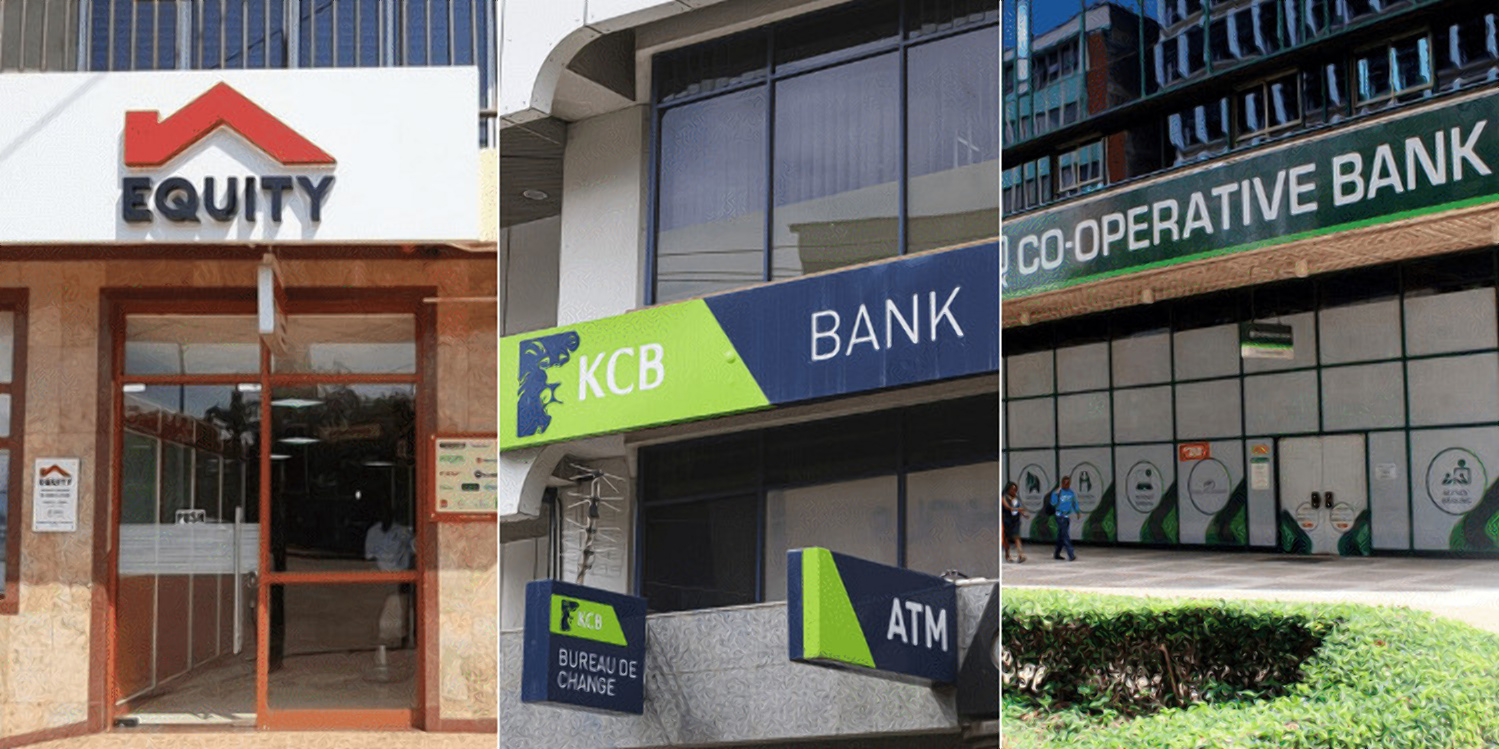
Among the major listed banks, Equity reported Sh43.8 billion in profit, up 31.5 per cent; KCB reported Sh36.1 billion, up 14.5 per cent; Co-operative Bank Sh18 billion, up 28 per cent; NCBA Sh12.4 billion, up 12.2 per cent; I&M Sh9.3 billion, up 20 per cent; and DTB Sh6.4 billion, up 34.1 per cent. Stanbic grew profit by 1 per cent, while Absa and Standard Chartered recorded declines of 9.8 per cent and 16.8 per cent, respectively.

Equity was particularly notable. Its 31.5 per cent earnings growth came from an already large base, with regional profit before tax growing 42 per cent to Sh26.2 billion, compared with 35 per cent growth in Kenya to Sh29.4 billion.
At sector level, profit before tax increased from Sh83.5 billion in Q1 to Sh88.9 billion in Q2, while return on equity rose from 23 per cent to 24.1 per cent.
The question, however, is whether this recovery can continue.
Co-op Bank unveils revamped mobile banking app with enhanced features
The economy is recovering, but inflation is re-emerging
The broader economy entered H1 on a firmer footing. Real GDP grew 5.3 per cent in Q1 2026, up from 4.9 per cent a year earlier, with financial and insurance activity growing 6.3 per cent, manufacturing 4.4 per cent, construction 6.6 percent and agriculture 4.9 per cent.
Financial conditions also eased. The CBR stood at 8.75 per cent, Kenya Shilling Overnight Interbank Average (KESONIA) was around 8.75 per cent, and the 91-day Treasury bill yield was approximately 8.77 per cent. Lending rates declined to 14.39 per cent in July, while the average deposit rate stood at 6.93 per cent.
Lower borrowing costs should support credit demand, investment and economic activity, creating a more favourable environment for banks as loan growth recovers.
However, inflation has become a more important constraint. Headline inflation rose from 4.5 per cent in August 2025 to 6.6 per cent in August 2026, with food inflation at 9 per cent and transport inflation at 15.7 per cent.
Producer inflation remained relatively contained at 1.43 per cent in June 2026, although the Producer Price Index increased 4.47 per cent quarter-on-quarter. This suggests that the pressure is currently being felt more strongly by consumers through food and transport costs than through a broad-based producer-price shock.
See More: Equity Group net profit rises 32pc to Sh45.5 billion in six months
The Purchasing Managers Index (PMI) also points to a more complicated recovery. After rising above the 50-point expansion threshold to 51.3 in July, it fell to 49.7 in August. Firms cited inflation, liquidity constraints and material shortages, while input purchases declined for a fourth consecutive month.
This creates a more difficult backdrop for monetary policy. The H1 earnings recovery benefited from lower rates, but inflation may limit how much further easing can continue. This is important for banks because the H1 earnings improvement was supported by the easing cycle. If rates remain accommodative, the benefits could continue to pull through into H2; if inflation constrains further easing or deteriorates until a hiking cycle is reinstated, the earnings recovery will have to rely more heavily on actual credit growth, efficiency and diversified income.
H1 recovery or H1 pull-forward?
Three forces now matter most for H2.
First, monetary conditions have eased. Lower rates have reduced borrowing costs and improved the environment for private-sector credit.
Second, economic growth has strengthened, giving businesses and consumers more room to borrow, invest and spend.
Third, markets have already begun pricing in the recovery. The NSE has rallied strongly, with Safaricom up 33 per cent year-to-date as of September 4, Equity up 57 percent and KCB up 49 per cent. At the same time, foreign investors sold Sh4.55 billion of equities in August, while local institutional investors increased their equity exposure.

