

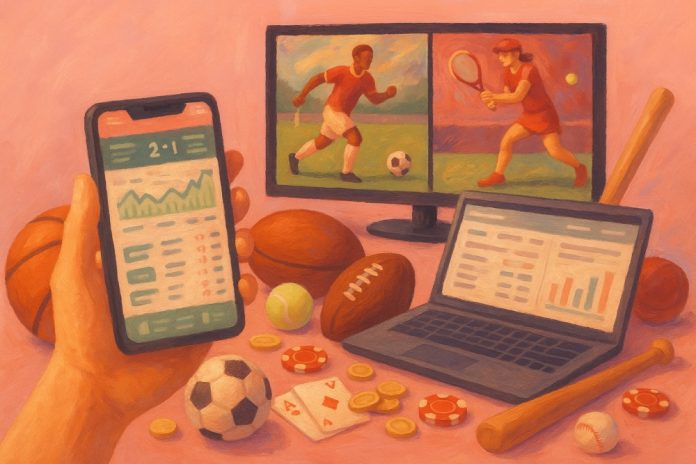
Betting has always been about patterns. Long ago, bettors followed handwritten lists from bookmakers, studying margins through rough calculation. Now, technology allows instant access to combined markets, offering dozens of choices per match. The ability to read those markets and link them logically turns guessing into analysis.
Modern betting platforms gave players the tools once reserved for traders. People compare live prices, track trends, and simulate different outcomes on their screens. Many begin their journey once they Afropari apk, gaining access to markets that link goals, corners, and match outcomes. The variety looks complex at first, but it reflects how professional betting has evolved over decades into an analytical craft.
:In the same way that seasoned bettors sometimes explore alternative platforms like Biggerz or even compare odds from 22Bet and 1XBet, understanding the underlying stats rather than just chasing the highest price can mean the difference between breaking even and consistent value betting over time. These comparisons are much like choosing between different calculators when solving the same problem; each might give you a number, but knowing why one is more accurate matters more than the number itself. Avoiding the trap of simply picking the “bigger number” helps bettors focus on meaningful insights rather than surface-level appeal.

Combining markets is less about chance and more about structure. It means connecting related outcomes where probability overlaps, creating a balance between potential reward and control.
Understanding market correlation
Not all bets are independent. Some outcomes naturally connect, such as a team winning and scoring over a certain number of goals. This principle of correlation defines how combined markets behave. Bettors who understand it reduce contradictions and strengthen overall logic.
For example, in football, a high-scoring team usually aligns with “win and over 2.5 goals.” In tennis, a strong server may create long sets but fewer breaks. Recognising these links helps avoid risky or redundant combinations.
Commonly combined markets include:
- Match result and total goals
- Both teams to score and over/under goals
- Half-time result and final score
These combinations increase potential payouts but demand precise timing and awareness of team form.
How technology changed betting logic
Decades ago, players tracked odds through print media and radio updates. Today, algorithms compare hundreds of lines every second. Modern betting systems calculate expected value automatically. The human role has shifted from manual tracking to pattern interpretation.
How Machine Learning Improves Game Balancing in iGaming
With live statistics, bettors now identify small gaps in bookmaker pricing. By combining related markets, they adjust exposure and create controlled variance. This hybrid approach mirrors portfolio diversification in finance, where balanced risk offers steady returns rather than sudden windfalls.
Market shifts and emotional patterns
Odds movement is rarely random. When large numbers of users focus on similar events, bookmakers adjust their lines to reflect public sentiment. Sharp bettors notice when early odds move faster than expected, signalling insider confidence or unusual volume.
During this process, digital activity mirrors human emotion. Excitement around tournaments, derbies, or finals often pushes casual bettors toward simple wagers. Those analysing combined markets, however, focus on data continuity. They understand that emotions change faster than statistics.
In this environment, the iGaming mobile boom became a turning point. Mobile apps opened constant access to data, transforming idle moments into analytical sessions. Users no longer depend on office computers or betting shops – the market now travels in their pockets.
Approaching market combinations methodically
To apply this system effectively, bettors focus on preparation. Combining markets requires studying variables that interact rather than overlap. This includes team motivation, schedule density, and tactical matchups.
Strategic planning often follows simple but consistent routines:
- Reviewing performance metrics from the last five matches
- Comparing market odds against statistical expectations
- Identifying when two markets support the same scenario
The key is alignment, not volume. Combining too many selections increases complexity and error probability. Professionals often say that three related markets per match strike the right balance.
How Asian Handicap shapes betting trends, accuracy across African football competitions
Regional and sport-based adaptation
Different sports require distinct approaches. In basketball, totals and handicap lines move frequently, allowing dynamic combination models. In football, correlations depend heavily on style and formation. Historical data shows that combining defensive metrics with low-goal markets produces more stable returns over time.
Across Africa, football remains the main testing ground for such techniques. The diversity of local leagues and international tournaments provides constant data flow. Bettors adjust to differences in pace, weather, and competition structure. The result is a living laboratory where market combinations evolve weekly.
Sustaining discipline and perspective
Like any analytical process, combined-market betting needs patience. Tracking success over months, not days, creates understanding. Experienced bettors keep records of every combination, noting both success rate and average return.
This discipline resembles the work of statisticians in other fields. The numbers tell a story of balance, not risk. Over many decades, that mindset has separated informed bettors from those who rely on impulse.
In the end, combining markets reflects how betting itself has matured. It turns quick predictions into structured thought. Each connection between outcomes becomes a small study in probability – proof that betting, when understood deeply, remains less about luck and more about observation.