


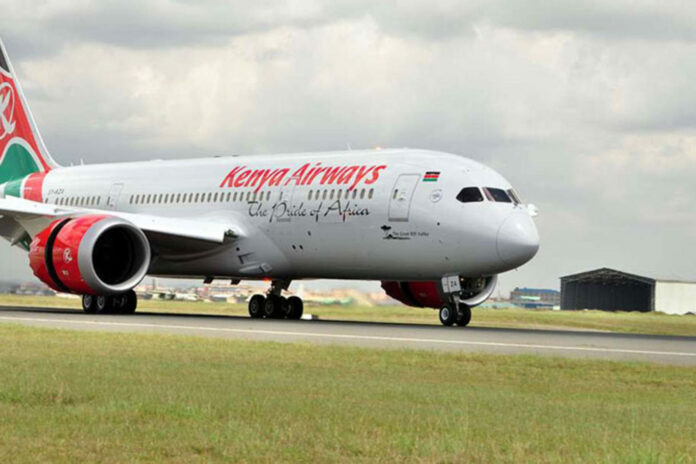
The intricacies of aircraft finance can confound even seasoned industry observers. Matters grow murkier still when arcana such as operating and finance leases enter the discussion. For the uninitiated, the jargon alone is an obstacle course. As so often where understanding is thin, ignorance is padded out with conjecture, guesswork and, in less excusable cases, outright falsehoods deployed less to illuminate than to disguise the absence of knowledge.
Kenya Airways (KQ) has lately been the subject of a familiar Kenyan pastime: the confident propagation of nonsense. Attacks on the airline have relied less on evidence than on a cocktail of ignorance, supposition and outright invention. Its aircraft operating and finance leases, scrutinized repeatedly by reputable audit firms and hauled before assorted parliamentary committees, have been examined, re-examined and pronounced proper.
Yet rumours persist. The most recent, aired in a national newspaper, alleges without substantiation that these leases are inflated to enrich senior management. It is an accusation that survives not because of plausibility, but because calumny travels faster than fact.

An appreciation of lease structures is indispensable. A finance lease closely resembles a mortgage: regular payments are made to a lender over a fixed term during which the lessee enjoys uninterrupted use of the asset. Once the final instalment is paid, ownership duly passes to the lessee.
Dissecting the falsehoods surrounding Kenya Airways (Part 1)
An operating lease, by contrast, is little more than a tenancy. The lessee remits rent to the owner for a specific period and enjoys exclusive use for the duration. When the contract expires, the asset, like a rented house, returns to its proprietor, leaving the occupant with nothing but memories and a cleared balance.
Airlines, like most capital-intensive businesses, rely on a judicious blend of operating and finance leases. This hybrid approach allows carriers to preserve financial flexibility, distribute risk, extract advantages where available and adapt to the unforgiving cyclicality of air travel. By mixing the two, airlines can expand fleets, keep aircraft tolerably modern and husband cash without the self-inflicted constraint of committing to a single orthodoxy. It also bears repeating, because confusion persists, that aircraft manufacturers are not benevolent lenders of last resort. They design and build airplanes for the global marketplace; financing their purchase is emphatically someone else’s problem.
This article dismantles a set of durable but unfounded rumours suggesting that Kenya Airways’ lease arrangements are elaborate connivances designed to enrich politically connected businessmen and complicit managers. They are nothing of the sort. In particular, the oft-recycled claim that the airline’s finance leases are controlled by shadowy offshore-registered interests collapses under even cursory factual scrutiny. Comprehensive details of KQ leases are disclosed in Note 25 of Kenya Airways’ 2021 annual report and other annual reports.
Of particular concern is a recent article in one of the dailies alleging that Kenya Airways’ “big bosses steal when leasing aircraft” and that there exists a scheme to burden the national carrier with Boeing 737 Max aircraft at inflated rates. It further asserts, with breezy confidence, that more attractive bargains for new jets are readily available.
Why Kenya Airways’ recovery needs facts, not aviation folklore
These claims collapse under even cursory acquaintance with the aviation industry. It is an elemental fact, known to financiers, manufacturers and airlines alike, that the post-pandemic recovery has left the global supply chain for aircraft and spare parts in acute disarray. Boeing and Airbus, the industry’s comfortable duopolists, together carry an order backlog approaching 17,000 aircraft. An airline placing and fully paying for a new aircraft would not expect delivery for seven to eleven years. To suggest that fleets of discounted, immediately available jets are loitering on the tarmac is not investigative journalism; it is wishful thinking masquerading as exposé.
Post-pandemic distortions have also extended well into the secondary aircraft market, where availability is rationed on a first-come-first-served basis. In such conditions, price becomes a simple function of scarcity. Demand sets the tone and any aircraft that appears on the leasing market commands a premium. Pricing is further shaped by the lessee’s risk profile. Smaller airlines, deemed less reliable, pay more for their access to aircraft than sprawling carriers with hundreds of jets and balance sheets to match.
By global aviation standards, KQ is a small airline. It cannot extract the economies of scale available to industry behemoths, nor can it compete with state-backed carriers from oil-rich countries that can write cheques upfront and ask questions later.
Aircraft leasing, in short, is not a uniform market governed by egalitarian pricing. This is a basic fact, one that those entrusted with informing a national audience might be expected to grasp before advancing insinuations that are not merely uninformed but potentially damaging to the country’s national flag carrier.