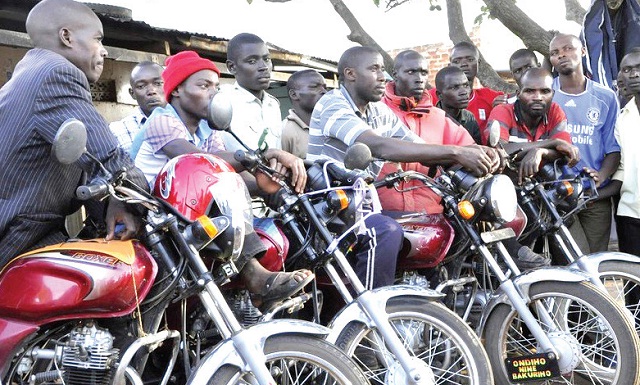
Kenya’s informal economy is often celebrated for its resilience. The bodaboda stage on every corner and the near-ubiquitous M-Pesa kiosk are presented as proof of an industrious nation that will always find a way to survive. That narrative is comforting. It is also incomplete.
The more difficult question is not whether these businesses create activity, but whether they create progress for the individual operator.
A perspective I find intellectually honest comes from Noah Mwale of Designtech Africa Ltd. From a value-chain standpoint, he argues that the bodaboda rider is enormously productive. One rider supports fuel suppliers, insurers, spare-parts dealers, roadside food vendors, M-Pesa agents, and even the government through fuel levies and licenses. For customers, the efficiency is undeniable: a trip that might cost KSh 700 by taxi can be done for KSh 150 on a motorcycle. That is real consumer surplus and real economic utility.

From a macroeconomic lens, he is correct. The bodaboda rider is a moving node in a dense economic network.
But macro value creation should not blind us to micro outcomes.
Man buries boda at home; reports it missing to lending company
The rider absorbs the highest risk in the chain: physical danger, long hours, regulatory uncertainty, volatile fuel prices, and asset depreciation. After loan repayments, maintenance, and daily operating costs, very few riders build durable capital. Many remain trapped in a high-effort, low-accumulation loop. The economy benefits, but the engine itself rarely upgrades.
This is where sustainability must be interrogated. A model that relies on perpetual entry of new riders, with limited upward mobility for incumbents, is not a growth pathway. It is a pressure valve for unemployment.
Consider capital allocation. The same KSh 200,000 used to acquire a motorcycle could seed a small manufacturing or value-addition enterprise: basic furniture production, packaging, metal works, or agro-processing. These are not glamorous businesses, but they compound. They can scale, formalize, employ others, and—critically—reduce Kenya’s dependence on imported consumer goods and even food from neighbouring countries. Production builds capability. Hustle alone does not.
The M-Pesa kiosk raises a parallel concern. In an era where banks offer end-to-end digital services—mobile banking, instant transfers, merchant payments—the kiosk often functions as a redundant bridge between two digital systems. Its persistence says less about innovation and more about structural gaps: financial literacy, trust deficits, and a reluctance to redesign systems around the end user rather than habit.
Man loses boda after paying off Sh. 215k loan; suspects lender stole it
This leads to an uncomfortable but necessary question. Are we truly short on ideas, or have we become too comfortable recycling low-barrier models that absorb labour without building long-term capacity? Do we celebrate visibility over viability?
Answering this requires more than opinion. It demands behavioural insight. I intend to explore this further with Paul Daudi Kitonga of Front Man Consulting, whose work examines why individuals gravitate toward certain economic choices and what conditions actually unlock strategic risk-taking.
Kenya does not lack energy. It lacks sufficient pathways that convert effort into enduring wealth and national capability. Until we confront that honestly, we will keep praising the hustle—while quietly accepting stagnation for those doing the hardest work.
Real progress begins when we ask not just how people survive today, but how they are positioned to build tomorrow.
Why practical skills matter more than degrees in today’s economy
About the author
Mulumi Mwangi is a seasoned businessman with more than five decades of life experience, bringing a rare depth of perspective to both enterprise and writing. Trained as an electrical engineer, he has founded, built, and managed ventures across diverse sectors, including advertising, marketing, agribusiness, real estate, and fintech.
His writing is firmly grounded in lived experience. It draws from family life as a father, husband, brother, and uncle; from public life through his service as a national political party official; and from the hard lessons of business, both failure and success. These experiences, combined with everyday social interactions, have shaped a reflective and pragmatic worldview.
Mulumi’s work is offered as a personal perspective rather than a prescription. His views are candid, experience-driven, and open to debate—acknowledging that insight is often refined through dialogue, reflection, and the humility to accept that one may be right or wrong.