

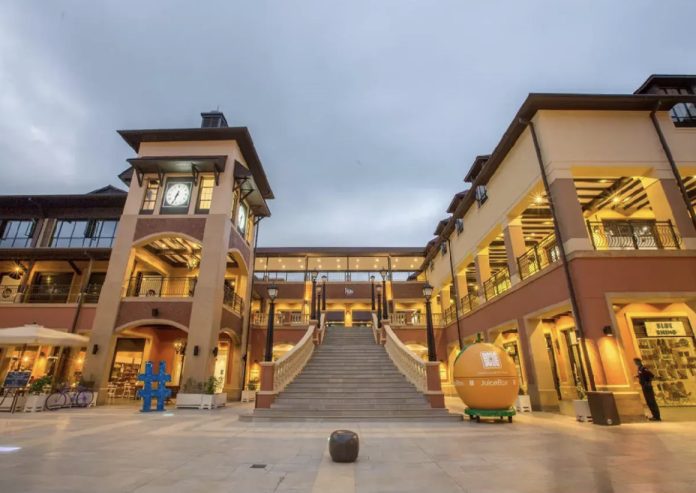
Nairobi’s retail market has quietly changed shape over the last two decades. Large destination malls once defined where people shopped, ate, and spent leisure time. Today, small estate malls and neighbourhood shopping arcades are steadily rewriting that script.
This shift is not limited to Nairobi alone. Similar patterns are now visible in Karen and across other major towns in Kenya, where retail is increasingly moving closer to residential catchments rather than drawing consumers into centralised hubs.
For years, areas such as Westlands and Kilimani were served by a handful of major malls. Sarit Centre, Yaya Centre, The Mall Westlands, Westgate Mall, and Junction Mall operated as regional shopping destinations. Ten to twenty years ago, these centres were considered premium, attracting consumers willing to travel long distances for shopping, dining, and leisure.

Their locations near major roads and public transport corridors defined both their success and their clientele. High accessibility meant high footfall, but it also introduced congestion, noise, and transient traffic. As consumer preferences evolved, these same strengths began to create friction with more affluent shoppers.
China Square dominating Kenya’s retail scene with new Sh. 1 billion outlet
A similar transition has already occurred in public services. A term ago, Kenyans were required to travel to major towns to access banking and government services. That era is largely over. Banks now operate in rural centres, and government services are available at sub-county levels. Services moved closer to people, reducing the need for long-distance travel. Retail is following the same decentralisation logic.
Over time, smaller estate malls began emerging within high-income neighbourhoods. In Westlands alone, developments such as GTC, Mwanzi Mall, Spring Valley Shopping Centre, Rhapta Square, Rapta Promenade, and Broadwalk along Ojijo Road illustrate how retail has moved closer to where people live.
These malls are not competing on size. They are competing on proximity, convenience, and experience.
One of the clearest outcomes has been the gradual migration of high-net-worth consumers away from crowded, high-volume malls. These shoppers value privacy, controlled environments, and time efficiency. High human traffic may be good for volume-driven retail, but it can discourage premium clientele.
Noise plays a critical role in this shift. Matatu traffic, hooting, congestion, and general street activity do not mix well with premium retail. Posh environments thrive on calm, predictability, and comfort. This partly explains why malls located close to each other attract noticeably different audiences despite their proximity.
Why practical skills matter more than degrees in today’s economy
Mall size and crowd density influence where people choose to shop or dine. Smaller estate malls typically offer quieter environments, easier parking, and shorter walking distances. These details matter to consumers who prioritise discretion and comfort, which is why boutique retailers and specialised restaurants increasingly prefer neighbourhood centres.
The contrast is similar to nightlife patterns in Nairobi. Clubs along Kangundo Road attract large crowds, play louder and varied music, and operate on volume. Clubs in Gigiri or Westlands are smaller, quieter, and more controlled, reflecting the purchasing power, tastes, and expectations of their clientele. Retail follows the same logic.
Older malls, on the other hand, are increasingly driven by volume economics. A useful comparison can be seen in Nairobi’s CBD restaurants, many of which operate on extremely high customer turnover. Diners are expected to vacate tables shortly after finishing meals. Despite lower prices compared to high-end cafés in affluent areas, these establishments generate strong cash flows purely through human traffic.
The same principle applies to legacy malls. High footfall sustains revenue even when individual spending is lower. However, foot traffic alone does not guarantee retail success. Large numbers of people often roam malls without making purchases, yet they are still counted as traffic. This inflates perceived performance and directly affects tenant expectations around conversion.
Visibility does not always translate into sales, particularly in malls located near transport hubs. Many legacy malls now experience higher tenant turnover as businesses adjust to changing consumer profiles and spending patterns.
Consumer purchasing power ultimately defines what works. The same supermarket chain stocks different products in Kayole compared to Gigiri because the customer determines demand. Kayole delivers volume, Gigiri delivers premium.This is basic consumer economics.
The Kenyan mirror: why corruption isn’t just a leadership problem
For the same reason, concepts such as jumping castle entertainment make sense in Eastlands malls but may not align with expectations in Westlands or Karen. Retail formats must match the economic reality of their immediate audience.
Village Market demonstrates the value of alignment. It does not compete for mass-market traffic from Ruaka. Instead, it serves Gigiri, Runda, Muthaiga, and the United Nations community. Similarly, Two Rivers Mall continues to grow through integrated residential developments, entertainment offerings, and proximity to diplomatic zones rather than reliance on transit-driven foot traffic.
This shift is not decline. It is evolution.
Some older malls are adjusting tenant mixes toward value retail, entertainment, and services. At the same time, high-net-worth consumers are increasingly shopping and dining closer to quieter, private environments. Nairobi’s CBD reflects the same transition. Once the centre of shopping and leisure, it evolved as consumer habits and residential patterns changed.
Retail mirrors society. Items once considered luxury, such as chicken or chapati, eventually became everyday staples. In the same way, retail formats change with time.
Small estate malls and legacy malls now serve different audiences. Proximity, purchasing power, noise levels, and lifestyle preferences matter more than size alone.
This article is a general market observation and does not constitute financial or investment advice.
About the Author
Mulumi Mwangi is a seasoned businessman with more than five decades of life experience, bringing a rare depth of perspective to both enterprise and writing. Trained as an electrical engineer, he has founded, built, and managed ventures across diverse sectors, including advertising, marketing, agribusiness, real estate, and fintech.
His writing is firmly grounded in lived experience. It draws from family life as a father, husband, brother, and uncle; from public life through his service as a political party official; and from the hard lessons of business, both failure and success. These experiences, combined with everyday social interactions, have shaped a reflective and pragmatic worldview.
Mulumi’s work is offered as a personal perspective rather than a prescription. His views are candid, experience-driven, and open to debate—acknowledging that insight is often refined through dialogue, reflection, and the humility to accept that one may be right or wrong.
Contact: [email protected]