


Across Kenya, small small businesses are the engines that keep daily life moving. They are also, in many cases, running on instinct. Records sit in notebooks, stock is tracked mentally, sales are remembered rather than recorded, and decisions are often made without a clear picture of what is actually happening in the business.
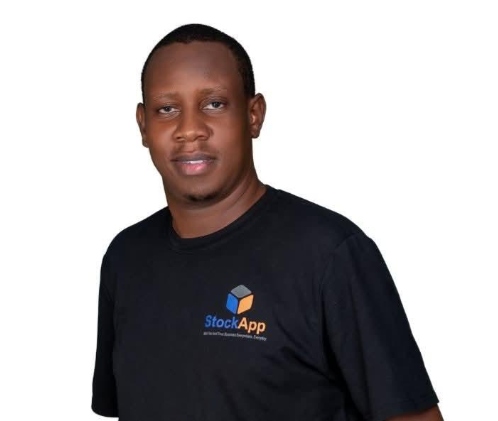
For Kenyan entrepreneur Ken Gitonga, this was not just something he observed. It was something he experienced firsthand.
“The idea for StockApp started from a very personal experience, my uncle, who runs a hardware store, asked me for a way to manage his business better,” Gitonga says. What he found was not just disorganisation, but a lack of visibility.

“Every time he stepped away and came back, things were unclear. Stock records did not add up, sales were difficult to track, and it was hard to know what was really happening.” That experience quickly pointed to something much larger.
This is the reality faced by millions of MSMEs across Africa. These businesses employ nearly 85 per cent of the non-farm workforce, yet many still rely on manual processes to run their operations. This approach limits their ability to grow, and it is not sustainable if you want to scale.
In its early stages, StockApp was shaped by direct engagement with small business owners. “Most businesses struggle with three fundamental challenges. The first is lack of structured data. Many cannot accurately track inventory, sales, purchases, profits, or expenses.”
The second is visibility. “Owners are making decisions without clear insight into what is working and what is not. They do not always know which products are performing or where they are losing money.”
The third is fragmentation. “If they are using digital tools, they are often using several apps that don’t talk to each other. That creates more confusion instead of solving the problem,” Gitonga explains.
These realities informed the direction of the platform; one system where everything comes together. From the beginning, the focus was on building something usable.
“We designed StockApp with the understanding that many business owners are not technology experts. They just want tools that help them run their businesses better,” Gitonga says.
The platform brings together stock tracking, sales, expenses, supplier management, staff monitoring, and even online selling into a single environment.
“Everything is designed to mirror how businesses already operate,” he explains. “The goal is to make it feel simple and natural.”
Today, StockApp is used in more than 70 countries, a reach that reflects how widely shared these challenges are.
“The problems we are solving are universal. Whether you are a small retailer in Nairobi, Lagos, or Manila, the challenges are very similar,” Gitonga says.
Why every small business owner needs the NCBA Business Saver Account
Much of that growth has happened organically.
“Entrepreneurs share tools that work, and that has been a big part of how we have expanded,” he adds.
That traction has also been recognised within the local innovation ecosystem. StockApp is part of Safaricom’s Spark Accelerator Cohort II, a programme supporting high-potential startups with mentorship, funding, and access to market.
At the core of the platform is its ability to make business data usable. “The AI assistant analyses sales patterns, inventory movement, purchasing behaviour, and cash flow,” Gitonga explains. “It helps business owners understand how their business is performing.”
The next step is already in progress. “We are moving towards AI that not only gives insights, but also takes action,” he says. “Things like suggesting reorders, generating reports, and supporting day-to-day operations.”
For many businesses, the impact is immediate.
“One of our clients, Joy Pinky Stores in Diani, runs two retail outlets. After adopting StockApp, she was able to manage both stores and access all her reports directly from her phone,” Gitonga says.
The difference was clear. “For the first time, she could see her sales, stock levels, and overall performance in real time.”
Beyond Kenya, similar stories are emerging. “In Zambia, one of our clients is opening their 13th branch,” he adds. “They have told us that being able to manage everything from one platform has made that growth possible.”
These outcomes extend beyond individual businesses, as each expansion creates jobs, supports families, and strengthens local economies.
Expanding into multiple countries has not been without challenges. “There are differences in regulations, business culture, currencies, and infrastructure,” Gitonga says.
To navigate this, the company is testing a more localised model. “We are piloting an agency model, similar to franchising. “We partner with local operators who handle customer-facing activities like sales and support, while we focus on the technology, ” he adds.
The model is currently being tested in Tanzania, with plans to expand into more markets if successful.
As more businesses digitise, trust becomes critical. “Data security is a fundamental priority for us. We have implemented secure infrastructure, encryption, access controls, and continuous monitoring.”