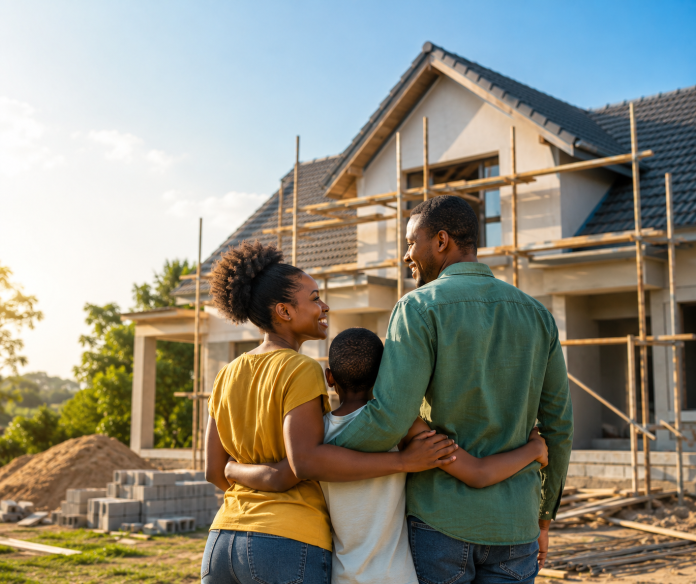
For many Kenyans, owning a home represents more than having a roof over their heads. It is a symbol of stability, security, and financial progress. It’s a place where families can put down roots, raise children and build a lasting legacy.
For some, the dream begins with a piece of land and a vision of a modest three-bedroom house. For others, it is about transforming an existing property into a comfortable family home.
While the desire to own a home remains strong, the cost of putting up the first brick has made the dream difficult for many households to achieve.
Building a house requires substantial upfront capital, from site preparation and foundation works to roofing, plumbing, electrical installations and finishing.
And as construction costs continue to rise, many aspiring homeowners find that their savings are not enough to take a project from the drawing board to completion.
The 2025 Status of the Built Environment Report by the Architectural Association of Kenya (AAK), citing construction-cost research by Integrum Construction, put the cost of a standard bungalow at about Sh54,730 per square metre in Nairobi in 2025, up from Sh48,750 per square metre in 2024.
At that rate, a 100-square-metre standard bungalow would translate to roughly Sh5.47 million in construction costs alone, before taking into account land, professional fees, approvals, utility connections and other expenses.
Actual costs, however, vary depending on location, design, size, materials and the quality of finishes.
For a household relying on monthly income, raising several million shillings before construction begins can be difficult.
Saving for years can also expose the project to rising material and labour costs, potentially pushing the original budget even higher.
This is where access to mortgage financing can change the equation.
Financing the journey to home ownership
Co-operative Bank of Kenya (Co-op Bank) is addressing the financing challenge through mortgage solutions that allow customers to fund the construction or renovation of residential and commercial properties.
Under its mortgage offering, the bank finances construction or renovation projects, giving borrowers the option of spreading repayment over an extended period rather than having to raise the entire construction budget upfront.
For single dwelling units, financing can run for up to 20 years, while residential commercial units can be financed for up to 10 years. The longer repayment period is designed to make instalments more manageable for eligible borrowers.
The mortgage package also comes with competitive interest rates and a six-month moratorium, or grace period, giving borrowers time to get their projects underway before regular repayments begin.
Additionally, a house purchased through the mortgage can be used as collateral, while its rental income can be channelled towards servicing the loan.
This can provide an avenue for borrowers developing income-generating residential property to align financing with the property’s earning potential.
What borrowers need
For registered businesses and companies seeking financing, Co-op Bank requires documents including the relevant incorporation and registration documents, identification documents for directors, six months’ bank statements and, for loans above Sh5 million, audited accounts.
Other requirements include a resolution to borrow for registered companies, details of the business location, necessary approvals from the relevant county or local authorities and NEMA, as well as the securities to be provided.
Individual borrowers without registered businesses are required to provide identification documents, while other documentation will depend on the nature of the facility and the property being financed.
Also Read: Your mortgage was approved. So why don’t you have your home yet?