

Potato farming is undoubtedly an attractive commercial enterprise for farmers seeking to generate reliable income from relatively small pieces of land.
The crop has a ready market, matures faster than many staple crops, and can deliver substantial returns when production is well managed.
However, profitability is not guaranteed. It depends on a combination of factors, including market prices, production costs, soil fertility, weather conditions, pest and disease management, agronomic practices and, critically, the quality of planting material.

For farmers, the choice of seed can determine much of what happens in the field. Poor-quality planting material can result in uneven emergence, weak plants, disease outbreaks and low yields, increasing production costs while reducing potential earnings.
Starting with healthy, vigorous potato seed is therefore one of the most important steps towards a profitable crop.
Experts say farmers who have access to large, healthy Irish potato tubers can prepare additional planting pieces through careful cutting, provided the process is done correctly.
The practice can help make better use of suitable tubers, but it requires attention to seed selection, hygiene, cutting, treatment and curing.
Begin with healthy tubers
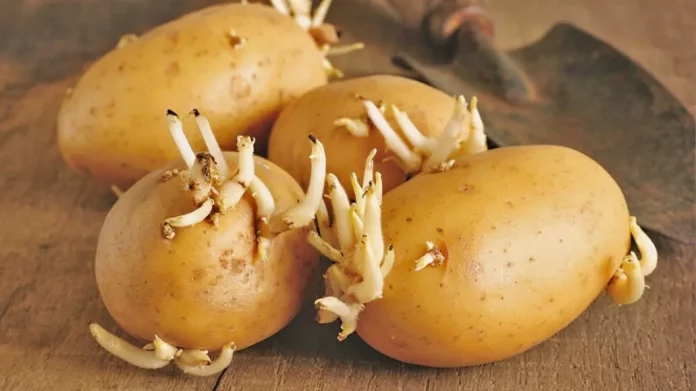
The process starts with selecting firm, healthy tubers with well-developed eyes and strong sprouts. Tubers showing signs of rotting, severe physical damage or disease should be discarded.
Where possible, farmers are advised to begin with quality certified seed. Planting material can carry diseases from one production cycle to another, making the quality and health of the original seed particularly important.
Give the tubers time to sprout
Selected tubers should be kept in a suitable, well-ventilated environment with indirect light to encourage healthy sprouting before they are cut.
According to experts, short and strong sprouts are preferable because they are less likely to break during handling and are better suited to establishing vigorous plants. Very long or weak sprouts should be handled with caution.
Choose tubers suitable for cutting
Farmers should not automatically cut every potato. Large, healthy tubers with several well-developed eyes are the most suitable because they can potentially produce several useful seed pieces.
Smaller tubers may be planted whole, reducing unnecessary cutting and handling. The objective should not be to obtain the largest possible number of pieces, but to produce planting material of sufficient size and quality to support strong early growth.
Hygiene is essential
A clean, sharp knife should be used when dividing the tubers. The cutting equipment should also be properly disinfected to minimise the risk of spreading disease between tubers or different seed lots.
Each tuber should be divided into reasonably sized pieces, with every piece containing at least one healthy eye or sprout. Farmers should avoid producing very small slivers simply to increase the number of planting pieces.
Seed-piece size matters because adequately sized pieces generally have better reserves to support early plant development.
Protect freshly cut surfaces
Once a potato is cut, the exposed surface becomes a potential entry point for organisms that can cause decay. Experts note that in some African potato-growing systems, farmers use clean, dry wood ash on freshly cut surfaces before allowing the pieces to cure.
Where this practice is used, the ash should be clean and dry and free from chemicals or other contaminants.
The treatment is intended to help protect the exposed surface while the cut piece undergoes the curing process.
Curing should not be rushed
One of the common mistakes farmers can make is planting freshly cut pieces immediately. Instead, the pieces should be placed in a clean, shaded and well-ventilated area and given time for the cut surfaces to dry and develop a protective healed layer.
Proper curing is important because it can help reduce the likelihood of seed-piece decay, particularly where field conditions are less than ideal.
Inspect before planting
After curing, the seed pieces should be inspected individually. Farmers should retain pieces that are healthy, properly cured and have viable sprouts, while removing those showing signs of rot, excessive damage or poor development.
This final selection ensures that only suitable planting material reaches the field.
While good planting material does not eliminate all the risks associated with potato farming, it gives the crop a stronger foundation.
Farmers must still pay attention to soil preparation, fertility management, planting depth, spacing, moisture, pest and disease control, harvesting and access to markets.
Once the seed pieces are ready, planting becomes the next critical stage. Correct spacing and planting depth can influence plant establishment, crop development and ultimately yield.
Also Read: Kenyan student earning Sh2,000 per hour working on British farms