

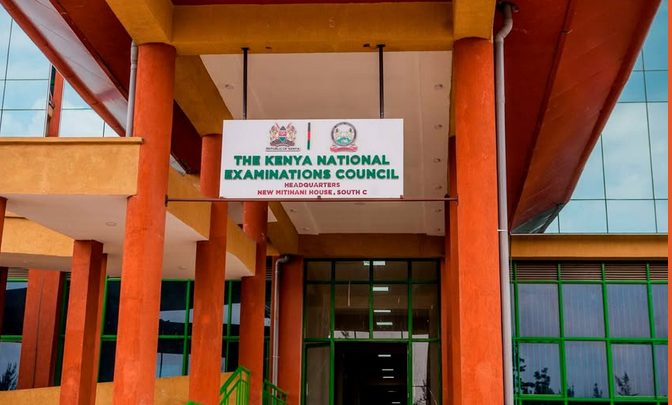
The Kenya National Examinations Council (KNEC) has released detailed feedback reports on the 2025 Kenya Junior School Education Assessment (KJSEA) and Kenya Certificate of Secondary Education (KCSE).
The reports contain subject-by-subject performance analyses, official statistics, examination papers and marking schemes.
The information is intended to help institutions identify areas of strong performance and address learning gaps in preparation for future assessments.

The KJSEA report also provides an account of how formative and summative assessment scores were combined to determine learners’ overall performance.
KNEC said institutions, teachers and other stakeholders seeking the reports can obtain them from its bookshop at New Mitihani House in South C, Nairobi.
Orders can also be made through [email protected] or by contacting the council’s headquarters.
KJSEA performance
A total of 1,130,459 candidates took the 2025 KJSEA, comprising 578,630 boys and 551,829 girls.
The assessment evaluated learners on an eight-point scale and classified them into four performance bands: Exceeding Expectations, Meeting Expectations, Approaching Expectations and Below Expectations.
The assessment incorporated both national summative examinations and school-based assessments. Overall, 75 per cent of learners reached or surpassed the Approaching Expectations level across the assessed learning areas.
Girls recorded stronger performance than boys in 10 of the 12 learning areas assessed, with particularly notable differences in Kiswahili and Christian Religious Education.
Hindu Religious Education recorded the highest proportion of learners who met or exceeded expectations at 84.62 per cent, followed by Integrated Science at 61.77 per cent and Social Studies at 58.56 per cent.
Mathematics and Kenyan Sign Language registered the lowest proportions, with 32.44 per cent and 22.14 per cent of learners respectively meeting expectations.
The Grade 9 national assessment also provided an indication of learners’ potential eligibility for senior school pathways.
The Science, Technology, Engineering and Mathematics (STEM) pathway had the highest potential eligibility at 59.09 per cent, followed by Arts and Sports at 48.73 per cent and Social Sciences at 46.52 per cent.
The KJSEA feedback report has been published in three volumes. Volume One covers Languages; Volume Two focuses on Mathematics, Science, Agriculture and Pre-Technical Studies; while Volume Three covers Humanities, Creative Arts and Sports.
Question papers and marking schemes for individual learning areas are available separately at a fee.
KCSE records improved performance
Meanwhile, the 2025 KCSE was taken by a record 993,226 candidates, including 501,214 girls, representing 50.46 per cent of the candidature, and 492,012 boys, who accounted for 49.54 per cent.
A total of 1,932 candidates attained straight As, while 270,715 candidates, equivalent to 27.18 per cent of the cohort, achieved the minimum university entry grade of C+.
The number of candidates attaining at least C- also increased significantly. A total of 507,131 candidates, or 50.92 per cent, attained C- and above, marking the first time in a decade that more than half of a KCSE cohort reached the grade.
In addition, 634,082 candidates, representing 63.67 per cent, scored D+ and above.
Performance improved in 17 subjects compared with 2024, while 11 subjects recorded declines.
Gender performance varied across subjects. Boys outperformed girls in 11 subjects, including Mathematics, Biology and Chemistry, while girls recorded higher performance in six subjects, among them English and Kiswahili.
The council cancelled the results of 1,180 candidates over examination irregularities.
The KCSE feedback report is organised into four volumes. Volume One covers Languages, Volume Two Mathematics and Sciences, Volume Three Humanities, and Volume Four Technical subjects.
KNEC has also made question papers and marking schemes available separately for each KCSE subject at a cost.
The council said the feedback reports are intended to support evidence-based evaluation, instructional planning and interventions aimed at improving learning outcomes across the education system.
Also Read: Third term school calendar: Education Ministry confirms opening, closing & exam dates