
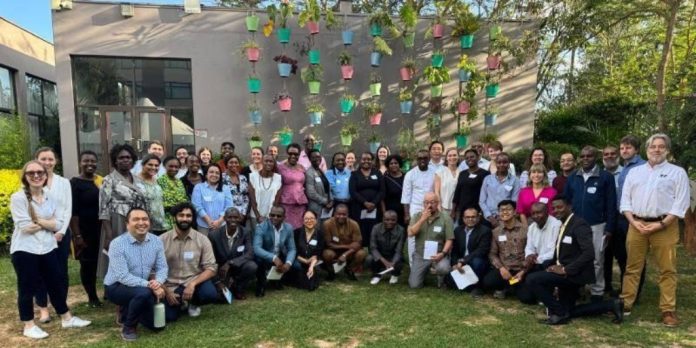

African policymakers, researchers and development partners are exploring sustainable ways to finance education amid mounting fiscal pressures, as the 2026 Global Partnership for Edbzucation Knowledge and Innovation Exchange (GPE KIX) Africa Research Symposium enters its second day in Nairobi.
The three-day symposium, running from October 21 to 23 at the Argyle Grand Hotel along Mombasa Road, has brought together education and finance officials, parliamentarians, researchers, regional institutions and development partners to discuss strategies for protecting education investment while improving access, equity and learning outcomes across the continent.
Held under the theme “Education Financing: Navigating Fiscal Constraints, Driving Transformation,” the meeting is examining how African countries can sustain improvements in their education systems despite limited public budgets, debt pressures, competing government priorities and climate- and conflict-related disruptions.
The discussions are focusing on the need to make education financing more equitable, efficient and responsive to the needs of learners, particularly those in underserved communities.
Among the key issues on the agenda are the allocation of education resources, financing early childhood learning, teacher recruitment and development, skills training, data systems, technology and strengthening education systems against crises.
The symposium also provides a platform for researchers to share evidence that can inform government policies, budget decisions and the implementation of education programmes.
Through high-level plenary sessions, thematic evidence panels and English- and French-language policy discussions, participants are examining how research findings can be translated into practical financing approaches that deliver measurable improvements in education.
The research and solutions marketplaces are also creating opportunities for stakeholders to showcase evidence, exchange experiences and identify approaches that can be adapted to different national and regional contexts.
Need to utilise digital technologies to support basic education
A central concern is how governments can protect education spending when public finances are under pressure, while ensuring that available resources reach learners and schools that need them most.
Education financing remains critical to addressing inequalities in access to quality learning, supporting teachers and preparing young people with the knowledge and skills required for employment and participation in economic development.
The conference is expected to conclude on Friday, October 23, with closing reflections on how research evidence can influence education policies, budget allocations and implementation.
The GPE KIX Africa 19 and Africa 21 Hubs convened the symposium to strengthen dialogue between researchers, policymakers and other education stakeholders across Africa.
The meeting underscores the importance of connecting research with decision-making to help countries identify financing approaches that support inclusive, resilient and sustainable education systems.
As the symposium continues, attention remains on identifying practical ways to navigate fiscal constraints without compromising progress towards equitable access to quality education and improved learning outcomes across Africa.
Did you love the story? You can also share YOUR story and get it published on Bizna Click here to get started.