

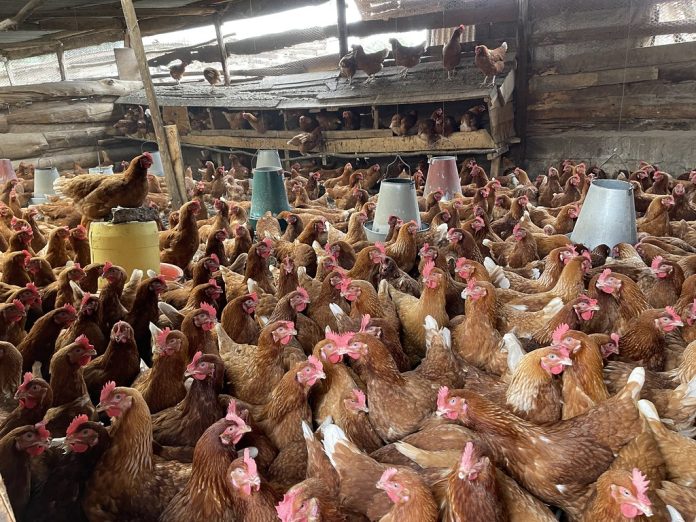
Poultry farming is a popular venture in Western Kenya, where many households keep chickens primarily for domestic consumption.
Although the birds provide food and occasional income, high feed costs and the challenges of raising young chicks have made it difficult for many farmers to turn the activity into a profitable business.
In Bungoma County, members of the Bungoma County Youth Sacco (BUKO) are changing this narrative through mother brooding, an approach that allows them to raise improved kienyeji chicks through their most vulnerable first month before selling them to farmers for further rearing.

The Sacco has also ventured into broiler production, supplying hotels, restaurants and market traders with chicken for slaughter, creating an additional source of income and helping members meet the growing demand for poultry meat.
According to the sacco, the shift towards commercial poultry farming gained momentum when a local hotel ordered 50 chickens at Sh900 each.
“That order showed members that poultry could bring in steady income, not just put food on the table,” says Julian Simiyu, chairperson of BUKO Sacco. “That was when we started looking at poultry as a serious business.”
Also Read: Azolla farming offers Nyeri farmer a low-cost feed alternative
How the mother brooding model works
Under the mother brooding model, the Sacco purchases day-old chicks from hatcheries and provides them with warmth, balanced feeds, clean water and the necessary vaccinations and treatments for about 30 days.
The birds are then sold to farmers who raise them to maturity, reducing the risks and losses associated with brooding chicks at household level.
“At this early stage, chicks are extremely delicate,” Simiyu explains. “Even the water matters. If you start them on rainwater, you must continue with that until they are sold.”
The initiative has expanded from batches of 100 or 200 chicks to between 300 and 2,500 birds. Some experienced members now manage up to 1,000 chicks at a time, supported by heating equipment provided through the programme.
“Some of our members received gas brooders and heaters. That allowed us to start producing in bulk,” Simiyu says. Of the 12 members involved in improved kienyeji brooding, five use gas systems, while others rely on charcoal or solar heating.
Poultry farming market and opportunities
Buko’s poultry products target local markets across the western region.
“Eateries in Chwele alone need around 60 chickens every day,” Simiyu says, pointing to the steady demand for broilers.
The group says demand for indigenous birds rises between March and August and during December festivities, with sales often slow in October and November.
To maintain reliable supplies, members stagger production and order broiler chicks weekly.
“If you cannot supply a customer consistently, they will find someone who can,” says Wabomba, a Sacco member.
The initiative is supported by Heifer International through the Kenya Livestock Market and Resilience Project (KLMP), which seeks to strengthen poultry and red meat value chains and improve livelihoods across Western Kenya, the North Rift and arid regions.
Also Read: A look at seven-day fodder alternative that could help farmers slash feed costs
Dr. Dennis Ogaso, a project coordinator at Heifer International, says poultry farming offers accessible economic opportunities, especially for young people and women.
“Poultry is an inclusive value chain because it requires little space and relatively low start-up capital,” says Dr Ogaso. “This makes it accessible to women and young people and creates livelihood opportunities for many households. It also employs different stages of the value chain.”
He says the mother brooding model addresses the challenge of high chick mortality by enabling farmers to purchase vaccinated, month-old birds in manageable quantities, typically between 10 and 50.
“This has improved chick survival, reduced mortality, and increased profitability for farmers,” he says.
The project, which initially targeted 38,000 households, including about 32,000 in poultry, has surpassed its outreach target, working with farmer organisations in Bungoma, Busia, Trans Nzoia, Uasin Gishu and Nandi counties.
The group is also turning poultry waste into an income-generating resource, composting droppings for use in kitchen gardens and commercial vegetable farming.
BUKO has already sold 3.5 tonnes of composted manure, further diversifying its revenue as it builds a sustainable poultry business.
Also Read: Farmer turns dry Laikipia land into beef goldmine selling up to 100 cattle per month