

Every harvest season, tonnes of fruits, vegetables, roots and cereals go to waste before reaching consumers, costing farmers income and undermining investments in production.
The losses are mainly attributed to market oversupply, buyers who fail to honour supply contracts, and limited access to affordable storage and preservation technologies.
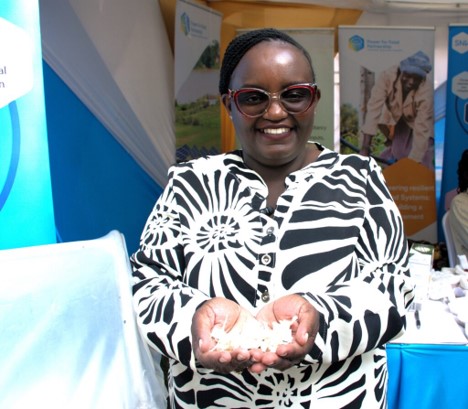
It is a challenge that Doreen Achieng, co-founder of BioAfriq Energy, understands firsthand. Her family’s experience with a failed pumpkin supply contract inspired the development of solar-powered food dehydrators designed to help farmers preserve their harvests, extend shelf life and earn more through value addition.

A family setback sparks an innovation
The idea took shape in Machakos County in 2017 after Achieng’s family ventured into commercial pumpkin farming. Her mother had secured a contract to supply pumpkins, prompting the family to invest heavily in production.
Also Read: Farmers turn to poultry, goats as crop returns decline
The harvest was successful, yielding 50 tonnes of pumpkins. However, the buyer failed to show up, leaving the family with a large quantity of produce and no immediate market.
The setback threatened to wipe out the investment made in seeds, fertiliser, irrigation and other production costs.
Faced with no ready market, the family began exploring ways to preserve the pumpkins by converting them into flour.
“The idea was, how do we dry it so that we can make pumpkin flour? And that’s how James Nyamai, my co-founder, came up with the innovation,” she said as quoted by Kilimo News.
Nyamai, an engineer, developed the initial dehydrator inside a 40-foot shipping container. The system helped the family find a way to preserve the pumpkins instead of allowing them to go to waste.
Despite its effectiveness, the first unit remained out of reach for some farmers in the region. Recognising the need for affordable units, Nyamai redesigned the technology into smaller, scalable units to make it more accessible to customers seeking to preserve and add value to their produce.
Turning perishable crops into valuable products
Today, BioAfriq Energy manufactures solar-powered food dehydrators ranging from compact household units to large industrial systems measuring 20 by 30 metres.
The equipment costs between Sh40,000 for smaller solar dryers and Sh1.2 million for the largest custom-built units, depending on size and specifications.
The company says the equipment is suitable for various agricultural products, including cassava, sweet potatoes, pumpkins, mangoes, bananas, apples, plantains, millet, sorghum, herbs, ginger and garlic.
Achieng reiterates that through dehydration, farmers can preserve their harvests for longer periods and sell the produce when market conditions are more favourable. The dried products can also be milled into flour or supplied as raw materials to food processors.
Also Read: I started poultry farming with 100 chicks made Sh3.4 million profit in the first year
“Farmers don’t have a market to take a product because they have either planted at the peak season, the market is flooded, or there’s just a surplus within the marketplace,” she said.
She further highlighted the potential that lies in value addition. Achieng cited cassava as an example, noting that fresh cassava selling for about Sh10 per kilogram could fetch between Sh40 and Sh90 after processing, depending on quality.
“That is the opportunity we are giving farmers, that they can peacefully focus on their core business, which is growing crops and know that there is a system through which they can preserve, value add and get more value for their products,” she said.
The company also works with Taliana Foods, its partner business, to process dehydrated crops into gluten-free flour for consumers with specific dietary needs.
Solar technology designed for changing weather
BioAfriq Energy’s dryers use solar energy and automated temperature control to regulate the drying process.
The company also offers hybrid systems fitted with heat exchangers that use farm waste as fuel. This allows drying to continue during cloudy weather and at night, when solar energy may be insufficient.
“What sets us apart in the market is the fact that our system is temperature-automated using solar, so you can monitor the temperature of your product within the dryer and the moisture within the dryer,” Achieng said.
“The hybrid systems also incorporate a heat exchanger that uses farm waste as fuel, allowing drying to continue during cloudy weather and at night.”
For farmers who may not afford the full purchase price of a dehydrator, BioAfriq Energy offers commercial dehydration services at its processing facility in Machakos County.
Farmers can deliver their harvested produce to the facility, pay a processing fee and collect the dried products for storage, sale or further processing.
Beyond individual farmers, the company serves microprocessors and agricultural off-takers who require dehydrated raw materials for food manufacturing.
Also Read: Mother brooding gives poultry farming a commercial boost in Western Kenya