




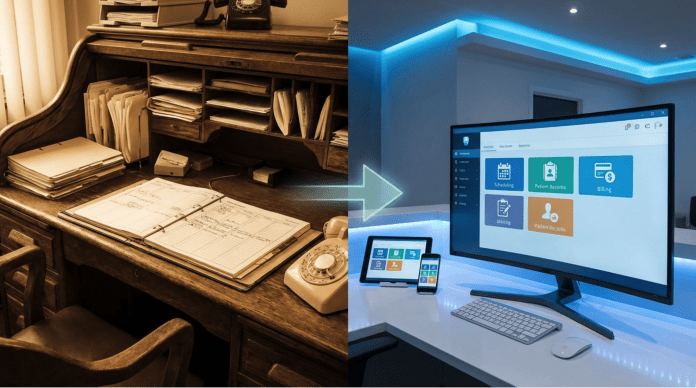
Software for dentist helps clinics achieve these goals by automating routine tasks, improving workflows, and enhancing patient care. Platforms like Dendoo demonstrate how modern software for dentist can truly transform daily clinic operations.
From Paper to Digital: Lessons from the Past
In the early days, clinics relied on paper charts, appointment books, and manual billing. While familiar, this approach had clear limitations:
- Staff spent excessive time on administrative tasks
- Patient records were prone to errors or misplacement
- Tracking follow-ups or recurring treatments was inefficient
Practical takeaway: Transitioning to software for dentist immediately reduces errors and frees staff to focus on patient care.

Early Digital Tools
The first wave of digitalization included simple software for individual tasks:
- Appointment scheduling
- Basic electronic billing
- Patient record storage
These tools helped reduce administrative workload but were often fragmented. Multiple platforms were needed to manage all key processes effectively.

Insight: For maximum efficiency, clinics should choose integrated solutions that combine all essential functions.
Branice Munyasa: Third year UoN student who started top dental clinic while at school
Integrated Dental Practice Management Systems
Modern platforms combine multiple functions into a single system. Clinics now benefit from:
- Automated appointment scheduling and reminders – reduces no-shows
- Online patient intake – forms are completed digitally before visits
- E-prescriptions – prescriptions are sent directly to pharmacies
- Analytics dashboards – track revenue, patient flow, and treatment trends
Using software for dentist ensures these features work together seamlessly, saving time and improving patient experience.
Cloud-Based Platforms: Flexibility and Accessibility
Cloud-based solutions allow clinics to access patient records, schedules, and billing from anywhere, on any device. Mobile apps let dentists and staff manage appointments, update patient data, and communicate on the go.
Benefits of cloud-based solutions:
- Real-time updates across devices
- Secure storage and automatic backups
- Synchronized operations for multi-location clinics
- Easy integration of new features without downtime
Tip: Ensure your cloud provider meets healthcare data security standards, such as GDPR or HIPAA.
Patient-Centric Innovations
Today, software for dentist focuses on enhancing patient experience, not just internal efficiency. Key features include:
- Self-scheduling portals to reduce phone traffic
- Automated reminders via email or SMS
- Online payments and digital invoices
- Educational materials delivered before or after visits
These tools allow patients to manage their care independently while freeing staff for direct patient interaction.
Why employers in international markets prefer KMTC graduates
Using Data to Make Informed Decisions
Modern systems collect large volumes of data. Clinics can analyze:
- Appointment trends and peak hours
- Revenue by procedure and provider
- Patient retention rates
- Treatment popularity and effectiveness
How to use it: Generate monthly reports to identify bottlenecks, optimize staff schedules, and plan marketing campaigns for preventive services.
Avoiding Common Implementation Mistakes
Even the best software fails if implemented poorly. Common pitfalls include:
- Lack of staff training – employees need time to master the system
- Ignoring patient education – patients should know how to use online portals
- Choosing software without scalability – ensure it can grow with your practice
Tip: Start with core functions like appointment scheduling and online intake, and gradually add analytics and reputation management.
Future Trends: AI, Tele-Dentistry, and Predictive Analytics
The next stage of dental software evolution includes:
- AI-powered appointment optimization
- Predictive analytics for treatment planning
- Tele-dentistry modules for remote consultations
- Automated follow-ups and treatment reminders
Tip: Use flexible, cloud-based software to integrate new capabilities without disrupting clinic operations.
Conclusion
The evolution of software for dentist shows how clinics have progressed from paper-based workflows to integrated, patient-focused digital platforms.
Clinics adopting modern solutions benefit from:
- Reduced administrative workload
- Improved scheduling and fewer missed appointments
- Increased patient engagement and satisfaction
- Data-driven decision-making
Actionable advice: Identify your clinic’s pain points, choose an integrated solution, train staff, and involve patients in the transition. This approach ensures an efficient, patient-centered practice for years to come.