


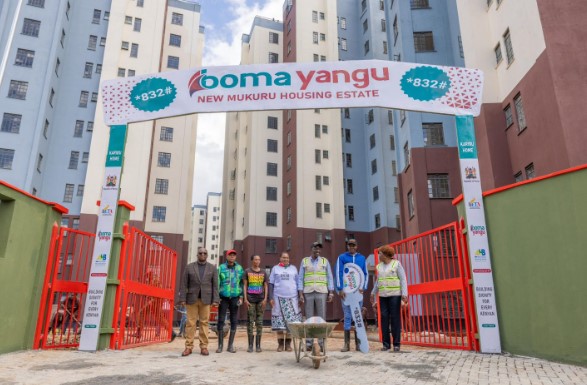
The affordable housing program is gaining momentum in Kenya, with high occupancy rates in completed projects in Nairobi, Homa Bay, and Nakuru.
Official data indicate that over 290,000 Kenyans had registered on the Boma Yangu platform for affordable housing as of June 2025.
Designed around the principles of affordability, transparency and long-term ownership, these housing units are significantly expanding access to decent housing for low- and middle-income earners.

Below is the step-by-step guide on how to buy an affordable housing unit in Kenya, the typical features of available units, and the indicative prices and monthly charges based on unit size.
Step 1. Register on the Boma Yangu Platform
The first formal step is registration on the government’s Boma Yangu digital platform. This is the official portal for all affordable housing applications.
What you need to register:
- A valid Kenyan National ID
- KRA PIN
- Active mobile phone number
Once registered, applicants can indicate whether they intend to rent or purchase and select preferred projects when they are announced.
Step 2. Make Regular Savings Contributions
Applicants interested in buying are encouraged to activate their accounts by saving a minimum of Sh200. After activation, applicants can save any amount at any time, as many times as they wish through the various payment options available.
Savings can be made via mobile money across all networks, Credit and debit cards, or cash deposit at any of the authorised custodial banks (KCB, NCBA and Cooperative bank).
As a registered and saving member, you can view all the available projects on Boma Yangu, add those you like to your wishlist and select a preferred unit
Selecting a preferred unit will show you how much deposit you’d need to save to be eligible for allocation, which is 10% of the unit value.
“Please note that you can save as many times as you want to, daily monthly etc. The amount of savings is not capped. Refunds on savings will be in accordance with the housing fund regulations and can be requested through this portal,” Boma Yangu states.
Step 3: Choose a Unit Type Based on Budget
Affordable housing projects consists of a mix of studio, one-bedroom, two-bedroom and three-bedroom units. Below is an overview of common unit sizes, features and indicative pricing.
Studio Units (20–30 sqm)
Indicative Price: Sh640,000– 1.5 million
Monthly Charges: Sh3,000 – 6,000
Features:
- Open-plan living and sleeping area
- Kitchenette
- Bathroom with modern fittings
- Tiled floors and basic cabinetry
Best suited for single occupants or young professionals.
One-Bedroom Units (30–45 sqm)
Indicative Price: Sh1.8 – 2.5 million
Monthly Charges: Sh5,200 – 10,000
Features:
- Separate bedroom
- Living and dining area
- Fitted kitchen
- Bathroom with shower
- Secure steel door and prepaid utilities
Ideal for small households or couples.
Two-Bedroom Units (50–65 sqm)
Indicative Price: Sh3.0 – 3.8 million
Monthly Charges: Sh6,500– 18,000
Typical Features:
- Two bedrooms with wardrobes
- Living and dining area
- Fully fitted kitchen
- Bathroom and separate WC (in some projects)
- Balcony in mid-rise developments
This is the most popular option for young families.
Three-Bedroom Units (70–85 sqm)
Indicative Price: Sh4.0 – 4.8 million
Monthly Charges: Sh20,000 – 25,000
Features:
- Master bedroom with ensuite bathroom
- Two additional bedrooms
- Spacious living and dining area
- Modern kitchen with storage
- Balcony and enhanced finishes
Targeted at larger households with stable incomes.
Note: Prices and monthly charges vary by location, developer and financing structure. Figures above are indicative averages.
Step 4: Allocation, Contract Signing and Payments
Once projects are completed, the allocation process begins. Registered members are notified when the allocation process starts.
Registered members are asked to select a unit and are notified of the amount they need to have saved to be eligible for allocation. The allocation process for homes is done through a fair and transparent process.
The initial eligibility for allocation depends on several factors, such as when you reached the amount of deposit required, family status and other social factors, as well as the demand across various housing categories.
Those who do not get an allocation in the first instance are put on a waiting list to ensure they have priority in subsequent allocations. For private sector projects, allocation is done according to the terms and conditions of sale.
Step 5: Occupation and Transfer of Ownership
Upon completion of payments or reaching agreed milestones, the buyer is issued with ownership documents or a long-term lease, depending on the project structure.
Most developments include basic estate management services funded through modest service charges.
Also Read: Piped gas and WiFi: Inside Mukuru houses handed over by Ruto