


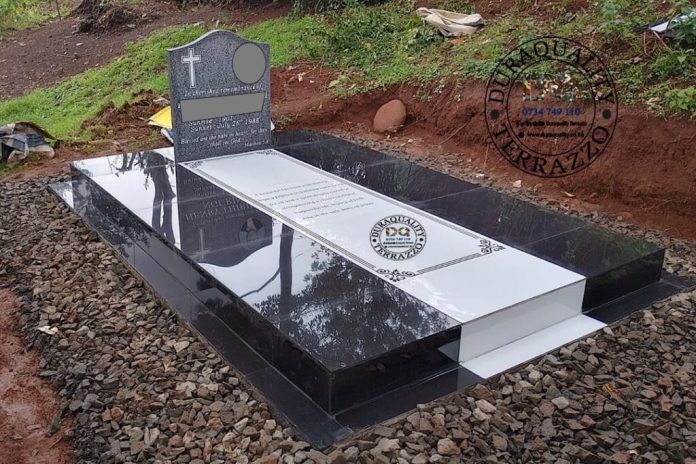
In Kenya’s cemeteries, quiet spaces often associated with grief and remembrance, a modest but steadily growing industry is taking root.
Grave decoration, once limited to simple flowers and occasional repainting, is evolving into a specialized business offering customized designs, landscaping, maintenance, and memorial branding.
Honouring the dead through decorated graves is not new in Kenya. Across communities, families have long marked burial sites with flowers, stones, and symbolic items.

However, urbanization, migration, and changing lifestyles have altered how families maintain these sites. Many relatives now live far from ancestral homes or cemeteries, creating demand for paid services to keep graves neat and dignified year-round.
Despite its income potential, grave decoration is rarely discussed as a viable business. Cultural sensitivity plays a role with many Kenyans uncomfortable to openly commercialize activities linked to death.
The few individuals who have filled their boots in the sector say the business is well-paying. Charles Karanja from Kiambu is one of the businessmen earning from grave decoration, an opportunity that came by chance.
How It All Started
When Karanja graduated after pursuing a construction course, getting a job was not easy, a situation that forced him to look for opportunities in other sectors.
With good skills in construction, he found a construction gap that needed to be filled, only that his audience this time would be the dead.
He started to paint and embellish graveyards to give the deceased a nice resting home. Karanja revealed he settled on painting graves because it was an untapped market.
He did his first project using internet technology because he had not done such work before. The output was so encouraging, inspiring him to do more.
“I build graves and embellish them. People are constantly coming up with new methods to honor the deceased. A long time ago, people were buried in the bush, or a banana plant was planted to serve as a marker for the graves, but today, people honor and remember their loved ones.
“In a unique way, I assist them in doing that. A person’s special home remains thereafter burial for all time. So it’s good that you respect the deceased and value that individual,” Karanja said.
The Kiambu-based grave decorator revealed he earns Sh300,000 in a good month and Sh150,000 in a bad one. His normal rate for a project is Sh60,000, which has enabled him to create employment for other young people.
“I have a managing director, seven regular employees, and a few temporary employees. I had no money when I started. My business was launched with the help of a client’s down payment, “He said.
Just like any other business, Karanja has sailed through a myriad of challenges, among them financial constraints and unruly customer behaviors.
“Yes, I do face obstacles, particularly financial ones. There are situations when a client underpays you and might even refuse to pay. You are required to follow up by phone, particularly if they are outside of Kiambu. People would disregard and even block you, “He said.
He plans to expand his business so as to create employment for more young Kenyans and solve the challenge of joblessness in the country.
“I aim to reach higher, where I would be the best decorator in the country. I also want to inspire the youth and employ more of them as I open more workshops,” he added.
Also Read: Simple practical skills that can move you from joblessness to millionaire