



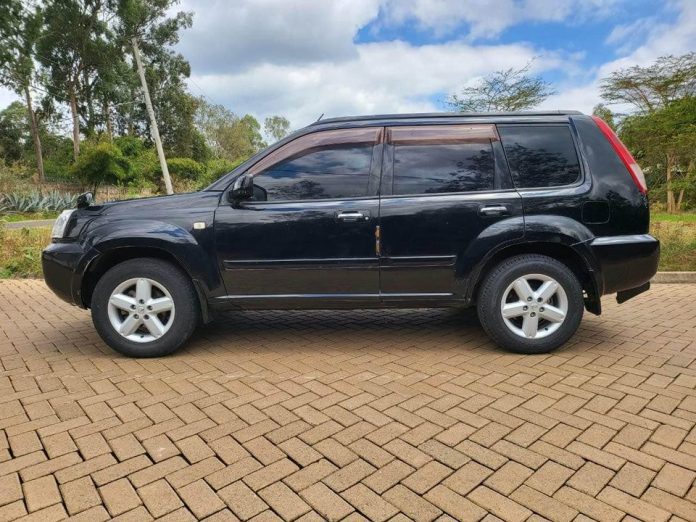
A Kenyan motorist has shared his candid experience owning a used 2006 Nissan X-Trail, warning prospective buyers that the popular compact SUV may come with unexpected costs if not properly understood before purchase.
According to his narration on Money 254, the driver, who bought the vehicle in 2022, says the purchase was driven by a long-held desire to own an SUV.
With a budget of Sh700,000 at the time, he acquired the X-Trail for Sh550,000, a decision he now says he regrets three years later.

According to the motorist, the vehicle appeared to be a practical and affordable option at the time, but the reality of ownership exposed several challenges ranging from inconsistent fuel consumption to maintenance issues linked to its transmission system.
Unpredictable Fuel Consumption
One of the biggest frustrations, he says, has been the vehicle’s inconsistent fuel economy. On highway drives, the SUV performs reasonably well, returning an average of about 10 kilometres per litre. However, the story changes significantly in city traffic.
“In the city it becomes a gamble. On a good day it will give around 8 km per litre, but on a bad day it drops to around 6 km per litre. Driving through a Nairobi snarl-up can cost me over S30 per kilometre. I honestly have no idea what causes the disparity, but I’ve learned that for an older SUV, “city driving” is a very expensive hobby,” he explains. Adding that the unpredictability makes budgeting for fuel difficult.
Sensitive CVT Transmission
Another major lesson came from the vehicle’s Continuously Variable Transmission (CVT), a gearbox technology that differs from traditional automatic transmissions.
As a first-time owner unfamiliar with the system, the motorist says he initially struggled with recurring transmission problems and surging fuel consumption.
“I didn’t know the difference between a normal automatic gearbox and a CVT. I learned the hard way that the CVT is extremely sensitive,” he says.
In the early months of ownership, he frequently drove the vehicle on rough terrain for recreational events. However, he later realised that each off-road outing was often followed by costly mechanical attention.
His understanding of the vehicle improved only after joining online communities for X-Trail owners on Facebook and WhatsApp, where other drivers shared maintenance advice.
“That’s when I learned the engine doesn’t just need any oil,” he explains. “It requires specific synthetic oil and strict service intervals if you want it to run well.”
Spare Parts: Available but Frequent
The motorist also highlights maintenance frequency as another challenge.
While spare parts for the X-Trail are readily available in Nairobi’s well-known automotive hubs such as Kirinyaga Road and the Industrial Area, he says the issue is not availability but how often certain components need replacement.
“Compared to my friends who drive other Japanese cars, I find myself visiting the spare parts shop far more often,” he says.
Lessons for Prospective Buyers
Despite his frustrations, the motorist acknowledges that the X-Trail remains a popular SUV among Kenyan drivers due to its affordability, spacious interior and off-road capability.
However, he advises potential buyers of older models to conduct thorough research before purchasing, particularly regarding transmission systems, servicing requirements and fuel consumption expectations.
“I think the 2006 X-Trail is a good car; it’s just not a good “first” car. It requires a level of mechanical awareness and proactive maintenance that you only develop with experience.”
“If you’re shopping for a second-hand car, make sure you check for reviews from past owners and mechanics. And ensure to check the resale price, it’s been three months trying to sell mine to no avail,” he added.
Also Read: Meaning of new green number plates and distinctive features