

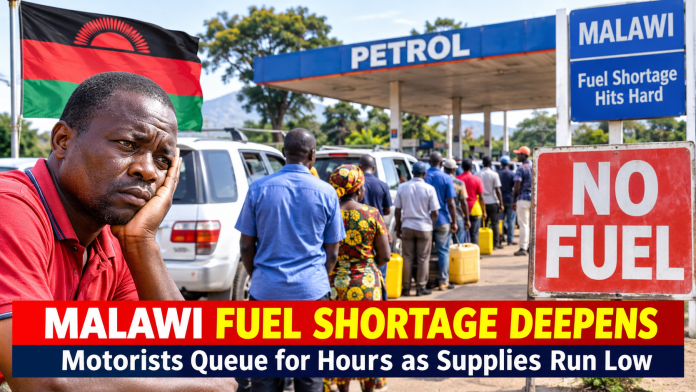
Malawi is facing a deepening fuel shortage in November 2026, with motorists spending hours and, in some cases, entire nights queuing at filling stations in search of petrol and diesel.
The crisis has disrupted transportation, commercial activities and daily livelihoods, exposing the country’s vulnerability to foreign exchange shortages and its dependence on imported petroleum products.
In major urban centres, including Lilongwe and Blantyre, motorists have struggled to find fuel despite government interventions aimed at increasing supplies.

The situation has also triggered confrontations at filling stations as frustrated drivers compete for limited deliveries.
A report published by Al Jazeera on November 20 described the situation in Blantyre, where some motorists were spending several hours waiting for fuel tankers, with others reportedly sleeping at filling stations.
Fuel prices in Kenya since January 2026: What’s driving the rise?
Foreign Currency Shortages at the Centre of Malawi’s Fuel Crisis
The shortage is largely linked to Malawi’s inability to generate sufficient foreign currency to finance petroleum imports.
The country relies on imported refined petroleum products, meaning fuel procurement depends heavily on access to US dollars and the ability to pay international suppliers.
The National Oil Company of Malawi (NOCMA) estimates that the country consumes approximately two million litres of fuel daily and requires around US$49 million monthly to meet its petroleum import requirements.
Limited foreign currency reserves have made it difficult for importers to meet payment obligations to international suppliers, disrupting the regular arrival of fuel shipments.
The problem has been compounded by Malawi’s wider trade imbalance, which limits the availability of foreign currency needed to finance essential imports.
According to local reporting, government officials have acknowledged that difficulties honouring letters of credit have affected fuel procurement.
Motorists Spend Nights Queuing for Petrol and Diesel
The shortage has transformed filling stations into overnight waiting areas, with motorists uncertain about when the next fuel delivery will arrive.
In Blantyre, vehicle owner Ken Mhango told Al Jazeera that he waited four hours to purchase just 20 litres of fuel after hearing that a tanker was expected.
Other motorists reportedly spent the night waiting for supplies.
The uncertainty has also increased tensions among drivers, with disputes and physical confrontations reported at filling stations.
Although the Malawi Energy Regulatory Authority (MERA) publishes schedules showing stations expected to receive deliveries, motorists continue to face difficulties because scheduled deliveries do not always translate into immediately available fuel.
The shortages have affected both private motorists and commercial transport operators who depend on regular fuel supplies to earn a living.
Malawians to apply for US visas only at the US Embassy in Nairobi
Transport Operators and Small Businesses Bear the Brunt
Malawi’s fuel crisis is having significant consequences for the country’s informal and formal economies.
Minibus operators, motorcycle taxi drivers, vehicle dealers and other small businesses have been particularly affected.
Without reliable access to petrol and diesel, transport operators cannot maintain normal working schedules, reducing their daily earnings.
Businesses that depend on vehicles to transport goods, deliver services and reach customers are also experiencing operational disruptions.
Some business owners have reported declining customer numbers because customers themselves are unable to access transport.
The crisis is consequently affecting employment, household incomes and the availability of goods and services.
Black Market Fuel Trade Emerges as Shortages Worsen
The scarcity of fuel has also created opportunities for illegal and informal fuel trading.
With official filling stations unable to meet demand, some motorists have turned to unlicensed vendors, where fuel is reportedly being sold at significantly higher prices.
This has raised concerns about fuel quality, consumer exploitation and the safety of informal storage and distribution.
The emergence of black-market trading further illustrates how prolonged shortages can undermine formal petroleum distribution systems.
Fuel shortage starts as Kenya runs out of US dollars
Government Secures Additional Fuel Supplies
The Malawi government has announced several interventions to improve petroleum availability.
On October 27, 2026, Energy Minister Jean Mathanga announced that Malawi had secured 23.6 million litres of petrol and diesel.
Of this quantity, approximately 11.6 million litres were reportedly in transit, while some deliveries had already started reaching filling stations.
However, the procurement announcement has not immediately resolved the shortages, with motorists continuing to report difficulties accessing fuel in November.
The government has also explored alternative procurement and financing arrangements to improve the country’s ability to secure petroleum supplies.
Private Companies Allowed to Import Diesel
In another intervention, MERA announced on November 17 that companies undertaking strategic development projects could apply for licences to import diesel for their own operations.
The arrangement, initially running until January 31, 2027, is intended to reduce pressure on conventional fuel importers and help critical sectors maintain operations.
The Consumers Association of Malawi (CAMA) welcomed the decision, arguing that allowing major fuel consumers to import diesel independently could ease pressure on filling stations.
Mining companies, road construction contractors, factories, agricultural businesses and large transport operators are among the potential beneficiaries.
However, consumer representatives have called for strict monitoring to prevent privately imported fuel from being diverted to the black market.
Hersi: Solution to ending shame of fuel shortage in Kenya
Global Oil Market Disruptions Add to Malawi’s Problems
Malawi’s domestic fuel challenges have been compounded by international petroleum market disruptions.
The conflict involving the United States, Israel and Iran has increased uncertainty in global oil markets, with disruptions around the Strait of Hormuz affecting shipping, insurance and petroleum supply chains.
Higher international procurement and transportation costs have placed additional pressure on countries that depend on imported fuel.
For landlocked Malawi, the challenge is particularly significant because petroleum products must be transported through neighbouring countries and regional ports.
The country’s dependence on supply routes through Mozambique and Tanzania makes reliable regional transportation infrastructure essential to maintaining fuel availability.
What Malawi Needs to End the Fuel Crisis
The November 2026 fuel shortage highlights the need for structural reforms in Malawi’s energy and foreign exchange management systems.
Some of the measures that could help address the crisis include:
-
Strengthening foreign currency reserves: Increasing export earnings from agriculture, mining and other productive sectors would improve the country’s ability to finance petroleum imports.
-
Diversifying fuel procurement: Expanding supply arrangements through regional ports and international suppliers could reduce exposure to individual supply disruptions.
-
Improving fuel financing: Establishing sustainable credit arrangements would help ensure that suppliers receive timely payments.
-
Strengthening petroleum reserves: Maintaining adequate strategic fuel stocks would protect against temporary import disruptions.
-
Improving transparency: Greater accountability in fuel procurement, transportation and distribution would help restore public confidence.
-
Accelerating alternative energy investment: Renewable energy and electric mobility could gradually reduce dependence on imported petroleum.
Malawi’s Fuel Crisis Exposes Wider Economic Vulnerabilities
Malawi’s fuel shortage is more than a petroleum supply problem. It reflects deeper economic challenges involving foreign exchange availability, import dependence, export performance and the country’s ability to finance essential commodities.
The sight of motorists sleeping at filling stations illustrates how an energy crisis can disrupt virtually every part of an economy.
Unless the government addresses the underlying foreign currency constraints and establishes a reliable fuel procurement system, emergency shipments and temporary import arrangements may provide only short-term relief.
For Malawi, restoring consistent fuel supplies is essential not only for motorists but also for businesses, agriculture, employment and national economic recovery.