

Home Blog Page 2218

Review: 2014 Mercedes-Benz E350

0

This review was first made and published by Car & Drive.

The E350 is Mercedes-Benz’s sensible sedan. Standing in the shadow of the extroverted E63 AMG and conceding the efficiency crown to the forthcoming E250 BlueTec diesel, it earns respect by effortlessly balancing form and function in a practical and attractive package. In many ways, the E-class is Mercedes; integrity is everything when you have that kind of weight on your shoulders.

Honing and Toning

Freshly resculpted for the 2014 model year, the W213-generation E-class traces its lineage to 2010. Although the grille covers roughly the same real estate, its corners are now softer, and the previous quad headlamp lenses have been shaped into two longer, leaner units that blend more naturally with the sleek rake of the fascia. The Mercedes shape-up program didn’t neglect the glutes, either, as the formerly flared rear fenders now appear more tight and toned, and the overall package displays a more cohesive and athletic look than did the previous car.

Specifications

“VEHICLE TYPE: front-engine, 4-wheel-drive, 5-passenger, 4-door sedan

PRICE AS TESTED: $66,270 (base price: $55,327)

ENGINE TYPE: DOHC 24-valve 3.5-liter V-6, aluminum block and heads, direct fuel injection

Displacement: 213 cu in, 3498 cc
Power: 302 hp @ 6500 rpm
Torque: 273 lb-ft @ 3500 rpm

TRANSMISSION: 7-speed automatic with manual shifting mode

DIMENSIONS:
Wheelbase: 112.2 in
Length: 192.1 in
Width: 73.0 in Height: 57.1 in
Curb weight: 4136 lb

C/D TEST RESULTS:
Zero to 60 mph: 5.8 sec
Zero to 100 mph: 14.9 sec
Zero to 120 mph: 22.4 sec
Rolling start, 5-60 mph: 6.3 sec
Top gear, 30-50 mph: 3.4 sec
Top gear, 50-70 mph: 4.7 sec
Standing ¼-mile: 14.5 sec @ 98 mph
Top speed (governor limited): 132 mph
Braking, 70-0 mph: 165 ft
Roadholding, 300-ft-dia skidpad: 0.86 g*

FUEL ECONOMY:
EPA city/highway driving: 20/29 mpg
C/D observed: 23 mpg
*Stability-control-inhibited.”

Our test car came in a slimming shade of Lunar Blue ($720) and was equipped with the no-cost Sport Styling package that—in addition to the sport suspension; 18-inch, twin five-spoke alloy wheels; and interior touches—swaps the standard grille and the traditional stand-up three-pointed star for a two-bar grille with an integrated emblem. Weight was shaved by rendering the fenders, hood, and doors in aluminum and a decklid made from a composite. All in, our example tipped the scales at 4136 pounds.

To give you an idea of how thinly the V-6–powered, four-door, four-wheel-drive, premium sedan market is sliced, consider that the last BMW 535i xDrive we tested weighed 4272 pounds and an Audi A6 3.0T Quattro, 4055 pounds; both were a tad portly compared with a Lexus GS350 AWD, which crossed the scales at a comparatively breezy 3977 pounds. As you might expect, the acceleration numbers are grouped almost as tightly, the E350 handling the 0-to-60 sprint in 5.8 seconds, the BMW and the Lexus in 5.7, and the Audi taking the ribbon in 5.1.

The 302-hp, 3.5-liter V-6 is the E350’s silent partner, sending its output to a seven-speed automatic, where the shifts are either fully automatic or activated at the behest of the standard wheel-mounted paddles. Power reaches the pavement via Mercedes’ 4MATIC permanent all-wheel drive, which quickly and quietly makes the most of any traction situation. We can’t say acceleration is neck snapping, but the forward urge is strong and steady, and responses to pedal inputs are decisive.

Reality Check

The E350 may be a product of a luxury brand, but its suspension settings favor a European preference for road texture instead of isolation. Frost heaves, expansion strips, and broken pavement transmit impact harshness through the 245/40-series Pirelli P Zero tires. Even so, the cabin remains tight and rattle-free, and the suspension (independent three-link front and five-link rear, variable-rate dampers all around) remains planted. Vehicle control is never compromised. The variable-effort electric power steering is superlight when stopped in traffic and at low speeds but firms up nicely as speeds and tire loads increase. It’s short on contact-patch communication, but at least it’s consistent and accurate. Lateral acceleration registers 0.86 g, and given the choice, we’d take the E350 Sport package’s firm body-motion control over a setup that goes weak in the knees when challenged.

An engine stop-start system is standard for 2014, as are a few safety features such as Attention Assist, which monitors your driving behavior and lets you know when it thinks you are drowsy or distracted, and collision assist, for when you’re clearly not paying attention at all. Our car had the optional Lane Tracking package, which includes blind-spot assist and lane-keeping assist, two features that go unappreciated until you need them.

From the driveline and seating to the steering and suspension, from the exterior refresh to the conservative yet elegant interior, Mercedes has taken a holistic approach with the 2014 E350. Although it might not stand out in any single category, the way the E350 seamlessly blends its many strengths is a work of art in its own right, and a longtime Mercedes skill.

Is forex trading a hidden scam?

The following feature is by John Forman, the author of The Essentials of Trading!

“Forex is a scam! I studied and practiced for quite awhile and as soon as I went live those MM make sure to go against your trade-they along with the big banks make the money. I feel they analyze your deal and make sure to go against it.”

This is something I received from an obviously disgruntled now ex-forex trader yesterday. He’s not the first to make that statement, and I’m sure he won’t be the last. I’ve been involved in the forex market as a trader and/or analyst for more than a decade now, so I think you can figure out where I stand on the subject.

The primary argument folks who make the scam claim put forward is that fact that forex brokers take the other side of your position in their market making actions. They thus conclude that said brokers are trading against you.

First of all, not all forex brokers are market makers. Some are ECNs. They simply pass your orders through into the market like a stock market broker does. Since they don’t act as market makers and take no positions they do not earn the spread, so they make their money from commissions instead.

Oh, and by the way, not all stock market transactions are straight pass throughs to the exchange either. Some brokers act as market makers in certain stocks, so if you trade those stocks through them they are doing the exact same thing as the non-ECN forex brokers do. I don’t think anyone ever calls that a scam. Further, the whole basis of the interbank market – and all OTC markets – is transactions between buyers and sellers and market makers. In interbank forex, the banks are the market makers, both with and amongst each other and with the funds and companies that are their customers.

On top of that, there are market makers in all markets. They are the ones who provide steadily liquidity by always being ready to provide a quote and take the other side of a trade. Without them the markets would operate much less smoothly. As a rule, market makers in all markets look simply to make the spread over and over and over again. They don’t generally look to take positions, but rather to be net neutral.

Forex brokers who act as market makers operate in basically the same fashion. They are just offsetting customer longs and shorts against one and other. Do they sometimes have an overbalance? Sure. In such cases they have internal processes which determine whether they keep the exposure or whether they offset in the market. Different brokers handle things different ways in that regard.

One of the other arguments scam claimers make about forex brokers is that they run people’s stops. Guess what? That gripe has been in the markets for years – all markets. For traders in the futures pits are supposedly notorious for that kind of action. Here’s the thing, though. The markets and market makers exist to facilitate transaction flow and make their money from it. They are going to do whatever makes sense to increase that flow. That periodically could include running stops.

That sort of action, though, is a bit easier in the futures pits than in the widely dispersed forex market. Brokers and dealers generally keep their prices tightly in line because if they don’t they can lose business. As such, stop running is not something easily accomplished. It would take a highly coordinated effort among a wide array of market makers to do that kind of thing.

In most cases, the claims of stop running coming from forex traders is nothing more than people getting burned by putting their stops too close to the market and getting taken out by normal volatility.

The question I would ask for anyone who is making a claim of forex being a scam is whether they can demonstrate a trading system with a meaningful track record of success and that they followed said system as designed. A lot of traders spend a relatively short period of time in demo trading and make good returns with no real proven method, then find that things are very different when it comes to real money. This is more about the trader than the broker.

The idea that your broker looks at your specific open positions – out of the many thousands of trades that might be open at a given time among all their customers – and make decisions based on it is egotistical and self-centered in the extreme.

Making big profits farming on the side

0

Innovative city slickers have been stealthily stepping out of the towns, swopping their sharp suits and sleek heels for muddy gumboots, unwieldy gloves and rough battered jeans, a few days a month.

As the cost of living rises and salaries remain the same, many seeking supplementary incomes may not previously have considered farming as a side option. There are different models they have been adopting too: working with a parent, working with a partner, or simply, going it alone.

WORKING WITH A PARENT

Dr Stan Mureithi Wahome has truckloads of energy. If you thought running one farming venture on the side alongside a job was hard, well this 27-year-old is running three separate farming projects.

And a fourth is in the pipeline.

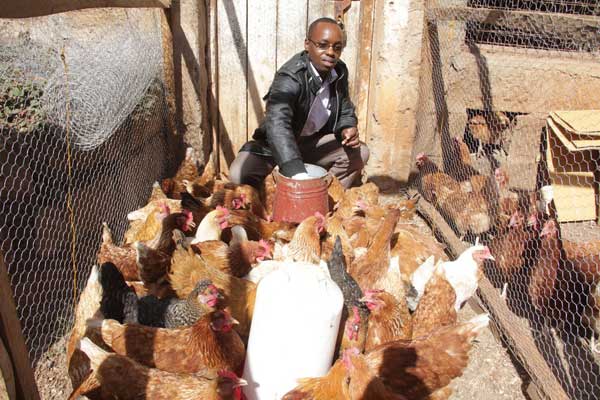
A medical doctor based at Karatina District Hospital, Wahome keeps chicken, sheep and goats, and is in the middle of setting up a dairy unit. He also plans to start rearing bulls in a year.

“When I was growing up, my school fees was paid by money from farming and so I wondered how much more it could bring in if I went large-scale.”

Wahome started in July 2013 after his medical school internship, working with this father. “So far we’ve grown our livestock from 10 to 80. We have four heifers for dairy and 120 chicken in Karatina.”

Currently Wahome gets between three to four trays or eggs a day but hopes the number will rise to five.

“If you do five trays with each tray giving you Sh300, you could make Sh1,500 in a day, which would be Sh45,000 in a month.”

How does he ensure this side hustle does not interfere with his day-time job?

“I am up by 6.30am and done with feeding and watering them in an hour. This means that I easily get to work on time. And then I leave work at 4. If anything, I have a lot of free time by the end of it.”

Ms Maryanne Mugo, a market researcher with a multinational in Nairobi, has been farming with her mother in Molo for just over a year now. Maryanne is in her late 20s.

“Molo has a lot of rain, good soil and leasing land is pretty affordable. I thought it would be good to grow my county and at the same time increase my income,” she says.

Theirs is a 50:50 joint venture.

“My mother manages the shamba very well. We put some of the profits back into the farm and save the rest because we also want to put up some buildings together.”

WORKING WITH A PARTNER

Mr Peter Keregi, 29,  is an accountant with the Kenya Forest Service in Elburgon. He lives 20 minutes away in Molo and his three-acre potato farm is an hour away in Kiptunga. He got started in June 2013, after a friend invited him to join in his venture. Keregi says that despite the loss made in the first harvest, he is optimistic.

“We invested Sh132,000 for labour, seeds and fertiliser the first time. We only made Sh40,000 from the harvest but things have been picking up since then.”

How has he kept the peace at work?

“I didn’t have to tell my boss but I did. It doesn’t take my time during the week so he does not have a problem with it anyway. I visit the farm on weekends.”

WORKING ALONE

Mr Makokha Wanjala is in his mid 30s and has been in poultry and dairy farming in Isinya and Misikhu respectively for six years.

“The main drive was making supplementary income; it occurred to me that you can make more money by farming even as you work,” he says.

Apart from nine dairy cattle Wanjala has 300 layers. His initial investment was Sh200,000 much of it going towards construction of the chicken house. He harvests six to eight trays of eggs daily and with each egg selling at Sh15, he looks kindly upon it. “On a good month, it can bring in between Sh150,000 to 200,000. My ambition is for it to triple my income.”

Currently heading the strategy and treasury unit at the Institute of Certified Accountants of Kenya, Wanjala divulges that the experience has also had its down times. “There was a time I had an infection on the farm. I was away at the time and lost 300 birds.”

He explains that a way out of the challenge of needing to be on site sometimes is establishing a chain of networks of veterinary doctors and feed suppliers. “My farm is 60 km away. But just by using the phone, I can get people to go look at the animals if a problem comes up. At the end of the day, it’s about working with people.”

Mr Ezekiel Bose is an engineer with a financial institution in Nairobi. Like Wanjala, he started out cultivating maize in Western Kenya as an additional line of income.

He is optimistic about his farming project, describing the margins as exciting. Having invested Sh54,000 the first time, he got back Sh118,000. He has been lucky not to have suffered crop failure, and he attributes this to planning. “You have to plan as much as possible. Don’t get into part-time farming on impulse or just because someone else is doing it, do your research and planning.”

Does it interfere with his work? “It does not. There’s no conflict as such. In a month you work 22 days, if you are good at planning, you work with the seven days well to monitor the farm. If you are lucky to have a good farm manager, someone who has the same vision as you but is willing to work for you, it becomes easy. If you don’t have someone trustworthy, then you can be spread thin, because farming can be quite intensive and involves monitoring.”

These youthful farmers have different tips for you if you want to start out:

“If you are getting into farming, you have to forget about your status. It involves waking early, wading through mud and getting one’s hands dirty. If you think to yourself, ‘I am a doctor’, you won’t do it,” Wahome says.

Wanjala has some advice on the financial aspect of things. “I would tell people to have a separate bank account for their side business so that they can be clear on how much they are getting. Also, seek out information from professional sources along the way.”

For Wanjala, it’s attitude. “The first person to start with is yourself; you have to vigorously believe in your own dream and be ready for setbacks.”

Mugo meanwhile puts it in one word. “Patience. In your first few months you might make a loss, but don’t give up. It is never easy.”

Keregi says getting a good, reliable farmhand is the first step to peace of mind and huge returns.

How teachers will be paid in new TSC salary system

0

Reports have emerged that the government plans to start paying teachers based on their performance. This is according to an appraisal system for public school teachers which is meant to increase performance, determine promotion and also salaries.

The new system comes in the wake of a biting strike that on Friday saw the closure of all public and private schools in the country.

According to Tuko, an online news channel, the new system will provide for specific yardsticks which each teacher will be required to attain with its trial having taken place in 5, 000 teachers in six selected counties.

Teachers Service Commission (TSC) has rolled the new system in 500 public schools in the counties of Nyeri, Uasin Gishu, Kwale, Samburu, Kitui and Kisumu.

Under the system, the teachers will be required to demonstrate that they first understand what they are teaching, the tools they use to share knowledge in class and their methods of assessing learning.

They will be expected to regularly produce records of works including lesson plans, notes, teaching aids, books, report forms or results and experiment records and test papers, among others, used during teaching.

Under the system, there are no percentage ratings or ratings based on subjective terms such as ‘good’ or ‘poor’ neither are the ratings based on a 3, 5, 7 numbered-like type scale.

There are only three standards where the teacher is either ‘at standard’, ‘transitioning to standard’ or ‘not at standard’.

The appraisal will also include support programmes as peer support, mentorship, coaching, team teaching, and in-service training for teachers who fall below the required standards.

Civil servants to get car loans at 3 per cent

0

Civil servants are now set to receive cheap car loans from as low as 3 per cent. this follows the publication of fresh regulations by the National Treasury cabinet secretary Mr. Henry Rotich unlocking Sh1 billion to finance a motor vehicle purchase scheme for civil servants.

Following this publication, the Treasury will now be able to establish the State Officers and Public Officers Car Loan Scheme Fund which will oversee the disbursement of the loans.

The fund will receive car loan applications from civil servants and process them according to set guidelines that prescribe the maximum amounts available for workers across the various cadres.

The regulations also provide for procurement of a financial institution that will disburse the car loans to civil servants once they are approved by the fund.

“The initial capital of the Fund shall be Sh1 billion appropriated by Parliament in the financial year 2014/15 and additional capital of the Fund shall be made in the subsequent financial years’ budgets,” Mr Rotich said.

Why you need to wear your mistakes proudly to succeed

0

Daniel Lubetzky found a sweet spot with consumers when he founded KIND Healthy Snacks, a line of wholesome snack products carried by Costco, Target and a slew of other major retailers. He has two funds worth over Ksh.824 billion.But like all entrepreneurs, his journey wasn’t without its struggles. In an excerpt from his new book, Do the KIND Thing: Think Boundlessly, Work Purposefully, Live Passionately, Lubetzky reflects on failure and why it’s so important to the future success of your business.

Billionaire

“When you’re building a business, you want to focus and deliver excellence at what you do. This simply cannot be done when you are launching multiple ventures, dozens of new products, and selling everywhere and anywhere at the same time.

All my mistakes from those days in the wilderness are responsible for KIND’s success today. Trying to forget or hide your mistakes is a huge error. Rather, hold them near and dear to your heart. Wear them proudly. Big failures hold better lessons than any success—-as long as you are in tune with yourself and are open to learning from them. I can trace every one of my accomplishments to earlier failures that I learned from.

I know that when you are experiencing failure, it’s pretty damn painful. It is easy in retrospect to wax poetic about it. But in the moment, you don’t think you will survive, let alone have the time to reflect on how valuable those lessons will be for you in the future. That said, this is the most important time to constructively criticize yourself and reflect on what you did wrong, as well as how you can do things differently in the future.

Even when you are succeeding, it is important that you be attuned to your mistakes and actively look for those failures. When things are going well, fast growth can hide a lot of weaknesses and deficiencies. There are companies that seem like juggernauts of excellence because they happen to be part of a fast-growing market. But when that market’s growth slows, or when they get hit by a challenge, their weak culture or lack of internal strength may bring them down. It is easy to lead and seem like a superstar when your company and your brand are taking you places. What is really worth admiring, though, is when you hit a wall and your team’s character is tested.

To build a culture of constant introspection and renewal, we at KIND encourage our team to engage in “start-up think”—-to review all practices every year, and to reinvent systems or practices on an ongoing basis if necessary. Question every decision anew, think critically. If you are failing, you are forced to do this. Let those failures invigorate you with the knowledge that, once you know what you did wrong, you can now start doing it right. You are half of the way there. If you are not failing, are you aiming high enough? At KIND we embrace the “fail fast, succeed faster” approach and welcome risk-taking and experimentation (with the qualification that we do not roll out products unless we are confident they will outperform in their category).

And if you are succeeding, do not let success get to your head. Force yourself to question assumption – to use the AND way of thinking to see if you can improve on any and every facet of what you do. Let errors inform you and keep you grounded and keep reminding you that you are neither invincible nor a genius, and that you can always do better.

Business is like the game of Risk. If you expand your armies too quickly and try to conquer land after land, you disperse your forces and leave your borders vulnerable. Enemies can then invade and defeat you. Your zeal to build an empire can lead to your demise. Similarly, when you’re launching new products, you first need to make sure you defend your original leading items—-to establish your core and continue to win on that central offering. You want each new move to be strong: Your products need to stand on their own and prevail at every store where they compete. Otherwise, if you fail with new products, you’ll also dilute your assets and expose yourself in the key areas where you had an opportunity to succeed. You’ll be deploying resources and attention that are desperately needed to maintain and grow your market share in your core.

You can expand eventually, but you need to do so only once your flagship line is well cemented—-or a competitor will come in and take away your market share. When you do expand, make sure you’re not changing the value proposition, which can confuse and scare away your existing customers. And confirm that you have enough resources to push hard. It’s a matter of playing offense and defense. Being passionate without a strategy won’t help your business.

Helios Investment makes Sh. 52.5 billion after selling Equity Bank shares

Majority of the large investors who bought out Helios Investment Partners’ 24.99 per cent stake in Equity Bank paid a 10 per cent premium on the market value of the shares, enabling the UK fund to raise up to $500 million (Sh52.5 billion) from the sale.

Equity CEO James Mwangi, who termed Helios exit as a record for sub-Saharan Africa, disclosed Thursday during an investor briefing that Helios was able to get premiums on the market price, then standing below Sh50.

Analysts had previously estimated the size of the sale at about Sh44.1 billion based on the prevailing market prices of the time the PE sold stakes to several investors.

Helios also collected dividends totalling Sh6.5 billion from Equity, taking its total return on investment to about 436 per cent on the original investment of Sh11 billion made in 2007.

“Majority of these shareholders paid a 10 per cent premium on the market price. The highest was nearly Sh52 per share,” said Mr Mwangi.
“Hopefully the market will start to load that premium on the share as well.”

Mr Mwangi also disclosed additional institutional investors who took up stakes sold by Helios, which are Investec, African Alliance and Renaissance Capital.

These are additional to the already known buyers of the Helios stake— Norfund and NorFinance, NSSF Kenya, NSSF Uganda and Genesis Investment LLP, whose investments had been disclosed earlier.

Norwegian sovereign fund Norfund and a consortium of partners under the umbrella of NorFinance were the first to conclude the purchase of a 12.5 per cent stake in April, becoming the single-largest shareholder in the bank.

Of the several institutional buyers, only NSSF Uganda and Genesis disclosed the price at which they bought their stakes.

Helios in June sold a 2.44 per cent of its stake in the bank to NSSF Uganda for Sh4.5 billion or Sh50 for each of the 90.3 million shares.

UK-based fund Genesis Investment Management also bought a 4.21 per cent stake in Equity from Helios in the same month for Sh7.3 billion or Sh47.50 for each of the 155.8 million shares. The Genesis sale was carried out through the open market at the NSE.

Loans borrowed on Equitel hit Sh. 4 billion

0

Loans borrowed from Equitel mobile money have hit Sh4 billion since its launch, underlining the vast potential of mobile banking in the country.

Equity Bank CEO James Mwangi said an average Sh5,000 is borrowed daily, with most borrowers using the ATM non–card option to access the loans.

“This is one of the reasons for the spike in transaction amounts. The service allows users to access loans 24 hours a day,” said Mr Mwangi on Thursday, “We have exceeded by far the target, and the amount disbursed has doubled in three months.”

Equitel has so far issued 1.2 million SIM cards, with transactions hitting Sh7 billion by August. The mobile money transfer is using innovative approaches to reach customers with record applications of “chama”, reminders and loan disbursements.

Mr Mwangi said that as more Kenyans pay their utility bills, pay for transport and conduct cross-mobile money transfers, 120 transactions will be carried out per client in a month.

“The transfers explain why competition is becoming stiffer. Equitel has a higher quality in terms of convenience, quality and seamlessness. We launched in June and we are attracting users daily,” said Mr Mwangi.

The update follows the Central Bank of Kenya’s intervention in a war that has seen Equity Bank and Safaricom bitterly feud over higher bank-to-M-Pesa surcharges.

Equity accused Safaricom of increasing the charges to frustrate its entry into the lucrative mobile money business through Equitel.

Safaricom’s tariffs had raised fees charged on Equitel but have since been lifted following interventions from Mr Mwangi and the CBK.

The CBK now plans to set up a payment services management board, the Payments Association of Kenya. It will draw in telcos, switch operators, aggregators, electronic-money issuers, banks and other financial services providers.

Among organisations supporting the new body is Financial Services Deepening (FSD). The head of FSD, Victor Malu, said the platform will bring “Equity Bank and Safaricom to the same table to talk about payments, inter-operability, eventually lowering the cost of transactions.”

Local company awards all employees Sh. 11 million each as bonus

0

Employees of investment firm Centum Investments of whom billionaire investor and entrepreneur Chris Kirubi is a major shareholder are smiling all the way to the bank. This is after they were awarded Sh. 11 million each as bonus payments for the past one year.

The company’s top 10 executives will on average take home a higher pay cheque of Sh34 million each. “The bonus is high because of the performance,” said Centum CEO James Mworia.

According to Centum Investment, the bonus is meant to balance the interest of shareholders and employees, who are driven to consistently match or beat the performance benchmark going forward for their cash entitlement to vest.

“It focuses the staff on performance. Everyone at Centum works like they are running their own business,” said Mr Mworia.

Centum

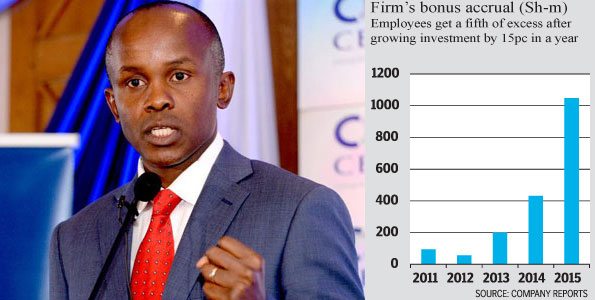
Centum says in its newly released annual report that the 142.6 per cent jump in bonus payment is attributable to the out-performance of pre-set annual benchmarks.

Centum’s board has set a target for the employees to raise shareholder funds or net assets by 15 per cent each year. The employees are entitled to 20 per cent of any return above the set benchmark, with the absolute payout also based on individual performance.

Centum’s net assets rose 39.1 per cent to Sh32 billion in the review period, beating the Sh26.4 billion target of based on the company’s performance criteria.

This created an excess of Sh5.5 billion in absolute terms, of which up to Sh1.1 billion was available for allocation to the staff.

Fuel-efficient cars: the best and the worst

0

Best fuel efficiency:

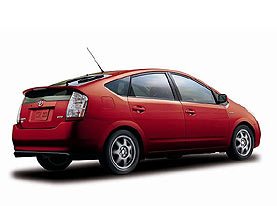
1. Toyota Prius Hybrid (48 mpg city, 45 mpg highway) —  The most popular hybrid car on the road today, this sedan is roomy and comfortable, and average on performance.

2. Honda Civic Hybrid (40/45) — The Civic has Honda’s sporty performance and handling, but is a bit lacking on acceleration. A very efficient car, but a bit small for families.

3. Nissan Altima Hybrid (36/42) — One of the largest hybrids because it’s a mid-size sedan, but rear seat room isn’t a strong point for tall passengers. However, with 198 horsepower, it is one of the quickest hybrids.

4. Ford Escape and Mazda Tribute / Mercury Mariner hybrids (34/30) — Roomy but not oversized compact SUV hybrids. Acceleration is leisurely, with only 133 horsepower.

5. Toyota Camry Hybrid (33/34) — Refined, roomy, and practical. Conservative styling and performance.

6. Toyota Yaris manual transmission (29/36) — One of the fuel-thrifty trio (with the Honda Fit and Nissan Versa) of small Japanese economy cars that arrived about a year ago. Toyota’s smallest car, but room for four 6-footers. Has a small, hardworking four-cylinder engine.

7. Toyota Yaris automatic (29/35) — Same as the manual but with less driving effort — and a little less performance.

8. Ford Escape, Mercury Mariner and Mazda Tribute hybrids with four-wheel drive (29/27) — All the benefits and drawbacks of the No. 4 models, but with traction of four-wheel drive.

9. Toyota Corolla-manual transmission (28/37) — The all-time best-seller, even topping the Ford Model T and original Volkswagen Beetle. Long-lived and a good ride, but just average handling.

10. Honda Fit-manual transmission (28/34) — Most fun of the Japanese economy-car trio. Honda’s smallest model but very space-efficient. Still, even the Honda Civic feels more substantial.

Worst fuel efficiency:

Most if not all of these models are toys for the rich. While the cliche, “If you can afford the car you can afford the gas” may apply, the environmental costs need also be considered.

1. Lamborghini Murcielago automatic (8/13) — Sensational looking sports car — with sensationally high gas costs.

2. Bugatti Veyron (8/14) — Very classy, exquisite interior, but you’ll pay for gas and insurance.

3. Lamborghini Murcielago manual (9/14) — Barely better mileage than the automatic.

4. Bentley Azure/Arnage RL (9/15) — Azure is a large four-seat convertible; Arnage is big, less sporty but also awesomely fast sedan. If you can afford either, whatever gas costs shouldn’t bother you.

5. Ferrari 612 Scaglietti automatic (9/16) — Fuel economy aside, one of Ferrari’s most-practical cars, with seating for four and a decent-size trunk. Less attractive than other Ferraris.

6. Lamborghini Gallardo Spyder manual, Ferrari 612 Scaglietti manual, Bentley Arnage automatic (10/15) — Entering the territory of the fuel economy of the biggest luxury SUVs — which is all they have in common.

7. Lamborghini Gallardo Spyder, Aston Martin DB9 Coupe and Volante and Mercedes-Benz Maybach 57, 57S, 62 and 62S (10/16) — How the “other half” lives — or drives.

8. Lamborghini Gallardo Coupe manual, Bentley Continental GT, GTC and Flying Spur automatics (10/17) — All the virtues of the above Lamborghinis –and all the vices.

9. Mercedes-Benz G55 AMG (11/13) — Any model from Mercedes’s AMG hot rod division is fast, exclusive and costly.

10. Jeep Grand Cherokee SRTS four-wheel drive (with 6.1 liter hemi) and Mercedes-Benz ML 163 AMG (11/14) — Plenty of power and SUV utility, but prohibitively expensive on gas.

Highest Fuel Economy Models by Vehicle Class

Two Seater: Audi TT Roadster (2 liter engine,auto) 22/29
Minicompact Car: Mini Cooper Convertible (manual) 23/32
Subcompact Car: Toyota Yaris (manual) 29/36
Compact Car: Honda Civic Hybrid 40/45
Midsize Car: Toyota Prius (hybrid) 48/45
Large Car: Honda Accord 4Dr Sedan (manual) 22/31
Small Station Wagon: Honda Fit (manual) 28/34
Midsize Station Wagon: Passat Wagon (manual) 21/29
Sport Utility Vehicle:
Ford Escape Hybrid FWD

Mazda Tribute Hybrid FWD
Mercury Mariner Hybrid FWD
34/30
Minivan:
Dodge Caravan 2WD
Chrysler Town & Country 2WD
17/24
Pickup Truck:
Ford Ranger Pickup 2WD (manual)

Mazda B2300 2WD (manual)
  21/26
Van: (Cargo&Passenger)
Chevrolet G1500/2500 Van 2WD

(4.3 liter engine)
GMC G1500/2500 Savana 2WD Cargo
(4.3 liter engine)
15/20