Home Blog Page 2219

Zuku slashes unlimited internet, TV and phone prices

0

Wananchi Group’s home entertainment brand, Zuku has refreshed its triple play platform with the launch of Zuku Fiber Infinite packages at reduced prices.

Dubbed “Go Infinite Life Got Better”, the new packages will enable customers to enjoy Infinite Internet, Infinite TV and Infinite Talk telephony with high internet speeds of 10Mbps, 20Mbps and 50Mbps at reduced prices of Kshs 4,099; Kshs 5,299 and 9,799 respectively.

Customers can now choose the mix of television they would like on their Triple Play.

Apart from unlimited internet, all new subscribers access over 60 free TV channels, and enjoy free Zuku to Zuku calls as well as free Wi-Fi mobility across various hotspots in Kenya.

“Zuku recognizes the dynamic and growing needs of our customers and is committed to offering tailor-made products and solutions. We are providing fast unlimited residential internet, digital television and phone services at great value,” said Wananchi Group CEO Richard Alden.

Zuku Infinite offers several advantages to customers such as working from home, streaming sports, videos, music and holding video conferences without buffering all through the month of subscription. Multiple devices can be used on the same Wi-Fi connection, providing entertainment for an entire family, Mr. Alden pointed out.

“We recognise that the market’s needs are continually evolving. It is essential therefore for Zuku Fiber to innovatively meet those needs and provide customers with quality solutions at a more affordable rate,” Mr Alden said.

He added that with the increasing demand for internet, the TV product had been packaged separately for customers who would like the option of premium TV or Asian channels. This way, the triple play package will be bundled as Internet, Phone and Edge TV having 61 channels with free-to-air and Zuku channels.

Simba Colt Motors unveil all-new Mitsubishi L200 SUT

0

Simba Corporation, has sent out yet another clear signal on its intent to lead the Kenyan automotive market with the local launch of the latest, all new Mitsubishi L200 pickup truck.

With the entry of the all-new Mitsubishi L200 single and double cab pickups, Simba Corp, through its auto sales subsidiary, Simba Colt Motors, is set to further stir the one ton pick-up market.

Cars

The local launch of the all-new Mitsubishi L200 “Ultimate Sport Utility Truck” is also part of a global market introduction programme by Mitsubishi Motor Corporation (MMC) which has a strong heritage in producing quality proven pickups.

Featuring improvements in functionality and reliability the all-new L200 Sport Utility Truck (SUT) combines the comfortable interior of a passenger car with the functionality and reliability of a pickup.

Speaking, at a ceremony marking the official launch of the Mitsubishi L200 SUT in Kenya, Head of Sales for Simba Corporation‘s Motor Division, Ameet Shroff, confirmed that the firm has laid out elaborate market penetration strategies as part of its business development efforts.

“We plan to achieve our market share targets through the delivery of quality Kenyan spec vehicles that meet the diverse needs of our customers complemented by our nationwide sales and service capability,” Shroff added.

Statistics from the Kenya Motor Industry (KMI) confirm that the one ton pickup segment remains the most active market class locally. As at 31st August this year, KMI statistics indicate that more than 4,000 pickups have been sold, easily outselling any other market class.

“The launch of the all-new Mitsubishi L200 SUT is yet another signal that we are actively pursuing a bigger slice of the lucrative one ton pickup segment. Simba Corp is well placed to capture a larger market share because of our superior service across the value chain. We offer the complete motoring package from sales to top-tier maintenance, parts, and service for all Mitsubishi models, supplemented by world-class customer care. In addition, we offer tailor made leasing and fleet management solutions for all our vehicles,” said Faruk Allibhai, Sales Manager, MMC.

The all-new L200, SUT, is also more fuel efficient, and comes fully loaded with enhanced safety features and a larger carrying capacity, thanks to its generous cargo bed. Its muscular, sleek and dynamic styling, evokes the form of a well-honed athlete and provides generous interior space, ample payload capacity, and class-leading handling.

The all-new L200 also achieves high levels of safety performance through its durable and sturdy chassis and frame structures designed to deliver quietness and ride comfort at par with a passenger car thanks to its new engine, optimization of the suspension, the strategic placement of sound insulation, absorption and vibration damping materials.

The all-new Mitsubishi L200 pickup achieves superior all-terrain performance with the choice of three modes, including 2WD for maximum fuel economy and two 4WD modes (4H and 4L) to handle different surface conditions. “Our customers have the choice of buying these vehicles outright and  through our Simba Hire Purchase or tailor made Simba Leasing programme, tagged as “pay as it suits you”, added Faruk Alibhai.

The L200, has quicker and easier steering with the shortest turning radius, thus delivering a great driving experience. Its sleek and flowing design gives it a dynamic and elegant look that also enhances its aerodynamic performance, thus contributing towards better fuel efficiency.

The all-new L200 joins the range of passenger and commercial vehicles from Mitsubishi Motor Corporation (MMC) and Mitsubishi Fuso Truck and Bus Company (MFTBC), sold and serviced locally by Simba Colt Motors.  The cars in the Simba Colt stable include the Lancer EX, ASX, Outlander, Pajero Sport, and the Pajero. The truck product family includes the legendary Canter, the formidable FH, FM and FN trucks, the FJ tipper, FJ concrete mixer and the FZ prime mover. Simba Colt also sells Mitsubishi Fuso buses ranging from 26-seater to 62-seater capacity.

The unveiling of the all-new L200 follows sustained strong sales of new vehicles since the beginning of the year. KMI statistics indicate that single cab (2wd and 4wd) pick-ups have recorded the highest sales this year – accounting for 19.29 per cent of sales. The double cabs (2wd and 4wd) have the third highest sales, at 12.28 per cent of new vehicle sales. Overall, pick –ups account for just over 30% of total industry sales for the first eight months of calendar year 2015.

KQ is most expensive flight from Kenya on key routes: see shocking price comparison

0

The following feature was first published in The Star newspaper.

Kenya Airways is losing out to rivals due to high fares even as the national carrier struggles to recover from a massive loss. Ticket prices from the airline’s hub at Nairobi’s Jomo Kenyatta International Airport to various domestic, regional and international routes remain high, giving its competitors an edge.

kenya-airways

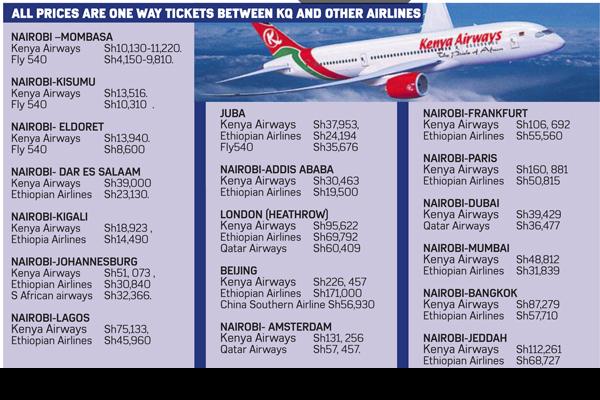
Online booking inquiries by the Star for this this week’s fares show KQ’s one way ticket from Nairobi to Mombasa (economy class) costs between Sh10,130 and Sh11,220.

A similar ticket from Nairobi to Kisumu is Sh13,516 , while Nairobi- Eldoret is Sh13,940. Local airline Fly540 is charging between Sh4,150 and Sh9,810 for the same between Nairobi and Mombasa, Sh5,270 and Sh8,600 (Nairobi-Eldoret) and Sh5,540 and Sh10,310 (Nairobi-Kisumu depending on the day and time of flight. In the regional and African market, KQ’s main competitor, Ethiopian Airlines, remains the most fairly priced.

A one-way economy class ticket from Nairobi to Dar es Salaam on KQ costs Sh39,000 compared to Ethiopian’s Sh23,130. Flying from Nairobi to Kigali will cost you Sh18,923 for an economy ticket while Ethiopian airlines will take you there for Sh14,490, a price that has seen its economy tickets sold out for the next two weeks. On the Nairobi-Johannesburg route, KQ is charging Sh51,073 compared to Ethiopian’s Sh30,840 for a one way economy class ticket.

South African airways is charging Sh32,366. Nairobi-Lagos is Sh75,133 (KQ) and Sh45,960 (Ethiopian Airlines). “I had to choose Ethiopian airlines on many occasions due to your prohibitive fares,” Tony Mwangi, a passenger told KQ on its Facebook page on August 17. Kenya Airways has also continued to face stiff competition in the European market (Kenya’s leading tourism market source), Asia and the Far East.

Apart from Ethiopian and South African, leading players such as Emirates, Qatar and Etihad have not only eaten into KQ’s market share, but dominate the routes. This week, KQ is flying to London (Heathrow) at Sh95,622 (one way economy) compared to Ethiopian’s Sh69,792 and Qatar Airways Sh60,409. Nairobi-Dubai one way ticket is averaged at Sh39,429 compared to Sh36,477 for Qatar airways. Beijing-China is Sh226,457 on KQ compared to Sh171,000 on Ethiopian Airlines and Sh56,930 on the recently introduced China Southern Airlines.

Other prices are Amsterdam at Sh131,256 (KQ) against Sh57,457 on Qatar Airways. Paris is Sh160,881 on KQ against Sh50,815 for Ethiopian Airlines. Consumer Federation of Kenya secretary general Stephen Mutoro yesterday said Kenya Airways has overpriced itself despite low quality services and delays compared to other airlines.

“They need to align themselves with the market or even offer slightly lower prices. They are losing to other airlines who are offering even better services at low prices,” said Mutoro. Kenya Association of Tour Operators said high prices have a negative impact especially on regional and domestic tourism.

“People will definitely look at other airlines offering cheaper packages,” said KATO managing director Fred Kaigwa. Kenya Airways head of corporate communication Wanjiku Mugo however argued that the airline’s prices are not high, compared to the services offered and time taken to reach various destinations unlike other airlines that have many stopovers.

“It depends on what you want. If you want value for your time, our prices are not high but if time is not of any essence then you are free to book from our competitors. We always ask our customers to do early bookings to get fair prices,” said Mugo on phone.

While the airline’s management blames competition and a slump in tourism for the loss, analysts, government and investors have pointed out several issues which include pricing and management. The cash-strapped airline has since turned to debt for recovery after posting a Sh29.7 billion pre-tax loss in the 2014/15 financial year.

Start-ups biggest winners as Companies Bill 2015 is signed into law

0

The Companies Bill 2015 has been signed into law, replacing the Companies Act Schapter 486 of the Laws of Kenya.

The new laws were signed by President Uhuru Kenyatta earlier this week and are aimed at revolutionalizing business in the country by getting rid of pre-existing laws that have been a hindrance in successful business operations within the country.

The new law codifies common law principles – in particular, the indoor management rule and common law fiduciary duties of directors.

Along with this, it modernizes company law by recognising electronic communication and the use of websites and other electronic avenues for a company’s communications. The new Act has also increased the penalties and fines for offences relating to companies.

Interestingly, start-ups falling under the ‘small company’ regime appear to be the biggest gainers under this new Act as they will be able to easily set-up shop, identify, protect and commercialize their IP assets within fairly wide monetary thresholds paving the way for growth.

Private school in Nairobi sold for Sh. 3.6 billion

0

Brookhouse International School has been sold to Educas, a United Kingdom-based private equity fund, for Sh3.6 billion.

The school was the venue of Kenya’s first ever presidential debates that featured eight candidates ahead of the 2013 general elections.

Founded by Piyush Mehta and co-owned by PE Firm AfricInvest, the school raked in some Sh. 900 million for the Mehta family, Sh. 1 billion for Victoria Bank and Sh. 720 million for the family of its managing director Yogesh Pattni.

The school’s founder Piyush Mehta, sold a 25 per cent stake in the institution, and Victoria Bank sold a 20 per cent.

With fees ranging from sh 200,000 to 900,000 per term, Brookhouse is one of the most elite schools in the country.

AfricInvest was part of a consortium of investors that acquired a combined 75 per cent stake in Brookhouse from the Mehta family in 2010.

How to use stockbrokers’ reports on buy or sell recommendations

The following opinion feature by investment expert Rufus Mwanyasi was first published in the Business Daily.

Anyone who has an investment account with a broker must have received a stockbrokerage research report recommending stocks for either buy or sell.

Brokerages, who make enormous investments in collecting, analysing and publishing research for consumption by the investment community, often use the reports as a value addition tool to boost their businesses.

However, persistent evidence shows that most broker recommendations exhibit a poor track record of picking stocks. In this article, I attempt to identify the conflict of interest and challenges faced by research analysts and how ordinary investors can make use of research reports.

To start with, forecasting stock returns a year or two in advance is exceedingly difficult. Often, failing to foresee one big event such as this year’s rapid weakening of the shilling can render research reports completely useless.

Of course, research analysts try to do better by using complex models to forecast currency rates, earnings growth, price/earnings ratios and other market-driving factors.

However, despite the effort put into the exercise, forecasting the stock market is extremely difficult, if not impossible. For this reason, rather than invest based on research report recommendations, most investors are better off sticking with their usual allocations and, for planning purpose, to assume that stocks over the long run will rise at their usual pace.

Secondly, most broker recommendations have historically exhibited a ‘buy’ bias. This is because most sell-side research analysts who work for brokerage houses which often have strong investment banking franchises create a potential conflict of interest when their employers act as investment bankers to the companies they cover.

A common practice is for equity analysts to initiate coverage of a company in order to develop relationships that lead to highly profitable investment banking business.

Thirdly, analysts are also subject to the behavioural bias known as “herding” in the sense that they release recommendations that are seemingly highly correlated.

Lastly, the way brokerage houses are compensated creates a need to advise clients to trade frequently.

Brokers are paid via trading commissions based on transactions and so, the more transactions, the more money they make. Therefore, it’s possible such an inclination filters through their reports to get clients to trade more frequently than necessary.

So how does one make use of research reports? The best way to use broker research is to focus on what seems to add value. Investors ought to give more weight to changes in recommendations rather than the recommendations themselves.

They should also focus on using the research to understand the overall industry and the current operating environment.

In other words, investors are better off focusing on the educational value of these reports as opposed to their advisory value.

Moreover, investors ought to recognise that broker reports are used for a multitude of purposes and in particular, to make money for the firm producing them.

Finally, they should also pay attention to revised forecasts and reasons given for the revision.

Review & Specs: 2014 Toyota Probox and Succeed

0

The Toyota Probox and Succeed come 12 year after the first generations arrived on the scene in Japan and bring a host of new features. The models are based on the same platform and are powered by 1.5-liter DOHC four-cylinder engines with CVT gearboxes as standard, which replaces both the 4-speed auto and the 5-speed manual of the older models. Either front- or all-wheel drive is fitted, but the cheaper PROBOX also comes with a small 1.3-liter engine. Toyota has also updated the suspension, adding a trailing link axle at the back, the brakes and stability control.

All engines come with start / stop technology to make them cheap to run and tax, but output varies between 95 and 109 hp, depending on the setup chosen.
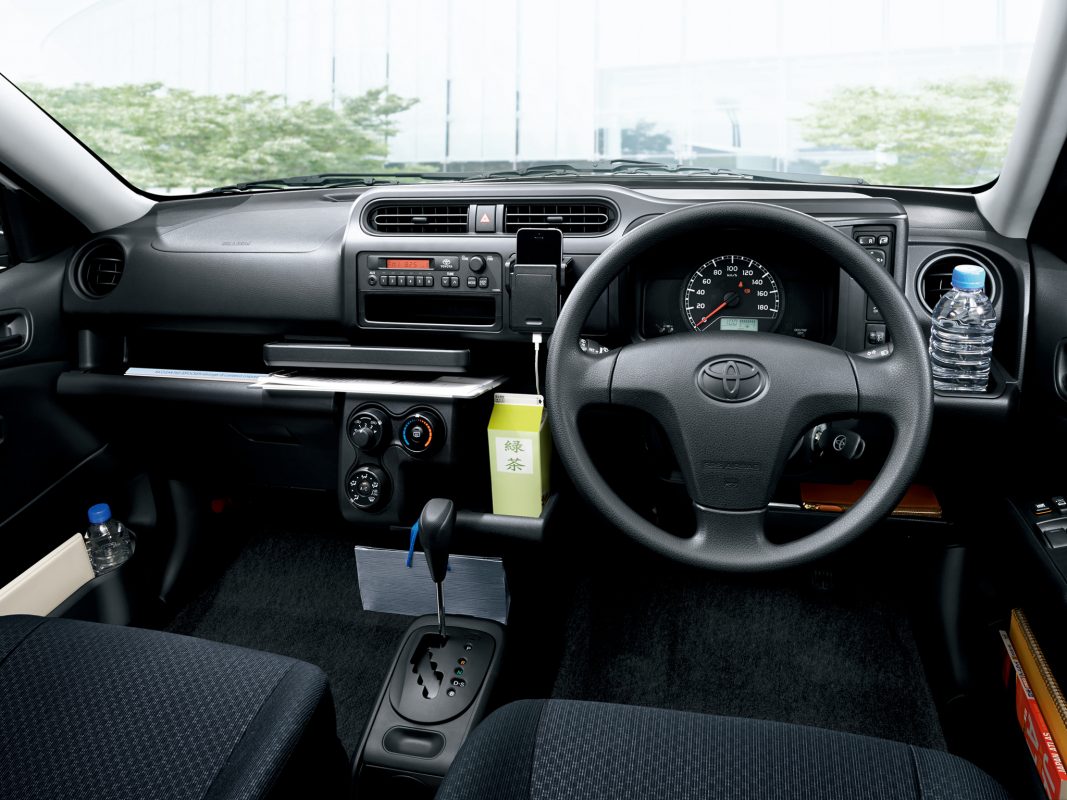
CarsThe cabin is dotted with storage spaces and the central cup holder can even take a 1-liter square milk box. The front seats of this these 5-door minivan can recline by up to 76 degrees and the rear ones fold flat to create a bigger bay.

Toyota Probox Van GL CVT 1.3 (2014)

Sale from 2014/ 9
Model Code DBE-NSP160V-EXXGK
MSRP (JPY) 1,425,600
Displacement(cc) 1329
Fuel Type Gasoline
Transmission CVT

Basic Specification

Drive System Front Steering Right
Doors 5 Wheel Base (mm) 2550
Riding Capacity (Person) 5 Tires Front Tread (mm) 1485
Weight (kg) 1090 Tires Rear Tread (mm) 1465
Length (mm) 4245 Ground Clearance (mm) 140
Width (mm) 1690 Minimum Turning Radius (m) 4.9
Height (mm) 1525

Engine Specification

Engine Model 1NR-FE Puissance maxi tr/mn (kW[ps]/rpm) 70[95]/6000
CylinderConfig Line Engine4Moteur Couple maxi (Nm[kg-m]/rpm) 121[12.3]/4000
Supercharger DOHC

Mitsubishi Outlander Aspire diesel vs Toyota Rav4 Cruiser diesel

0

Toyota RAV4 Cruiser AWD diesel: 2.2-litre 4cyl turbo diesel; 110kW/340Nm; 6-sp automatic; AWD; 6.5L/100km and 172g/km CO2.

Mitsubishi Outlander Aspire diesel: 2.2-litre 4cyl turbo diesel; 110kW/360Nm; 6-sp automatic; AWD; 5.8L/100km and 153g/km CO2.

Inside

Toyota: The Toyota has a funky faux carbon-fibre effect that is at least a decade trendier than the “woodprint access veneer” used by Mitsubishi. Toyota’s sculpted dashboard has leather accented by white-top stitching along with an interesting use of contrasting materials. RAV4’s seats and driving position are better, and the tilt-and-slide moon roof gives it an extra edge over Mitsubishi.

Mitsubishi: Outlander’s outdated woodpanel doesn’t gel with the “active lifestyle” image attached to modern SUVs. The upright dash is quite stark, though the widescreen infotainment suite and punchy nine-speaker Rockford Fosgate stereo are pleasant features. Our car also had some niggling rattles.

Winner: Toyota

Under the bonnet

Toyota: The RAV4 returns 6.5L/100km fuel use in diesel automatic form, which is above average for its class. Unlike Mitsubishi, Toyota offers a manual option for its diesel SUV which returns a commendable 5.6L/100km. While it sounds dull, the engine is relatively refined for a diesel SUV and while the RAV4 lacks shift paddles, its sporty auto will “blip” down through gears to help smooth shifts.

Mitsubishi: The Outlander has 20Nm more torque and uses 11 per cent less fuel than the RAV4, which makes it a better engine on paper. In real life the difference between the two isn’t as great, mainly because the Outlander loses marks for its lack of refinement in some situations. The six-speed auto – generally a well-sorted transmission with cool column-mounted metal shift paddles – often lets the engine revs drop unnaturally low, which can send a noticeable vibration through the car.

Winner: Mitsubishi

On the road

Toyota: The RAV4 is slightly taller and wider than the Outlander, yet manages to feel more secure on the road thanks to firmer suspension that keeps the body sitting flatter. The trade-off is a firmer ride, but it’s far from bone-jarring and generally does a good job of absorbing bumps on its inch-smaller tyres. The Toyota’s heavier steering is also inviting for enthusiastic drivers.

Mitsubishi: The Outlander is lighter by 50kg and has a small torque advantage, helping it feel lighter on its feet than the RAV4. But the softer suspension is sloppier through corners and feels nose-heavy when pushed. Mitsubishi’s all-wheel-drive transmission is a reactive system – it’s predominantly front-wheel-drive until the car senses slip, so in some situations it can chirp the front wheels as it struggles for traction before the rear wheels kick in.

Winner: Toyota

Practicality

Toyota: Unlike previous models, the new RAV4 has a roof-hinged tailgate that makes for easier access to the cargo area, which is 100 litres larger than that of the Outlander. Disappointingly for a four-wheel-drive SUV, Toyota equips the car with a space-saver and charges for a full-size spare that robs more than 60 litres of storage space from the boot. The cargo blind and small item netting is handy, as is a small amount of underfloor storage. Tiny 550kg tow capacity limits usefulness; Toyota is working on increasing it.

Mitsubishi: The Mitsubishi’s trump card here is seven-seat versatility thanks to a pair of extra seats in the boot. The second and third rows fold flat to reveal a flat load area which we put to the test on a trip to buy a single mattress. Access to the load area is through a powered tailgate; a welcome feature for parents, shoppers and the vertically challenged. The cargo area is protected by a retractable blind, though the boot-mounted subwoofer can get in the way of goods. Outlander gets a more useful 2000kg tow capacity.

Winner: Mitsubishi

Verdict

Toyota: It’s not perfect but the RAV4 is a big improvement and a better car, making it the winner of this comparison, with an above-average driving experience and stylish interior.

Mitsubishi: The Outlander offers strong value and a frugal diesel engine, and its seven seats could seal the deal for prospective buyers. But it’s let down by average dynamics and an uninspiring cabin.

Winner: Toyota

The easy way to know your cow’s weight without using a weighing scale

0

The following feature was first published in the Seeds of Gold magazine.

The most reliable information about the weight of an animal is obtained by the use of a weighing scale.

A good weighing scale for cattle will cost you about Sh210,000, which is out of reach for most small-scale farmers.

Fortunately for the purposes of drug administration, the body weight of an animal should be estimated accurately to within 20 per cent of their true weight.

This gives room for safe weight estimation.

Most seasoned animal health practitioners are able to estimate the weight by observation and using the known average by age of a given breed. The guide is as given in the table right.

However, the weight band is an alternative way of accurately estimating the body weight of an animal. It exploits the high correlation between the circumference of the chest and body weight. With the right amount of tension on the tape, one will get within 5 per cent of the real weight. Commercially available bands have the weights printed on them.

In the absence of a weight band, an ordinary 3 metres tape measure is used.

This tape gives the circumference measurements in centimetres which are then converted to kilogramme using a conversion table.

For example:

135cm = 214kg

182cm = 500kg

When taking measurements, the band/tape is placed just behind the front legs under the body behind the elbow and all the way around to the point behind the shoulder blade.

It is important to note that the information acquired using these two methods is less accurate than the one obtained by the weighing.

Your most comprehensive guide on all chicken feed ingredients

The following guide was first published in the magazine Seeds of Gold by Sophie Miyumo.

Feeds account for about 60 to 70 per cent of the total cost of producing eggs or meat from poultry.

Of the total feed cost, about 95 per cent is used to meet energy and protein requirements, 3 per cent for major mineral, trace mineral and vitamin requirements, and 2 per cent for various feed additives.

The ingredients should be selected based on the nutrients they can provide, the absence of anti-nutritional or toxic factors, their palatability or effect on voluntary feed intake, and cost. It is also important to know which feed ingredients are needed and how they should be used in poultry diets.

These diets are formulated from a mixture of ingredients, which are assembled on a least-cost basis, taking into consideration their nutrient contents as well as their unit prices.

ENERGY SOURCES

Cereal grains: They contribute greatly in meeting the energy requirements of birds. Their quality depends on seasonal and storage conditions. Poor growing or storage conditions can lead to grains with a lower than expected energy content or contamination with mycotoxins or toxin-producing organisms.

Environmental factors also affect the nutrient content in grains and the digestibility of nutrients contained in an ingredient. Although the amounts and types of cereal grains included in poultry diets will depend largely on their current costs relative to their nutritive values, care must be taken to avoid making large changes to the cereal component of diets, as sudden changes can cause digestive upsets that may reduce productivity and pre-dispose the birds to diseases.

Maize is an excellent feed ingredient for both meat and egg laying birds and is extensively used as an energy source. It is high in energy but low in protein.

The available protein in maize is of poor quality because it is deficient in both tryptophan and lysine, hence the need to provide supplemental amino acids.

Most hybrid varieties tend to produce grain of lower protein content than the old open-pollinated varieties. Yellow maize has higher protein content and contains yellow pigmentation that helps in producing yellow egg yolks and yellow-fleshed broilers.

The other energy source that meets most of the same criteria as maize is low-tannin sorghum. Sorghum can be grown in low-rainfall areas and is a popular crop in hot, drought-prone regions.

The high tannin content of many older sorghum varieties limits their use in poultry diets, but low tannin varieties are now available and can be used in poultry diets without any limitation. The energy value of low-tannin sorghum is 90 to 95 per cent that of maize.

Millet also resembles maize in energy content but has considerably higher protein content.

When milled, it is an excellent constituent in poultry diets, with similar feeding value to barley and it promotes the production of white fat.

However, the cereal is prone to infection by fungus in the dry season, which can produce toxins that are dangerous to both human and poultry.

Wheat is also an energy source with a slightly lower energy content than maize but higher in protein content.

Wheat is very glutinous and if fed in a ground condition, it should be limited to 30 per cent of the diet. Higher levels are possible if the wheat is fed whole.

Barley, on the other hand, has a protein content of 10 per cent and a fibre content of seven per cent in grain form, which makes it an unsuitable ingredient for inclusion in diets for highly productive laying birds and broilers, especially under hot climate conditions.

However, using hydroponics to produce barley improves the nutritive value by increasing the protein content to 16 per cent with lower fibre content of 1 percent. Barley in grain form could, however, be used in broiler breeders where the desire is to reduce feed intake.

Rice is a valuable ingredient since it is high in starch and low in oil but the threshed one has a thick, fibrous husk that contains 20 per cent silica and in this form, it can cause adverse effects on poultry performance.

Cereal by-products: These are typically high in fibre, which is poorly utilised in poultry and is low in energy. Manufacturers of maize meal usually produce maize by-product called ‘hominy chop’ that comprises of maize bran, maize germ and parts of the seeds. It is slightly lower in energy than whole maize but it is higher in protein and fibre content.

Maize bran, on the other hand, consists of the outer coating of the maize seeds. It contains 15 per cent fibre and is low in energy. It is not a suitable ingredient for inclusion in the diet of high-producing broilers and layers.

Wheat bran consists almost entirely of the coarse outer coating of the wheat seed. It contains about 10 per cent fibre, which limits its value for poultry feeds, but the protein of the bran is of better quality than that of wheat or maize. It is rich in phosphorus, which is one of the highest of all common feed ingredients.

Rice bran is a by-product of rice and is high in fibre and oil. If poorly stored, the high oil content is likely to make it go bad. It probably should not be added in poultry diets at levels above 20 per cent of the total ration.

Wheat pollard consists of fine wheat bran mixed in varying proportions with wheat meal. A good quality pollard should consist of 50 per cent bran and 50 per cent wheat meal. It is appreciably more digestible than wheat bran and has lower fibre content and relatively high protein content of 14-16 per cent.

Brewers dried grains is normally a by-product of barley but those from sorghum have a similar composition. The protein content is about 20 per cent and the fibre content 14 per cent. The high fibre content means that they are of limited value to poultry.

Molasses is also considered an energy source, however, it is unsuitable for poultry but can be used in limited levels of not more than 2 per cent of the diet because it causes diarrhoea and wet droppings and sticks to birds’ feathers.

Roots and tubers: These are not recommended as an ingredient in poultry diets because of the low dry matter and the presence of glucosides. Ensure that the tubers are chopped into thin slices and left in the sun to dry to reduce the moisture content from 65 per cent to 14 per cent, as well as they release cyanide, reducing it to acceptable levels.

The dried tubers can then be milled and introduced to poultry diets. However, they have low protein content and a balance of amino acids very different to that required by poultry.

PROTEIN SOURCES

Plant protein: These sources usually come as meal or cake, the by-product of oilseed crops. After the oil is extracted, the remaining residue is used as feed ingredient. Oilseed meals make up 20-25 per cent of a poultry diet.

Soybean is the most suitable plant protein source for poultry diets because relative to other oil seed meals, the protein content has a good balance of essential amino acids, which can complement most cereal-based diets.

Raw soybeans contain several anti-nutritional factors, including protein inhibitors, which can negatively affect digestion and the bird’s performance.

However, these inhibitors are destroyed by heat during the extraction of oil from the seeds.

Groundnut meal obtained from de-husked groundnut is suitable as a poultry feed because of its low fibre content.

The quality of protein of groundnut meal is good, ranking close to that of soya bean meal. Its major disadvantage is that the meal is often contaminated with aflatoxins.

Cottonseed meal is rarely used in poultry diets because of gossypol substance, which is poisonous to birds as it may cause anaemia, diarrhoea and eventually paralysis.

Proper processing of cottonseed during oil extraction ensures the heat changes the gossypol to ‘bound gossypol’, which is less poisonous.

A good quality cottonseed meal is light yellow and has a sharp nutty smell. A dark colour indicates that it contains a high percentage of shells and fibre.

Ensure you limit the inclusion of cottonseed meal in poultry diets to 10 per cent. If the ration of layers has more than about 5 per cent cottonseed meal, the yolks of the eggs develop an olive green or brown colour, which tends to affect egg quality.

In addition, the cottonseed meal should be limited to 2 per cent in the diet of the breeding flock since the gossypol substance can adversely affect the hatchability of fertilised eggs.

Sunflower meal is highly palatable and has a longer shelf-life. Those obtained from de-husked seeds are the best due to reduced fibre content allowing extensive usage in high-performing birds.

Also note that when it is overheated during the extraction processes, an essential amino acid, lysine, is destroyed.

Linseed meal does not effectively supplement the protein of maize or other grain in poultry diets. However, it is rich in phosphorus and has fair level of calcium but it should not exceed 3 to 5 per cent of the poultry diet since it is likely to depress growth and cause diarrhoea.

Alfalfa meal is also used extensively because of the high carotenoids but the inclusion level should be limited to 10 per cent.

Animal protein: Animal protein meals provide a good source of essential amino acids (like lysine and methionine) and are also good sources of energy and minerals, particularly calcium and phosphorus.

However, there can be significant variation in availability (absorption and retention) of amino acids due to the day-to-day difference in inputs as well as processing conditions (temperature, moisture, pressure and time).

The variation within processing plants can often be greater than that between plants. It is important for users to establish strict criteria as to the quality of product and work with their suppliers to ensure quality is met.

Fishmeal is high quality protein feed ingredient rich in all the essential amino acids, Vitamin B12 and choline. It is also a good source of calcium, phosphorus and riboflavin. When stored in hot climate, it can deteriorate in quality and should, therefore, be protected by the addition of an antioxidant.

High inclusion rates, above 10 per cent, may affect poultry meat and eggs, especially if low quality fishmeal is used.

Meat and bone meal is usually made from carcasses of animals that die on the farm, but not from diseases that are likely to be transferred to poultry.

The whole animal, except the skin and hooves, is cut up, cooked, dried, and then ground to form a meal. The quality will depend on the relative proportions and bone in sample but generally the meal is a good source of essential amino acids and minerals.

It requires addition of an antioxidant to prevent deterioration. It should be noted that if the meat and bone meal is outsourced, ensure it is from a safe source to prevent transfer of diseases.

Feather meal is also used as a protein source, however, care must be taken to prevent the dangers of infecting birds with diseases, particularly those caused by salmonella bacteria but this may be controlled through proper processing of feathers in steam and grinding the product.