

Home Blog Page 2220

Vacancies: Industrial & Commercial Development Corporation (ICDC) Job Opportunities, Application Deadline 25th September 2015

0

The Industrial & Commercial Development Corporation (ICDC) is a State Corporation established in 1954 to promote the economic development of Kenya through supporting the establishment and growth of industrial and commercial enterprises.

The Corporation has ambitious plans to become a high-performance public entity that will contribute meaningfully to the economic development of Kenya.

As part of our strategic realignment we believe that attracting and retaining the right people is essential to the realization of our corporate goals.

ICDC therefore invites applications from qualified professionals for the following positions:-

1. Job Title: Internal Auditor

Role Purpose: Reviewing and evaluating internal controls and operations in order to provide assurance on their efficiency in safeguarding assets, meeting corporation’s objectives and ensuring reliability of financial reports.

Duties & Responsibilities

• Collecting and accurately analyzing data and preparing quality audit reports.
• Conducting follow-up audits and monitor management interventions.
• Undertaking a detailed examination and evaluation of the adequacy and effectiveness of financial and operational controls.
• Undertaking audit procedures to ascertain the correctness and validity of financial and operational information in accordance with regulatory requirements
• Carrying out audit procedures to ascertain efficient and effective utilization of the corporation’s assets in pursuit of corporate objectives
• Evaluating the effectiveness of the corporation’s risk management framework.
• Reviewing ICT existing processes to help ensure they consider the threats posed in the corporation and carrying out a topdown risk assessment around the cyber-security processes
• Assessing third party service and technology providers to confirm the extent to which current risks have been mitigated.
• Participating in internal audit scope and development of annual plans

Job Requirements

Qualifications

• Bachelor’s degree in a business related field from a recognized University.
• Certified Public Accountant.
• CISA – (Certified Information System Auditor)
• At least five (5) years’ relevant experience three (3) of which must be in a similar position.

Skills

• Good interpersonal, and communication skills
• Team player
• Ability to work under pressure and meet deadlines

2. Job Title: Principal Treasury Accountant

Role Purpose: To manage the Corporation’s liquidity, co-ordinate raising of funds from the market and ensuring that all controls around cash are effective.

Duties & Responsibilities

• Develop strategies for raising capital to finance various investment projects.
• Manage all borrowings.
• Ensure the maintenance of a proper record of all fixed deposits and other investments in the money market.
• Ensuring that all standing orders and direct credits/debits in the bank statements are accounted for in the books.
• Checking the daily cash summaries and ensuring that all receipts are properly captured and banked.
• Managing the office cash float.
• Check the bank reconciliations for all bank accounts.
• Prepare monthly, quarterly and semi- annual cash flow projections.
• Ensuring the proper maintenance of tenants’ accounts and issuing the monthly rental demand notes.
• Ensuring that staff loan accounts are properly maintained.
• Ensuring that all information necessary for the production of various sub system reports is received and processed on timely basis.
• Processing the payroll
• Ensuring that the monthly PAYE, NSSF, NHIF, VAT, Withholding Tax and all other statutory returns are filled on time.
• Ensuring that the annual Corporation Tax, PAYE, VAT and other statutory returns are filled by the due dates.

Job Requirements

Qualifications

• University graduate with Bachelor of Commerce degree accounting option or equivalent. Certified Public Accountant
• At least seven (7) years’ working experience of which four (4) should have been in a similar position.

Skills

• Good interpersonal, and communication skills
• Team player
• Ability to work under pressure and meet deadlines

3. Job Title: Project Officers / Analysts

Role Purpose: To identify and evaluate Investment proposals for ICDC

Duties & Responsibilities

• To develop a deal pipeline for the Corporation in the chosen sectors of focus for investment purposes
• To vet and appraise investment proposals for funding.
• To assess and report all risks or problems relating to projects under appraisal.
• Promote sound risk management and ethical standards.
• To ensure continuous improvement of the quality and value of services provided to ICDC’s customers
• Ensure that investments are made within stipulated Policy guidelines and established approval levels.
• To closely monitor projects implementation to successful completion and provide project update reports periodically.
• Prepare periodic portfolio analysis reports to management and the Board as required.

Job Requirements

Qualifications

• Bachelor’s Degree in a business-related field from a recognized University
• Certified Financial Analyst (CFA) Certified Public Accountant CPA (K) or ACCA (UK) qualifications will be an added advantage.
• At least four (4) years’ relevant experience, of which two (2) should be in a similar position in a financial institution.

Skills

• Excellent financial modelling and report writing skills
• Excellent business acumen
• Good interpersonal, and communication skills
• Team player
• Ability to work under pressure and meet deadlines

How to Apply

Applicants are required to submit an application letter which indicates current remuneration and day time telephone contacts accompanied with a detailed CV and copies of relevant certificates and testimonials to:

HR & Adm. Manager
P. O. Box 45519 – 00100
Nairobi

Only shortlisted candidates will be contacted for interview.

ICDC is an equal opportunity employer which strives to achieve overall balance in its staffing patterns. Women and persons with disabilities are strongly encouraged to apply.

All applications should be received on or before 25th September, 2015
Drug lord who lost $2.1 billion each year – and felt like they were peanuts

0

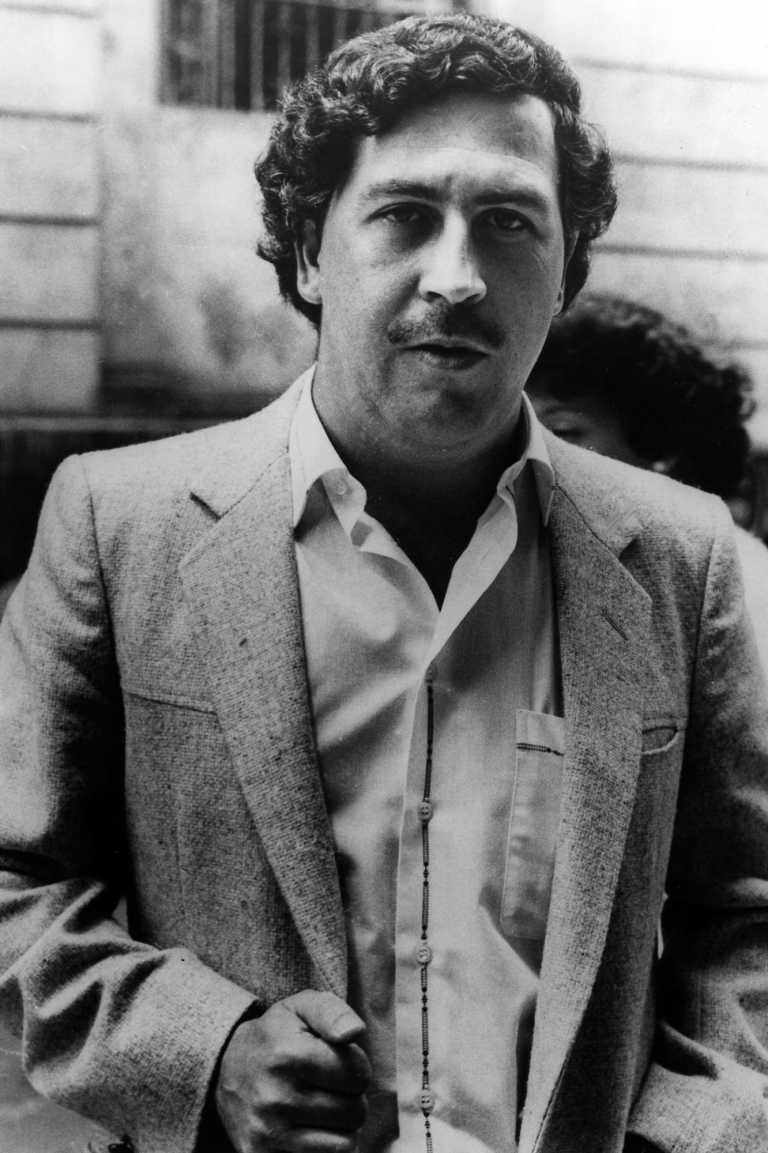
At the peak of his power, infamous Medellín cartel boss Pablo Escobar brought in an estimated $420 million a week in revenue, easily making him one of the wealthiest drug lords in history.

Escobar, known as the “king of cocaine,” saw his wealth grow so immense that he stashed piles of cash in Colombian farming fields, dilapidated warehouses, and in the walls of cartel members’ homes, according to Roberto Escobar, the cartel’s chief accountant and the kingpin’s brother, in his book, “The Accountant’s Story: Inside the violent world of the Medellín cartel.”

“Pablo was earning so much that each year we would write off 10% of the money because the rats would eat it in storage or it would be damaged by water or lost,” Escobar wrote.

That would be about $2.1 billion, given how much money he was reportedly making.

Escobar simply had more money than he knew to do with, and therefore haphazardly losing money to rodents and mold wasn’t an issue.

In a 2009 interview with Don Juan magazine, Escobar’s only son, Juan Pablo Escobar — who has since changed his name to Sebastian Marroqui­n — claimed that his father once torched $2 million in crisp banknotes in order to keep his family warm while they were on the run.

While hiding or destroying the exorbitant amount of money was one issue, the brothers faced another much more elementary problem — neatly organizing the banknotes.

According to Roberto Escobar, the cartel spent an estimated $2,500 a month on rubber bands needed to hold stacks of bills together.

At the height of his power, Pablo Escobar’s cartel supplied 80% of the world’s cocaine and smuggled 15 tons of cocaine into the US per day.

7 questions to determine your money’s health

0


  • What have you learned about money so far this year? 
  • If you have empowered yourself by gaining new knowledge you will be in a better position. If you did not spend time gaining new knowledge, how did you expect to get wealthier?  New information unlocks a different way of thinking that leads to a different set of actions and habits that change our financial lives.
  • Have you had at least three conversations with people who have created wealth and are ahead of you in this journey?
  • This question is closely linked to the one above but the conversation element is extremely important. If your conversations have been the same with the same group of people, you will not be empowered. A person who has not walked the journey ahead of you cannot teach you anything. The only person who can tell you why that business idea or investment will work or not work is the person who has experienced it.
  • Have you spent less than you’ve earned so far? Figuring this out is easy.
  • Are your savings and investment balances greater than they were last year and by how much? If not, it means you spent all your money. If all you have to show for it is a nicer car, home furnishings, holidays and phones, you have failed this particular test. You cannot create wealth if this equation is out of balance. However, if you have a bigger savings balance, more investments, etc., then you have made progress.
  • Are you earning more than you were a year ago?  Most of us are definitely spending more than we were a year ago.
  • Rising expenses are not a surprise. We all know inflationary pressure will affect even basic needs. My challenge is this: have you done anything to create additional income for yourself? Did you perform better at work and get an increase or bonus?  Did you spend your spare time pursuing something that will generate income? Did you grow your business?  Did you get returns on investment? This question is not about whether your employer paid you more. Great if they did, but if not, what did you resolve to do to earn more income?
  • Do you have less consumer debt than you did a year ago?
  • Consumer debt is debt on lifestyle expenses such as credit cards, school fees, car loans, personal loans, etc., and debt that has not resulted in additional investment value. If your consumer debt is not less, it means that either the cycle of bad borrowing continued or you did not make additional effort to pay this debt quickly.
  • Have you reviewed you goals this year? What have you found out
  • I know many people voiced their financial resolutions and fewer put them down on paper.  Even fewer took action and fewer still monitored and reviewed their goals continuously. If you are not looking at it, thinking about it, doing the research and taking continuous action, it is never going to happen.
  • Do you know how much you are worth right now?
  • We will never know if we are growing financially if we do not keep track of what we are worth financially.  If you did not immediately know the answer to this then you are not keenly watching the value of your assets versus liabilities. Your financial value is the difference between the two. It gets better when your assets grow and/or your liabilities reduce.

20 easy steps to become a millionaire

0

While you may be looking to make your first million off of your business alone, the fact of the matter is that becoming a millionaire does not just come about by raking in profits from your business.

It arises from the decisions that you make in your day-to-day life as well.

There are more millionaires than ever nowadays, and it’s not because the financial market is good; in fact, it is pretty common knowledge that the economy has definitely seen better days, and the people able to find success in it know how to act accordingly. To become the next millionaire, you will need to blend business practices with responsible financial decisions in order to both maximize profits and squirrel away some cash for the winter.

Even though this is easier said than done, the things that you have to do to become the next millionaire are theoretically fairly easy.

1. Buy the things you need rather than the things you want.

Even though one of the reasons people strive to become millionaires is to be able to afford the things that they want to do, living in a house far too big for your needs or shelling out on a vehicle more luxurious than you require is going to set you back in your goals.

2. Spend less than you earn.
This is saving money and accruing wealth 101, but even old advice can be good advice, and such is the case with this.

3. Make sure that you can pay off the things that you buy.
And the quicker you can pay them off, the better! This will enable you to search for a job that you love and will therefore be more conducive to putting you closer to your goals.

4. Exercise patience.
It may be really tempting to up your quality of living or your lifestyle expectations as you begin accruing more money and assets to make you into a millionaire, but you will not reach your goal by taking some out of the pot.

5. Utilize automatic paycheck deductions.
You cannot spend what you do not have, so having these set up with your bank is going to help you save money better than many other tactics will.

6. Pay off your credit cards every month.
Having a good credit score is always a strong financial situation to be in, but making sure that you can afford what you are spending is even better when you are trying to become a millionaire.

7. Use time to your advantage.
The quicker you start saving, the better. If you begin saving in your twenties or thirties, you will be able to take advantage of compounding interest and put yourself in a better position without having to do much extra work.

8. Realize that money doesn’t buy happiness.
When you are working for a wholesome goal instead of a ploy to satisfy material urges, your goals will come to you faster and easier.

9. Realize that ‘life happens.’
Having a bit of money on the side separate from your millionaire fund will keep you on a steady track toward that goal; after all, you never know when a financial emergency will rear its ugly head.

10. Focus on being debt-free.
Even if you have income coming in every month, if you have any sort of debt, you need to be deducting that from your gain — if it comes out negative, you are not financially free, and will not be able to achieve your millionaire dreams yet. In order to be the next millionaire, you have to make sure that your debts are all paid.

11. Work hard and diligently.
If you keep putting in the effort, it will be easier to make amends after a financial mishap.

12. Get a second job.
Not only will it add to your savings that much faster, but also, if you stay busy, you will have no time to spend the money that you are trying to save.

13. Don’t be afraid to have a big vision.
Most modest savings plans do not end up panning out as the people who made them would have liked. Having a vision larger than what you can currently deliver will actually be the best way to ensure that you meet your goal.

14. Have good money management skills.
Keep up to date on what you need to know to manage your money, and realize that without good management, it will never grow or mature into what you would like it to be.

15. Do what you enjoy.
Working in a field you enjoy will be one of the fastest routes to financial freedom and success, as you will spend more time at work and excel at it, putting you in a better position for promotions and pay increases.

Read: How to Become a Millionaire by Age 30 Guaranteed

16. Pay yourself first.
This will keep you satisfied and will help you achieve financial success with your goals.

17. Go out and find your money.
Simply saving and hoping that it will come to you will never be good enough. You will only receive what you earn.

18. Invest in yourself.
Without furthering your education or professional development, there will be nothing to set you apart from others, and no reason for your employer to aid you in your goals.

19. Invest in property when you do buy assets.
Having property on hand is always going to be a good asset, as there are always buyers for property and property values are beginning to climb again, healing from the collapse in 2008.

20. Realize that there is more than one way to approach a problem.
Being versatile will lead you quickest to the solutions for your problems.

There’s certainly no surefire way to becoming a millionaire. After all, if there was, everyone would be making millions. However, if you manage to blend the right business practices with solid personal finance skills, there’s no telling where you’ll end up. Follow these 20 guidelines, and you, too, can become the next millionaire.

Read the original article on Inc.

Safaricom Foundation sets Sh. 50 million to fund young mobile technology innovators

0

Safaricom Foundation has launched a multi-million fund targeting investors in the social innovation sector who are looking for technical and entrepreneurship support to develop and deploy mobile technology solutions.

According to Joseph Ogutu, the Safaricom Foundation chairman, the Sh. 50 million fund dubbed Technology for Good Fund is expected to empower young innovators with the potential to deliver significant and impactful solutions that leverage mobile technologies.

“Our overall aim is to enable transformational innovation for young developers who may not have access to the technical support they need to bring their ideas to life. Successful applicants will have to demonstrate that they have viable and sustainable ideas that are commercially viable for them in the long term,” said Mr. Ogutu.

Mobile technologies have proved to be essential tools for the development of solutions that can solve some of Kenya’s most pressing socio-economic challenges.

The application process is open for the next 21 days, ending October 1,2015 and forms are available on the Safaricom Foundation website- www.safaricomfoundation.org

The selected projects will be incubated at Strathmore University’s iLab for three months. During incubation, the successful applicants will receive technical support, mentorship and expert training relevant to the success of their innovation.

After the incubation phase, five innovations will progress to the next phase of the program, which will seek to identify tangible ways that they can be scaled for success.

The innovations must be mobile-based, of public benefit, demonstrate sustainable scalability, offer value for money and be in line with Safaricom Foundations strategic pillars which include health, education, economic empowerment, arts and culture, water, environment and disaster relief.

“We believe mobile technology can be used to address some of the world’s most pressing humanitarian challenges. It is transformative and can enable us put relevant, impactful services in the hands of underserved communities,” Mr. Ogutu said.

Michael Gitonga: how I get 255 litres of milk from my 8 cows daily

When you visit his farm in Embu County, ensure that you switch off your mobile phone, and you should not laugh loudly because you may disturb the cows.

These are some of the measures that Michael Gitonga, a dairy farmer, has taken to ensure that he gets optimum milk from the animals.

“The cows should not be stressed. Any noise can affect their mood and they may fail to produce the required amount of milk. Sometimes they even react negatively to certain colours,” he explains.

Gitonga has eight Freshian cows, which produce about 255 litres of milk a day. He ensures that this high production rate is maintained by keeping the animals stress-free.

The founder of Blessing Farm located in Muthege village, Mukuuri sub-location has been in the dairy farming business for the last 10 years, raking in hefty earnings.

“I believe dairy farming is my vocation. I started farming when I was in Class Five. My father gave me a piece of land where I planted nappier grass and sold to my uncle on credit,” explains the 30-year-old.

At one time, his uncle paid him Sh900, which he used to purchase his first goat.

“That was in 2003. The goat multiplied. By the time I had completed Class Eight, I had nine goats. Then I sold six goats which gave me Sh7,000. I used the money to buy an Ayrshire calf at Sh6,500.”

Gitonga practises zero-grazing on his one-acre plot, which has proved that space is not an issue for anyone looking to get into such a venture.

He also grows trees. Until 2012, Gitonga says, his five cows used to produce only 40 litres of milk per day.

A visit to various farmers in the county and dairy farming forums educated him on different feeds to give his animals.

Gitonga started to give the animals soya beans and sunflower, besides nappier grass. This saw them increase production to 70 litres.

“I learned from fellow farmers how to mix nappier grass with molasses and soya beans, which make the cows produce more milk.”

Encouraged by the production, he increased his herd to eight cows. This saw his milk production rise from 70 litres to 100, then to 170 and currently between 240 and 255 litres a day.

Gitonga gives his animals different kinds of feeds, which he learned from farmers’ forums and the New Kenya Cooperative Creameries (KCC), the company he is attached to and which buys his milk at Sh40 a litre.

“I ferment bran feeds, maize germ plus protein supplements such as soya, sunflower, magic dairy and fish meal. These provide a balanced diet, which make the cow produce more milk.”

Gitonga, who is currently the new KCC privatisation committee national vice-chairman, adds: “The cows make enough money to feed themselves and pay the workers. They are not stressful. What one needs when making the feeds is the correct ratio of different ingredients. I give them food only once, at 7pm after the third time milking.”

Gitonga has visited various exhibitions, including one in Zimbabwe, where he learned dairy farming tips.

“I practise what I learn in different exhibitions and tours. I have been attending almost all dairy farming exhibitions within and outside the county. Last year, I attended the East and South Africa Dairy Association conference and exhibition in Zimbabwe, courtesy of KCC.

That is where I learned some of the things I am practising currently,” says Gitonga, who is a member of Mutugi Commercial Dairy Cow Management Self-Help Group.

Besides feeding the animals well, Gitonga says he keeps them in a clean environment and takes care of their health.

“You should be friendly to your animals. Though I have employed two people, I visit the cows regularly, thus I am able to tell what they need.” From his earnings, he has bought a tanker that has been hired by KCC Runyenjes cooling plant to collect milk from satellite coolers in Embu and Kirinyaga counties.

“I love dairy farming. This is one among other farming ventures where you can harvest two or three times a day. Then, you don’t have to seek a permit to keep cows, they produce manure, meat and a calf every year. I believe that milk is number three after gold and petroleum,” says Gitonga, who dropped out of school in class eight to pursue dairy farming.

His farm has become a model where he teaches his colleagues on how to improve productivity.

During such visits, the affable man strolls with farmers, explaining how he started, what is needed for a cow to produce enough milk and how to sell the commodity.

The farmers, who travel from as far as Meru, Tharaka-Nithi, Nyeri and Nairobi counties, pay Sh400 for the visits.

In three years, Gitonga hopes to be a local dairy cow breeder.

His main challenges include the poor road network that makes him lose milk, especially when it rains. The area has no electricity, making it hard for him to install and use a milking machine, which works better than human hands.

Michael Gitonga can be reached on: 0720 392 716.

Deposit money with Urithi Sacco at your own risk, warns regulator

0

The Sacco Societies Regulatory Authority (Sasra) has warned the public against some services being undertaken by Urithi Sacco.

The warning, which was issued through a public notice, indicated that members of the public who opt to partake in Front Office Service Activity (Fosa) services being offered by Urithi Sacco will be doing so at their own risk. “Members of the public are further warned and put on notice that any person who undertakes deposit-taking Sacco business or transacts such deposit-taking business with an unlicensed person, institution or entity, shall be doing so at his/her own risk and peril,” said Sasra’s acting chief executive John Mwaka in the notice.

These services savings and deposit accounts, offer Automated Teller Machine (ATM) services, and mobile money business. However, Urithi has come out to deny that it has been offering Fosa services to its customers. Urithi was established three years ago and has offices in Nairobi, Nakuru, Gilgil, Mombasa and Eldoret. It has 10,000 members.

Urithi Sacco has been claiming to offer its investors interest rates of up to 24 per cent. To register and join the sacco, members are asked to pay sh. 1,000 and buy a minimum of 2 shares at sh. 7,000 each, after which they get a share certificate within 7 days.

The advisory comes in the wake of allegations that another popular sacco in rural Kenya Good Life Sacco had defrauded investors at least Sh. 500 million by promising to more than triple their money overnight.

Strikingly, the advisory on Urithi comes hot on the heels of the announcement by the sacco that it was undertaking a Sh. 800 million construction project. Apparently, the sacco will be constructing 740 housing units after receiving the money from Unaitas and will be targeting students at the Jomo Kenyatta University of Agriculture and Technology.

Governor John Mruttu: how I built a 30-acre profitable farm

0

The following feature was first published in the Daily Nation.

When he is not in Wudanyi – his county’s headquarters – or not doing official rounds, Governor John Mruttu will most likely be at his home in Kimala, Taveta. This is where the soul of the Taita Taveta County governor is, since he is a farmer.

“Farming to me is no longer a hobby, it is serious business.  Although it is not a major source of income, I want to lead from the front and contribute to food security and try to create employment for our youth,’’ says Mruttu.

He adds by ‘‘soiling’’ his hands, he wants to encourage young people to get into farming, enjoy it and make money.

“I inherited some of this land from my father. Maybe this is one of the reasons I am passionate about farming since 1985 when I first tried my hand in it. I am determined to inspire young people to go into farming,” he says.

His people also know that their governor is a prominent farmer in the county.

“Almost everyone around here knows that our governor is among farmers who sell their bananas at Kongwea market in Mombasa County,’’ says   John Mwangola, who resides in Voi.

Mruttu has planted bananas on 20 acres and put another 10 acres on different types of vegetables. Furthermore, the farm and his homestead are dotted with mango, orange and indigenous trees as well as watermelons and paw paws.

Like his people in Taveta Sub-County, Mruttu also plants a lot of tomatoes.

He says his government plans to build a fruit processing plant for value addition so that it can increase money farmers are making currently and at the same time reduce the glut that arises mainly in August, making fruit farmers incur losses.

“People have shown interest to export bananas. We are currently holding talks with investors from Middle East. There are indications this will be possible in a few weeks because our bananas meet their expectations,” Mruttu tells Seeds of Gold.

Talks are also on with the Export Promotion Council to help in setting up an EPZ in Taveta, which is rich in banana, vegetable and fruit farming.

The governor says although he sells most of his bananas in Mombasa County, traders and business people also visit to buy from his farm, with a bunch fetching a minimum of Sh700 from the farm.  Most of his high-yield bananas are the product of tissue culture from the Kenya Agricultural Research Institute in Nairobi.

Governor Mruttu has also planted maize on a four-and-a-half piece of land and he is quite passionate about this particular plantation.  “I sell it green. It has very high demand,” says the soft-spoken former Kenya Oil Refinery General Manager.

Mruttu also keeps fish, which he rears in separate ponds within the farm.

Like the maize, the tilapia and the mud-fish are in so much demand that most of it is bought in Taveta and hardly gets to buyers in the neighbouring Mombasa County.

“It is unbelievable. The minute I send out a message that I have fish here, buyers flock and within no time, nothing is left,’’ says Mruttu, who has dug a 70m deep bore-hole that sustains all his farming activities.

He says fish farming has extra benefits to him because the water drained from the ponds has rich nutrients. He uses it to irrigate vegetables.

The governor keeps broilers, indigenous chicken and Kenbrow (a breed between traditional and broilers).   He sells the chicken locally to prominent hotels.

However, there is one aspect of his farming that Governor Mruttu is not proud of. His performance in dairy farming.  “My dairy unit is not doing well. I intend to do more and change the breed and tact for better results,’’ he says of his five dairy Friesian cows.’’  Although the area has potential in dairy farming, it has not been exploited fully.

“The potential is big here. The water table is quite high and there is no shortage of grass. We are pursuing the industry with a lot of vigour and have lined up a number of strategies.’’

Already, the county government has revived and improved the Bachuma Livestock Centre, which had collapsed and is now home to a new breed with the aim of producing high quality heifers for the people. Residents will then purchase them at affordable prices.

“We will also give every secondary school and polytechnic in the county a heifer,” says Mruttu, adding that in the heifer project, his government would have hit two birds with one stone by encouraging the youth to get into farming and developing the dairy industry in the mineral rich Taita Taveta County. The programme is expected to kick off next month.

Artificial Insemination (AI) services will also be re-introduced in each sub-county.  “Although mining is our economic mainstay, livestock farming has the biggest potential in the short-term.

“Young people do not get excited about the jembe. The blisters and the mess it causes on the hands would obviously not inspire the youth, especially girls,’’ he quips.

Learn from King Solomon to make money from the stock market

The following opinion is by Rufus Mwanyasi.

While Warren Buffett has done pretty well for himself investing in the stock market, King Solomon remains the best investor the world has ever known. The Queen of Sheba noted that everything his hands touched prospered.

The King of the Israelites was more than just a character in the Bible; he was the richest man who ever lived going by the fable.

So it would seem logical that if investors could glean some investment advice from him, then they should be able to improve their investment returns, too. In this article, I focus on three investment principles.

The first is the principle of time. King Solomon wrote that one should cast his/her bread upon the waters, for s/he will find it after many days (Ecclesiastes 11:1). The emphasis is on many days or long-term investing.

History has shown that investments held for a longer period tend to exhibit lower volatility than investments held for a shorter period. Assets with higher short-term volatility risk (such as stocks) tend to have higher returns over the long-term than less volatile assets such as money market or fixed-income funds.

Wealth grows exponentially — a little at first, then slightly more and then in a hurry for those who stick around the longest. The lesson is simple — time, patience and endurance pays off and so invest for the long term.

The second principle is diversification. The famous polygamist advises that one should divide his investments among many places, for he does not know what risks might lie ahead (Ecclesiastes 11:2).

Simply put, diversification involves investing across different asset classes such as stocks and bonds since they do not react in the same way to adverse events. No amount of risk-modelling can provide better portfolio protection than diversification.

Solomon reminds us that no one knows the future and therefore nobody knows what is certain and uncertain regarding his/her investments.

Therefore, a combination of asset classes will certainly help reduce any portfolio’s sensitivity to market swings. A diversified investor should have no more than 12 to 15 per cent invested in any single asset or category.

The third principle is the idea of market/economic seasonality. King Solomon reminds us that there is a time to plant, and a time to pluck up what is planted (Ecclesiastes 3:2). Indeed, there comes a time when harvesting ones investments is ideal and well advised.

This, therefore, calls for a thorough understanding of market or economic cycles in order to help one maximise investment returns.

However, investors often find it difficult either because they fail to recognise that markets are seasonal or forget to expect the end of the current market phase.

Nonetheless, smart investors who recognise the different parts of a market or economic cycles are more able to take advantage of them to profit. Typically, bull markets last between three and four years.

Following these timeless strategies as shared by the good king ensures an adherence to time-tested long-term stewardship principles that will generate wealthy in the long run. King Solomon writes about the things we need to know, remember and do to find success in the markets.