

Home Blog Page 2239

Four young African agri-preneurs seizing opportunities in farming

0

Over 500 of Africa’s youngest entrepreneurs applied for the 2015 Anzisha Prize. The competition, which recognises and celebrates entrepreneurs between the ages of 15 and 22, will be announcing this year’s 12 finalists in upcoming months.

This year saw a record number of applicants involved in farming. These young people are not only making money, they are employing others and contributing to the community. While a panel of reviewers are still evaluating entries, here is a sample of some of the young applicants operating within the agriculture sector.

IMPORTANT NOTE: Finalists for the Anzisha Prize have not been announced. The entrepreneurs profiled below have been selected randomly, and are not necessarily winners.

Farming association to combat poverty in Côte d’Ivoire

Koffi Jacques Olivier N’guessan is just 18 and is founder of The Yalètitè Ent. Group, a farming organisation involved in growing produce such as cocoa, cassava, maize, bananas and peanuts in Côte d’Ivoire.

It was started to address hunger and poverty in the community, and the company also actively seeks to employ widows and orphans.

According to N’guessan, his plans are to expand into food processing, especially cocoa.

“My country is one of the largest cocoa-producing countries. However, much of its population hardly consumes chocolate because of the high cost of the product. So I would also like to get into the transformation of local Ivorian cocoa into chocolate, then even poor people can benefit from this resource.”

Visit The Yalètitè Ent. Group on Facebook.

Empowering women through rice farming in Rwanda

Henriette Dukunde is a 21-year-old biology student at the University of Rwanda who wants to play her part in fighting poverty, especially for the women in Huye, in the Southern Province of Rwanda.

Towards the end of 2013 she started Rice Project with her friend, Marie Solange Tumusange. The project organises women into four co-operatives and provides them with parcels of land – as well as seeds, fertilisers and farming materials – to cultivate rice in the Nyanza marshland.

Some 65% of the revenue Dukunde generates from selling the rice goes to the co-operatives’ 50-plus members.

“Rice Project has improved the lives of poor vulnerable women,” she says. “It has created jobs for them and enabled them to buy themselves basic daily needs.”

Africa Agri-preneurs

Cassava and maize production in Nigeria

At age 20, Tojola Bolaji is already a serial entrepreneur, having sold his first company – a platform that syndicated local news content across major campuses in Nigeria – at age 18.

He used this capital to start Tojola Farms in 2013. The business cultivates, processes, packages and markets cassava and maize in the city of Ibadan. The company already has eight employees.

“As a cash crop, cassava generates cash income for the largest number of households in comparison with other staples, contributing positively to poverty alleviation,” he explains.

Produce is currently grown on five acres of land, and Bolaji aims to raise enough capital to expand his farm and increase production.

Youth employment through poultry production in Uganda

In 2009, during school vacation, John Ssebuufu visited his uncle who is a poultry farmer, and became inspired by the huge market he saw for poultry products in Uganda. In 2012 he used the money he had saved from working as a waiter (as well as a US$50 loan from his mother) to buy 10 chickens and start his own company, JP Poultry Project.

Today the business employs four people and has 250 chickens. It supplies both chickens and eggs to local restaurants as well as individual families. It also provides other farmers in the region with free, organic chicken manure to help them increase their productivity.

In addition to providing some youth employment in his community, Ssebuufu (now 19) has also managed to pay for his school material and learnt some valuable business skills.

“I have a dream of empowering youth in my community with poultry-keeping skills,” he explains. “We are looking forward to employing 20 people in the next 18 months and also expanding the project.”


Turning ideas into reality: Business advice from Africa’s young techies

0

Turning ideas into reality: Here are three tips from young African techies on how to turn an innovation into a successful business.

1. Be aware of possible failure, but don’t let it paralyse you

The tech space can be highly unpredictable, with the chance that today’s latest innovation can be replaced by tomorrow’s next big thing – a scary thought for those that risk all to turn their ideas into reality.

This is a fear young Nigerian entrepreneur Chukwuwezam Obanor admits to knowing all too well.

He is the co-founder of Prepclass, a database of study content to help prepare prospective university students for their Joint Admissions and Matriculation Board (JAMB) exams.

The start-up was named one of Fast Company’s top 10 most innovative companies in Africa for 2014, not long after being launched. But in the beginning Obandor admits one of the most difficult decisions he ever made was quitting his job to focus on developing Prepclass full-time.

Both he and his partner had tried to work on their dreams while also holding down secure jobs, but soon realised that it required their full attention. And this meant giving up a stable salary.

According to Obanor, he was prepared to face many challenges as an entrepreneur, but the struggle of self-doubt surprised him. “It’s something I had never heard of or thought about as a challenge before becoming an entrepreneur, because it seems so few people talk about it.

How African Tech Start-ups Raised $129m

“There is the challenge of not knowing if or where your next sale [will] come from, or sometimes not being sure you are engaging in the most rewarding kind of business. Or if your business will actually survive or thrive long enough to become successful. Finally [there’s] the fear you are rejecting opportunities that look really lucrative to chase something that is still only a dream.”

However, he notes that these are natural fears, and he has learnt to try stay positive so that his doubts don’t end up affecting his team and business operations.

“I decided I would try to build a company of my own while I’m young and still have the liberty to take the risk,” he continues.

“You have to choose whether to aim for greatness at the risk of failure, or settle for mediocrity while hoping you eventually get lucky and get a break.”

2. Make sure you understand your industry, and be creative

Ugandan Titus Mawano is the entrepreneur behind Ffene, an award-winning business management platform for African SMEs that assists with accounting as well as customer and inventory management.

He says it is a myth that a person simply needs money and connections in order to be a successful entrepreneur. “It’s all about good strategy and improvising with what you have. Really, the [best tool] is creativity. If you are a creative person, then you are going to figure it out.”

However, he advises entrepreneurs to make sure that they start researching their industry before launching.

“It means thinking about the kind of industry you want to work in, analysing that market and just amassing information. Information is power, and if you have a dream of starting a certain enterprise, it’s time to start researching that now.”

3. If you don’t have business know-how, hire someone who does

Togo’s Sam Kodo has always had a brain for robotics and computers, having built his first robot by age seven. Today he is the founder of Infinite Loop, a company that produces low-cost PCs for students. But although he ‘gets’ computers, he has learnt it takes much more to operate a start-up. And to make up for some of the business skills he might lack, he believes in surrounding himself with strong team members.

“Bill Gates or Mark Zuckerberg might not have particularly been good businessmen or good administrators or even good at marketing, but what they did was surround themselves with people who have the competencies and skills to turn their [innovations and computer skills] into a company.”

Kodo says he and his business partner have complementary skills, which they use to make joint business decisions.

“When you choose a business partner, choose someone who complements you – not someone with the same skills.”

The above tech entrepreneurs are previous finalists of the The Anzisha Prize, a competition which recognises and celebrates young African entrepreneurs who are using entrepreneurship to solve problems in their communities.

22 Ways to Motivate Your Team (Video)

0
Want to get the best from your team and retain your top talent? Here are 22 simple ways to motivate your team (16 of them are essentially free!)
  1. Salary: Are you paying your people market rate? While you will never win with money, you need to be in the right neighborhood. If you aren’t paying in the market range, you’ll risk higher turnover with the costs associated with that turnover.
  2. Benefits: For many of your team, especially those who are more “security” conscious, the benefits you offer are actually worth more than their true cost to your company.
  3. Bonuses: Recognize that any bonus that is regularly paid quickly becomes part of the “base” in the minds of your team, a strategic bonus plan can be a great motivator and retention tool. Ideas range from setting up a semi-annual bonus for qualifying team members that is paid 90 days after the end date, and for which they must still be employed by your company to earn it at that date (by which time they will have earned half of their next semi-annual bonus, making it painful for them to walk away from); to bonuses for generating new business; to bonuses for innovative ways to lower your structural costs.
  4. Commissions: For some of your staff, letting them earn “success fees” and “commissions” is a great motivator. The biggest mistake I see with sales compensation plans is to have too high and not enough of the earnings on commission (if in fact that is how you want to structure your sales team comp.) A sales team that earns too much on base is more concerned with selling you on not firing them than they are on selling more of your products and services.
  5. Contests: Set a goal, have a clear way to measure progress that your team can visually see, and reward the result. The best contests bring a team together, either by setting a team challenge and reward, or by being playful enough that they let any competition be healthy competition, not destructive competition.
  6. Great work environment: Do people like the feeling and atmosphere of your office? Do they feel good when they are at work? After all, they are spending 8+ hours a day there, give them a work environment that brings out their best.
  7. Flexibility of schedule: Where possible, can you let your team schedule work around family commitments? Or give them the ability to feel in control of their own calendar? Obviously the job has to get done, and the nature of the work and your business will put some constraints there, but within those constraints you have a lot of room to be flexible. This costs you nothing, and can mean the world to your team. It can also be something they have to earn (as well it should.)
  8. Winning Team
    Winning Team
  9. Work remotely (all or part-time): This is one of the highest valued perks team like. Not only does it cost you nothing, but likely it will reduce your costs as you have the need for less space in your office. Yes you have to work harder to improve communication and workflow, but this can spark you to increase quality and volume of output by your team.
  10. Vacation time: Let your team earn more vacation time based on their performance. Whether this be you reward a team that came through on a big project with a 4-day weekend, or you let any team member who is in their 3rd year with you get a 3rd week of paid time off, vacation time is a sweet perk that many small business owners can use to retain top talent.
  11. Unpaid time away: If you can’t afford to pay them for those extra three weeks of vacation you want them to have, perhaps you can give them weeks 3, 4 and 5 off for that once in a lifetime trip, just without pay. Again, be creative here and keep this in your bag of tricks to use with individual situations of your top people.
  12. Greater autonomy: This is a huge motivator for your team – letting them earn the ability to self-manage and to do things their way. After all, it’s likely one of the strongest drives that compelled you to start your own business to begin with so why shouldn’t it be as compelling to your team?
  13. Greater responsibility: Your team will see that when they earn greater responsibility they are growing professionally. It’s a sign that you trust them more, and that they are creating more value for the company. This is a powerful intoxicant for top producers. Of course if you give them greater responsibility you need to give them the authority to meet those responsibilities too.
  14. Share information: Bringing a team member into the “inside” where you share key information with them is a clear signal that you value and trust them. On a lessor scale, even just sharing more mundane information with your team in an organized and regular way is a motivator as it keeps employees in the “know”. It’s a sign that you respect them. Often this motivator is employed in its opposite – by not sharing information – and the destructive, demotivating message of distrust and disrespect that sends.
  15. motivated team
    motivated team
  16. Ask and value their input – honor their voice: When was the last time you asked for a team member’s opinion? Or confided in them asking for their help to solve a thorny issue? Asking your team for input on how to solve problems or to improve the company is a great way to engage your workforce. If you do this, make sure you are serious and not just paying lip service to their ideas. Your staff can smell insincerity a mile away.
  17. Cool work: Is the work your team does inherently challenging and absorbing? Do you have the ability to hand off cool projects to your key team?
  18. Feeling of growth: Do you have a plan in place to help your staff learn and grow? This can be as simple as taking time each quarter to give your team feedback and help them map out a plan of action to grow professionally. You do this with your managers and encourage your managers to do this with their teams.
  19. Let them bring pets into work: From my experience, it is a great reward to bring a pet in to work versus the stress of finding a way to care for them while they are at work.
  20. Let them bring their kids in to work (or work home to their kids): If you can swing the on site day care, that can be a huge perk for your people. Obviously most small businesses can’t afford this. But this can also be letting them bring a child in who has an afternoon off at school, or perhaps letting them work from home (mentioned above) if they have a sick kid. It can also having a contract with a local babysitter service and rewarding your core team with x days of sitting for when they need it during the work day.
  21. Aspirational – a path forward: Help your team map out a career with your company, not just a job. The clearer you paint that future picture with them the more committed they will be to doing great work and enhancing their capabilities to fit in with the future you paint for them.
  22. A mission to be part of: Does your team move boxes or move the world? Do they feel connected to a higher calling with your business? It is important to “coach business owners” to grow their companies and reduce its reliance on them, the owner. Teams thus feel part of a company that changes lives – of clients, staff, vendors, customers, and families of all of these groups. We share stories of client’s success. We start or end many meetings with reminders that we’re not here to coach a business, but to bring the humanity back into building a business. (Yes you can grow your business and get your life back! You can build a company that gives opportunities and security to a growing team of employees.)
  23. Relationship – a personal connection: Be willing to forge deep personal connections with your team. Take the time to get to know them and their lives. Share about yours. I know that many business owners (myself included) hold ourselves back for fear of drama or awkward moments, but in general, we error too often on isolating ourselves from our teams. So take a team member out to lunch, organize a social event, ask them how their son is doing is school, and truly be open to connecting in an authentic way.
  24. Identity – how they see themselves: The team should see themselves in a special way. The more you can get your team to identify with your company, to see their work with you as part of who they are, the more committed they will be and the happier they’ll be working with you. So help shape how your team see themselves.

Safaricom, Airtel take trademark fight back to court

0

Two mobile operators have failed to reach an agreement in a dispute over the use of advertising and promotion materials for a money transfer service.

Safaricom and Airtel Kenya on Wednesday told Justice Francis Gikonyo that the out-of-court settlement that they were pursuing had failed and that they were willing to have the trademark dispute resolved by the court.

Safaricom claims Airtel Kenya is using a trademark identical to its M-Pesa logo.

Safaricom said Airtel is riding on its goodwill and extensive marketing of M-Pesa, which has recorded considerable growth and has a commanding lead over Airtel Money.

The M-Pesa trademark has a reputation in 85,756 retail outlets providing mobile money transfer services.

The judge extended orders barring Airtel Kenya from using the material until the case is concluded.

He also directed the parties to file their court papers.

The case will be heard on September 9.

10 Pictures Almost Everyone Takes In Kenya

0

Even people who know nothing about Africa still know that it’s a veritable treasure trove of pictures. It’s a continent full of exotic plants, exotic animals, and even exotic people. From the densely populated urban centers to the open plains, from north to south, east to west, and coast to coast, tourists flock to Africa, cameras in tow. Here are ten pictures that (almost) everyone takes in Africa.

1. Zoo animals on the side of the road

Zoo Animals on the  side of the road

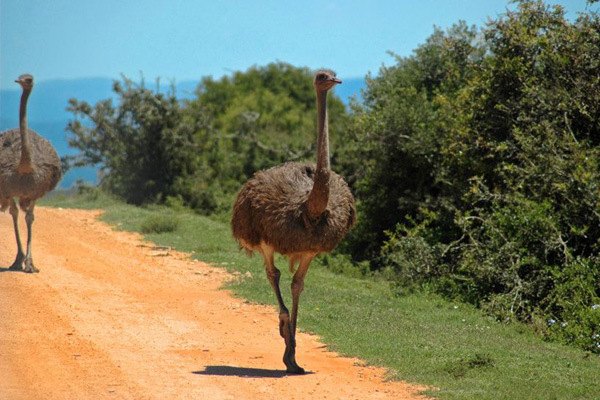
Let’s face it, you were 15 years old before you stopped confusing rhinoceroses and triceratops. To folks like us, animals like zebras, giraffe, and ostriches live in only one place – the local zoo. So, to see one of these exotic creatures running down the road is a thrill. (Pro tip: if it’s running toward you, put the camera down and start hoofing it!)

2. Crazy Traffic

Crazy Traffic

In most countries in Africa, you will eventually be confronted by the most insane traffic you’ve ever encountered. When this happens, you will try to take a picture of it. The picture will completely fail to do justice to the claustrophobic predicament in which you find yourself. That’s OK. Shoot away. Your friends may not understand, but you can relive the terror every time you see the pic.

3. Weird things on motorcycles

Weird things on motorcycles

There is something in the African spirit that just won’t accept defeat. When all you have is two wheels and a motor, this means going to extraordinary lengths to get large objects from point A to point B. Furniture, ladders, and livestock all make their way around city and country roads on these bikes, and there’s almost nothing that someone hasn’t attempted to haul on one.

4. Overloaded Vehicles

Overloaded Vehicles

Similar to the motorcycle, but with much greater capacity, trucks (lorries), vans, and even cars are regularly loaded to the max in Africa. Whether full of stuff, people, or both, these overloaded vehicles push the limits of automotive engineering. They also beg to be photographed. After all, when is the last time you saw a truck piled 20 feet high with anything in your home town?

5. Guy pulling a cart

Guy pulling a cart

The ubiquitous two-wheeled cart can be found all over Africa, and indeed, the world. How this simple design, including the rear “brake” tire has found its way across continents and oceans is one of the world’s great mysteries. However they came to be, these carts, and their faithful manpower, provide a great photo op, and a good lesson in the effectiveness of simple machines (you know, like you learned about in physics class).

6. People carrying things on their head

People carrying things on their head

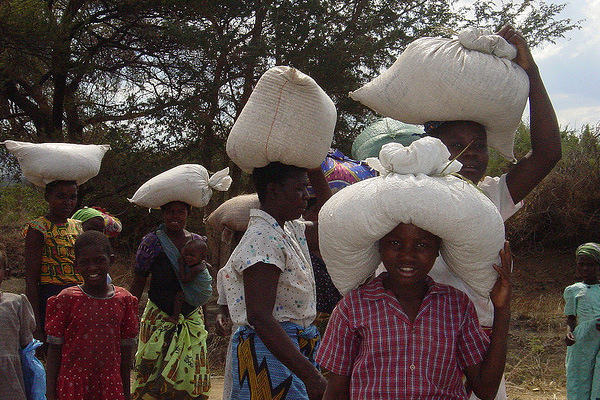
We westerners think it’s oh so funny to see an African carrying something on his or her head. To us, it’s a bit of a parlor trick. That’s because we typically have at our disposal other means of carrying things. But when you have to carry water from the next village, or firewood from a far-off forest, this vertically-aligned carrying position is the way to go. Still, it does make for an good picture.

7. Interesting construction techniques

Interesting construction techniques

OSHA doesn’t have a field office in Nairobi or inspectors in Lagos. What Africans have is sheer will…and cheap lumber. Who needs metal scaffolding or fancy cranes when you have a bucket of nails and plenty of manpower? While tourists may cringe at the sight of these makeshift construction sites, the truth is that many buildings in much of the world have been constructed this way. Of course, if you fancy climbing up there, OSHA recommends a hard hat.

8. Funny signs

Funny signs

When considering the humorous nature of some of the signs you see in Africa, pause for a moment and think how odd of a sign you might create if asked to write only in Swahili. Google translator to the hilarious rescue! Still, when you see a sign announcing half-off heads at the barber or a fried chicken beast special, it’s worth a spot on your SD card.

9. Public transportation

Public transportation

Driving is an art form in many African cities, so why not do it in style? The personalization of these people movers runs the gamut from spiritual to sexual to…well…Eminem. The goal? To make you look. If you look, you might hop in. If you hop in, the driver gets paid. At the very least, these wheels are more entertaining than MARTA busses.

10. Pasty white people with the tribe

Pasty white people with the tribe

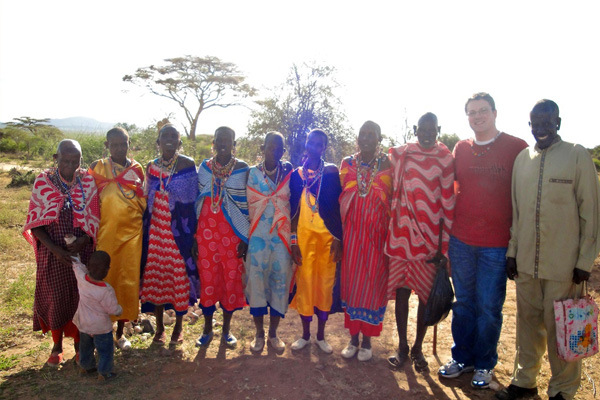
If you take the time to visit traditional tribal people, it’s almost mandated that you get together in a group and take a picture. If you happen, like yours truly, to be incredibly lily white, chances are you will also show off your goofiest face while having said picture taken. (Yes, that’s me on my first trip to Kenya. I was really happy.)

Most westerners don’t know just how widespread cell phone usage is in Africa. In areas that never had landlines, cellular technology has vastly transformed how locals communicate. No more walking for hours only to discover that the well is dry. Now, a quick call or text message will let everyone know the location of the nearest water. Still, it is quite odd to see a Masai tribesman, decked out in traditional dress, carrying a long walking stick, reach into his shawl and pull out a Nokia. Ancient meets modern in today’s Africa. Bonus points if you capture it in an image like this!

Antony Rume: my rabbits are my employer

Inside makeshift wood and wire mesh hutches somewhere in Rongai, on the outskirts of Nairobi, a group of rabbits, nibble away at pellets and vegetable leaves.

The bunnies do not stop nibbling as some dart from one corner of the hutch to another.

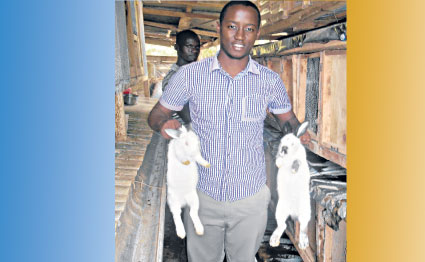
Antony Rume, the owner of the rabbits, dips his right hand into the cage and attempts to catch one, but it darts to a corner.

“I wouldn’t exchange my bunnies for chickens or any other animal. They are the best thing I have currently,” the 25-year-old says.

Rume began the project in September last year. “I started with 11 bunnies; 10 does and one buck. I bought them from a rabbit organisation that was selling each at Sh2,000 male and Sh2,500 female,” says the Moi University economics graduate.

Fresh from college, he had initially thought of venturing into poultry farming. But Rume says he realised poultry requires more space and capital to set up and run.

“I talked to a friend and he advised me to keep rabbits. He told me that it was cheaper to feed the animals and the market for their meat was growing in city restaurants and hotels.”

A kilo of rabbit meat is currently retailing at between Sh350 and Sh500.

Armed with the idea, Rume approached his mother for startup capital.

“I could not bank on my savings since I was fresh from college. I also did not want to sit at home and depend on her for all my needs. I talked to my mother and a close relative. They both supported my idea,” he recalls.

His mother, a nurse, offered him Sh20,000. He raised Sh15,000 from friends.

Today, Rume’s venture has multiplied tenfold. He owns more than 100 bunnies and reckons he has made close to Sh200,000 since he started. “I sell the animals to farmers and there are people who come to buy them from here.”

According to him, rabbit meat is becoming a delicacy in the country as people move away from rearing them as pets.

He also sells the rabbits to an institution called Rabbit Republic and to a hotel in Hurlingham, Nairobi.

According to Peter Waiganjo of Rabbit Breeders Association of Kenya (Rabak), whose members supply rabbit meat to the various supermarkets, the future is bright for bunny farmers.

“Rabak has witnessed a tremendous growth. Currently we have over 1,500 members. This is due to the increased membership and demand for rabbit meat in various parts of the country. This demand means well for farmers,” he says.

What is pushing many to rabbit eating are the associated health benefits. “Unlike beef, rabbit meat is white and has lower cholesterol, fat and calories than chicken and pork,” he says.

There are about 48 bunny breeds worldwide, but the most popular with local farmers are New Zealand White and Californian White. Others include Flemish and Ilri giants.

New Zealand Whites are slightly larger than the Californian Whites and slightly heavier as they weigh between 4 and 6kg as opposed to 3 to 4.5kg for the latter.

It is not just individuals who are keen to invest in bunnies. The government is also interested and is planning to put up an abattoir in Thika Town to boost bunny farming. Once operational, bunny farmers like Rume are upbeat that the abattoir will open up local and international meat markets.

For maximum gains from cuniculture, Jane Ikanyi, a livestock researcher at the International Livestock Research Institute recommends commercial pellets and vegetables. These prevent stomach bloat and help them grow faster.

“Pellets are hygienic and also contain necessary nutrients and vitamins that help rabbits grow. A rabbit is supposed to eat 150g of pellets a day,” she added.


Transfer up to 50m on M-Pesa via StanChart

0

Business customers and M-Pesa agents can now transfer millions of shillings through the mobile money platform and access it immediately in cash.

This follows the integration of M-Pesa with the Standard Chartered payment system to enable users to bypass the process of transferring funds to cash which takes minimum six hours.

CEO of Standard Chartered Kenya Lamin Manjang said the agreement allows merchants to transfer a maximum of Sh50 million per transaction which can be withdrawn by the recipient immediately.

Initially, M-Pesa only allowed merchants to transfer a maximum of Sh5 million. In the current arrangement, the transfers will only be allowed from merchant headquarters or from PayBill to PayBill number belonging to their bank.

“Since launch eight years ago, M-Pesa has emerged as the biggest and perhaps the most important positive disruption to the financial services space. This has been made possible by strategic partnerships such as the one we are signing today, that have been informed by the need to develop solutions to common day problems faced by our common customers,” said Safaricom CEO Bob Collymore.

Customers using the service will push e-value from merchant PayBill or till to Standard Chartered PayBill 329329. On receipt of the e-value, Standard Chartered will automatically credit the client’s account.

The proposition targets the banks entire client list, from business, commercial to corporate. Merchants can also transfer and settle as little as Sh10 from the current threshold of Sh35, 000.

Vacancies: Massive recruitment at Radisson Blu Hotel, Nairobi (100+ positions)

1

Carlson Rezidor, one of the world’s largest and most dynamic hotel companies, will open its first hotel in Nairobi, Radisson Blu Hotel, Nairobi, Kenya, in Q4 of 2015.

The hotel is situated in Nairobi’s upcoming business district of Upper Hill and features 271 guest rooms, 3 restaurants, bars, gym & spa, as well as extensive conference and banqueting facilities.

We are looking for dynamic, competent, qualified and experienced hospitality professionals to fill the following positions:

• Guest Room Attendants
• Public Areas Attendants
• Laundry Attendants

• Housekeeping Coordinator
• Reservations Manager
• Reservations Executive

• Meeting and Events coordinator
• Kitchen and Laundry Technicians
• Shift Engineers

• HVAC Technicians
• Plumbers
• Electricians

• Food & Drinks Waiters (ess)
• Food & Drinks Hostesses
• AV Handymen

• Sous Chef (Banquet)
• Chef de Partie (Hot & Cold Kitchen)
• Head Baker

• Cooks (Hot, cold & staff Kitchen)
• Cooks (Bakery & Pastry)
• Staff Canteen Chef

• Kitchen Stewards
• Night Manager
• Night Auditors

• Receptionists / Guest Service agents
• Concierge
• Bellmen

• Drivers
• OTS / Telephone Operators
• Recreation Supervisor

• F & D Cashiers
• Credit Clerk
• Income Auditors

• Cost Clerk
• Accounts Administrator
• Storekeeper

• Store hand
• Purchasing Clerk
• Receiving Clerk

• Security Officers
• Time Keepers
• Recreation Manager
• Fitness Trainer / Pool Attendants

Send your application letter and detailed CV to [email protected] clearly indicating the job position applied for on the email subject line.

The application deadline is 19th July, 2015.

Please note: At this point we are directly recruiting for the advertised positions only.

We DO NOT WORK with any recruitment agency thus will not accept applications from third parties.
Applications and CVs to be in soft copies ONLY.

Copies of certificates are not required at this point.

Short listed candidates will be contacted by email or telephone calls.

Should you not be contacted within 14 days of submitting your CV, please consider your application as unsuccessful.

Airtel customers to get free medical insurance for using Sh. 250 airtime

0

Airtel subscribers who use over Sh250 airtime a month will benefit from free medical insurance pegged on their monthly airtime top up.

The insurance will cover both outpatient and inpatient with a minimum of Sh10, 000 and over Sh250,000 for life and accident cover depending on the monthly airtime usage.

The new program follows a partnership with both Pan Africa Life and MicroEnsure, it targets the 12.6 million people working in the informal sector. It also aims to inculcate insurance culture among Kenyans.

Airtel CEO Adil EL Youssefi said the product will help the telco attract revenue from frequent usage of its airtime and increase its subscriber base from the current 6 million subscribers.

“Airtel Insurance has been successful in Zambia, managing to increase the life insurance penetration from 1 per cent to 15 per cent since its launch last year,” said Mr El Youssefi.

According to Pan Africa Life CEO Stephen Kamanda, the product will help the insurer grow its penetration by tapping into the 79 per cent Kenyan population that already has mobile phones.

“There is space for insurance to grow in Kenya, only 3.5 per cent of the population has insurance covers, with this product, we foresee a jump to 5 per cent since majority of uninsured are from informal sector,” said Mr Kamanda.

Tap private sector cash, government tells Kengen

0

Government has urged KenGen to team up with private sector players and hasten completion of power generation projects so as to attract investors into the country.

Energy and Petroleum Principal Secretary Joseph Njoroge Wednesday said joint ventures will help KenGen reduce their operational costs.

He added that it would also increase chances of realisation of the 5000MW power project which is important to government.

“KenGen has a good portion, about 900MW of the 5000MW. We are expecting more capacity from you,” Mr Njoroge told the annual meeting of KenGen’s forum on innovation and improvement of its business which ended Friday in Nairobi.

SET UP A COMMITTEE

So far, the Energy and Petroleum ministry has set up a committee chaired by Baringo Senator Gideon Moi that will audit power use and help assess government’s plans to increase power capacity. The committee will monitor demand and ensure Kenya does not over generate power.

KenGen this year put up 280MW of power into the national grid, boosting governments plans to increase power supply countrywide.

“Because of the 280MW project, tariffs have reduced by between 25 per cent and 30 per cent based on the tariff regimes for various customers,” said Njoroge who added that those criticising the project should instead support government’s power increment plan.

Local energy analysts and the International Monetary Fund have previously warned that the 5,000MW power drive could overshoot demand.

error: Content is protected !!