

Home Blog Page 2238

Dorcas Khakasa: I gave up my high-flying IT job to dance

“I am very good with the computer. Technology fascinates me. Dance however, is my greater passion. The intricacies and simplicities of dance and music are what encompass my life. When I am dancing, I am in my element. I started dancing when I was seven years old and I knew that I wanted to dance professionally when I was sixteen.

“Unfortunately for me, my older siblings set the academics bar quite high and my parents would hear none of it.

This is how I found myself at the Jomo Kenyatta University of Agriculture and Technology studying for a degree in IT. IT is challenging and demanding and the thrill of hacking the hard projects kept me glued for a while. I was happy at my first job in IT after graduation in 2011. I loved the responsibility of having a job and a salary at the end of the month.

The monotony of the work however caught up with me after just 10 months.

“I had no plan when I handed in my resignation letter. I seemed lost. My family was struggling to understand me.

A little depressed and with nothing to do all day at home, I sought refuge in my church, The Nairobi Baptist Church. I would go to church every day not to pray, but to dance by myself.

Soon, I was dancing with two other young people in church and we would sometimes be invited to schools.

NEEDED TO EARN MONEY

While I was happy dancing, I needed to earn money to get by.

“In 2012, I joined a dance company in Nairobi. My first assignment at my new job was teaching children dance at an international school. It was terrifying.

I was worried that I wouldn’t have anything to teach these children with backgrounds so different from mine. I was pleasantly surprised to learn that all that children need to warm up to you is to show them love.

When they are happy, they show it, they will come up and hug you. Over the course of that year, I passed them my skills while they taught me patience and forgiveness.

“Perhaps because my happiness and fulfilment radiated, my career choice slowly stopped becoming an issue with my family.

We stopped fighting about it.  A year into my dance job, I started feeling like I needed more space to grow. When I quit my job to go solo, my older sister sat me down to discuss my plan and how to change what I was doing from a job to a business.

“I am an introvert and the biggest challenge has been getting out of my comfort zone and putting myself out there. Now that I was no longer under my employer’s wing, I had no choice. I started out taking very small jobs which would pay even a thousand shillings. I figured that these may not bring in the big bucks but they did get my name out there.

My first big job was from a lady I had taught dance who wanted a ballet teacher for her daughter and a few other young girls. This was at the start of 2014.

“Everything I know about dance I learnt from watching videos and other choreographers at work. I choreograph all forms of dance ranging from ballet and contemporary dance to hip hop.

One would imagine that it is the old hands who are the best teachers but I’ve found that I learn best from the younger ones. They are the ones who come with new things.

HITTING ROCK BOTTOM 

“2014 was a good year for me. I got several schools on board and I was doing a dance concert every other month. The best part of it was seeing my family at these concerts. Then, just as the little pieces were falling back together, my mother passed away in September. Losing her just when she had embraced my career was devastating.

This thought was the very thing that snapped me back to work after three months of not working. I decided that instead of sitting at home depressed, it was best to honor her with dance. I came back with renewed energy.

“It hasn’t been easy but given a chance to make a career decision again, I would still pursue dance. I see a new generation of dancers who are impatient, wanting to get things done now. It has taken me five years to build my brand. I now work with other institutions including the Kenya Dance Academy. I’m extremely content.

I had no one to hold my hand while I worked at getting here, I hope that I will be able to mentor young people in the near future.”

HOW SHE DID IT:

  • For her, dance isn’t just about skill. It is also about character.
  • The thrill of having crowds of people watching you dance can make you vain. She has strived to stay grounded.
  • She kept her eye on the bigger picture.

5 key tips to successfully applying for a business loan

1. Provide detailed information. Don’t skimp on specifics with banks. Show exactly how you will use the requested funds and how much you need to accomplish your goals. Lenders appreciate attention to detail and preparedness when it comes to the facts.  For example, if you are looking to purchase a new piece of equipment, provide quotes on the exact costs, how much capital you need to facilitate this purchase and specifically how the new equipment will help grow your business.

2. Be prepared to share your financial information—all of it. Provide your lender with all the financial background on your company, future growth plans and often your personal financial information. By offering this information up front, it will allow a bank to gain an understanding of your complete financial situation and it will ultimately reduce the time to finalize your loan package.  The more information you have to illustrate that you’ve run your business well in the past gives banks the confidence they need to invest in you for the future. The more information you provide, the easier it will be for your loan officer to get your loan approved. Banks are in business to loan money, so this is a win-win for both sides.

3. The more the merrier. Research and make a list of five potential lenders and start at your first choice. If approved for a loan, continue to shop the market for the best rate if you have time. If declined, keep trying!  Too often, mostly due to lack of time, business owners stop at the first or second negative response. Be prepared to seek a loan from a minimum of five lenders. And learn from your mistakes. If one lender turns you down for one reason or another, learn from this feedback and adjust your approach with the next lender.

4. What information will you need?

Different lenders may require more or fewer documents, but in general, you will need:

  • Personal and business credit history
  • Personal and business financial statements for existing and startup businesses and as well as a projected financial statements
  • Strong, detailed business plan (including personal information such as bios, education, etc.)
  • Cash flow projections for at least a year, and
  • Personal guaranties from all principal owners of the business

5. Think local. There are all types of lending institutions, but community lenders are often best equipped to appreciate how your company works within the local business environment. Community lenders’ key insights can range from local market dynamics, to cash flow timing issues, and they frequently understand your ability to achieve success. It is always important when working with a local lender to highlight your involvement outside of work within the community. This is a great demonstration of your commitment to the community where you both live and work.

How 19-year-old is flying high with rabbit farming

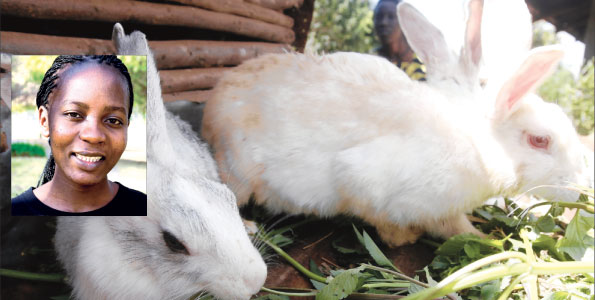
The rabbit darts in its hutch from one corner to another as the young girl attempts to catch it. Laeititia Mukungu laughs heartily as the animal dodges.

After several attempts, she corners it, holds it by the ears and takes it gently out of the hutch.

She will cuddle the big-eyed animal as she cleans it. The affection for the animal and over 200 others in several hutches at her farm is unmistakable.

“These are my babies. I love them dearly,” says Laeititia as she strokes the rabbit gently before sending it back into the pen.

SCHOOL FEES

The 19-year-old is a successful rabbit farmer, who started keeping animals when she was 12 years old.

Fate pushed her into rabbit-farming. After sitting KCPE exams in 2009 at Nairobi Primary School, Laeititia scored 432 out of 500 marks, getting admission to Precious Blood Girls, Riruta.

However, she was forced to discontinue her studies since her mother could not afford school fees. She later moved to her grandparent’s home in Bukura, Kakamega County, where she got a job as an untrained primary school teacher at Bukura Educational Complex.

The desire to raise her secondary school fees and improve the welfare of her pupils, many who came to school without taking breakfast because of poverty, made her think of ways to make some income.

With land being the only resource she had from her grandparents, Laeititia visited Bukura Agricultural Training Institute for advice on what agricultural project she could engage in.

An official at the institute advised her to venture into rabbit-farming. She shared the idea with her headteacher, who offered her Sh40,000 capital.

Laeititia bought 10 does and five bucks from farmers in the area with part of the money. She also built a hutch for the animals. “In about nine months, I had raised Sh70,000,” she recounts.

The teenager used the money to pay her school fees at Precious Blood Girls, where she joined in second term in 2010. She left her business to her mother Mukungu Zambezi.

“I would always look forward to returning home over the school holiday to help her,” she says. She feeds the rabbits on pellets, hay, water and fresh vegetables. This costs her about Sh10,000 a month.

“I had 450 rabbits but we sold quite a number recently. We now have about 200,” she says.

Rearing rabbits is a viable undertaking especially for beginners.

They take six months to mature and their gestation period is 30 days. On average, a rabbit can give birth up to 30 babies a year. Each and every part of a rabbit, she told Seeds of Gold, has economic value.

“The fur is used to make clothes, the skin shoes, their droppings are manure and urine is an organic pesticide. You cannot go wrong with rabbits,” she says.

A mature rabbit retails at between Sh1,500 and Sh2,000, while a kilo of its meat fetches Sh400.

She only keeps two breeds namely New Zealand White and Californian White, but she is working on introducing Angora.

Laeititia’s passion for rabbits earned her a scholarship to study leadership and entrepreneurship at the African Leadership Academy (ALA), where she is currently. “I quit Precious Blood in 2012 for ALA. It is a unique institution with so many opportunities. I have learnt a lot from ALA,” says the teenager, who is using the knowledge she acquires at ALA to improve her passion that operates under the trade name Africa Rabbit Centre.

Laeititia won the scholarship after participating in ALA’s Anzisha Prize Award, which recognises young people who have developed and implemented innovative ideas that help better the community.

“I got the information about the award from a friend. I later quit Precious Blood in Form Three. I am now based in Johannesburg, South Africa. I am currently on study leave,” says the third year student.

She thanks her mother for helping her nurture her business as she undertakes her studies.

“I have reached where I am because of rabbit farming. If I had not remained steadfast and ventured into farming, I would not be where I am today. I hope to have my slaughterhouse at the farm so that I can avoid middlemen,” says Laeititia, who will soon be joining a US university.

Equitel formally launches today

0

Equity Bank’s thin SIM mobile arm Equitel enters the telcoms market today after the High Court last month lifted an order barring its roll out.

In a statement, Equity said it would launch the SIM cards at a media and investors briefing.

“Equity Group Holdings Ltd will on Monday, July 20, host a media and investors briefing session to officially launch Equitel — a platform that combines mobile and banking services,” the statement said.

Equity Bank CEO James Mwangi declined to speak of the product, saying he was reserving his comments for the launch day.

The thin SIM will be used by both feature phones and smartphones. It is placed on a subscriber’s original SIM card, turning the device into a dual-SIM phone.

Over 200,000 customers have actively been using the normal Equitel SIM card in a pilot phase since last year. Entry of the thin SIM technology is set to attract more subscribers to Equitel because of what some users say are expensive mobile money rates by Safaricom’s M-Pesa.

It is almost free to send money using Equitel, “If you send Sh100, you will pay Sh1. If you send Sh1,000, you will pay a maximum of Sh25,” said Mr Mwangi.

Safaricom — Kenya’s largest telco with 19 million customers actively using M-Pesa — charges between Sh1 and Sh110 to transact on M-Pesa. To withdraw money, subscribers pay between Sh10 and Sh330.

However, the prepaid telephone rates from Equitel to all networks cost Sh4 per minute. Text messages are charged at Sh1 while Internet is Sh4 per MB. Safaricom and Airtel charge a flat rate of Sh3 per minute.

The deal comes at a time when Safaricom has also increased withdrawal fees from bank to customer accounts through M-Pesa.

Communications Authority of Kenya board chairman Ben Gituku said Equity took the necessary insurance to mitigate any risk posed by the technology.

Equity Bank chairman Munga denies Sh. 150m shares sale deal with friend

0

The following report first appeared in the Business Daily

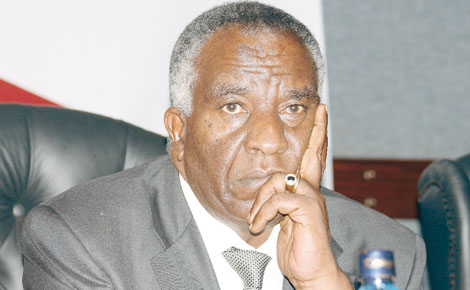
Billionaire businessman Peter Munga has denied entering into a deal with Equity Bank and long-time friend Joseph Muturi Kamau over the sale of TransCentury shares worth Sh150 million. Mr Munga, who is also the Equity Bank chairman, wants the High Court to dismiss a suit Mr Kamau filed seeking Sh150 million from him.

He says he and Mr Kamau never had any contractual agreement with Equity over the sale of three million shares of the Nairobi Securities Exchange (NSE)-listed investment company TransCentury.

Mr Kamau says he had in 2011 agreed to sell his three million TransCentury shares to Mr Munga at Sh50 each to settle a Sh40 million loan taken from Equity.

The bank was to deduct the outstanding loan balance of Sh33 million and pay the balance to Bethany Vineyards — Mr Kamau’s company.
But Mr Munga now says he and Mr Kamau never had any contract over the shares.

He has further denied that a letter he wrote to his friend allegedly confirming his interest to buy the shares was legally binding.

“Mr Munga has no knowledge and does not admit there being any tripartite contractual relationship as pleaded by Mr Kamau. Mr Munga further denies that his letter dated June 20, 2011 had any contractual effect or altered the already entered agreement for sale of the shares,” the Equity Bank chairman says.

Mr Kamau says he is yet to receive the balance of the share sale, which was to see Mr Munga repay his loan with Equity.

Mr Munga, however, says his friend arm-twisted him into paying the Sh33.5 million to Equity Bank.

“The payment was indeed made under duress to avoid the embarrassment set up by Mr Kamau when he pleaded that Mr Munga had in his private dealings compromised his fiduciary duty as a director of Equity Bank,” he adds.

Equity Bank in January lost a bid to be struck off the case when Justice Fred Ochieng ruled that there was still no way to prove whether or not the lender was involved in the alleged fraudulent sale of Mr Kamau’s shares.

How To succeed in Dairy Farming in Kenya

Dairy farming has grown tremendously in the last couple of years. From being a hobby activity, dairy farming in Kenya has been transformed into a full blown business venture. There are more than enough examples of people making a more than good living from dairy farming but almost all of them will agree with me when I say it requires you to give a lot for you to receive.

Good Feed
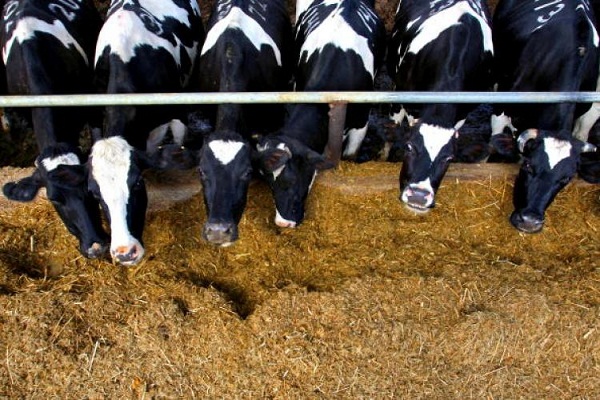
Many people practicing dairy farming today are not satisfied with the amount of milk the cow is giving them. Especially when there are successful dairy farmers getting 30-45 liters of milk per cow per day. The easiest solution to this would be to buy some of the successful farmers’ cows. This is solving the problem without actually solving the problem. Il explain, if your cow is producing less than 10 liters a day, then you are not feeding it right.

To solve the problem, a farmer should first learn to feed the cows as required before buying high producing cows. Many farmers end up with diminished milk production after spending a lot of money buying quality breeds but fail when it comes to feeding them.

Good Breeds
Having quality breeds helps a lot when it comes to milk productivity. Farmers can get these cows from big farms that sell off heifers. This almost assures you of good milk produce provided you feed the cows right. It is therefore advised that farmers learn as much as possible about the cow when they but it. You wouldn’t want to subject it to totally different conditions to the one it is used to as it may affect production.

Having a good bred means that you can also rear your own herd and also improve on it through artificial insemination.

Affordable Feeds
To ensure that you gain maximum profits from your dairy venture, make sure you drive the cost of feeds down. Reports have it that the main cost in dairy farming in kenya is from animal feed which accounts to is between 40%-60% of the total costs.

There are several ways in which farmers can drive the costs down for example planting their own food if there is enough land available. Farmers can also make their own concentrates such as dairy meal. This will significantly reduce the cost of farming. There are new technologies that help reduce the cost of feeds for dairy farming in Kenya such as hydroponics fodder where fodder is planted without water and is ready in just 6 days.

Good technical support
Every farmer requires good technical support to be successful. Having a qualified vetinary doctor to visit your farm regularly can save you lot of costs amounting from medical expenses. It is also important that a farmer has a nutritionist visit the farm once in a while to advice on the feed to give the cows in the different lactation stages. Soil analysts are also important because if your soil lacks certain nutrients needed for cow development, then the crops grown on it will most likely also lack the same.

There are several dairy farming in Kenya Youtube videos that i would advice every aspiring dairy farmer to watch including the ones above.

15 Habits of Mentally Tough People

0

We all reach critical points in our lives where our mental toughness is tested. It might be a toxic friend or colleague, a dead-end job, or a struggling relationship.

Whatever the challenge, you have to be strong, see things through a new lens, and take decisive action if you want to move through it successfully.

It sounds easy. We all want good friends, good jobs, and good relationships.

But it isn’t.

It’s hard to be mentally tough, especially when you feel stuck. The ability to break the mold and take a bold new direction requires that extra grit, daring, and spunk that only the mentally toughest people have.

It’s fascinating how mentally tough people set themselves apart from the crowd. Where others see impenetrable barriers, they see challenges to overcome.

There are habits you can develop to improve your mental toughness. In fact, the hallmarks of mentally tough people are actually strategies that you can begin using today.

1. They’re Emotionally Intelligent
Emotional intelligence is the cornerstone of mental toughness. You cannot be mentally tough without the ability to fully understand and tolerate strong negative emotions and do something productive with them. Moments that test your mental toughness are ultimately testing your emotional intelligence (EQ).

2. They’re Confident
“Whether you think you can, or think you can’t—you’re right.” — Henry Ford
Mentally tough people subscribe to Ford’s notion that your mentality has a powerful effect on your ability to succeed. True confidence—as opposed to the false confidence people project to mask their insecurities—has a look all its own. Mentally tough people have an upper hand over the doubtful and the skittish because their confidence inspires others and helps them to make things happen.

3. They Neutralize Toxic People
Dealing with difficult people is frustrating and exhausting for most. Mentally tough people control their interactions with toxic people by keeping their feelings in check. When they need to confront a toxic person, they approach the situation rationally. They identify their emotions and don’t allow anger or frustration to fuel the chaos. They also consider the difficult person’s standpoint and are able to find common ground and solutions to problems. Even when things completely derail, mentally tough people are able to take the toxic person with a grain of salt to avoid letting him or her bring them down.

4. They Embrace Change
Mentally tough people are flexible and are constantly adapting. They know that fear of change is paralyzing and a major threat to their success and happiness. They look for change that is lurking just around the corner, and they form a plan of action should these changes occur.

Only when you embrace change can you find the good in it. You need to have an open mind and open arms if you’re going to recognize, and capitalize on, the opportunities that change creates.

5. They Say No
Research showed that the more difficulty you have saying no, the more likely you are to experience stress, burnout, and even depression. Mentally tough people know that saying no is healthy, and they have the self-esteem and foresight to make their nos clear.

6. They Know That Fear Is the No. 1 Source of Regret
Mentally tough people know that, when all is said and done, they will lament the chances they didn’t take far more than they will their failures. Don’t be afraid to take risks.
People often say, “What’s the worst thing that can happen to you? Will it kill you?” Yet, death isn’t the worst thing that can happen to you.

The worst thing that can happen to you is allowing yourself to die inside while you’re still alive.

7. They Embrace Failure…
Mentally tough people embrace failure because they know that the road to success is paved with it. No one ever experienced true success without first embracing failure. The biggest breakthroughs typically come when you’re feeling the most frustrated and the most stuck. It’s this frustration that forces you to think differently, to look outside the box, and to see the solution that you’ve been missing.

8. …Yet, They Don’t Dwell on Mistakes
Mentally tough people know that where you focus your attention determines your emotional state. When you fixate on the problems that you’re facing, you create and prolong negative emotions and stress, which hinders performance. When you focus on actions to better yourself and your circumstances, you create a sense of personal efficacy, which produces positive emotions and improves performance.

9. They Won’t Let Anyone Limit Their Joy…
When your sense of pleasure and satisfaction are derived from comparing yourself to others, you are no longer the master of your own happiness. When mentally tough people feel good about something they do, they won’t let anyone’s opinions or accomplishments take that away from them.

10. …And They Don’t Limit the Joy of Others
Mentally tough people don’t pass judgment on others because they know that everyone has something to offer, and they don’t need to take other people down a notch in order to feel good about themselves.

Comparing yourself to other people is limiting. Jealousy and resentment suck the life right out of you; they’re massive energy-stealers. Mentally tough people don’t waste time or energy sizing people up and worrying about whether or not they measure up.

11. They Exercise
A study conducted at the Eastern Ontario Research Institute found that people who exercised twice a week for 10 weeks felt more socially, intellectually, and athletically competent. They also rated their body image and self-esteem higher. Best of all, rather than the physical changes in their bodies being responsible for the uptick in confidence, which is key to mental toughness, it was the immediate, endorphin-fueled positivity from exercise that made all the difference.

12. They Get Enough Sleep
It’s difficult to overstate the importance of sleep to increasing your mental toughness. When you sleep, your brain removes toxic proteins, which are by-products of neural activity when you’re awake. Unfortunately, your brain can remove them adequately only while you’re asleep, so when you don’t get enough sleep, the toxic proteins remain in your brain cells, wreaking havoc by impairing your ability to think—something no amount of caffeine can fix.

13. They Limit Their Caffeine Intake
Drinking excessive amounts of caffeine triggers the release of adrenaline, the source of the fight-or-flight response. The fight-or-flight mechanism sidesteps rational thinking in favor of a faster response to ensure survival. This is great when a bear is chasing you but not so great when life throws you a curve.

14. They Don’t Wait for an Apology to Forgive
Mentally tough people know that life goes a lot smoother once you let go of grudges and forgive even those who never said they were sorry. Grudges let negative events from your past ruin today’s happiness. Hate and anger are emotional parasites that destroy your joy in life.

15. They’re Relentlessly Positive
Keep your eyes on the news for any length of time, and you’ll see that it’s just one endless cycle of war, violent attacks, fragile economies, failing companies, and environmental disasters. It’s easy to think the world is headed downhill fast.

Why your cows have a rough skin and how to help them

This feature was first published in Seeds of Gold.

The skin is the largest organ of an animal and the most visible indicator of its health status. It is commendable that you pay close attention to your animals and note changes on their coat.

A rough hair coat may be an indication of diseases in the body, parasites on the skin, worms in the digestive system, nutritional (vitamin) and mineral deficiencies.

You have indicated that you have dewormed your animals but did not say the drug used and the dosage given. Worms in the digestive system compete for nutrients depriving the animal the much needed minerals for sustenance of body functions and productivity.

Using de-wormers as prescribed would help remove the pests in the digestive system, otherwise you will not observe any improvement. Misuse can lead to resistance.

It is always advisable to consult a registered veterinarian on the appropriate de-wormer to use and the recommended dosage.

Many conditions affecting the whole body in cattle, which lead to debilitation and poor feed consumption also manifest through rough hair coat.

Your animals should be seen by a veterinarian who will check their health status and give medical treatment if required. He will also advise you on many other disease-control and prevention measures.

Cattle require adequate amounts of nutrients to support growth, milk production and the growing foetus during pregnancy. You have not indicated how you feed your animals. However, it is important to ensure that they receive adequate levels of energy, proteins, roughages, minerals and vitamins. The main sources of energy include concentrates such as maize germ, dairy meal and maize bran. Proteins are derived from fish meal, cotton seed cake and various fodder plants like calliandra, sesbania and desmodium.

VITAMINS AND MINERALS

Vitamins and minerals are required for the normal body functions and you can get the appropriate mineral mixes from your agrovet and use them as recommended. Your animals should also be provided with clean drinking water always.

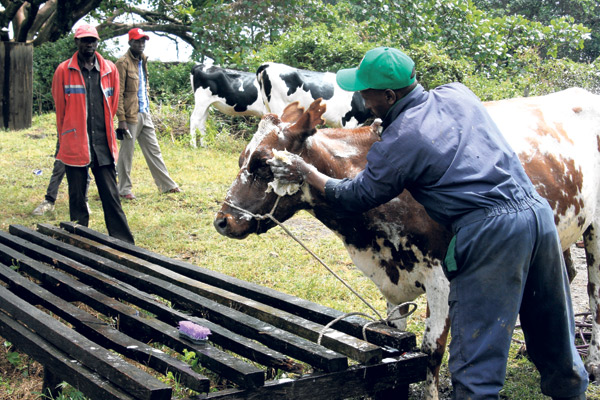
Allergies too lead to rough appearance of the skin. External parasites such as ticks, fleas and lice suck blood and cause irritation, which leads to poor growth, loss of production and a rough hair coat.

To control the above mentioned parasites, cattle should be sprayed/dipped with the right concentration of acaricide. However, ticks have been known to develop resistance to some acaricides after extended use.

You indicated that your animals have been dipped. Consult your area veterinary professional on the recommended frequency of dipping or spraying.
Please check whether there are ticks still attached to the skin after dipping as this could be an indicator of resistance. Some allergies such as those against sunlight commonly found in light coloured animals may also lead to rough hair coat. However, this rarely affects all animals in the herd.

The most reliable used cars and the ones to avoid

0

Value-minded consumers know that buying a reliable used car is often the best choice but that finding one takes research. Here we identify the proven Best of the Best in nine categories. They’re vehicles with multiple years of above-average reliability, covering 1999 through 2008, that scored well in our tests when new.

Toyota and Honda vehicles dominated the majority of the nine categories, demonstrating consistent reliability and performance. But some recent domestic models are also worthy choices, including the Buick Lucerne (V8), Ford Fusion, and Mercury Milan.

Reliability data are derived from our Annual Auto Survey, which generated responses about more than 1.4 million new and used vehicles.

In this report, we show the top used cars in each category (below), plus other good choices. Next are Models to Look For, listed by model year in 12 price ranges, our lists of Used Cars to Avoid and the Worst of the Worst (below), models with multiple years of much-worse-than-average reliability.

Best of the best

Small cars

The most reliable used cars and the ones to avoid

Honda Civic

Honda Civic

The Honda Civic is reliable, economical, and fun to drive. It grew with the 2001 redesign, and 2003 saw the introduction of the Hybrid model. The 2006 redesign included standard antilock brakes (ABS), curtain air bags, and a better ride. An alternative with more cargo room is the Scion xB, which also has standard electronic stability control.

Other good choices:

  • Toyota Echo
  • Scion xB
  • Toyota Corolla
  • Toyota Matrix
  • Pontiac Vibe
  • Mazda3
  • Mazda Protége
  • Subaru Impreza

Family cars

Honda Accord

The Accord has been a very reliable used-car choice. The 2003 redesign made it quieter and more agile, and it received standard ABS. Standard ESC arrived on V6 models in 2006 and on all models with the 2008 redesign. The Ford Fusion and Mercury Milan have very good reliability, tested well, and are very affordable.

Other good choices:

  • Toyota Prius
  • Ford Fusion
  • Mercury Milan
  • Toyota Camry (except ’08 V6)
  • Subaru Outback (6-cyl.)
  • Nissan Altima

Upscale cars

Lexus ES

The ES has been very reliable through its many generations. This quiet and comfortable sedan was redesigned in 1997 and 2002 but got a stronger, more fuel-efficient engine in 2004. ESC became standard in 2007. The Acura TL and TSX are sportier alternatives.

Other good choices:

  • Lexus IS
  • Toyota Avalon
  • Acura TSX
  • Lincoln MKZ, Zephyr (FWD)
  • Infiniti G20
  • Acura TL
  • Infiniti I30, I35
  • Infiniti G35 (sedan)
  • Volvo S60
  • Buick Lucerne (V8)
  • Nissan Maxima

Luxury cars

Infiniti M35

Since 2003 the M has been a reliable model, but the 2006 redesign made it comfortable when cruising the highway and on twisty roads. The V6 is strong, and the interior is well finished. The Lexus LS is a more luxurious choice.

Other good choices

  • Lexus LS
  • Lexus GS (6-cyl., RWD)
  • Acura RL

Sports and sporty cars

The most reliable used cars and the ones to avoid

Mazda Miata

Mazda Miata

The slick shifter, nimble handling, and good performance make the affordable and reliable Miata fun to drive. ABS became standard with the 2006 redesign; look for the optional ABS on older models. A practical alternative is the Subaru WRX, which gives great performance along with standard AWD and four doors.

Other good choices

  • Lexus SC
  • Honda S2000
  • Toyota Camry Solara
  • Acura RSX
  • Toyota Celica
  • Scion tC
  • BMW Z3, Z4
  • Acura Integra
  • Porsche Boxster
  • BMW M3
  • Subaru Impreza WRX/STi
  • Ford Mustang (V6)
  • Nissan 350Z

Minivans

The most reliable used cars and the ones to avoid

Toyota Sienna

Toyota Sienna

Toyota’s first-generation Sienna is refined, but the third-row accommodations are snug. In 2003 a redesigned Sienna went on sale. It is roomier and more powerful, and it’s available with AWD. Reliability has been very good overall. The Honda Odyssey isn’t as plush but has better handling.

Another good choice:

  • Honda Odyssey

Small SUVs

The most reliable used cars and the ones to avoid

Toyota RAV4

Toyota RAV4

Introduced in 1996, the RAV4 was the first car-based SUV. It was agile and comfortable but small and underpowered. The 2001 redesign brought more power and a roomier interior. ESC arrived in 2004. For 2006 Toyota added an available third row. Throughout its life the RAV4 has had stellar reliability.

Other good choices:

  • Honda CR-V
  • Subaru Forester
  • Mitsubishi Outlander

Midsized and large SUVs

Honda Pilot

Introduced in 2003, the Pilot is roomier than its MDX sibling and less expensive. It’s roomy and refined, delivers good fuel economy, and has flexible seating for eight. Crash-test results are impressive, and reliability has been excellent. The Toyota Highlander is a good choice with an optional third-row seat.

Other good choices:

  • Toyota Highlander
  • Lexus RX
  • Toyota Land Cruiser
  • Toyota 4Runner
  • Infiniti FX35
  • Acura MDX
  • Infiniti QX4
  • Lexus GX
  • Hyundai Santa Fe
  • Subaru Tribeca
  • Nissan Xterra (’05-08)
  • Toyota Sequoia

Pickup trucks

The most reliable used cars and the ones to avoid

Honda Ridgeline

Honda Ridgeline

Honda’s pickup rides and handles like a sedan but delivers the utility of a truck. The V6 engine is smooth and responsive, and the cabin is nicely detailed and easy to access. The in-bed, weather-tight, and lockable trunk is a plus. Opt for the Tundra if you need more towing or off-roading capability.

Other good choices:

  • Toyota Tacoma (’05-08)
  • Toyota Tundra
  • Subaru Baja
  • Nissan Frontier (’05-08)

Worst of the worst

These have multiple years of much-worse-than-average reliability among 1999 to 2008 models. Listed alphabetically.

Audi A6 Allroad
Audi A8
BMW X5 (V8)
Buick Rendezvous (AWD)
Cadillac SRX
Chevrolet Blazer
Chevrolet Colorado (4WD)
Chevrolet S-10 (4WD)
Chevrolet Uplander
Chevrolet Venture
Chrysler Pacifica
Chrysler Sebring convertible
Chrysler Town & Country (AWD)
Dodge Grand Caravan (AWD)
GMC Canyon (4WD)
GMC Jimmy
GMC S-15 Sonoma (4WD)
Jeep Grand Cherokee
Kia Sedona
Land Rover Discovery, LR3
Mazda RX-8
Oldsmobile Bravada
Oldsmobile Silhouette
Pontiac Aztek
Pontiac G6 (V6)
Pontiac Montana, Montana SV6
Porsche Cayenne
Saturn Relay
Volkswagen Cabrio
Volkswagen Jetta (V6)
Volkswagen New Beetle (turbo)
Volkswagen Passat (V6, FWD)
Volkswagen Touareg
Volvo XC90 (6-cyl.)

Vacancies: The Teachers Service Commission is advertising 5,000 posts for recruitment of additional teachers

0

The Teachers Service Commission is advertising 5,000 posts for recruitment of additional teachers (2,338 posts for primary school teachers and 2,662 posts for post primary teachers). Eligible candidates should meet the following basic requirements:

1. Be Kenya citizens.
2. Must be 45 years of age and below.
3. Must have original Professional and Academic Certificates.
4. Must be registered with the Teachers Service Commission.

Applicants applying for posts in Primary schools must be holders of P1 certificate.

Interested candidates should apply to the TSC County Director, in the County where a vacancy has been advertised and submit all relevant academic and professional documents.

Those who had applied earlier and were unsuccessful must apply afresh since a new merit list for 2015/2016 financial year will be generated.

Applicants applying for posts in Post Primary institutions must be holders of a minimum of Diploma in Education.

Interested candidates should apply to the Secretary, Board of Management of the School/Institution where the vacancy has been advertised and submit a copy to the TSC County Director not later than 31st July 2015.

The Teachers Service Commission is an equal opportunity employer and people with disability are encouraged to apply.

The Teachers Service Commission will only deal with TSC County Selection Panels and Boards of Management in this exercise.

Individual application to the Commission will NOT be considered. Successful candidates should fill employment Form in only one station.

Caution: The recruitment exercise is free of charge.

The Teachers Service Commission would wish to forewarn applicants against fraudsters who might extort money from unsuspecting persons purporting to assist in recruitment.

Any fraudulent activity should be reported to the nearest Police Station, TSC County Directors, Sub County Staffing Officers or to Teachers Service Commission headquarters through the following hotlines between 8.00 a.m. and 5.00 p.m.

Director (Teacher Management) Tel:0202892193
• Senior Deputy Director (Teacher Management Primary) Tel:0202892132
• Senior Deputy Director (Teacher Management Post Primary) Tel:0202892137
• OR Write to the Commission through the email address [email protected].

For detailed information on available vacancies in sub-counties and schools/Institutions applicant are advised to:

a) Visit the TSC Website Teachers Service Commission ;
b) Visit the TSC office at the County or Sub-County of their choice.

Nancy Njeri Macharia, OGW
Secretary/Chief Executive