Home Blog Page 2274

Safaricom to start selling digital set-top boxes next month

0

Safaricom will start selling its digital set-top boxes next month as the telecoms operator eyes a piece of the broadcasting sector.

Safaricom has said that it had already received approval for the model of its gadget from the Communications Authority of Kenya and was about to ship in the first batch.

Safaricom Corporate Affairs Director Nzioka Waita said the decoders were expected within the next three weeks, with distribution scheduled to start immediately. They will be sold through the company’s existing distribution network.

“We have gotten the approval for the set-top box and a vendor’s licence, which now allows us to start selling the devices in Kenya. We are still in talks with the regulator for the award of a broadcasting licence. Hopefully it will come through soon,” Mr Waita said.

By entering the broadcasting sector, Safaricom is targeting a piece of the Kenyan TV space, but with a greater focus on offering Internet connectivity to every home with a television set.

The set-top box will operate as a hotspot, which members of a household can use to connect to the web.

Officials from the CA said they were reviewing the application by Safaricom with a view to concluding the matter soon.

MCA shot in Nairobi

0

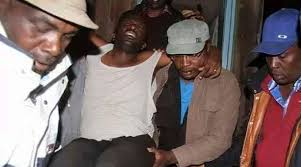
A Member of County Assembly was on early Wednesday shot and injured by a gunman on a motorcycle. The MCA said to be the representative for Korogocho, Maxwell Ochieng’ Ochar, was shot at around 6.10am as he waited for his wife in his private car at a parking lot in Riverside Estate.

Nairobi County police boss Benson Kibue said the gunman rode off from the scene soon after the incident. “The motive of the shooting is yet to be established but officers on the ground are pursuing the attacker,” said Kibue.

Starehe Deputy OCPD, Abdikadir Ahmed said the gunman may have been waiting for the MCA at the parking lot. “He shot the MCA once before escaping on a motorcycle whose number plate was not taken. The MCA sustained a bullet wound on his right hand” Mr Ahmed said.

Police, who visited the scene, collected a spent cartridge and said the gunman shot once shattering the driver’s windowpane. Other witnesses said the gunman aimed at MCA Ochar after he had taken the driver’s seat in his saloon car.

The MCA, who is also a member of the County Assembly Committee on Planning and Housing, is admitted at a Nairobi Hospital in stable condition. He drove himself to the hospital after the attack. Police want to establish if the victim had received any threat to his life. This is because the gunman did not steal anything from him. Some of his colleagues later visited him in hospital and announced that he was in a stable condition.

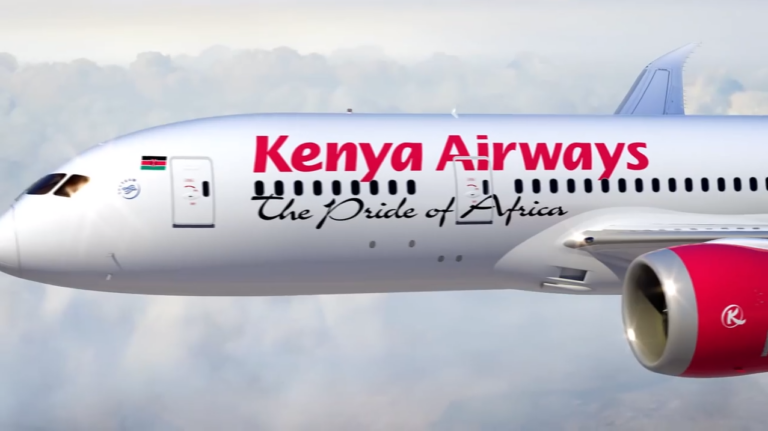
Kenya Airways flies into turbulence

1

The following feature on Kenya Airways was first published inside the Smart Company.

“Kenya Airways suffered Sh10.451 billion loss for the half year ending September, 2014.  It doesn’t help Kenya Airways that the new competitors are said to be receiving huge subsidies from their governments. Three top US airlines accused Dubai’s Emirates, Abu Dhabi’s Etihad Airways and Qatar Airways two weeks ago of receiving subsidies from their governments amounting to $42 billion (Sh3.9 trillion).

Similarly, the latest increase in flight frequency in Africa by the powerful Middle East carriers will be adding to the headache of dwindling tourist numbers to the country that has poured cold water to the new engines of the country’s flag airline.

Last week, Dubai-based carrier, flydubai said it would increase its flights in Africa to 78 per week. The airline, which doubled its Africa routes last year, will have 12 touch points in East and North Africa. The latest destinations are Alexandria, Bujumbura, Juba and Zanzibar. This has seen its passenger numbers in Africa shoot up by 14 per cent. Flydubai chairman His Highness Sheikh Ahmed Bin Saeed Al Maktoum said the airline’s strategy this year is to increase flights, especially in the underserved routes in Africa.

Dubai’s Emirates has also brought the battle to the doorstep of the troubled Kenya Airways when it announced plans to connect more people with Kenya’s capital, Nairobi, by switching from the current Airbus A330-200 aircraft used in one of the two daily flights to a larger Boeing 777-300 ER starting May 1.

Abu Dhabi’s Etihad Airways and Qatar Airways have also been increasing their touch points in Africa. The latest plan by the giant Gulf carriers means a fresh headache for Kenya Airways.

The waning fortunes of Kenya Airways could have prompted the government to move in to keep it afloat. Early last month, an inaugural aviation workshop held at the KQ Pride Centre to supposedly deliberate on the way forward for the local industry turned out to be a strategy to whip up all government officers to fly KQ.

Government efforts to lift Kenya Airways out of trouble are not new. Qatar Airways’ application for licence to be the third foreign airline to fly to Mombasa from August 2013 failed over what was said to be traffic right issues.

In 2012, the Doha-based airline’s application to fly to Kilimanjaro via Nairobi was not permitted by Kenyan authorities. Last year, Fastjet’s plans for a low-cost flight business in the country faced clearance delays from Kenya’s aviation authorities following objections from local airlines including Kenya Airways. The resistance could have been motivated by the fact that Fastjet was likely to give KQ’s budget carrier, JamboJet, a  run for its money. Jambojet flies Mombasa, Eldoret, Nairobi and Mombasa routes that Fastjet is also eyeing

However, not all is lost for Kenya Airways. Kenya Airways may well use partnerships with other airlines to boost its dwindling passenger numbers, which is one of the airline’s greatest challenges now. A plan similar to the partnership struck last year with  Delta Airlines to have seamless connecting flights to various destinations from Africa can be a big boost  for KQ.

In the partnership with Delta, Kenya Airways offers connecting flights between Monrovia, Liberia, and Accra, Ghana, operating three times a week on a Boeing KQ’s 737 aircraft.  The move is meant to bridge Delta’s nonstop flights between Accra’s Kotoka International Airport and New York’s John F Kennedy International Airport.

“Delta has had a presence in Liberia for four years and we are pleased to continue this association with the country through our new partnership with Kenya Airways,” said Perry Cantarutti, Delta’s senior vice-president for Europe, the Middle East and Africa. This service has replaced Delta’s three-time weekly operations from Monrovia’s Roberts International Airport to Accra, Ghana.  Kenya Airways therefore benefits from the Delta’s 165 million passengers carried yearly.

Major Differences Between The Successful & The Very Successful

0

There’s no denying that successful people are hard workers. They’re often the ones who put in the long hours, do the jobs that no one else wants to do and hustle until they get rewarded for it.

However, successful people should not be confused with very successful people.

Some people are simply more successful than others. This success often comes from lifestyle choices and habits they’ve picked up over the years, while other reasons stem from the way they prioritize their lives.

Commit to Their Ever-Evolving Goals

The most significant difference between the successful and the very successful is the nature of their commitment. Successful people often pursue their goals with an unwavering, iron-willed perseverance.

The very successful are equally as committed, but they recognize that their goals are constantly evolving. What you thought you wanted when you were a startup entrepreneur may be entirely different from what you want when you’re the CEO of a successful company. And that’s okay.

Say No, More Than They Say Yes

Successful people may agree to do everything, but very successful people are much more selective with their choices.

Very successful people see the value behind their time, and will choose what they do accordingly. They don’t haphazardly say no, but rather eliminate nonessential activities or actions that won’t help them achieve their goals.

Get Joy From Their Jobs

Though clichéd, the idea of loving what you do does hold merit.

If you’re committed to achieving a goal, you need to really want it. While you can’t avoid doing some things you don’t enjoy, very successful people get to where they are because they genuinely enjoy their jobs. You won’t hear the very successful bemoaning work-life balance, because their work is an essential part of their life.

Separate Work from Play

At the same time, very successful people know the importance of having down time. Many studies have already shown that working without taking a break can be detrimental to your health and your career.

source:addicted2success

We make money from selling heifers than milk

The over 10 calves graze leisurely on the 26-acre farm in Siongiroi, Bomet County. A shepherd watches keenly from a distance and then moves close to one of the cows with a small trough filled with dairy meal. The other animals follow him. This is Yebei’s Farm.

While most dairy farmers focus on the production and selling of milk and its by-products, Yebei’s Farm produces Ayrshire heifers, which are sold to farmers.

Farmer, Samson Yebei started keeping exotic dairy cows over 20 years ago, but it was not until eight years ago that he chose to be selling served heifers.

The septuagenarian runs the farm with his son, Josiah Lelgo, 34, a biology and agriculture high school teacher.

“Initially, our focus was on milk, just like many other farmers. We would dispose of the calves as soon as they reached four months because we did not want them to interfere with the lactating cows,” Yebei tells Seeds of Gold.

It is after he convinced his father that selling heifers would bring more money that they switched to selling served heifers.

“While studying at Egerton University, I learned during a visit to one of the farms that heifers fetch more money once they are served than when they are sold early.”

He convinced his father to stop selling the young calves and instead keep them until they conceive, at 18 months. “At first it was hard changing the farm’s routine because my father was used to keeping lactating cows only. He saw the heifers as a burden.”

The challenge of maintaining an increased herd was compounded by the fact that the region experiences long dry spells, thus, pasture and water are hard to get.

So popular are their served heifers now that sometimes prospective buyers have to book a year in advance.

The farmer initially was selling the heifers for between Sh10,000 and Sh20,000, depending on the age while the young bulls would fetch a maximum of Sh12,000.

This has now changed. They sell the served heifers at between Sh80,000 and Sh100,000.

“Most of our heifers are bought by people who know the value of keeping high quality animals. We carefully select the semen to ensure we end up with quality calves.”

The demand for heifers has made the farm turn to sexed semen to ensure they end up with female animals.

“We relied on the conventional semen, but we are now using sexed semen to ensure we get only female calves,” says Lelgo, noting that when using the normal semen, timing is crucial.

“We only use semen from quality bulls because we want to have the best calves. It is supplied by a breeder.”

However, it was not easy to convince farmers to purchase the heifers at a higher price, than what they were used to before.

Besides, most residents were used to indigenous cows that produce five litres of milk a day.

Lelgo says to overcome the challenge, they opened their farm for demonstration in 2007, allowing visitors to seek advice from livestock extension officers who they brought to the farm.

The farmers would learn basic dairy management practices, and they were then convinced to buy the heifers.

The farm is paddocked to accommodate the herd and fodder. However, they also buy additional hay to supplement the pasture. Part of the farm has Rhodes grass, napier and sugarcane, which serves the purpose of molasses in making silage.”

They also have a water pan that collects water during the rainy season. It is only during prolonged dry periods that they fetch water from River Chepkulo, a tributary of the Mara.

The farm keeps records of each animal from the time it is born. The records are what persuades the farmer to buy the heifers.

“From the records, a farmer can project the amount of milk that a cow will produce. Our Ayrshire cows average 25 litres a day. The heifers attain this production or more in their second calving as long as the farmer feeds them properly,” says Lelgo, who identifies one of their challenges as high cost of feeds at Sh3,000 per bag of dairy meal, and diseases, mainly East Coast Fever.

“Proper feeding of the calves ensures that they grow fast and healthy, thus they will be served at less than 18 months,” he says. “A calf normally drinks five litres of milk a day during the first month of life. This amount drops continuously at four months when the calf is fully weaned.”

The price of milk is also low. They get 120 litres of milk a day, which they sell at Sh30 each.

Lelgo explains that they chose Ayrshire breeds because they suit the region, which receives low rainfall and has an average temperature of 25 degrees Celcius.

Joseah Kirui, a breed inspector with the Kenya Livestock Breeders Organisation in Bomet notes that the use of conventional semen guarantees high conception rate, and thus it is rare to repeat the process, but one may not get the animal they want.

On the other hand, using sexed semen allows the farmer to choose the gender of the calf, but conception might fail leading to repetition.

“A farmer should observe the cow closely each day, preferably early in the morning or late in the night to check for any signs of heat. This enables the farmer to fix the best time for serving the cow. This should be between 15 to 20 hours after the first signs are seen.”

Kirui has helped Yebei’s Farm to register their cows with Kenya Stud Book and certificates will be issued soon.

He says registering adds value to the heifers because their ancestry can be traced.

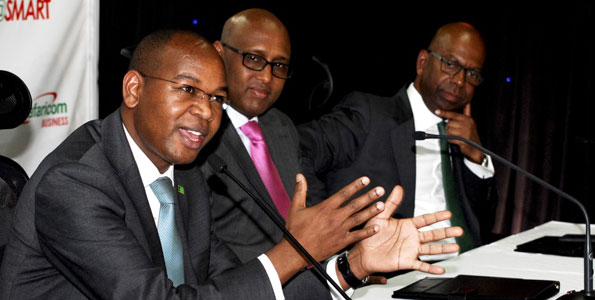
Joshua Oigara: Mobile banking is the key to unlocking wealth

0

The following opinion by KCB CEO, Joshua Oigara, was first published inside the Business Daily.

“Over the last decade, the telecommunication and finance sectors have been key differentiators that have powered the growth of the Kenyan economy. The massive investment in technologies that sit at the heart of these two industries not only created hundreds of thousands of jobs, and new wealth, but it has also empowered an entire generation of young Kenyan millennials who today cannot imagine living in a world that is not connected to the Internet or queuing on a line for an entire day just to check their bank balances.

Our best bet then is that bringing these two industries to work together in a complementary role could fast track Kenya’s rise up the league tables of industrialised middle-income countries.

With the recent rebasing of Kenya’s gross domestic product having put the country on middle income country bracket, what is critical now is to ensure that our prosperity lifts the fortunes of every single citizen.

This will only be possible if we ensure the availability of tools for every citizen to participate in wealth creation and evenly distribute economic growth.

One quick way is to offer the public an easy and convenient way to access financial services to be able to save and borrow to invest.

This calls for innovation in the way the country finances growth, and mobilises resources to fund capital investment. More people need to save more – in a broader way than we are currently doing – so as to generate enough investments to power growth. It is easy to see why.

Recently, the government initiated the road annuity programme which aims to double tarmacked roads from 14,000 kilometres in the next three to five years. The project is expected to create nearly 137,000 direct jobs and is estimated to cost over Sh300 billion.

The annuity programme means that government expects private sector to step in to finance the project. Financial institutions are the natural choice.

Unfortunately, as it is today, the financial sector would struggle to finance such a project, which would mean a need to syndicate the loan to foreign funding.

The road annuity is just but one project that needs massive funding if Kenya is to experience an accelerated social and economic transformation.

The list includes the second phase of standard gauge railway, leasing of medical equipment, financing of one million irrigation programme, modernising of security system and education.

The list is endless and there is a need for the government not to compete with small businesses for financing from banks.

Unlike most of developed countries where over 90 per cent of the population have access to formal financial services, thus making it easy to save, only about a third of the Kenya population have such access.

Other democracies such as Singapore have used the law to force their population to save – a minimum of 40 per cent of their wage shared equally with employers.

Pooled savings are then channelled into bank loans, providing long-term finance to power growth. The East Asian economies, which were famous for their high levels of investments in physical capital and economic growth from the early 1960s to date, have been characterised by high gross domestic savings of over 30 per cent of GDP.

Unfortunately, Kenya’s gross national savings is low- at 11.1 per cent of GDP in 2009- and does not measure up to our peers in sub-Sahara Africa at 20.3 per cent.

The challenge in Kenya and one that must be addressed then is the question of locked up savings, which is not available for lending and also earn little or no return to owners.

Locked savings, which means money retained in alternative assets such cattle, jewelry or simply cash under the mattress, is largely driven by two factors: lack of access to financial market and savers lack of faith in the institutions taking their money.

To unlock wealth and get it flowing into formal bank accounts we believe that the mobile phone offers the best solution that can both convince people that their money is in safe hands as well as reduce the cost that banks incur to reach customers by building and maintaining expensive branches.

We believe that KCB M-Pesa account which is our latest product borne out of the partnership between Safaricom and KCB will offer the twin solution.

Already the seed of success has been sown and sprouted. Since 2007, M-Pesa has been able to offer over 12.8 million users convenience in moving money.

The trust earned is demonstrated with the fact that M-Pesa is currently moving a quarter of the country’s wealth every year. In 2014, KCB moved Sh7.8 trillion or 1.5 times the size of the Kenyan economy. This is a demonstration of trust Kenyans have in the bank.

Harnessing this partnership is bound to super-charge the cashlite economy and brings full-scale mobile banking and commerce to the masses.

The success of this has already borne fruits in current partnership between M-Pesa and CBA where 4.5 million savers have deposited about Sh5 billion and borrowing close to Sh2 billion in under three years.

The idea then is to dramatically scale up this success ensuring that every single Kenya has a tool to enable them participate in growth by first saving and then accessing credit which is critical in funding growth.”


7 Telltale Signs of a Weak Leader

0

Most people associate a weak leader with being docile, deferential, timid or meek. While that may have some merit, weak leaders can also be bombastic, egocentric, domineering, dictatorial and imperious. Even if you are successful at adding to the bottom line, bringing in new clients or developing new products and services, if people are not seeking you out or jockeying to be on your team, you are a weak leader.

Here are seven behaviors that beset a weak leader:

1. Your team routinely suffers from burnout.

Being driven and ambitious are important traits for successful leaders. However, if you are excessively working your people or churning through staff, than you are not effectively using your resources. You may take pride in your productivity by doing more with less, but today’s success may undermine long-term organizational health.

2. You avoid making the tough call.

A decision needs to be made and you are dancing around the situation. This can stem from the need to be 100 percent certain or not having confidence in your abilities. So you keep sending people off to find more facts in order to get as close to 100 percent as possible. Routinely you wait until the last possible moment so if the decision turns out to be off the mark you can say “we” ran out of time or “we” did not have all the information. In the meantime, you hold up the process and have people spinning their wheels searching for certainty (that more often than not does not’t exist) while other work is not getting done.

3. You do not provide adequate direction.

You are in a rush to get a project or assignment underway but you have not thought through what you want. You gather your team together for a quick kick-off meeting and start thinking out loud. Your meandering unfocused thought process leads to divergent tangents that are contradictory and leave people confused. At the end of the meeting, you still have not clearly communicated concrete goals and objectives and many murky areas are left open to interpretation. Ultimately, you’re leaving it up to the team to figure out and take the “I’ll know it when I see it approach”. As the team leaves the meeting they quietly whisper, “Here we go again”. Knowing the assignment will be a chaotic mess.

4. You belittle your team members in a public setting.

Weak leaders will habitually demean others as a way of making themselves look or feel better. If someone is deserving of constructive criticism, do it in private. Creating a spectacle in a meeting in which you make everyone uncomfortable does not put you in power position. Quite the contrary, good people will not tolerate such actions and you will be left with a feeble team that will deliver mediocre results because they are afraid of you.

5. You make commitments but do not follow through.

You routinely swoop into an important client meeting, and to assert your position, you seize the moment with grand gestures and assurances that you will personally see certain actions through. This makes you look good for the moment but once you have received your glory with the client there is no follow through on your promise(s). You move on to the next big thing and the rest of the team is left to pick up the slack and figure out how to address what the client thinks is a done deal. Over time, this is will diminish your credibility and people will view you as all talk and no action.

6. You ask multiple people to work on the same request independently.

This may seem like a good idea since you will have more to choose from and a greater probability it will get done to your satisfaction. However, when people find out, they will feel angry and frustrated because you have pulled multiple people away from their regular assignment to work on your special project. This is especially damaging if you do not use someone’s work. It will signal that you do not trust either of them enough to do the job. Or it will mean you take a scattershot approach to managing the business hoping that something will stick. In either case, it will begin to erode your leadership position.

7. You don’t provide honest feedback.

In order not to hurt someone’s feelings, or to keep them happy, you do not provide truthful actionable feedback. This can be about their performance, likelihood of being promoted or whether you see them as a long-term player on your team or with the company. By skirting the issue you create unrealistic expectations for the person on your team and confusion when implied promises are not kept. Left unchecked, people will place little credence in what you say assuming everything that comes out of your mouth is a half-truth. Providing tough, yet fair, feedback is a hallmark on a strong leader. In the long run, people will appreciate your candor.

Being a strong leader requires equal amounts of self-awareness, self-management and humility.

Juja MCA says he was locked in car boot for two weeks amid claims he stage-managed kidnapping

0

Juja MCA Samuel Gitau who had been missing for two weeks and who was found on Sunday evening has come out to say that he had been locked in a saloon car boot for two weeks! Apparently, the Juja MCA managed to jump from a moving vehicle along the Nairobi-Nakuru highway as members of the public moved in to rescue him.

Read more: Missing Juja MCA Samuel Gitau found in Nakuru

The Juja MCA was seriously injured on the head and hands after he landed on the tarmac at the trading center 15kms from Naivasha town. According to witnesses he spoke to, the Juja MCA said that he had been jumped out of the car boot as the car slowed down at Ihindu trading centre at around 8pm in Nakuru County.

“He says that he has been locked in the car boot for all that time adding that during the carjacking incident he was hit on the stomach with a blunt object,” said the area MCA Samuel Waithuki.

“After jumping from the moving car members of the public suspected that something was amiss and rushed to his rescue as the suspects fled towards Nairobi.” He added that the Juja MCA kept complaining of pain in his stomach and head after he landed on the tarmac during the escape.

Nonetheless, the details surrounding the abduction of the Juja MCA have been put in doubt with claims that he may have stage-managed the kidnapping. Police have since launched investigations surrounding his mysterious disappearance.

Missing Juja MCA Samuel Gitau found in Nakuru

1

Missing Juja MCA Samuel Gitau has been found. MCA Samuel Gitau was found locked in a house in Nakuru. According to reports, police investigations have already been started to establish the cause of the kidnap and unravel the mystery surrounding his disappearance.

A search for Mr. Gitau had already been initiated in his Juja ward, and mainly concentrated around the area’s coffee fields. Kiambu Governor William Kabogo had issued a reward of Sh. 100,000 to anyone who’d help find MCA Samuel Gitau.

The MCA went missing on the night of Saturday March 7 at around 10.30 pm. According to relatives, MCA Samuel Gitau had left his Mirima-ini estate home at about 8.30pm to withdraw money from an ATM in Juja Town. However, he did not return and his vehicle, a Toyota Voxy, was found the following morning at the entrance to his compound. MCA Samuel Gitau expectant wife, Mrs Tabitha Wairimu, had further explained that the MCA excused himself to drive to the ATM, he left his phone charging in the house.

Mr Gitau had been listed as the chief guest for a fundraiser at the local St Mary’s Catholic Church the following day on Sunday. Reports indicate that MCA Samuel Gitau was then rushed to Agha Khan Hospital in Nairobi for medical check up and treatment.

More to follow…

The NSE billionaires set to make a cool Sh. 1 billion in dividends

The following market report was first published in the Business Daily.

14 top NSE billionaires investors with shares in Equity Bank, NIC Bank, DTB, CFC Stanbic and Barclays Bank are all set to earn about Sh. 1 billion in dividends, revealing the wealth creation machine that is the NSE.

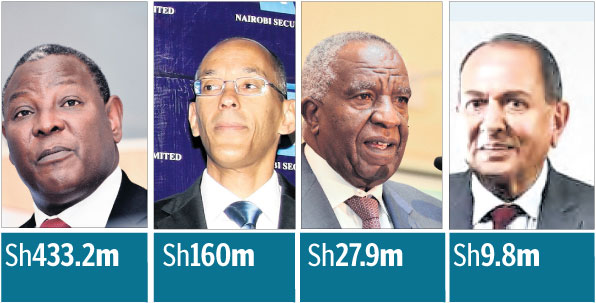
Equity Group Holdings CEO James Mwangi is arguably the NSE dividend king, who is set to earn Sh433.2 million for his 6.5 per cent stake in Equity, which has reported the largest net profit of Sh17.1 billion. His 6.5 per cent interest in the bank includes a 1.62 per cent shareholding by his wife Jane Njuguna.

The Bablas are ranked second, with the family expecting a combined dividend of Sh163 million from their interests in KCB and Equity. The investors have been accumulating banking stocks at the NSE in the past few years, a move that has seen them rank among the largest individual investors in Kenya’s two largest lenders.

Mr Andrew Kimani is set to earn Sh162.6 million for his 2.4 per cent interest in Equity, which has proposed the largest absolute dividend payout of Sh6.6 billion.

KCB, which was previously the most profitable bank, will follow with a Sh6 billion payout, representing 36 per cent of the Sh16.8 billion net profit it made last year.

Meanwhile, Philip Ndegwa’s family is in line to pocketing Sh160 million from their ownership of a 25 per cent stake in NIC Bank, which will pay a total of Sh640 million in dividends. The dividend is particularly rewarding for NIC shareholders, including the Ndegwas, who last year pumped an extra Sh2.1 billion into the company to fund its growth plans.

The additional funding, in the form of a rights issue, was in effect a dilution of past returns including dividends. NIC is betting on the new funds to grow its earnings in the coming years and ultimately reward shareholders with higher dividends and capital gains.

Ms Leah Muguku, a relative of the late businessman Nelson Muguku, will receive Sh59.3 million for the 0.8 per cent stake she inherited in the bank. The Mugukus have sold the majority of the shares the patriarch held in the bank, earning billions of shilling from the divestitures. The original stake would now be earning more than Sh500 million in dividends — based on Equity’s current dividend policy — assuming it was left intact.

Mr Simon Thuo, another long-term investor in Equity Group, is slated to earn Sh47.6 million for his 0.7 per cent interest in the lender while Franklin Ndii will pocket Sh36 million for his 0.54 per cent interest in Equity ahead of the bank’s chairman Peter Munga who stands to get Sh27.9 million for his 0.4 per cent per cent stake. Mr Munga has significantly reduced his ownership in the bank, earning billions of shillings in the process.

Benson Wairegi, the chief executive of insurance firm Britam, is enroute to pocketing Sh16.3 million for the 0.25 per cent stake he holds in Equity. He will be followed by Mr James Kimani who is scheduled to get Sh15.7 million for his 0.24 per cent stake.

NSE Billionaire investor Jeremiah Kiereini will earn Sh12.2 million for his 0.5 per cent interest in CFC Stanbic Holdings. Mr Baloobhai Patel, another NSE billionaire investor, is expecting Sh9.8 million from his minority interests in Barclays and DTB. Mr Patel has the bulk of his net worth — in excess of Sh3 billion — outside banking stocks.

Mr Duncan Ndegwa will receive Sh5.5 million for his 0.8 per cent interest in NIC Bank while billionaire investor Amin Nanji Juma is slated to earn Sh5.3 million for his 0.9 per cent stake in DTB where he is the single largest individual investor.