Home Blog Page 2275

How to Ignite Work Place Engagement

0

The most important power a CEO has is the power to motivate the company’s employees. However, few CEOs realize just how critical it that job is. Often, the ability to motivate is chalked up to a natural flair or charisma — but in fact some simple practices can help any leader inspire an entire company.

Setting meaningful goals can help even disconnected employees feel invested in the company’s success. And an enthusiastic workforce equals a high-performing company.

To begin the process, follow these three steps:

Begin with company goals

It’s the job of the CEO to select the company’s top goals. Maybe they include new product development or a way to help the local community. They’re not random, of course; you’ll listen to the market, analyze past results and brainstorm with key advisors. But the real secret here is listening to the customer. The smartest businesses today practice agile strategies, and in this case that means aligning your goals with what your customers are trying to achieve.

Focus on the ‘why’

It’s the CEO’s to draw the connection between the employee’s duties and the customer’s benefit. Employees need to know that what they do during the day impacts big-scale results. By putting the employee’s purpose in the context of helping others, you can help everyone understand their role in achieving the company goals. It’s a critical ingredient in making sure the goals get executed. If you fail to provide a “why,” your busy employees simply won’t make their goals a priority.

Get your employees involved

This is where most leaders derail the whole goal-setting enterprise, as they tend to get overly detailed in their planning and try to set everyone else’s goals. Because the CEO doesn’t know how to actually do everyone’s job, those plans wind up being implausible and disconnected from the staff’s day-to-day reality. Instead, trust your people to write their own goals. Allowing employees to select the “how” of their contributions will boost morale and help them connect their work to results. Provide guidance and motivation, but let them chart their course.

source:entrepreneur

Ferdinand Waititu wins Kabete parliamentary nominations

0

Former Embakasi MP Ferdinand Waititu has won the Kabete parliamentary seat nominations for the Jubilee Alliance Party (JAP) with over 14,000 votes. At the time of going to press a few minutes past 9.30 pm, Mr. Ferdinand Waititu is said to have been leading with 13,082 votes. He was followed by Wilson Mburu with 1,861 votes, Lewis Nguyai with 1,604 votes and Charles Chege with 1,188 votes.

The nominations are being held ahead of a by election following the murder of former Kabete MP George Muchai. Mr. Ferdinand Waititu lost the gubernatorial race to ODM’s Evans Kidero in the 2013 General Elections.

Mr. Ferdinand Waititu now looks set to return to parliament under the newly created party JAP. It remains to be seen if President Uhuru will hit the campaign trail on behalf of Mr. Ferdinand Waititu. During the race, Ferdinand Waititu is said to have engaged the area Senator Kimani Wamatangi in a war of words!

More to follow…

Ownership row emerges over ‘Equitel’ trade name

0

The Standard: A leading retail commercial bank and an insurance agency are locked in a fierce battle over ownership of the business name ‘ Equitel’. This dispute over who should use the name Equitel could end up in court if both Equitel Insurance Agency and Equity Group Holdings Limited, which is piloting a mobile money platform named Equitel, do not agree to settle the matter amicably.

The set-back comes as Equity Holdings Limited, through its subsidiary Finserve Africa Limited, fights off some six cases already filed in court, stopping it from rolling out the Equitel Thin Sim mobile banking platform, a revolutionary product that could alter the entire mobile banking platform.

In a letter dated November 10, 2014, Sisule Munyi Kilonzo and Associates, lawyers acting for Equitel Insurance Agency, terms as unlawful the use of the trade name Equitel by Equity Holdings Limited. Equitel Insurance Agency is demanding that Equity Holdings desist from using the trade mark, including withdrawal of all publicity and advertising materials that contain this word.

Law firm Sisule Munyi Kilonzi and Associates, has threatened to take legal action against Equity Holdings Limited, if their demands for withdrawal of the name Equitel are not met. But in response, Coulson Harney, representing Fineserve Africa Limited, a subsidiary of Equity Holdings Limited and proprietor of the registered trade mark TM 80606 Equitel, denies any wrong doing. This is in a response letter dated December 5, 2014 written to Sisule Munyi and Kilonzi advocates.

“Our client is the proprietor of Equity Insurance Agency registered as such in 2007, to provide insurance services to its customers. Therefore, registration of Equitel Insurance Agency was targeted to misrepresent to the public that it was offering our client’s insurance services,” said in part a response letter sent to Equitel Insurance Agency lawyers and signed by Anthony Njogu- a lawyer at Coulson Harney.

Equity Holdings is further accusing Equitel Insurance Agency of using insider knowledge to set up its operations, given that it was an account holder at the bank and had first-hand experience of the services Equity Insurance was offering and, therefore, sought association in the registration of its own business name.

Section 7 of the Trademarks Act, Chapter 506 of the Laws of Kenya states in part- that the right of a proprietor of a trademark is infringed upon by a person who, not being a proprietor or registered under the trade mark, uses a mark identical with or nearly resembling it as to deceive or cause confusion in the course of trade. “The mere fact that your client may have been the first to register the trade name does not override the common law protection of the name, goodwill and reputation amassed by our client over the years’’, said Njogu in response on behalf of Equity Holdings.

Equity Holdings has also threatened to take this matter to court, one against a pile of six legal suits-allegedly instituted by the competition through proxies, effectively putting launch of its Thin Sim mobile banking technology, on the back burners.
“We have had many roadblocks but in the fullness of time, the truth will be clear,” said Dr James Mwangi-Equity Holdings Chief Executive and MD.


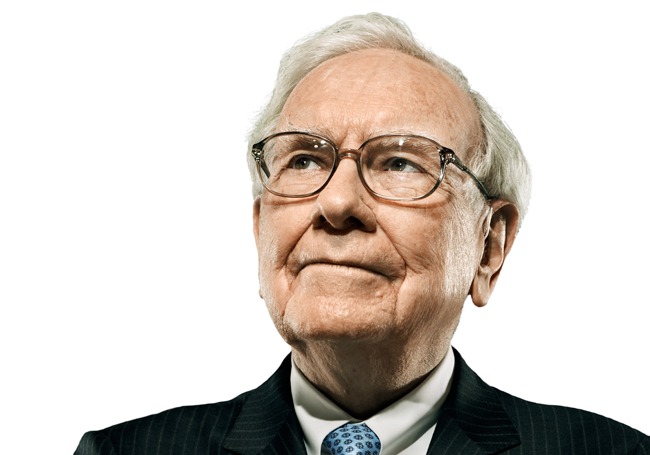
4 Essential Traits Warren Buffett Looks for in a Leader

0

Buffett recently released his 50th letter to shareholders of Berkshire Hathaway, in which he and his business partner, Charlie Munger, talk about the traits they look for in a CEO of a Berkshire subsidiary company—characteristics they’re sure to keep in mind when the time comes to name a successor.

So, what does it take to be a business leader in Buffett’s eyes? Namely, these four traits.

1. Trustworthiness

No surprise here. You can’t lead a company unless your team, your clients, and the public (if you’re way up there) trust you and your judgment. Building trust, then, is no small matter when it comes to leading a company, or even a team.

To do this, think consistency, communication, and compassion. You have to be the type of person who always honours commitments, discusses matters transparently, and, importantly, exudes kindness. No, you don’t have to like someone to trust him or her, but it definitely helps.

2. Skill

Another way to build trust is to be really, really good at what you do. Being highly skilled demands respect, and for the hard-core left-brained people in the organization, this is the only thing that will get their buy-in.

Buffett, an expert investor tasked with allocating capital in Berkshire Hathaway, will no doubt consider this an essential skill when choosing a successor. Besides technical skill, though, less tangible abilities related to strategic thinking, project management, or relationship building are also sought after and are often the difference between mediocre and inspirational leadership.

3. Energy

It’s not all about what you can do; it’s also about how you do it. When you’re the leader of a company or team, all eyes are on you. It’s important to be self-aware when you’re a leader and understand that you must imbue energy and enthusiasm into your actions. The difference between a boss who, say, was clearly forced to offer more vacation time and a boss who does so to make sure his or her employees are happier and more well-rested isn’t hard to see. Be the latter one.

4. Love for the Business

This is perhaps the most unexpected trait in this list. Buffett expects more than just someone who can do the job and get buy-in from others. He wants someone who actually loves the company. This goes beyond being excited about the company’s product or outlook. It’s not about meeting job requirements or having certain certifications. It’s about passion for the company and the desire to grow and care for it.

source:themuse 

How Great Entrepreneurs Reason

0

The most productive time of the day is not early morning. According to STEVE TOBAK– contributor to Entrepreneur magazine; work productivity has absolutely nothing to do with your daily rituals or habits. He even further asserts that your success probably has little to do with productivity in the first place.

A great mind is a terrible thing to waste. So quit wasting yours. And quit wasting the precious time you have to build your career and business worrying about stupid nonsense like what time you get up, how you eat breakfast, your sleep habits, and what kind of showers you take.

Here are five questions that enormous brain of yours needs to answer if you want to make something of yourself and have a successful business someday.

What customer problem do you solve?

I don’t care how much you love doing something or how passionate you are about doing it, if you don’t come up with a big problem that customers will pay to have solved, your entrepreneurial career will be very short-lived.

What’s your solution and what’s its value proposition?

If your products and services don’t offer a far superior value proposition with respect to the competition, then you’ve got what’s called a commodity product. That means you’re going to be slugging it out on price. That’s not a good place to be.

How are you going to win and keep customers?

Even the best solution doesn’t always win. You still need a plan to reach potential customers, win the business, keep customers happy, and put up competitive barriers because competition always goes where the business is.

How are you going to gain market share and scale?

You’re always creating a new market, expanding the overall market, or taking market share from others. Whichever it is, you need strategies and capital to do it. Market share isn’t just costly to lose. It’s costly to gain, as well.

How are you going to fund your growth?

This is where most entrepreneurs and small business owners fall short. You have to have a clear plan with reasonable assumptions to fund your business as it grows. Otherwise, you’ll run out of cash – easily the most common reason businesses fail.

source:entrepreneur

Breaking the cycle of bad relationships

0

The prospect of finding the right partner is always endearing, especially after a number of bad relationships.

There is excitement, faith and hope when a new relationship is born. You cross fingers and hope that at long last, you have found ‘the one’.

At the onset, things seem to be working. Your work-days brighten up. You feel more energetic and stress-free.

But then gradually, your bubble is burst by a sequel of bad relations that end in heart break.

And once again, you are back to square one, wondering how many more frogs you will have to kiss before meeting your prince. You are not alone.

Many other women are in the same basket. Take Keziah for instance. In her mid 30s, she has suffered many heart-breaks while searching for Mr. Right.

“I have not had luck with relationships,” she says with a pained and dejected look on her face. “I have just broken up with my boyfriend. We had been together for six months. Then I found out that he had a wife in the countryside. It was devastating.”

Unknowingly, Keziah has dated three other married men. Expectedly, the break ups are taking a huge emotional toll on her.

“Whenever I find someone, he never stays for long. I am always left. Sometimes I wonder: Will I ever find someone to be happy with? Don’t I deserve to be happy? Or there is something wrong with me? Aren’t I beautiful enough?”

Tell-tale signs

Annette is another victim of bad relationships. She is always falling for the wrong guys, even though there is an abundance of good men around her. She is just not attracted to them. The trouble is, she never learns from her many break ups.

“I love spontaneity, drama and kinkiness. It’s fun, sexy and exciting,” she says.

And true to her word, Annette has dated a whole bunch of men who never care about her welfare or feelings.

Severally, she has closed eyes on the tell-tale signs that her partners have all been bullies. She hopes that she can change them.

“No one is perfect,” she reasons. “We all make mistakes; we all have our weaknesses. You cannot condemn anyone on that basis. Moreover, everyone is capable of changing for better. Even some of those hardcore criminals at Kamiti do change!”

Whereas the tendency to fall for the wrong kind of guys can be partly genetically explained, the behaviour is usually learned.

Research shows that partners on the rebound or desperate to pair off often suffer heart break.

In marriages, over 50 per cent of all second marriages usually end in divorce.

The reasons behind this often go way back to the victim’s childhood.

Noteworthy, as an adult, you are likely to seek out emotional situations similar to those in your childhood.

For example, if one or both of your parents was absent, you may be inclined to feelings of being ignored.

As a result, you may be subconsciously looking for partners who will ignore and neglect you.

Or if your parents were regularly in conflict, then you are likely to look for partners with whom you can fight.

Fear of intimacy

Similarly, it might be that you are trying to make up for something that went wrong, or was missing when you were growing up.

Like an absentee father. So you look for someone who is unavailable, usually a married partner.

You do as much as possible to make them love you to make up for your absentee father.

The fear of intimacy is another key contributor to this. It is usually inspired if you were physically or emotionally abused by your parents, guardians or close siblings in your infancy, or even past boyfriends.

You do not want anyone to come too close to you, so you choose partners who can never do so. And married partners often make for ‘good’ choices.

If you are always falling for people whose lives are all messed up, it could be that one of your parents – in this case the father – had organisational problems.

Your mother devoted all her time to caring after him, which you subconsciously want to do.

Or you may decide to go for a bad guy in the hope that you can change him. However, you will never change him. Bad guys don’t change.

In fact, nobody does, unless they make a conscious, deliberate decision to, and fully commit themselves to making that change.

All said though, the cycle of bad relationships is not a maximum security confinement from which you can’t escape.

So what can you do to set yourself free from bad unions? Start by asking yourself about your past relationships using these guideline questions:

Do I seem to date the same type?

Look at the partners you have been with. Pick out their common attributes.

For example, are they all married? Are they all bullies and batterers? Or are they all good-looking, spontaneous and full of drama?

How have I contributed?

Analyse yourself in respect to your actions in all the bad relationships that you have been in. For instance, are you overly critical or jealous?

Look at your childhood: Does any event reflect in how your mate treats you? See if you need to change, what you need to work on, and how best to go about making that change.

Are my spouses genuinely interested in me?

Look at all the people you have dated. What were their intentions for you?

Were they really interested in a long term union or was it just for fun?

Make a list of the most important items that you must have in a relationship.

Clearly identify your needs, then pair them off with your mates.

See if there is any relation, correspondence or acknowledgment of the same.

Ask yourself what kind of man you should have. Do not go for anything less than what is reflected by your values.

What is a good relationship?

Get a fair opinion of what constitutes a healthy relationship. Clearly identify how decent and proper interactions should be carried in a relationship. Note your roles and those of your partners.

Compare your answers to your current situation. If you are in a relationship, ask yourself whether your partner is anything like your list.

If he is not, cut tail and run! Do not ready yourself for more heart break; reach out for groups where nice people hang out. Befriend them.

That way, you minimise your chances of pairing off with the wrong kind.

Better still, you have nice guys to fall for. Remember, you are important, and deserving of a happy and fulfilling relationship. So go for it!


How to tell if your man truly loves you or not

0

Nancy Roxanne: Have you ever met someone who was so overwhelmingly desirable that you immediately wanted to jump his bones? You become so strongly attracted to that person that you convince yourself that you are in love.

What you think is love at first sight could actually be lust at first sight. Strong sexual attraction can obstruct sound practical judgment. While navigating the dating scene, it is possible to misinterpret a fatal physically attraction as love. Lust is driven by desire and is based solely on physical attraction.

However, being in love doesn’t exclude lust. Lust is actually the first stage of falling in love. So, how do you distinguish between the two? The following tips will help you figure out if you are madly in love or madly in lust.
Lust is an immediate feeling, while love grows over time. There is no such thing as love at first acquaintance. I suspect that the person who coined the phrase ‘love at first sight’ was having trouble distinguishing love and lust as well. It is only in the movies where two people glance at each other from across the bar and know that they were meant for one another. Lust is not about long-term compatibility. If you feel head-over-heels crazy in love with a person you have just met, you are most definitely suffering from a severe case of lust. When you are in lust, sex is just about the only thing you have in common

When you are inflamed with lust, you are only interested in having sex. The other person’s feelings, hopes, dreams and aspirations never come to play. You never have deep meaningful conversations outside the bedroom If you find that you never really discuss deep feelings with your lover, you might be in lust. You’ll end up leaving immediately after sex because there is nothing else the two of you can do together. You only become affectionate when initiating sex.

People who are genuinely in love will show each other affection at all times. However, when in lust, if the affection is not leading to sex, then it is just not worth the trouble. You will only kiss and hug your lover or hold his hand when you have got more on your mind. Real couples crave all that mushy stuff even when sex is out of the question. Affection should not be seen as an opportunity for sex in healthy relationships. Constant groping of the boobs and booty is not affection!

When you describe your lover, you only talk about his physical attributes Pure lust is based solely on physical attraction. You are totally focused on the person’s looks and body. If you find yourself always talking about his great abs, his sweet lips and toned muscles, you could be in lust. People who are in love describe their partners’ real qualities first before getting into the physical attributes.

Vimal Shah’s stake in Bidco revealed

0

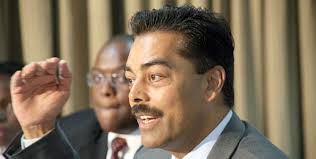
Business Daily: Billionaire businessman Vimal Shah has equal shareholding as his father Bhimji Shah and brother Tarun Shah in cooking oils multinational Bidco, documents filed with the World Bank’s private lending arm IFC have shown.

Vimal, who is the managing director and public face of Bidco which sells edible oils and washing detergents across Africa, controls 33.3 per cent shares of the company according to disclosures made by the International Finance Corporation (IFC), the World Bank’s private lending arm. His father and his brother also have 33.3 per cent shareholding in the Thika-based manufacturer.

The shareholding structure of the Kenyan-grown multinational has remained a closely guarded family secret for the 45 years that company has been in existence. “Bidco is a family business owned by father and founder Bhimji Shah 33.3 per cent, and sons Tarun Shah 33.3 per cent and Vimal Shah 33.3 per cent through an intermediate investment holding company called Hemby Holdings Limited,” IFC says in the filings.

Bidco is one of Kenya’s largest privately-owned manufacturing concerns with a turnover estimated at Sh46 billion as at 2013.

The shareholding structure is part of disclosures made to the World Bank’s private lending which the manufacturer has approached for a Sh2.1 billion loan and a further syndicated debt of Sh1.23 billion, bringing the total IFC-linked advance to Sh3.33 billion.

“The company (Bidco) has recorded extremely high growth rates over the past few years and is well positioned for this expansion,” the IFC notes in its documents.

The money, which is yet to be disbursed, will be used to expand Bidco’s Thika-based plant as well as construct a new factory on the same land in Kiambu County.

Bidco has already announced plans to venture into the lucrative soft drinks market with a Sh1.7 billion beverage plant that will set it up against multinationals such as Coca Cola and Del Monte.

“The move is in line with our expansion plan to play in even more categories of fast-moving consumer goods other than those we are already in,” Mr Shah told the Business Daily in a past interview.

Bidco has evolved from a garment factory founded in 1970 by the family patriarch Mr Bhimji to one of the region’s largest fast-moving consumer goods companies in the region. The company has grown its portfolio to over 23 brands including edible oils, cooking fats, soaps, baking powder, animal feeds and detergents.

Bidco currently commands a market share of over 60 per cent in the cooking fat category and 54 per cent of cooking oil market in Kenya, according to Consumer Insight.

Flame Tree acquires four new food brands

0

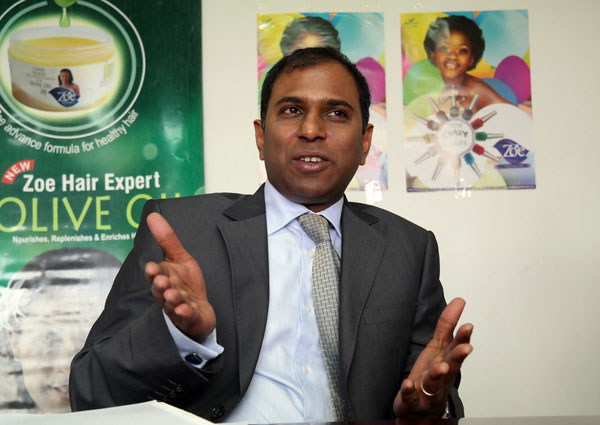
Nairobi Securities Exchange listed firm Flame Tree Group has announced acquisition of four food and snack brands from Chirag Kenya –Natures Own (spices), Chigs (potato crisps), Honeycomb (biscuits) and Gonuts (nuts).

This brand portfolio had annual turnover of Sh90 million for 2014 and is distributed through leading convenience, and retail channels. As well as the four brands, Flame Tree Group will be acquiring the company’s 60 employees and the Nairobi-based factory and distribution assets.

The acquisition is expected to be completed, subject to customary conditions, including competition authority approval and ratification by the board, during the coming months. Flame Tree Group CEO Heril Bangera said from a financial perspective, the firm believes this is a worthwhile acquisition.

“From a strategic perspective we are delighted to add new brands to our food and snack portfolio, which already includes Happy’s. I am particularly excited about our entry into the spices category with Nature’s Own spices. This is a well-loved brand in Kenya and has been a common feature in my spice cupboard for the past 25 years,” he added in a statement.

“The acquisition provides Flame Tree Group with an established platform for growth in the food space. It is also in line with our strategy of creating a diversified FMCG business – manufacturing across Africa and building a portfolio of much-loved African brands.”
 

ALY KHAN SATCHU: INNOVATION SET TO BOOST ECONOMY THROUGH ENTERPRISE KENYA

0

Aly Khan Satchu: On Monday and Tuesday last week, I attended the ICT Authority’s inaugural ICT and Innovation conference at the Kenyatta International Convention Centre.

The KICC is actually an evocative and retro centre and it is good to see it once again playing its proper role. The President’s presence also bestowed the required gravitas on the occasion.

What we do know is that Kenya is an outlier in ICT in Africa. McKinsey ranks Kenya’s Internet GDP at three times the sub-Saharan Africa average and top of class in SSA with Senegal.

Kenya took a big and bold bet on the broadband economy and McKinsey’s IGDP ccore confirms that the bet was well made. The runaway success of M-Pesa — even Bill Gates is tweeting about it — and its extension and integration into a new and still fluid payments configuration is strong testament that innovation pays and creates opportunity.

Of course, innovation can be disruptive. As Joseph Schumpeter once described it: “The opening up of new markets, foreign or domestic, and the organisational development from the craft shop to such concerns as US Steel illustrate the same process of industrial mutation — if I may use that biological term — that incessantly revolutionises the economic structure from within, incessantly destroying the old one, incessantly creating a new one. This process of creative destruction is the essential fact about capitalism”.

Shareholders of Nation Media, for example, who took the share price to a 24-month low on Friday, are beginning to fret that the #DigitalMigration campaign might prove a Schumpeter moment.

It is also worth remembering that this ICT revolution is a recent phenomenon. Just under 10 years ago, I remember spending $7,000 (Sh638,120 at the current exchange rate) to build a 170-foot tower in order to get a very intermittent 32 kilobytes Internet connection, for which I was paying over $500 (Sh45,580) a month for the privilege.

I was marvelling to myself last week that now I can listen to Mario Draghi’s press conference on a live stream and run another 10 programmes simultaneously on my computer. That’s a very big gap right there that has been closed.

Touching on Draghi, the euro fell like a stone on Friday and my January call for parity in the euro-dollar looks likely, and very soon.

The man from McKinsey explained that our IGDP component is predominantly private sector. If you look at the most successful ICT economies, you will note that the government also play a role as a precipitator. Think Israel, think the US.

Part of closing the gap, will require the government to take its operations into the 21st century and this will create an outsized demand-pull for the sector. ‘Think Kenya Buy Kenya’ was a call to the government to play that role of a precipitator.

There is plenty of innovation out there and the young Kenyans proved this at the KICC during the conference.

The point is, all the ingredients are here. And now we are looking for the magic recipe that will take our IGDP from above three per cent to near 10 per cent. We need the GoK to play an even bigger role. Enterprise Kenya [modelled on Enterprise Ireland] is a giant step in the right direction. The capital markets [GEMS in particular] have optimised the platform. We are at a tipping point. Let’s tip over.