

Home Blog Page 2279

PASTOR IMPREGNATES 20 CHURCH WOMEN, SAYS HOLY SPIRIT TOLD HIM SO

0

A self-styled 53-year-old pastor from Nigeria who impregnated more than 20 members of his congregation, including several married women and young girls, claiming that the Holy Spirit told him to have sex with them has been arrested for sexual abuse.

Ebere Amaraizu, DSP, a spokesman for the Enugu State Police Command told NaiJ that general overseer of Vineyard Ministry of the Holy Trinity, Pastor Timothy Ngwu, was arrested for abusing his female members.

“The pastor claims to be obeying prophetic/spiritual injunction to do the will of God, which is to impregnate any one chosen and revealed by the Holy Spirit, irrespective of whether the woman is married or not,” said Amaraizu.

“When the woman is delivered of the baby, the child remains in the ministry with the mother for life,” he added.

According to a Vanguard report, Ngwu was reported to the police by his estranged wife, Veronica Ngwu, who got tired of his lascivious behavior after he impregnated her young niece.

A brother of the pastor, who did not want to be identified, told Vanguard that he had been warning Ngwu and his family about his behavior for a long time but he refused to listen. The arrest, he said, was God’s wrath falling on his brother.

“Let me tell you, God’s anger has befallen my brother, we have severally appealed to him to stop what he was doing but he refused. He has colonized our compound, bearing children with recklessness. He accused us of being jealous of him because he is doing the will of God,” the brother told Vanguard.

“Look at these buildings here,” he said pointing to the church compound. “He (pastor) has converted all of them to himself in the name of vineyard. I can’t say exactly what informed his spirit to the devilish act in the name of God. He sacked his betrothed wife who has three children for him and embarked on impregnating married women and young girls. Look at the whole compound littered with children of different sex and age,” he lamented.

“How can an educated man of his status reason like an unrefined man? All members of the vineyard are fools, how can a woman abandon her husband for another man in the name of worshiping God and practice adultery? I cannot get myself involved in this matter; Vero has opened the vessel of worms in the vineyard. Let them sort themselves out with the police but I want the ministry to be shut down completely,” he added.

Ngwu told NaiJ that he has approximately five wives with 13 children along with concubines he acquired by the prophetic will of God.

He said he never had sex with any of the married women unless their husbands agreed with the request of the Holy Spirit.

Calista Omeje and Assumpta Odo, two of the women who left their husbands to live with the pastor said they did so based on the pastor’s prophetic anointing.

Calista, who has 10 children with her husband, said Ngwu had impregnated her but the baby died. She also revealed that she gave her daughter to him. Odo, a mother of eight, said Ngwu impregnated her and her daughter.


MAN UNITED’S FELLAINI DUMPED BY PORN STAR GIRLFRIEND

0

Manchester United midfielder Marouane Fellaini has been ditched by his porn presenter girlfriend – despite her love of his ‘cute’ hair.

Fellaini got with adult TV star Roxanne Jeffers a year ago, with the pair ‘sexting’ during the World Cup. The 26 year old Man United midfielder has been dating Jeffers for around a year, though for a large portion of that time the pair have only been able to communicate via the aid of sexting and Facetiming, though no doubt Fellaini is still crushed by the recent developments.

But despite Roxanne telling friends she loved his ‘cute hair’, Fellaini was apparently only a ‘distraction’ and has now been dumped.

‘Roxanne and Marouane have been sexting and Facetiming each other for most of the time he’s been away,’ a source told the Sun.

‘It’s been a great distraction for Fellaini and Roxanne is really into him — she thinks his hair is very cute.’ Jeffers is said to have been, and possible still is, a big fan of Fellaini ‘cute hair’ though this is seemingly insufficient a reason for her to continue the relationship any longer. Jeffers, who also works a glamour model, previously dated Ashley Cole.

NAIROBI SECURITIES EXCHANGE IS ON A FULL-ON BULL RUN

The following analysis on the Nairobi Securities Exchange by investment guru, Aly Khan Satchu, was first published in The Star.

“The Nairobi Securities Exchange has been on a Kerry Packer type winning streak. Kerry Packer was an Australian tycoon who founded World Series Cricket which was a break away professional cricket competition staged between 1977 and 1979. World Series Cricket started the innovation process which re-invented cricket.

Kerry Packer was a famous and lucky gambler and apparently walked into Vegas one evening and there is a noisy Texas Oil-Man around whom all the attractive girls are buzzing like bees and he calls over the waiter and asks;

”How much is that man worth”

The waiter responds ” $60m.”

Packer walks over and introduces himself and takes out a coin and says ” “I’ll toss you for $60m”

Packer was, more remarkably, once reported to have won 20 hands of baccarat in a row at Las Vegas.

The reason Packer came to my mind was in part because the Cricket World Cup is underway and because The Nairobi Securities Exchange has been on a red hot winning streak of mythic proportions. The Nairobi NSE20 has soared +7.42 per cent and to a more than seven year high. The Nairobi All Share has ramped +7.87 per cent higher so far. We have been in a full-on bull market for over 36 months now.

We are now slap, bang and in the middle of the earnings season at the bourse. And last week, I took myself off [and my camera crew – I really am pleased with my investment in some ”pukka” camera equipment because what is clear now is that we are in a revolutionary digital moment] to the Hilton Hotel to hear the earnings release from Kenya Commercial Bank. What caught my attention and everyone else’s was an eye-popping acceleration of Sh100 billion in the asset base year-on-year. That was the signal in the noise. Mr. Oigara characterises this moment in our region as a catalytic moment. If you believe its a catalytic moment then putting a Sh100 billion to work is a serious statement and that’s the point.

Further evidence of why this is the moment to be putting Sh100 billion to work was a report carried on Bloomberg last week which stated:

”The world is expected to grow 3.2 per cent in 2015 and 3.7 per cent next year after expanding 3.3 per cent in each of the past two years, according to a Bloomberg survey of economists. China, the Philippines, Kenya, India and Indonesia, which together make up about 16 per cent of global gross domestic product, are all forecast to grow more than five per cent in 2015.”

Kenya ranked third in Bloomberg’s All-Stars of the Global Economy for 2015.”

DNA CONFIRMS BODY IN VOI MORGUE TO BE OF MESHACK YEBEI

0

The results of a DNA test conducted on a body that has been lying at Moi Voi Hospital mortuary since December 30 has confirmed that it is that of International Criminal Court witness Meshack Yebei.

The family has confirmed that the tests had turned positive. Ben Yebei the brother to Meshack Yebei said they are now waiting for the tests done by the CID in Kenya to further confirm identity of the body. The results of the CID tests were to be released later on Wednesday by head of serious crimes unit John Kariuki.

Dr Ahmed Kalebi of Lancet Kenya confirmed the results of a parallel DNA test to that of the government. Dr Kalebi said the samples that were taken last Friday matched those of the mother and Meshack Yebei.

The family is waiting for results from the government pathologist before a post mortem is done on the body to determine the cause of death of Meshack Yebei.

In December, the family of Meshack Yebei had laid claim to a body that was found floating in Yala river. However, the body was claimed by another family, and after DNA tests were conducted at the Moi Teaching Referral Hospital in Eldoret, the body was found to be that of Yusuf Hussein and not Meshack Yebei as his family continued to state.

Should You Avoid or Embrace the Job Hopper?

0

Job hoppers are becoming more readily accepted in today’s workforce.

The stigma associated with not staying in one position, or at one company for very long, is fading. So should employers embrace or continue to avoid job-hopping candidates? Here are three reasons to reconsider hiring the candidate with perhaps a little too much experience (and which candidates to avoid):

They’re quick to adapt

While working at multiple companies in a short period of time may seem like a red flag, it can also work to an employer’s advantage. A previously nomadic lifestyle can give candidates a wide range of experience, in diverse work environments.

This makes it easier for new hires to adapt to their new work environment and better assimilate. A candidate who has little to no experience elsewhere will, most likely, take a bit longer to adjust. More roles, environments and sectors means more experience.

They have a large network of contacts

It’s reasonable to believe that job hoppers will have more business contacts than someone who has been with the same company for an extended period of time. Working for multiple companies can help employees build an impressive network of contacts within their industry. This can be advantageous to employers, as it offers them a whole new network of work-related resources.

They have a range of skills

Job hoppers are given the opportunity to continually hone their skills. With each new position comes new challenges, professional development opportunities and increased skill sets. Not to mention, working at multiple companies means working with a number of professionals, each with their own skills and abilities to learn from. Job hoppers can often make well-rounded employees.

source:entrepreneur

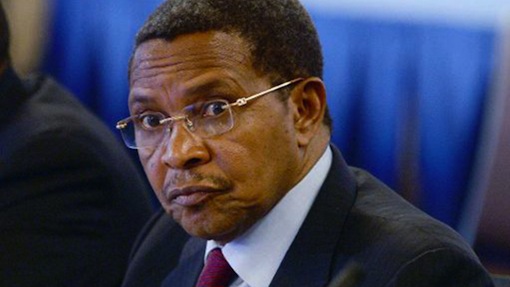
PRESIDENT JAKAYA KIKWETE VOWS TO END ALBINO KILLINGS

0

The Tanzania Albinism Society (Tas) had planned to march to State House in Dar es Salaam on Monday to deliver a message to President Kikwete, but the police banned the demonstration, citing security reasons.

The president said he was ready to meet albino leaders and campaigners at a later date to discuss possible solutions to the killings.

Tanzania’s President Jakaya Kikwete has vowed to end the killings of albinos, which he said had brought shame on the East African nation.

“I’m shocked and saddened at the sudden upsurge in these macabre killings,” he is quoted as saying in a TV address.

Albino people, who lack pigment in their skin, have faced attacks for their body parts, which witchdoctors believe bring good luck and wealth.

The president said such beliefs were false and fuelled the “ongoing evil”.

Witch-doctors banned

The UN warned last year that attacks on albinos were on the rise ahead of elections later this year, with politicians turning to witchdoctors to improve their luck.

“It is a false belief that if someone has the body part of a person with albinism, this will bring success in business, fishing and mining activities. This is what has been fuelling this ongoing evil,” Reuters news agency quoted President Kikwete as saying in his monthly national television address.

The UN warned last year that attacks on albinos were on the rise ahead of elections later this year, with politicians turning to witchdoctors to improve their luck.

Jakaya-Kikwete

“It is a false belief that if someone has the body part of a person with albinism, this will bring success in business, fishing and mining activities. This is what has been fuelling this ongoing evil,” Reuters news agency quoted President Kikwete as saying in his monthly national television address.

source:kbc


NSE: THE SECRET TO MAKING WEALTH FROM SHARES

The following analysis by investment analyst Rufus Mwanyasi was first published in the Business Daily.

Looking at the market in the past 12 months, one may be tempted to conclude that the market has not realised any value in relation to price. However, if one goes a little further behind say six years ago, then you realise the market has risen actually done better, rising more than 120 per cent despite experiencing two bear markets and one “sideways” market during the period.

In other words, if one just bought the “index” beginning of 2009, the portfolio should have more than doubled by the close of last year which translates to an annual rate of return of 14 per cent.

This is not bad for a six-year wait. I am sure some “best-of-the-breed” investment managers would lose sleep to get this kind of return.

I say all this to show why a clear selection process applied consistently is important in meeting one’s objectives.

Here is a good example. A strategy yielding 10 per cent per year, which may seem small in the eyes of many, but which in a period of 60 years (a little longer than most of us will be or want to be investing, but it proves the point) turns a Sh10,000 investment into a staggering Sh34 million goes to show the power of consistency.

Notice, in spite of the not-so-spectacular rate of return, the consistency of the approach followed on a long-term basis and boosted, thanks to the compounding effect, played a big role in determining results as opposed to merely the annual rate of return.

Sadly, most investors do not need to see the need or value of having a consistent strategy. In their search for investment profits, most investors focus on the spectacular.

Many an investor think investing is about finding one or two hot stocks, buying them, then cashing out for a huge gain.

I know there will always be hot stocks. That’s just the way it is. But usually this group of stocks will run very hot and then very cold. That’s not how money is really made in the world of investments. Far from it, investing is the business of getting a return on your money.

If your purpose of investing is to get rich quickly, then a different strategy is needed and not that of a person who wants to accumulate wealth over a time period.

I would suggest to you that getting rich quickly, which can happen in the stock market, is not as likely and carries with it a much higher degree of risk.

Lastly, a clear investment strategy will include an exit plan. This can be seen in two ways; an exit triggered when a predetermined goal is reached or when an investment turns south and starts to show losses.

The latter is critical since most investors generally do not have a problem exiting when a position shows some profits. Cutting losses has always been a great challenge but it is necessary if one is to survive in the long run.

The infamous speculator Jesse Livermore summed it up best when he wrote, “I believe it is a safe bet that the money lost by short-term speculation is small when compared with the gigantic sums lost by so-called investors who have let their investments ride. The intelligent investor will act promptly, thus holding his losses to a minimum”. I couldn’t agree more.

DSTV INCREASES SUBSCRIPTION FEES

0

Multichoice – DSTV – has announced an increase in the annual subscription fee for DSTV with effect from April 1, 2015. The company cited inflation, satellite lease cost, programming costs and efficiencies effected within the company as reasons why DSTV packages will come at a higher cost.

The increased DSTV subscription fees come at a time when three media houses KTN, NTV and CITIZEN have switched themselves off in protest over digital migration. The Government has ruled out any possibility of reopening analogue television broadcasting for 100 days as suggested by three media houses. Multichoice released their new DSTV subscription fee for the different DSTV bouquets as follows:


Bouquet                           New price


DSTV Premium               KES 8 200,00
DSTV Compact Plus       KES 5 550,00

DSTV Compact                KES 3 250,00

DSTV Family                  KES 1 890,00

DSTV Access                  KES 930,00

DSTV PVR Access          KES 1 020,00


INVEST IN UNIT TRUST TO UNLOCK WEALTH

0

Experts have lauded the unit trust market as a noble investment alternative, yet it has often struggled to shake off the tag that it is meant only for the rich. It also continues to operate in the shadow of other investment options such as shares and real estate.

“Unit trusts are not an option for a small investor like me,” says Mr Joseph Njau, who runs a hardware shop. “I would rather buy shares that can trade in a few days than invest in a fund that will take seven years,” he says.

Such perceptions seem to have affected how the unit trust fund market has been structured. Apparently, many people who would otherwise invest believe that only the rich should consider mutual funds or unit trust schemes — also known as Collective Investment Vehicles.

Also, certain aspects of unit trusts have been more predominant in Kenya than others. According to a study conducted by the University of Nairobi between January 2008 and December 2011, money markets, equity, and balanced funds were categorised as the major groups that represented the extreme end of the investment spectrum. The study established that growth of the fund was the key determinant in the performance of unit trusts.

“As funds grow larger, they tend to become less efficient in their operations. Similarly, expense ratio, age of fund, fund size, and initial investment amount do not have a key influence on performance,” notes the study.

However, with a growing economy and availability of information on the investment options available both locally and internationally, this market seems to have risen from the woodwork, if the current growth statistics are anything to go by.

Most licensed mutual fund traders have also embraced the use of technology, making it easier for existing and potential investors to join, switch between funds, redeem units, and update their information via mobile handsets.

The immediate benefit for investors using their mobile phones for such deals is the reduction in the amount they can invest. At Zimele Asset Management company, for instance, the amount has been reduced to Sh250 and Sh500 for the pension plan and the Zimele unit trust respectively.

Currently, Kenya has 17 licensed fund managers offering various products. “Locally licensed mutual fund companies offer the option to invest in several types of mutual funds which vary according to the type of financial investment that is made,” says Mr Bryan Wesonga, the communications director at Old Mutual investment company.

In Kenya, mutual funds fall into six main categories — money market fund, fixed income fund, balanced fund, equity fund, bond fund, and managed fund. The equity and balanced funds are the most popular, investing in company shares, bonds, and money markets.

“Mutual funds offer each contributor a specific rate of return in percentage form that is usually variable,” says Mr Wesonga. The returns are periodically distributed. According to Mr Wesonga, some funds will allow the investor to redeem their funds at any time. “This should be following a few days’ notice,” he adds.

In May 2011, Old Mutual cut its lump sum or single purchase order investment minimums. In that review, the minimum investment amount for equity, balance, bond, and East Africa funds came down to Sh50,000 from Sh200,000. Similarly, the minimum top-up amount decreased to Sh5,000 from Sh20,000. “This move has enabled us to attract more investors who previously thought the unit trust fund was an investment reserve for the moneyed,” he says.

Since December last year, Old Mutual has further reduced its minimum initial investment amount to Sh480 from Sh1,000. This change has also been effective on the minimum top-up amount, minimum withdrawal amount, and minimum switch amount.

Zimele is currently administering and managing funds in excess of Sh0.6 billion under its unit trust, guaranteed personal pension, and Zimele personal pension plans.

Suntra Investment Bank has generated two investment products — comingled managed funds and segregated managed funds. The comingled fund includes money, balance, and equity funds while the segregated fund is designed for potential investors without the expertise to run their portfolios.

Mr Wesonga notes that dissemination of information on the risk factors involved in the numerous products on offer to investors has boosted confidence.

According to Old Mutual, the money market fund has the lowest risk rate compared to the other funds while the equity fund has the highest risk. The minimum investment amount in the equity fund attracts the highest initial fee of 5.75 per cent compared to the bond fund that has an initial fee of 2 per cent.

At CIC Asset Management Company, the equity fund has the highest initial charge at 5 per cent per annum while the money market fee stands at 1.5 per cent.

“The money market fund is a short-term loan market where the mutual fund in is this case the lender and gets returns through interest levied on loans to institutions such as banks and the government,” says Mr Wesonga.

Some funds may be partially or fully exposed to off shore markets. For instance, the British-American balance fund may have a maximum of 10 per cent direct and/or indirect exposure offshore as a hedge against inflation. The balance fund is usually suitable for investors seeking to have a balanced portfolio that comes with exposure to all sectors of the market.

Unit trust funds are statutorily entrusted to the Capital Markets Authority and controlled by the Collective Investment Schemes Regulations Act, which aims to protect the investor.

An investor can change the asset allocation depending on circumstances. One can change from equity-based investments (shares) to fixed income securities (Treasury bills and bonds) or a blend of both.

BILL GATES STILL WORLD’S RICHEST MAN

0

Billionaire philanthropist Bill Gates kept his spot as the world’s richest man, a rank he has held for 16 of the past 21 years, Forbes magazine said Monday.

Bill Gates, who is Microsoft co-founder’s fortune increased $3.2 billion since last year to $79.2 billion, the Forbes business magazine said, despite a $1.5 billion gift of Microsoft shares to the Bill & Melinda Gates Foundation in November.

Mexican telecom tycoon Carlos Slim held onto second place thanks to his $77.1 billion, ahead of American investor Warren Buffett, with $72.7 billion. The so-called Oracle of Omaha was the biggest gainer of the Forbes list this year, up $14.5 billion from last year riding on the rising share price of his Berkshire Hathaway.

In fourth was Amancio Ortega, founder of the Inditex fashion group that includes Zara clothing retail shops. He counts a fortune of $64.5 billion.

Facebook co-founder Mark Zuckerberg jumped five spots to land in number 16, the first time he made it within the exclusive circle of the world’s 20 richest people.

Jack Ma, whose Alibaba online marketplace made the biggest global IPO ever last year, was ranked among the world’s 50 richest people, along with two other Chinese nationals.

The number of billionaires is growing steadily, breaking an all-time record this year, with 1,826 — up from 1,645 last year. The rise of the dollar against the euro, along with plunging oil prices, had a significant impact on this year’s list.