Home Blog Page 2280

SAFARICOM TO REVIEW DATA EXPIRY AFTER PROTESTS ON CAPPING OF SAMBAZA INTERNET AT 20MB

0

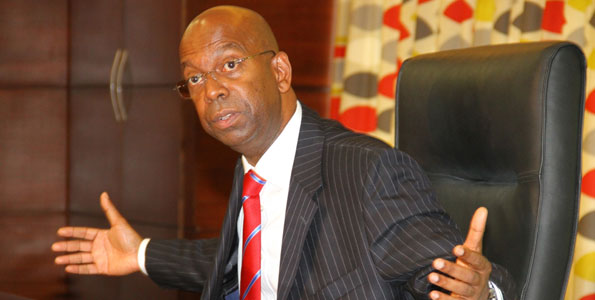
Safaricom CEO Bob Collymore on Monday promised to have the newly established expiry of Safaricom Internet Bundles . Through his twitter handle, Mr. Collymore said that he had directed his Safarifom team to look at the grievances expressed by Kenyans on Twitter. Mr. Collymore said: “Ok. I’ve heard you on the data bundle expiry issue and have asked the team to urgently look at some options.” According to Mr. Collymore, the data bundle reviews effected over the weekend were an attempt by Safaricom to review its data value to its subscribers. “We’re just trying to give better value,” he added.

This came after Safaricom subscribers took to social media to protest over the terms and conditions governing Safaricom’s new unlimited Internet data bundles.  This follows introduction of a new data pricing structure at the weekend.

Users are rallying around two hashtag protests to express displeasure at the expiry of unused bundles as well as a rule limiting bundle sharing to 20MB a day.

“Any data bundle not consumed within its validity period will be deleted and won’t be available for use,” Safaricom’s rules for its new bundles say. They add: “It is not possible to extend expiry… by purchasing newer bundles.”

The new rules also limit transfers of data bundles between subscribers. “It will be possible to Sambaza internet, but only to a maximum of 10MB per transaction and limited to two transactions (20MB) in a day,” Safaricom says. “All other rules for Internet Sambaza will remain in place.”

In January, Safaricom lowered the cap on the number of times one SIM card can Sambaza data bundles in a month from 50 to 20.

The move was aimed at throttling a thriving black-market in online reselling of cheaper data bundles, popularly known as “bundles mwitu”.

TOP TEN ECONOMIES IN AFRICA

0
This article was written by Higgins Mbugua;opinions expressed may not necessarily be in line with that of BIZNA’s. 
Higgins is a pro URP activist, to read more of his posts visit thekenyanoline.

1. Nigeria

Oil = 70% of government revenues. No middle class worth writing home about despite being Africa’s most populous state. Just 200 or so looter-superbillionaires and a mass of serfs. Infrastructure is a big cruel joke outside of Abuja and Lagos. Government recently claimed to have built a ‘new railway’ yet stocked it with trains from China from the 1950s. Takes them 5 to ten years years to build a 180km highway. Has stuck around Amnesty International’s Most Corrupt Country On Earth top 5 list for so long that they are thinking of making it a permanent member there.

2. S. Africa

Mineral exports (Gold, coal, platinum & palladium, chromium, diamonds) are 18 to 20% of GDP. A whopping 62% of black Africans live in abject poverty one of the highest percentages in the continent. Crime and political chaos/dictatorship creeping in (as shown recently when bulky police commandos stormed parliament to eject members for asking simple questions of the president) as well as power shortages and aging infrastructure are hobbling Africa’s most diversified economy. Standard of living has steadily declined since liberation in 1994 with downtown Johannesburg now an urban ghetto full of ‘hijacked” empty buildings with broken windows, no stima or water. There are more murders in this country than the rest of Africa that is not at war put together. Also the rape and armed robbery capital of the world.

3. Egypt

Oil production has been declining steadily since 1993 and is now worth only 7% of GDP. A dictatorship under Hosni for 40 years, not much has changed since despite several revolutions. The Economist recently called Egypt’s bankrupt economy “A Pyramid Scheme.”

4. Algeria

Petroleum, gas and electronics account for a whopping 97% of exports. Little else of value comes out of Algeria.

5. Angola

Was recently in the news for harboring Kenyan slaves . War gutted economy. Oil was its savior. The sector accounts for a mind boggling 50% of GDP and 90% of export earnings. No infrastructure at all outside Luanda. Zero! Luanda itself is a crumbling shortage-wracked city that has only started rebuilding within the past 10 years. Dangerous land mines still lurk in two thirds of the rest of the country making traveling out of Luanda a very dangerous affair.

6. Morocco

Consistently ranks as one of the world’s largest exporters of Cannabis and Hashish. Phosphates exports barely keeping it afloat. But is considered one of the better managed economies in Africa.

7. Sudan

Oil accounts for 70 to 90% of exports. Constantly at war for much of the past 60 years. Darfur war still ongoing. Border wars with South Sudan are a routine affair.

8. Kenya

Largest no mineral economy in Africa. Highly diversified domestic economy and export market with no single country it exports to receiving more than 13% of export output. Considered East and Central Africa’s hub of financial, communication and transport services. Holds the largest black middle class in Africa; a remarkable feat considering it has a modest GDP, average population, and is currently not exporting any minerals or oil to speak of. Considered the main entry point in Africa other than South Africa, for MNCs seeking a foothold in the continent. Agriculture as a proportion of GDP has steadily declined, reflecting the increasing diversification of the economy. Industry comprises an impressive 20% of the economy, Services about 45%. Diaspora remittances have steadily increased to about USD 1.5 Billion in 2014, accounting for an increasingly bigger slice of forex earnings for the country. Rapidly modernizing its infrastructure (third largest spending in infrastructure in Africa projected for 2015). Also projected to be third fastest growing economy in the world this year.

9. Ethiopia

Known for famine, strife and bizarre land laws but has been investing heavily in infrastructure and textiles. Kenya needs to be very careful about this one as it too is making all the right investment decisions that will pay off big time for them in the future.

10 & beyond

Libya & Tunisia Once considered economic powerhouses. Overtaken by humble old Kenya despite their lakes of oil that account for bulk of revenues and exports.

Tanzania

Sick old leper of Africa. You cannot even own land in your own name nor borrow on it in much of the country jameni. Once you finish your harvest you give the land back to sirikali and go to the urban areas to cool your heels doing other things. Plus many of them talk and move too slowly (wazembe) and are still socialists at heart (Garlic you will really enjoy living there). Yet to master the mysteries of basic business principles.

Things look bright for Africa.


KRA NOW SAY’S DEVOLUTION IS THE BEST THING TO HAVE HAPPEN

0

Figures and especially tax figures – don’t lie. Despite the bastardization attempts by various vested interests devolution is gradually proving to defend itself with tangible results.

But what does this bit by Betty Maina tell us about our capitalist.

“While we appreciate the initiatives most of them have rolled out in health and education, the investing community is interested in better infrastructure which would have a significant impact on the economy and hence yield more revenue,” Ms Maina said.

Are our capitalists are this mean? I thought disease and lack of competent labour are really holding down meaningful development. Hospital bills are impoverishing Kenyans in a week. Very few Kenyans can afford a medical bill past 200k. The question therefore is: should industrialists be interested on roads, energy, water and infrastructure only?

Devolution is sure way whether you look at it from political or economic view point.

On hospital bills, we need to find out a formula towards a National Health Insurance System. NHIF need to be reformed and made as big as UK’s NHS or Obama care.


WOMEN’S TOP SEX FANTASIES REVEALED

0

After the hype of Fifty Shades’ erotic reverie of whips and handcuffs, scientists have revealed women would prefer more play time rather than play room.

In the first study of its kind, experts have put female fantasies to the test to discover what really makes a modern-day woman smile.

And surprisingly, scientists found that these days, time to fulfil life goals seduces more women than any form of sexual pleasure. Universal Screen shot from Fifty Shades of Grey Fantasy: Women would now prefer to take control of their life rather than the bedroom.

Disproving the classic myths, 76% of British women are no longer aroused by clichéd ‘Mills and Boon-style’ fantasies. Not only has times significantly changed but it has also been disclosed that these intimate conversations or personal and professional growth can improve a woman’s health.

Research from a survey, conducted by new personal massager brand Smile Makers, found that more than one in 10 modern-day women fantasize about receiving a promotion at work whilst only 5% are stimulated by the idea of settling down with a partner. This is a far cry from two years ago when females’ top fantasy was being the submissive to a dominant partner or vice versa.

Jamie Dornan and Dakota Johnson in Fifty Shades of Grey Flowers or chocolates: None. Research found women would rather a gift which helps them take control of their lives.

British women seem to have evolved the themes of their fantasies from being purely sexual to self-accomplishments, disproving the notion that the female of the species’ ultimate dream is to be ‘swept of their feet’ by a person they are attracted to.

To support the survey, researchers from Birkbeck University of London were also commissioned to measure women’s neurological response to a number of stimuli and situations in a bid to identify ‘old wives tales’ of what women want from real home truths.

Monitored using electroenchephalogical (EEG) headsets, a group of British women were also measured for changes in the brain, heart rate and lower blood pressure associated with joy that makes you smile.

Bondage: That’s a thing of the fantasy past The study discovered their smiles in response to the stimuli presented triggered a calming response on the parasympathetic nervous system, resulting in a slower heart rate, lower blood pressure and a decreased respiration rate – all factors associated with improved health and well-being.

Top stimulants include intimate, topical conversations, self-pleasure scenarios, and the feel of newly-purchased clothing, a reward for professional or personal success and the smell of fresh flowers.

Now when it comes to romance, receiving roses and chocolate as gifts are viewed as clichéd techniques. Instead, three quarters of British women prefer to be seduced by items that productively help them ‘take control of their own lives.

URUGUAYAN PAUPER PRESIDENT, JOSE MUJICA, RETIRES

0

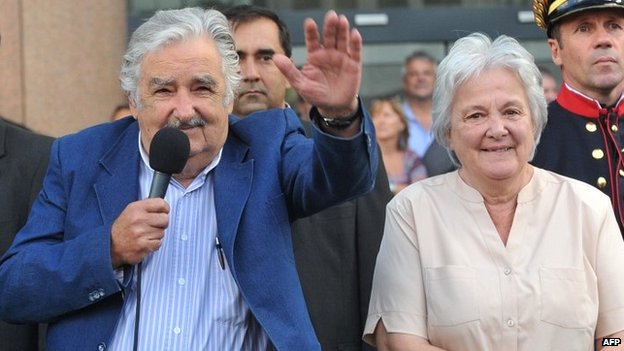
There are idealistic, hard-working and honest politicians the world over – although cynics might argue they’re a small minority – but none of them surely comes anywhere close to the outgoing Uruguayan president Jose “Pepe” Mujica when it comes to living by one’s principles.

It’s not just for show. Mujica’s beat-up old VW Beetle is probably one of the most famous cars in the world and his decision to forgo the luxury of the Presidential Palace is not unique – his successor, Tabare Vasquez, will also probably elect to live at home.

But when you visit “Pepe” at his tiny, one-storey home on the outskirts of Montevideo you realise that the man is as good as his word.

Wearing what could best be described as “casual” clothes – I don’t think he’s ever been seen wearing a tie – Jose Mujica seats himself down on a simple wooden stool in front of a bookshelf that seems on the verge of collapsing under the weight of biographies and mementoes from his political adversaries and allies.

Books are important to the former guerrilla fighter who spent a total of 13 years in jail, two of them lying at the bottom of an old horse trough. It was an experience that almost broke him mentally and which shaped his transformation from fighter to politician.
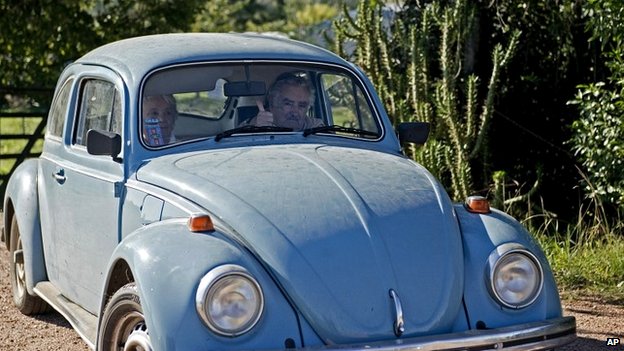
Uruguayan President's car!

“I was imprisoned in solitary [confinement] so the day they put me on a sofa I felt comfortable!” Jose Mujica jokes.

“I’ve no doubt that had I not lived through that I would not be who I am today. Prison, solitary confinement had a huge influence on me. I had to find an inner strength. I couldn’t even read a book for seven, eight years – imagine that!”

Given his past, it’s perhaps understandable why Jose Mujica gives away about 90% of his salary to charity, simply because he “has no need for it”.

A little bit grumpy to begin with, Jose Mujica warms to his task as he describes being perplexed by those who question his lifestyle.

“This world is crazy, crazy! People are amazed by normal things and that obsession worries me!” Not afraid to take a swipe at his fellow leaders, he adds: “All I do is live like the majority of my people, not the minority. I’m living a normal life and Italian, Spanish leaders should also live as their people do. They shouldn’t be aspiring to or copying a rich minority.”

Jose Mujica is outspoken and sometimes brusque, but he can afford to be so.

Uruguay is often referred to as the most liberal country in South America. As economic and political turmoil threaten to engulf the neighbouring giants of Brazil and Argentina, this country of just three million people certainly feels like a refuge.

Jose Mujica leaves office with a relatively healthy economy and with social stability those bigger neighbours could only dream of.

Mujica’s underlying principles are still socialist but he’s a man who has mellowed with age. Some of the most controversial political initiatives from his five years as president – like the legalisation of abortion and cannabis – were done for pragmatic as much as ideological reasons.

“Marijuana is another plague, another addiction. Some say its good but no, that’s rubbish. Not marijuana, tobacco or alcohol – the only good addiction is love!” says the man who in 2005 married his long-term partner and former co-revolutionary, Lucia Topolansky.

“But 150,000 people smoke [marijuana] here and I couldn’t leave them at the mercy of drugs traffickers,” he says. “It’s easier to control something if it’s legal and that’s why we’ve done this.”

Jose Mujica, who is sometimes described as the “president every other country would like to have,” dismisses all the adulation and attention with a waft of his hand but he is not leaving the stage just yet. “I have no intention of being an old pensioner, sitting in a corner writing my memoirs – no way!” he barks at me with a grin.

“I’m tired of course, but I’m not ready to stop. My journey’s ending and every day I’m a little closer to the grave.” Maybe so, but this enigmatic leader remains an inspiration to many and is a reminder that politics is meant to be a humble and honourable profession.


Why do people become entrepreneurs?

0
Why do you do what you do?

That might sound tautological, but think about your work. What is your motivation in picking up what you do? What inspires you? What defines you?

And more specifically to our users, why did you become an entrepreneur?

Unlike a few years ago, entrepreneurship is now an accepted career option. No longer are people afraid to do the tightrope walk without a safety net underneath. But it’s not an easy ride.

Entrepreneurs work incredibly hard; and anything that makes you work that hard will most certainly have an equally strong driver. Why else would you put yourself through so many struggles and sacrifice so much?

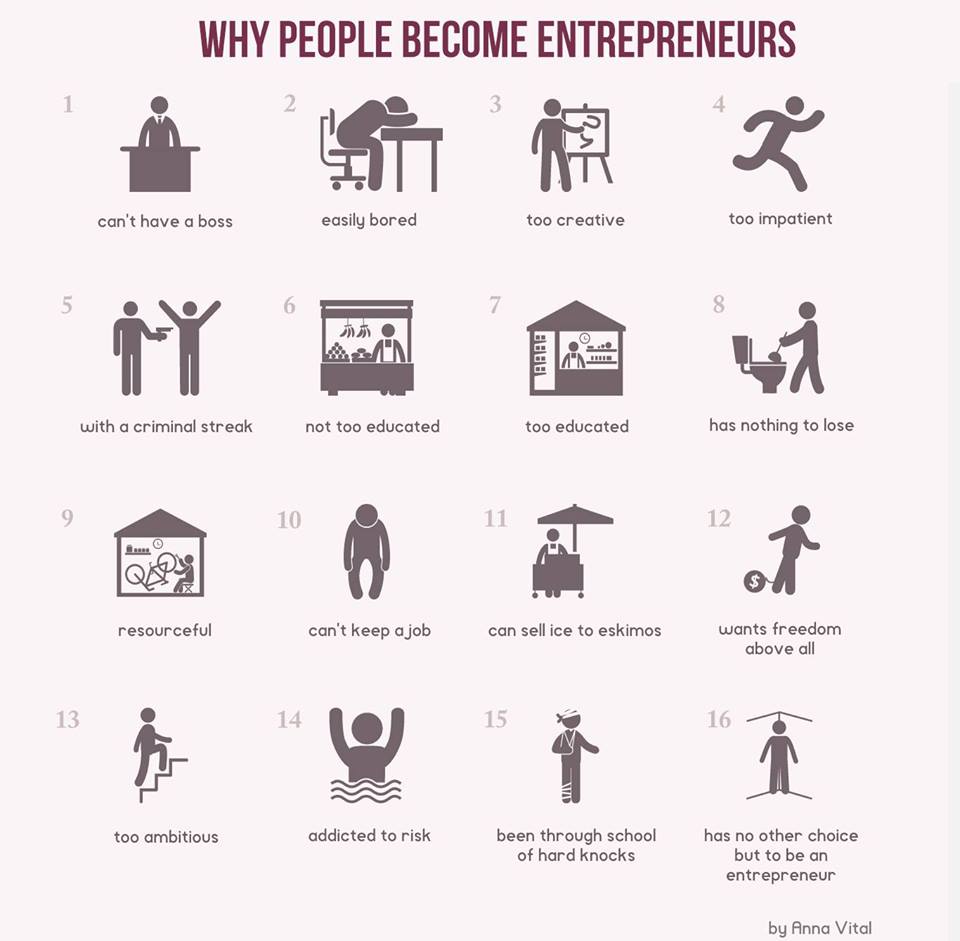
An Infographic by Funders and Founders explains why.

why_people_become_entrepreneurs


source:yourstory

Samsung’s Galaxy S6 and S6 Edge

1

https://www.youtube.com/watch?v=TtLHiiXyERA

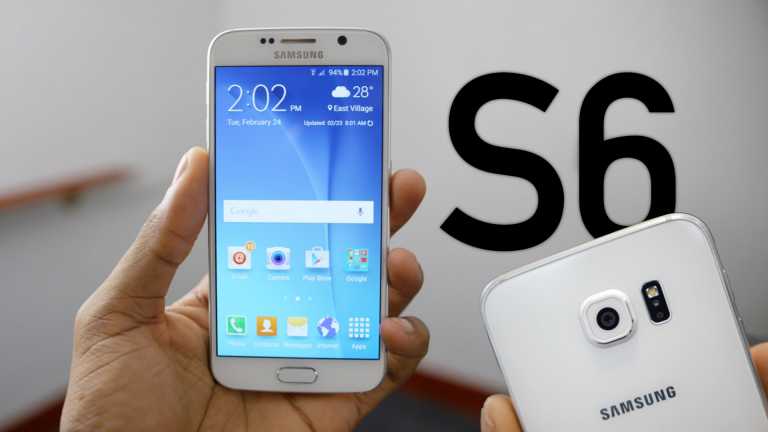
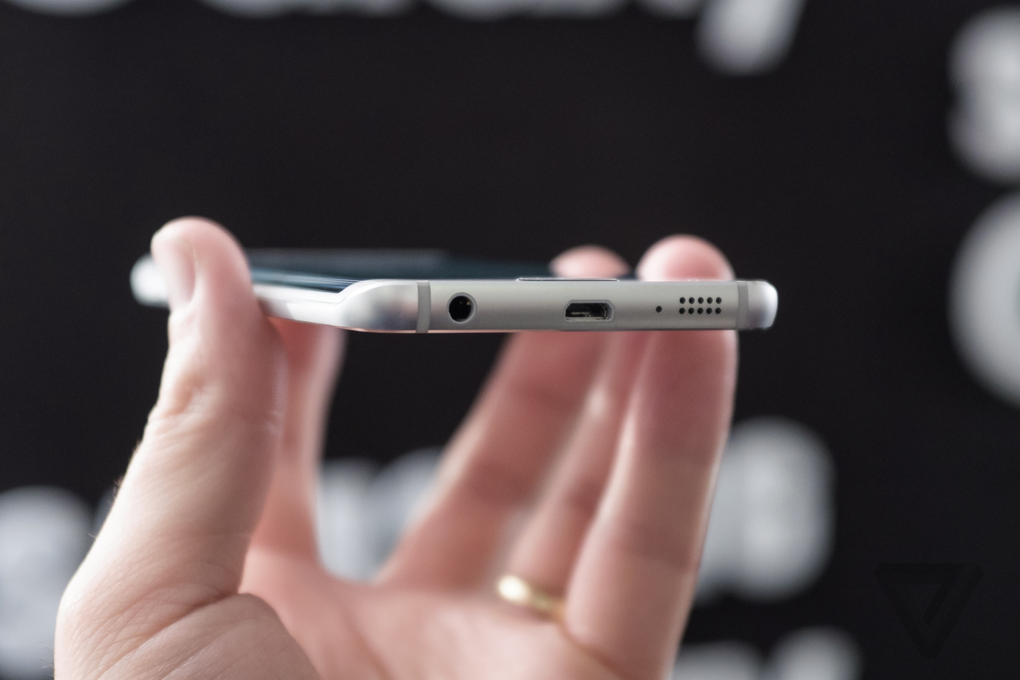
Samsung just announced its new Galaxy S6 and S6 Edge, its 2015 flagship smartphones. The S6 and S6 Edge have a completely redesigned look and feel and have ditched the cheap plastic for premium metal and glass. They look and feel great, if a bit familiar.Check them out in the photos – courtesy of the verge– below and judge for yourself.

galaxys6-1

galaxys6-2


KENYA DOMINATES GLOBAL GROWTH IN 2015

0
This article was written by Higgins Mbugua;opinions expressed may not necessarily be in line with that of BIZNA’s. 
Higgins is a pro URP activist, to read more of his posts visit thekenyanoline.

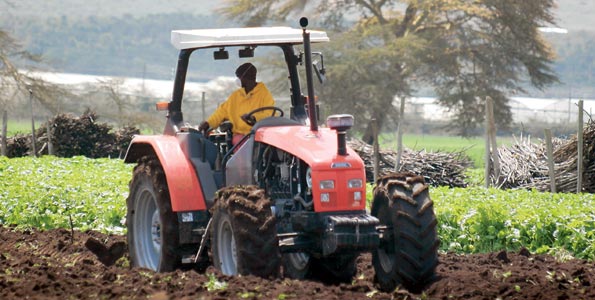
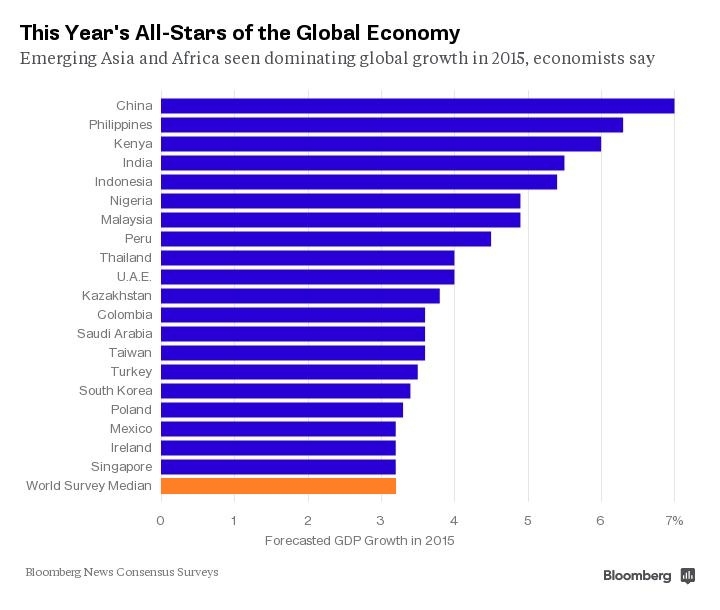
Unlike most of sub-Saharan Africa countries that depend mostly on commodities or AID; Kenya’s well diversified liberalized economy is set to grow at 6% and possibly 7-8% as SGR kicks in.

If only we could sort out manufacturing.

We need to find out why our manufacturing has been stuck at 9-10% of the GDP since time and memorial. The British left us with a decent manufacturing base and we haven’t grown it at all. It still mostly dominated by Asians and our majority indigenous Kenyans just can’t seem to hack it. Manufacturing is a great employer and that can quickly alleviate poverty (which now stand at 40% plus).

What we need to sort is to reduce the overall “dimensions” cost and time of doing business plus the cost of doing business (raw materials, energy, labour) and time (SGR will sort that out). After we have done that, then we should be able to attract big Chinese or American manufacturing.

global economy

Sadly nobody in GOVERNMENT is even thinking about that. We are doing Konza (for ICT) and Galana but nothing on Manufacturing. Meanwhile Ethiopia is busy establishing a shoe city that will in few years dominate the global market.

Bottom-line is, the two really sick sectors in our economy is Agriculture & mining (extractive) and manufacturing. We are doing extremely well in financial and intermediation, ICT, Tourism and name them.

If check we check the data, out of 10 or so sector, agriculture which account for 23-25% is an employer of 70% of our people. The ideal situation for our size of economy I dare say would be for about half the guys digging around should be doing low level manufacturing jobs.

Some sectors can bring in the big bucks but they aren’t great employer and we all know employment is one of surest way out of poverty.

ICT is and has been doing well and we can do better if we can get low level manufacturing and assembling of computers and smart phone. Ethiopia (again) now assembles techno phones.

NSE: WHY PROFIT WARNINGS SHOULD NOT SCARE YOU

The following Investment Analysis by analyst George Bodo appeared first on the Business Daily.

“It looks like profit warnings by listed companies will be more this year. This month alone, three listed companies namely, TPS Eastern Africa, Crown Paints and Pan Africa Insurance Holdings have issued profit alerts in quick succession. TPS and Crown Paints have both cited difficult operating environments in their markets while Pan Africa Insurance Holdings point at failure to replicate the exceptional earnings it recorded in 2013 (mainly through mark-to-market gains and property sales).

Between 2012 and now, 23 listed companies have issued profit warnings, out of which four companies have issued warnings more than once.

These are Kenya Airways (in 2012 and 2014), Mumias Sugar Company (in 2013 and 2014), Express Kenya (2012 and 2014) and KenolKobil (2012 and 2013).

In the same period, the highest number of profit warnings was recorded in 2012 and 2014, with seven warnings issued in each of the two years.

Generally, profit warnings can be attributable to micro and macro events wherein the former refers to company-specific variables while the latter refers to economic and operating environment.

Out of the 23 warnings issued, 16 cases have been primarily driven by adverse macro-economic factors while only seven cases are attributable to one-off company specific factors.

There are five outstanding adverse macro-economic factors that have directly contributed to the surge in profit warnings.

First, high interest rates that has direct bearing on borrowing costs for companies (as cited in the profit warnings issued by KenolKobil, EABL, EA Portland Cement).

Second, the significant depreciation of the Kenya shilling against major world currencies that has resulted in higher cost of doing business (as depicted in warning issuances by KenolKobil in 2012 and 2013 citing losses incurred in its forex hedging activities and East African Portland Cement in 2014 citing increased cost of servicing foreign currency debts).

Third, the decline in global soft commodity prices especially tea and sugar (as depicted in the issuances by Kakuzi in 2012 and 2013 Kapchorua Tea in 2014, all citing declining global tea prices.

Additionally, Mumias Sugar in its February 2013 profit warning cited the fact that 2012 sugar prices declined by 30 percent.

Fourth, domestic insecurity situation that has resulted in issuance of travel advisories (as cited by Kenya Airways in 2014 and TPS Eastern Africa in February 2015).

Finally, the geopolitical situations globally as cited by Kenya Airways in its January 2012 profit warning (citing political unrests in Egypt and Nigeria at the time).

With the exception of global soft commodity prices, it’s not likely that some of these key factors will abate in 2015.

Government’s continued huge presence in the debt markets will still see borrowing costs remain elevated; additionally, the shilling performance against US dollar is expected to remain sideways while geopolitical risks still lurk. Consequently, profit warnings by listed companies may surge in 2015 and will require policy intervention especially in easing domestic macro-economic conditions. However, investors should generally look beyond the profit warnings and have long-term goals as some of these variables tend to be temporary and cyclical.”

AUDI 2016 OFFICIALLY FASTEST CAR EVER

0

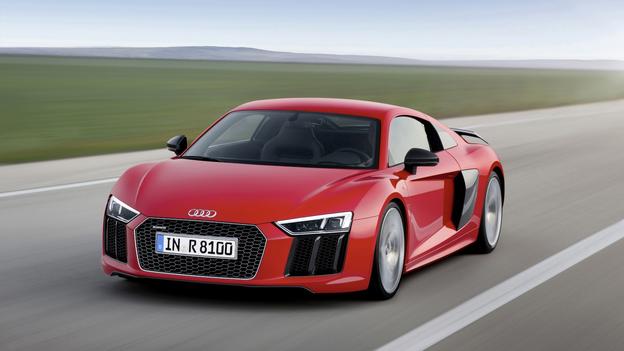
Here it is, at long last. Audi’s second generation R8 Coupe, revealed online ahead of its proper, sweaty-palmed reveal at next week’s Geneva motor show.

And as expected, it’s a meticulous, thorough, well thought-out evolution of the original car that earned Audi so many spurs. It’s still four-wheel-drive, it’s still mid-engined and it still packs a punch, but everything has gotten lighter, stiffer and faster.

Just how fast is quite striking. Audi is currently only offering the new R8 with a 5.2-litre V10 engine in two guises – the “standard” 532bhp version and the range-topping V10 Plus with 602bhp. Yep, same as the Lamborghini Huracán.


2016 Audi R8 V10 Plus

Coupled to a lighter body weighing in at 1,454kg (3,205lbs) dry – 50kg lighter than the last R8 – and constantly variable four-wheel drive, the V10 Plus can accelerate from zero to 62mph in 3.2 seconds and top out at 205mph. Dr Ulrich Hackenberg, Audi’s board member for technical development, said: “The new R8 V10 Plus is the most powerful and fastest series production Audi of all time.” Yowser.

The standard V10 is no slouch, though (that’s the blue car above), posting times of 3.5 seconds to 62mph and a top speed of 200mph, while the new R8 E-tron – also being showcased at Geneva – will accelerate from zero to 62mph in 3.9 seconds and promises a range of more than 280 miles (more than double the range of the first R8 E-tron) thanks to better battery tech.

2016 Audi R8V10

Back to the regular petrol cars, and both will feature the S-tronic double clutch gearbox, but with new software for faster shifting, together with a launch control and coasting function.

And in turn, this is allied to a four-wheel-drive system with an electro-hydraulic clutch on the front axle (replacing the visco clutch of the last car) and a mechanical diff on the rear axle. Audi tells us this newly developed Quattro system allows for fully variable torque distribution, meaning up to 100% of the car’s torque can be sent to either the front or rear axle.

It’s all wrapped up in Audi’s Space Frame body; the central tunnel, B-pillars and rear wall are all made from carbon fibre reinforced plastics (CFRP), while the front, roof arch and rear are made from cast aluminium. Not only is it lighter, but it’s 40% stiffer than before, too. Pointy.

There is double wishbone suspension all round, an aero-optimised underbody, electromechanical steering as standard – replacing the old hydraulic setup – and both cars will get passive dampers and steel suspension as standard. Though of course, you can option the adaptive magnetic dampers, with three modes (Auto, Comfort, Dynamic).

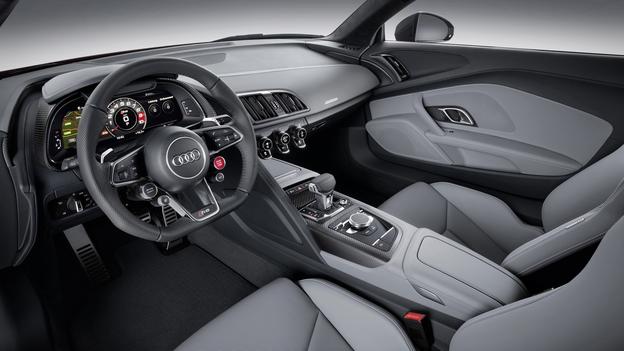
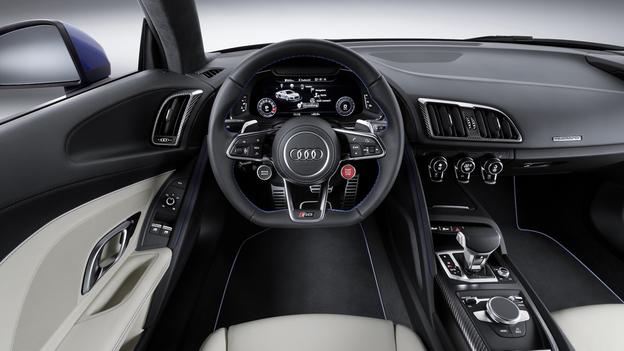
Inside, there’s now a fully digital “virtual cockpit” with all manner of variation for display, and many buttons on the steering wheel to control pretty much everything you need – including a button to make the exhausts chirrup that power even louder. This is a Good Button.

What else can we tell you? There are Audi’s new laser lights, a body that’s pretty much the same size as before (it’s bigger by about 1.6in), an evolutionary design, a fixed wing for the V10 Plus and all manner of customisation.

No word on UK prices just yet, but it’ll start from €165,000 for the base V10, and €187,400 for the V10 Plus. How does it feel and sound? Well, step this way, because TopGear.com was granted a hotride in a prototype. And it’s slidey.