Home Blog Page 2285

Pitching your idea to a U.S. investor? Five tips for getting your business visa.

0

Teleconferencing is convenient, but nothing matches the effectiveness of a face-to-face meeting. If you have your business plan, you’ve made your contacts and are ready to pitch your idea to U.S. investors, you’ll want to do it in person.

The Business Visitor Visa (B-1) allows for temporary, business-related travel to the U.S. The B-1 visa does not allow you to work or earn money in the U.S. To find out if you qualify for the B-1, go to travel.state.gov. To apply, visit the website of your nearest U.S. embassy or consulate. Fill out the online application to schedule an interview.

At your interview, the officer will ask questions that help him or her better understand your need to travel to the U.S. It’s important to effectively convey your reasons.

• Be specific. Tell the interviewing officer the particulars of your business trip — who you’re meeting with and why. Be prepared to answer questions about your trip and your business clearly and specifically.

• Make your ties to your home country clear. The officer who interviews you is looking to you to show that your trip is temporary and for a specific purpose. Strong family ties and an ongoing career in your home country are examples of connections that will help clarify this.

• Bring supporting documents. While you are not required to supply specific documents, a copy of your business plan, a letter from the U.S. company you’re pitching to or anything that supports your reason for travel will help.

• Be honest. Do not exaggerate the extent of your business or fabricate reasons for your travel. This will make a denial likely, now and in the future.

• Understand that there is no single magic answer. You’ll be granted a visa based on the information you give your interviewer about your overall circumstances. There is no secret answer to a single question. The best strategy is to be clear and straightforward about your particular situation.

source:shareamerica 


Kenyans to start paying more NHIF rates

0

The National Hospital Insurance Fund ( NHIF) has gazette the new rates which take effect April 1, this year.

In a special gazette notice dated February 6, 2015, the proposed premiums will see those in employment and earning a gross income of up to Sh5,999 contribute Sh150 per month, the lowest contribution according to the proposed rates published by the fund. The self-employed will contribute Sh500 monthly.

The highest monthly contribution is Sh1,700 for those earning Sh100,000 and above. The legal notice was signed by NHIF Chief Executive Simeon ole Kirgotty and the Fund’s Chairman Mohamud Mohamed.

Those earning between Sh8,000 and Sh11,999 will contribute Sh400 while those earning between 12,000 and Sh14,999 will contribute a monthly premium of Sh500.

Those earning between Sh15,000 and 19,999 will contribute Sh600 while those earning between Sh20,000 and Sh24,999 will have Sh750 deducted from their monthly pay slips. While the Central Organisation of Trade Unions had filed a lawsuit challenging the proposed new NHIF rates, it has since withdrawn the case, giving NHIF the green light to effect the new rates.

Expected to be hit most will be low income earners who will now be required to dig deeper into their pockets to make contributions to the National Social Security Fund. The State-pension fund has proposed to increase monthly contributions from the current Sh200 to Sh1,080 per month.

NSE: Buy CIC for medium to long-term

CIC: This stock is rated as a Buy with a medium term target price of about Sh. 15 per share. This is according to Eric Munywoki, an investment analyst at Old Mutual Securities. He notes that since the listing of CIC at the NSE at a price of Sh. 3.50 per share, the counter has risen from the ashes to a high of Sh. 12.40 per share. This is attributed to the company’s growth and diversification strategy.

“CIC is the first to tap into the micro-insurance segment, having launched M-Bima, a product that is targeting low-income earners. With insurance penetration in the East African regional at around 3 per cent, this further gives it a higher upward potential,” says Mr. Munywoki.

Currently, CIC is the third largest insurance firm, having attained a 9 per cent gain of the insurance industry’s total gross premiums by September last year. Similarly, the insurer has expanded into Malawi and Uganda through joint ventures.

“CIC also has a 26 per cent stake in Takaful Insurance of Africa, which allows it to offer Shariah-compliant products through Takaful,” says Mr. Munywoki. “All these components, together with its entry into the real estate sector add to its existing value.” Currently, CIC is planning to break into the health sector with Sh. 800 million set aside for the construction of a medical facility.

In the first half of 2014, CIC reported a 67 per cent jump in gross profit and is expected to announce increased annual profits. On Friday, CIC opened the market at Sh. 11.15 per share from the previous day’s Sh. 10.95 per share.

What women like and dislike on Valentine’s Day

0

“I really hope my partner will not send me another bunch of flowers this Valentine’s,” says Lucy Koech. “They’re boring, yet he has been sending them every Valentine’s for the past three years that we’ve dated.” Well, it is that time of the year again when cupid turns the town red and among many women, flower gifts are among the gifts being considered too cliché.

In fact, so boring among women have flowers become that the image consultants we spoke to are asking men to stay away from them this Valentine’s. According to Robert Burale, an image consultant with the Nairobi-based RB Company, men should avoid giving their women flowers. “Flowers are too predictable. Avoid them,” he says. A study conducted by Exquisite Gift Baskets in the UK resonates with Robert.

The study reports that only 4 per cent of women would want to receive flowers on Valentine’s Day next Friday. Nonetheless, if the findings of a previous survey by Ipsos Synovate on the gifts Kenyan men give during Valentine’s Day is anything to go by, many Kenyan women will be receiving bunches and bunches of roses.

According to the study, 41 per cent of Kenyan men will buy flowers for their valentine, 28 per cent will surprise their women with new clothes while only 11 per cent of men will take their partners out for dinner.

A spot check on numerous flower shops predictably reveals that orders for flower bouquets have been trickling in. Similarly, assorted gift hampers have been flying off the shelves as Valentine’s Day inches closer in many gift shops. According to Susan Wandia of Wishes Gift Shops located at the Yaya Centre, souvenir mugs, branded picture frames and teddy bears, and cards have been flying off the shelves in the few days leading to Valentine’s.

At Purpink Gift Shop which is adjacent to the Strathmore Business School, orders on chocolate bars, wine, perfume and small teddy gift hampers have been flowing in. “We are receiving huge orders for chocolate and wine gift hampers from men,” says Aryton Bett, the shop owner.

However, these may not be the gifts that women want. Take Lucy for instance. She wishes that at the very least, her partner would get her a dress. “A dress and some really nice shoes would do the trick for me,” she says. “Chocolates bars and wine are an effortless routine.” In an echoing survey of 1,000 women conducted by the UK marketing website NetVoucherCodes, women consider impersonal and inconsiderate gifts like stuffed toys and chocolate bars as effortless gifts.

Moreover, the women in the study list ill-fitting and unflattering panties, cheap perfume and tacky, cheap jewelry, and cuddly toys as some of the gifts they would never wish to receive from their partners on Valentine’s. Locally, 36-year-old Veronicah Munuhe confides receiving an underwear gift a year ago from a colleague who was eyeing her.

“I didn’t like it and found him awkward. I felt too mature for that,” she says. While many men consider lingerie gifts to be the ideal gifts for the women they are dating, women view such gifts as being too sexual. “Why would a man give you an underwear gift if he isn’t trying to bed you?” asks Veronicah. Millie Kegoro is another woman who received a lingerie gift last year. “He brought it over to my place in the evening and asked me to open it. Then he said that he wanted to see how I looked in it.

I refused,” she says, adding that she trashed it away once her man left. “A man who gives me lingerie is telling me that he wants to take me to bed and I hate that,” she says.

Strikingly, while women would want to be spoiled with gifts on Valentine’s, many say that the gifts they get do not resonate with their lives at all. Take Joyce Kui, a 32-year-old public relations officer. Last year, she received a pair of oversized akala shoes from her partner on Valentine’s Day. “He gave me the box at the Ambassadeur bus stop and asked me to open it. I did and everyone burst out laughing. I was irritated beyond measure.” In October, the two lovebirds broke up.

Faustina Achieng’ on the other hand says that her boyfriend has already rolled out an awful Valentine’s Gift for her this year after giving her an ‘Eat-All-You-Can’ hotel gift voucher. “I’ve been excising as I try to cut weight and then he brings me this,” she says. “If it’s all about the thought behind the gift, what does this food voucher imply?”

Although perfumes are a popular gift, Robert cautions that men should not gift them out unless they fully know their women’s taste. “Self-help books are also off limits,” he adds. According to Philomena Kasaya, a 32-year-old marketing executive, an ideal Valentine’s gift for her should be in equal proportion to her worth and class. “Valentine’s Day is a gift to our men to leave a mark. An ideal gift for me would be a trip to Zanzibar or Seychelles, not Mombasa. I can hitch a ride there by myself,” she says.

“Let him not wait till our honeymoon to take me there.” Priscilla Aswani on the other hand says she would want her man to upgrade her car. “Getting new car keys will leave an impression from February 14 onwards. A new ride is something I’ll use and something that will always remind me where and why it came,” she says.

Interestingly, Joyce Kui says she wishes her partner had asked her to meet him at the Ministry of Lands and given her a title deed to a small plot as a gift. “A land would be an accumulative asset that would later be of benefit to our family if we got married,” she says.

Ironically, many men buy Valentine’s gifts to remain on good terms with their women. “It’s a routine that you have to follow even if you don’t know why it exists,” says Daniel Khaemba, 36. Jackson Tanui on the other hand says that a man will only put effort in a gift if he is attempting to woo the lady.

“I will only spend if I am wooing her. If she’s a long time partner, I’ll just make an order and go with what’s available.” A study conducted by Harvard Business School, Boston, resonates with Jackson’s sentiments. According to the study titled ‘I Give, Therefore I Have’, single women are more likely to receive expensive gifts from their male partners than married women are from their married spouses.

“Single men will try to signal their wealth to prospective partners by letting them know that they’re solvent. They’ll tap into women’s longstanding attraction for wealthier men, regardless of their own wealth or lack of it,” says Professor Michael Norton, the study’s lead researcher. 491 people were interviewed in the study.

However, to some women, Valentine’s Day does not carry any meaning. Apparently, these women do not find any emotional or romantic essence in the day. “It does not affect how I view my partner or how I intimately relate with him,” says Maylene Mutisya, 33. Her sentiments are echoed by Verah Anyango, a Nakuru resident.

For the past five years that she and her partner have dated, the two have never celebrated Valentine’s Day. “I cannot remember when I last celebrated Valentine’s Day,” she says. “We just don’t feel like two desperate romantics. This year is no different.”


Here’s the right pick of flowers for Valentine’s

0

Roses remain the most evocative of flowers. For long, they have been considered the symbol of true, genuine love. Well, they still are! Essentially, roses come in different colours, shades and scents. But mark you, there are no blue roses!

And while it is the gesture behind your bunch of flowers that will ultimately carry the day, you will do well to get your colours and variety right. You wouldn’t, after all, mind a few extra points: or would you? Here’s a pick:

  • Red Roses: they are the widely acknowledged symbol of love and romance. They indicate beauty and perfection and perfectly serve well in saying ‘I Love You.’.
  • White Roses: They signify charm, purity and innocence. In most cases, they are associated with marriages and new beginnings. For instance, if you have recently made up with your spouse or have started a new phase of life together, these are the flowers for you.
  • Yellow Roses: They express joy and friendship, warmth and happiness. These are the flowers that will do the trick if offered to a close friend. They are also a good way to wish a sick acquaintance quick recovery.
  • Pink Roses: These flowers show perfect happiness and contentment. They are a symbol of grace and elegance, and are offered as an expression of admiration.
  • Orange Roses: They define passion and energy and are the embodiment of deep romantic desire and interest.

In addition to roses, you may choose to present a mixed bouquet. It could include some lilies, orchids and carnations. They are not too different from roses in the way they communicate.

For example, orchids symbolize love and beauty. On the other hand, different lilies have different meanings. The white lily will mean purity and sweetness while the tiger lily will romantically challenge your partner on Valentine’s Day.

There are also the daffodils which basically tell your spouse that they are the one! These are perfect if you just landed a new catch and have every intention of making her the one! Tulips depend much on their colours. Red tulips for instance are a declaration of love.

Yellow tulips ask whether your mate is really the one! By offering Yellow tulips you may come across as one wishing to review the direction your relationship is taking. It is also a polite way of showing appreciation and moving on! Variegated tulips on the other end symbolize beautiful eyes!

Make sure you have your flowers right. You can toss each at the spots she loves in your house. To make it more romantic, spread some fresh petals on the bed. Remember, Valentine’s Day is more than a bunch of flowers, so get it right!

How men and women react to sexual and emotional infidelity

0

Did you know that men would be more upset by sexual infidelity than emotional infidelity?

Well, while infidelity usually triggers sour relations, broken hearts, hatred, and mistrust in romantic relationships, a new study shows how men and women react to emotional and sexual unfaithfulness.

In the largest study to date on infidelity, a research by Chapman University in the US has laid down the first large-scale examination of gender and sexual differences in response to potential sexual versus emotional infidelity.

According to Dr David Frederick, the lead author of the study, heterosexual men were more likely than heterosexual women to be upset by sexual infidelity and less likely than women to be upset by emotional infidelity.

Fifty-four per cent of men surveyed would be upset by sexual infidelity if their partners cheated as compared to 35 per cent of women surveyed.

On the other hand 46 per cent of men would be bothered by their partner’s emotional infidelity, while 65 per cent of women surveyed would be bothered by the same.

During the study, participants were asked to imagine what would upset them more between getting physically cheated on by their partners without their partners falling in love with their side kicks, and their partners falling in love with someone else without having sex with them.

Strikingly, the researchers established that men faced the question of paternal uncertainty, which women didn’t when faced with sexual infidelity.

“Men will often assume an evolutionary perspective. They never know if their child is genetically related to them; there’s always a chance that the child could have been fathered by another man!” reads a section of the findings.

“In contrast, women never face the question of maternal uncertainty. Thus, though sexual jealousy is inevitable to both men and women, men will always exhibit heightened responses compared to women.”

During the study, 63,894 participants aged between 18 and 35 completed the survey, with the majority of those polled recording an average of 35-40 years.

Thirty-four cent of men and 24 per cent of women reported to have engaged in extramarital sexual affairs and the study determined that infidelity was the most common cause of marital dissolution.

Infidelity among the unmarried was reportedly higher. The study appeared to dull previous sociocultural studies that generally showed there was no difference in reaction between men and women in the event of both sexual and emotional infidelity.

“There has been significant disagreement on whether or not men and women differ in their response to sexual and emotional infidelity. Most of the previous research has relied on small samples or college samples, but in this study, we attempted to examine a broad and diverse sample,” said Dr Frederick.

The research was published in Archives of Sexual Behaviour.

Samuel Wanjiru’s widow Trizah Njeri denies marrying Maina Njenga, says she’s running broke

0

Trizah Njeri, the widow of the late Samuel Wanjiru, has come out to deny that she has been in a relationship with former Mungiki leader Maina Njenga. According to Trizah, Maina Njenga was only a close friend of the late Samuel Wanjiru and their neighbor in Ngong’. “These claims are baseless and it hurts to hear people say that I’ve been spotted dating Maina Njenga. Its all false. His late wife was in fact my tenant,” she says.

Moreover, Trizah has said that her life has changed since Samuel Wanjiru died in May 2011. Apparently, Samuel Wanjiru was the family’s bread winner, and since his death, Trizah says she has received very little money from his manager, making her life miserable! “Our lives have changed a lot since his death.

I have never received a dime from Kamau’s manager. Most of the things are still in the bank, and I have no access to them. I only depend on the rent I collect from one house my husband left behind,” she says.

On her husband’s cause of death, Trizah has maintained that he wasn’t killed and that the death was as a result of an accident.“We want to know the truth, although I know his death was an accident. The psychologist said Kamau was killed, we however cannot say anything yet because most witnesses, myself included, have not talked.

In court, Trizah is being represented by lawyer Ndegwa Wahome who is also the speaker of the Nyandarua County Assembly. She has requested for the pathologist who said Samuel Wanjiru was killed using a blunt object to reappear in court.

Is this why MP George Muchai was murdered?

0

As investigations into the murder of Kabete MP George Muchai last weekend continue and the mystery surrounding his shooting unravel, the Standard’s Nairobian publication has come out with a series of reasons as to why MP George Muchai may have been killed. The following special feature was first published in the Nairobian. Is this why MPGeorge Muchai was murdered in cold blood?

“Kabete MP George Muchai had tried to reinforce his personal security before his driver, two body guards and himself were shot dead by a lone marksman suspected to have been either a skilled mercenary, hired assassin or police officer.

Muchai had become increasingly jittery about his safety and was in the process of acquiring the services of a chase car, complete with three close protection officers (CPOs) as part of his security detail.

Jane Mugo, head of Trimo Security and Private Investigators, explains that the tragedy of Muchai was that “he had no idea where the potential threat lay. What he was sure about was that real enemies were likely to take advantage of his many problems to cause him harm.” MP George Muchai had met Mugo twice in 2012 and December 2014 over security concerns.

Their last meeting before the killers – who are still out there – accomplished their mission, drew a portrait of a desperate man who was not taking chances anymore. The MP was ready to meet the extra cost for his personal security. He told Mugo that a business complex he was putting up in Kamulu was a source of envy.

The construction was being done by a Chinese firm. Some people were not happy over this achievement, he said. They feared Muchai’s entry would offer ‘serious competition.’ On January 16, 2015, the legislator sought Jane Mugo’s help.

He wanted security lapses around him sealed to ward off potential threats, which he linked to his political power and wealth. The duo briefly met at a hotel in Westlands where MP George Muchai agreed to hire the chase car and trained CPOs. But the plan of scaling up Muchai’s security detail was to remain a guarded secret even to his bodyguards and driver.

Mugo purchased three chase cars in anticipation of signing the contract with MP George Muchai, who had indicated he would do so upon returning from a trip in Mombasa. “I am disturbed that he met his death before I could offer this service,” she says.

The camouflaged CPOs were to provide advance surveillance, sniff out any lurking danger and keep vigil around the MP. He had been advised that his enemies would not necessarily use guns, and that explosives planted in his car, food or drink laced with poison could still cause lethal harm.

Police are pursuing several theories to catch the killers. One account offered by a police officer in the Muchai murder investigation was that the brutal killing could have been centred on a piece of land in Ruai where Muchai had an interest.”

Khaligraph jones –“Mariga Money”

0

“Mariga Money” has been out for awhile now, one year and a few months to be precise. The beat is borrowed from Kendrick Lamar’s “Don’t Kill my vibe”. It’s not a cheap imitation of the original though, to the contrary, it’s one of my favourite tracks of the album “POINT OF NO RETURN”.

What’s the song about?

As the title states an artist’s dream of finally making it big, really big like “Mariga Money big”. The song is an “I come in peace” message to the likes of Octopizzo and Rabbit stating that the industry is big enough for everyone to have a slice.

https://soundcloud.com/khaligraph/mariga-20money-20by

Why my next phone will be an Iphone –Kill Switch

0

A Kill switch is a feature designed to deter the growing problem of mobile phone thieves.

Many smartphones already include the ability to let users remotely wipe their lost devices, ensuring that sensitive data doesn’t fall into the wrong hands. But that doesn’t stop a determined criminal from doing a “factory reset,” and selling the device on as though it were newly purchased from the local store.

The idea is this – if a smartphone can be rendered useless after it has been lost or stolen, that should make it less attractive for criminals to steal in the first place.

Imagine if all smartphones were protected with a Kill Switch, and all thieves knew that a stolen phone wasn’t going to be any use to them.

It’s hard to picture why anyone would be at risk of being mugged for their phone anymore, and wouldn’t that be great?

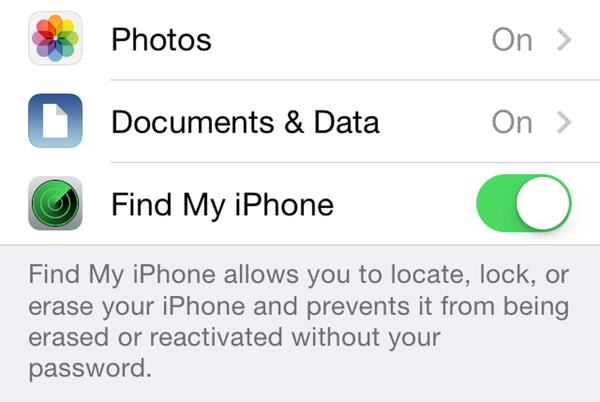
The great news is that from iOS 7, Apple’s “Find my iPhone” feature has incorporated a new technology called “Activation Lock,” which is effectively Apple’s version of the Kill Switch.

iphone kill switch