

Home Blog Page 2299

Moving on after a bad break-up

0

Chris Hart: You built your whole life around someone you trusted, and then, just like that, they’re gone — leaving you with heartache and pain. Even if the relationship was bad, you’re feeling lost and alone.

Maybe you’re in denial, hoping they’ll change their mind. But usually there’s no going back. Perhaps you’re angry, or promising you’ll change and everything will be different. Probably you’re feeling depressed. But you will recover.

How long that takes depends on your past relationship, how long you’ve been together, and who decided to end things. But it could take two years, so don’t expect to be back on track in a day or two. Accept that you will have to go through some pain.

And don’t be tempted to numb it all with rebound sex, drink or drugs.

Instead, acknowledge what you’re feeling. Talk to your friends and family. Tell someone at work. Stick to a daily routine, but also develop some new habits that re-establish you as an individual.

Missing someone’s like a craving, so getting rid of potential triggers will also help stop you feeling miserable.

So make your home feel different from when your ex was around. Move the furniture. Buy different soap. Avoid their music. Pack photos away. Unfriend them on Facebook. Unfollow them on Twitter. Don’t text, even though firing angry messages feels so good.

Don’t drink and dial. Instead, make new friends who don’t know your ex. Learn a new skill. Fantasise about a new career, with a new partner. Exercise — it will improve your mood. Ditto listening to your favourite tunes.

Avoid places you used to go together. And simply be courteous if you do bump into one another. Say ‘Hi’ like you would to a friend, have a short, impersonal chat, and say goodbye.

Deciding to feel some kindness towards your ex will help you move on. And when you’re ready, forgive them. If you don’t, you’ll never stop thinking about them, thereby becoming more and more bitter.

But how can you forgive an ex? Start by putting yourself in their shoes. Try to understand why they did what they did. Maybe it’s not possible to find a definitive answer, but at the very least, try to come up with some ideas.

Figure out what went wrong without obsessing over whose fault it was. Focus on the things you should change in your next relationship. See a professional if that’s difficult — or if your grief is ruining your life.

Everyone’s different, but most people feel ready to start dating again after a few months. So don’t think that your ex is the only person you could ever love or be in a relationship with. There are plenty of people out there ready for a relationship with you and who will make you very happy.

And don’t be afraid to love again. Of course there’s a risk you’ll be hurt again, but it’s worth it. Give yourself time to heal, at your own pace, and then give your heart to the right person. And your life will start again.

Small shareholders at NSE to be protected

The Capital Markets Authority will soon institute guidelines aimed at protecting interests of minority shareholders in listed firms.

The rules will apply in the event of delisting or suspension from trading at the bourse.

The regulator said a proposal is currently at board level seeking to limit the powers of majority owners in the event of a buyout of a publicly listed company and its subsequent removal from the securities exchange.

“The proposal will also address time frames on suspension and delisting of a stock from the NSE,” CMA acting director of strategy Luke Ombora said yesterday. There are no stipulated time lines under the current requirements.

Mr Ombora spoke on the sidelines of the regulator’s presentation of findings on impact assessment on market development in which a third of listed companies said current regulations are too cumbersome to comply with.

It was established that most small firms find CMA regulations too many to deal with, raising concerns over licensing requirements and the minimum share capital for listed companies.

The small firms found the regulations to prohibitive. Mr Ombora said the proposed regulations seek to have an independent valuer setting a fair price before a firm is delisted.

Currently for a firm to exit the NSE, its buyer needs a 90 per cent acceptance of its offer price from existing shareholders upon which the rest of the owners are compulsorily bought out.

In January, South Africa’s Dimension Data, for instance, made a compulsory acquisition of Access Kenya’s minority owners’s stake who did not participate in its Sh3 billion offer after attaining the 90 per cent acceptance target. Dubai-based Al-Futtaim Group also exercised a similar move to 7,000 minority shareholders of vehicle dealer CMC in its Sh7.5 billion buyout deal in April.

Is this the world’s best value investor?

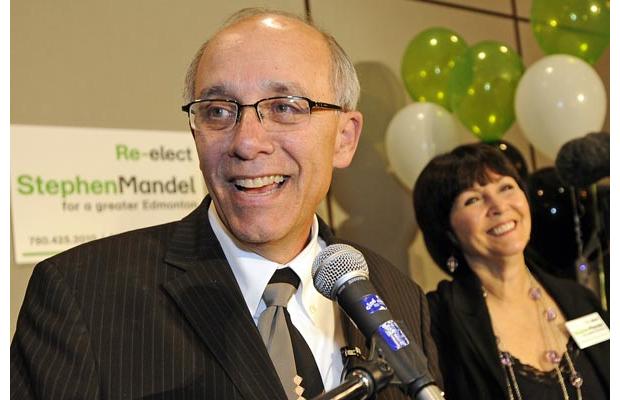
With broader stock market indices nearing what many consider to be fully valued, next year’s best performing investors will likely be those that excel in the art of identifying value. We tracked and analyzed the moves of the world’s best billionaire investors.  Over the past 15-years, there has been perhaps no one better at identifying value, than billionaire Stephen Mandel of Lone Pine Capital.

Stephen Mandel, a Dartmouth graduate and Harvard MBA, is a “Tiger Cub.” He worked for legendary billionaire Julian Robertson in the 1990s, before starting his own hedge fund in 1997.

His hedge fund, Lone Pine, has returned 30% annualized (before fees) since 1997. This compares to a 7.5% annualized return in the S&P 500 during the same time period.  To put this performance in perspective, investing $20,000 at 30% annualized for 15-years, grows to more than $1 million.

Stephen Mandel has, of course, achieved these world-beating returns in one of the most volatile 15-year periods in stock market history – and environment dominated by bubbles and crises.  Most impressively, he’s done it as a classic bottom-up stock picker, not from global macro trading.  Currently Mandel’s hedge fund runs more than $20 billion in assets. This has made Mandel a rich man. According to Forbes Stephen Mandel is worth more than $2 billion.

He recently made a brilliant move in Tiffany’s, buying up more than 5% of the stock in the weeks prior to earnings.  Tiffany’s reported better than expected earnings on improved margins resulting from lower gold and silver prices.  And Mandel reaped a windfall in his TIF shares. This is the kind of fundamental catalyst-driven investment that Stephen Mandel looks for when he takes a large stake in a company’s stock.

Here’s a look at Stephen Mandel’s five biggest positions according to his most recent filing:

1)   Baidu Inc. (BIDU) – Mandel’s biggest position is in BIDU. It represents almost 7% of his $20 billion portfolio. BIDU is a pure play on China.

2) Valeant Pharmaceuticals (VRTX) – Stephen Mandel has almost 6% of his portfolio in VRTX.

3) Michael Kors Holdings (KORS) – Stephen Mandel owns almost 8% of KORS. And if you are looking to buy Mandel on a dip, this is the stock.   KORS is down more than 15% over the past six months.  But many analysts are projecting a turnaround for this company.

4) Mastercard Incorporated (MA) – Mandel has almost 5% of his portfolio in Mastercard.

5) Microsoft (MSFT) – Stephen Mandel has 4% of his portfolio in Microsoft.  Microsoft still looks cheap at 14 times next year’s earnings, plus it has a 2.6% dividend yield.


Administration Police shoots five colleagues dead, commits suicide in Kakamega

0

An Administration Police officer Tuesday night went berserk and shot dead five of his colleagues at their camp in Shitsala division in Butere, Kakamega County before turning the gun on himself.

The Administration Police officer used his G3 rifle to target the victims at about 8pm before he escaped and later committed suicide. His colleagues say they are yet to know the motive of the attack.

Those who died include a sergeant and four, among them a couple. Police say the victims have all been identified. The killer administration police officer was identified as Mustafa Alando.

The six bodies were later moved to the St Mary’s Hospital Mortuary. Western Regional Commissioner James ole Serian said they are investigating what motivated the attack.

“We are yet to know the motive of the incident because even the attacker is dead,” said Serian.

The Best Smartwatch You Can Buy at Jumia

0

jumia

Smartwatches are going to be the next big thing. They’ll keep us connected, keep us informed, and make it feel like we’re living in the future.

A good smartwatch does three things: it makes it easy to see the time, it makes it easy to see notifications that show up on your phone, and it looks good, so you don’t feel like you’re wearing a computer on your wrist everywhere you go. It should allow you to keep your phone in your bag or pocket and only pull it out for important notifications.

Check out the types of smartwatches Jumia is currently offering.

U watch

U watch

Price: Ksh 5,999/=

Make calls from your wrist‎,‎ get real‎-time updates & notifications right there and answer your phone calls without having to reach to your pocket or bag‎.‎ You can also read your SMS‎’‎es quickly so you don‎’‎t are always aware of your day‎’‎s plan‎.‎

This is a new Bluetooth Smart U Watch which is compatible with all Bluetooth V2.0 or above enabled smartphones‎,‎ tablets and PCs ‎(‎support Android 2.3 or above‎)‎‎,‎ such as iPhone 6‎,‎ 5S‎,‎ 5‎,‎ 4S‎,‎ 4‎,‎ Sumsung S3‎,‎ S4‎,‎ Note 2‎,‎ Note 3‎,‎ Note 4.

Sony Smartwatch 2

sony-smartwatch-2-black


Price: Ksh 17,999/=

The SmartWatch 2 is an impressive and stylish standalone watch with many built‎-in features and an impressive array of customising options‎.‎ It interacts with your smartphone over Bluetooth‎,‎ so what’s happening in your life is mirrored in your watch‎.‎

XTOUCH Smart Watch Wave (Black + FREE BT Headset)

xtouch


Price: Ksh 6,999/=

This X‎-Touch smart watch has most of the capabilities of a phone compacted into the size of a watch‎.‎ It has Android 4.2‎,‎ you can use it to browse‎,‎ call and even sms‎.‎ It also has storing capacity‎.‎ So next time your friends ask you for your phone‎,‎ pull out your arm and tell them‎,‎ ‎”‎It‎’‎s already out‎!‎‎!‎‎”‎‎.‎

#JumiaSanta day the biggest online sale in Kenyan history

0

jumia

If you are not in the know, as of yesterday Jumia begun the mother of all Christmas offers.

And yes people, it’s not a hoax all deals are 100% real.

Starting from 8am to 8pm (12 hours) a new deal popped up for every hour with a total of 12 different deals ranging from Fashion to Electronics.

The deals were so sweet that at any one time potential customers were locked and loaded ready and waiting for the discounts to go online. As a result most deals got sold out vey first.

MINI BLUETOOTH SPEAKER – BLACK

MINI BLUETOOTH SPEAKER - BLACK by CFD

Price: Ksh 1,600

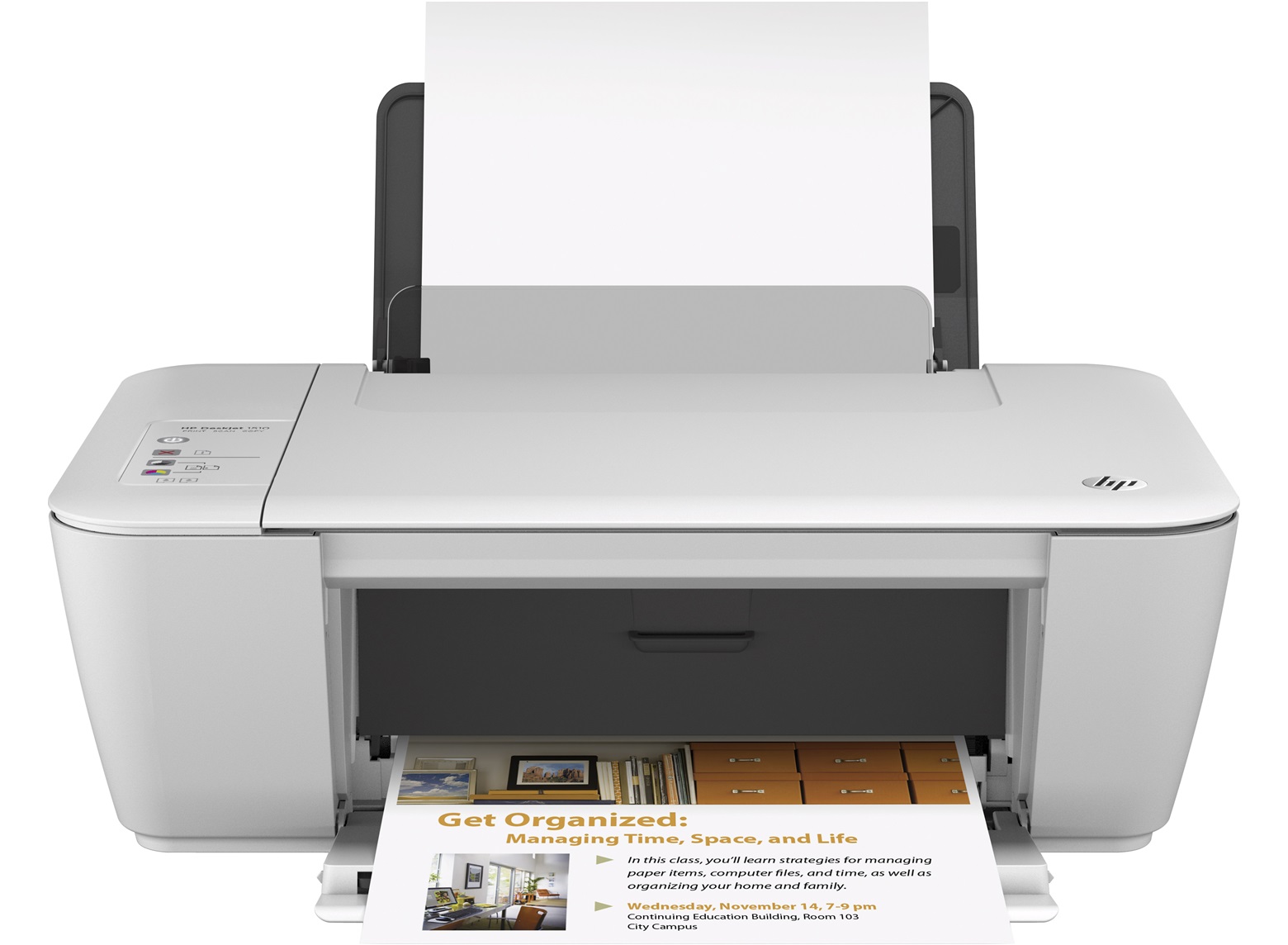
DESKJET 1510 ALL-IN-ONE COLOUR PRINTER by HP

DESKJET 1510 ALL-IN-ONE COLOUR PRINTER by HP

Price: Ksh 4,500

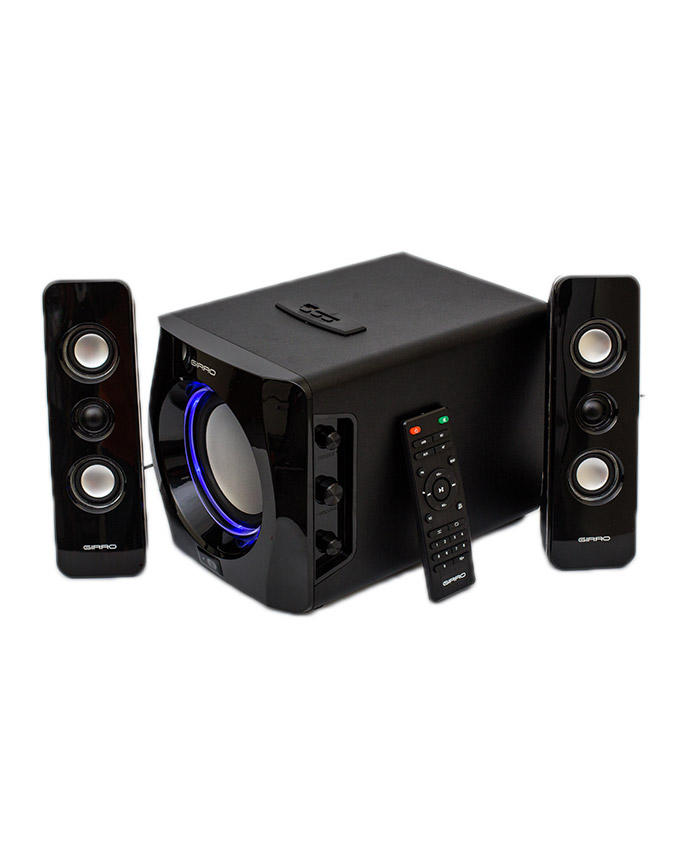
GIRRO Bluetooth Sub Woofer System

GIRRO Bluetooth Sub Woofer System

Price: Ksh 3,999/=

S5, 16GB – WHITE

S5, 16GB - WHITE

Price: Ksh 48,000/=

JOHNNIE GINGER PACKAGE

JOHNNIE GINGER PACKAGE

Price: Ksh 73/=

52 inch ULTRA SLIM LED TV

5 inch ULTRA SLIM LED TV

Price: 29,999/=

GX7W 250 TABLET

GX7W 250 TABLET, 4GB, WIFI - WHITE (PRE-ORDER)(WITHOUT CABLE) by GENX

Price: Ksh 999/=

27-year-old who can lend 50 million without squeezing his bank account

1

For 27-year-old Sylvanus Osoro, life has been a long, winding journey of struggles. Born and brought up in Gucha district, Kisii County, Osoro has defied the odds to become the CEO of PitchFace Marketing Division.

He also owns a hotel in Nairobi, and is a lawyer by profession. But all this, he says, didn’t come by luck. “I did door-to-door sales for more than a year to achieve this,” he says with a light touch.

After his parents death, Osoro came to Nairobi with an uncle who, soon after, got jailed. That ended the good life that Osoro had gotten used to. His uncle’s wife wasn’t ready to feed an extra mouth.

Must Read: The Most Profitable Businesses To Start in Kenya

Another uncle who worked at a tea factory in Kericho came to his rescue. But here, things weren’t rosy either. Going to school without breakfast became all too familiar.

But Osoro still worked hard through Chemasingi Primary School and later Kapsabet Boys High School in Nandi County. His relatives, who considered him worse than a stray cat, only paid the first year’s fee and said there was no more money despite having received his father’s terminal benefits.

Osoro left school and became a tea picker in the factory in which his uncle was the supervisor. Instead of getting paid, his uncle pocketed his dues. Annoyed, Osoro left for Kisii. But after months of doing a lot of odd jobs, he could barely pay school fees.

Later, the head teacher of Nyabigena Secondary School allowed him to join his school. However, he was again sent away from school after only one term. Desperation was creeping into the young lad’s mind, but Osoro refused to give in to feelings of hopelessness.

While living with his aunt in Kisii, he again started hawking and also trained as a welder.

“Just as I was thinking of looking for a job as a welder, the proprietor of Hill Secondary School in Kisii, who had worked with my father, offered me a full scholarship in his school,” he says.

The fact that he lacked all the neccessary things for a student didn’t deter his ambition to excel in KCSE. His belief was in God and his prayerful habit made other students to nickname him ‘pastor’.

After high school, he was out on the streets again since he could not afford university fees. Luckily, he got a chance as untrained teacher and earned a salary of about Sh2,500.

From his savings, he enrolled for a Certified Public Accountant (CPA) course in Nairobi where another uncle offered him accommodation in Mukuru Kwa Reuben.

“I had a burning determination to finish my accountancy course so I became a newspaper vendor. I used to wake up at 3am to pick copies of the newspaper and sell along Bunyala Road,” he says.

RELATED: How I Rose From A Street Boy To A Member Of Parliament

He went on to complete CPA 11, but a job was not as fast coming as he wanted. Despite that, he quit his job as a newspaper vendor. Osoro once again engaged his salesman’s skills to earn a living. He bought and resold second hand clothes.

Lady luck smiled on him this time as he made good money and his uncle, who had been released, invited him to Molo. He gave Osoro a brand new motorbike to ply the bodaboda trade.

“For the first time, I opened a bank account. But this good luck wasn’t to last long as an accident rendered my uninsured motorbike a write-off. At the same time, post-election violence erupted. I withdrew all my cash and fled to Nairobi,” Osoro says.

As soon as he landed in Nairobi, he was robbed of all his money by a rowdy mob. Without a single coin in his pocket, he went back to his uncle in Mukuru kwa Reuben.

Continue on Next Page…

Why you must risk to make money at NSE

0

Joshua Masinde: Many retail investors are often confused on where to pump their money in the financial markets.

However, one thing is always clear; their intent is to invest in gainful ventures. However, the challenge is how to get started, what to look out for, the risks and returns of available investment options.

The financial markets has a number of investment options that can be of interest to retail investors depending on their risk appetites, how much money they are ready or willing to invest and for how long they are ready to wait for returns.

Shares and bonds are the most common investment options in Kenya’s capital markets, so investors are often limited to the two.

Government bonds and corporate bonds bear a fixed return and are less risky compared to shares or equities, which have no fixed return but the gain depends on how they perform in the stock market.

Risk-averse

According to Old Mutual research analyst, Mr Eric Munywoki, bonds are good for the risk-averse investors seeking a fixed return on their investment over a given period. Equities on the other hand are high risk, high return.

“With shares, you can get better returns if you put your money in a company that has a high potential for growth compared to when you put your money in say, Treasury Bills,” Mr Munywoki says.

Returns on shares are not fixed or guaranteed so the investor typically has to have a high-risk appetite and hold the stock over the long-term.

Like investment bankers, advisers or stock brokers say, investing in the stock market should not be a short-term affair if an investor is keen on reaping higher capital gains.

Purchase of shares means that the investor owns a portion of the firm and they can benefit from capital gains or dividend, which is a fraction of the profits.

Investing in bonds simply means an investor advancing credit to an issuer and returns are fixed and guaranteed.

The investor does not have any voting rights in the firm he or she has lent money and does not benefit in any way from exceptional performance of the company.

The investor may choose to buy the shares or bonds in the primary market when firms are offering them for the first time or in the secondary market, when one buys them from another investor.

Bond holders are paid a certain percentage as interest on their money. They are also paid back the original amount that they lent to the company at the expiry of the bond tenure.

Most of the corporate bonds issued by firms this year have typically attracted yields averaging between 12 per cent and 13 per cent. NIC Bank, Diamond Trust Bank, UAP Group and Britam issued corporate bonds this year, which attracted high investor participation. The government securities on the other hand have returns of between eight per cent and 12 per cent this year.

The stock market has registered some of the highest returns on investments this year with Unga Group, Limuru Tea, Kakuzi and Longhorn shares making gains of over 100 per cent between January and November 2014.

Some analysts say that Kenyan capital markets have very few options for prospective retail investors. Some of the other forms of investment options expected to be introduced in the capital markers, which investors can take advantage of include municipal bonds and the Real Estate Investment Trusts (REITS).

Best returns

“The universe of investments is unlikely to change much unless we see new products in the market such as REITS. The challenge will be trying to figure out where the best returns can be made.

Clearly, if one gets promised a very good return for an investment, then probably the risk being taken is also higher,” said Eric Musau, a research analyst at the Standard Investment Bank.

Unit trusts, a form of collective investment schemes, can also provide small investors with access to professionally managed, diversified portfolios of assets.

The popularity of unit trust is not comparable to that of bonds and equities, but the Capital Markets Authority says their acceptance and popularity continues to grow.

They are typically a small investor’s answer in achieving wide investment diversification without the need of large sums of money.

“As a market becomes sophisticated and more volatile, unit trusts become safe havens for less sophisticated and less capitalised, conservative individuals in the market place,” says the markets regulator.

A number of the risks that investors should be wary of include political climate, exchange rate, inflation, currency, insecurity, current account and budget deficits, which affect the returns on investments.

Little things that keep your relationship alive

0

Successful couples constantly reach out to each other to stay connected — with glances, smiles, touches, cups of tea, nudges, kisses and secret looks of amusement about the people around them.

Or remarks like “How was work today?” “That was delicious!” “What are you thinking?” “Are you upset about something?”

These little gestures, comments and questions really keep your relationship alive.

Psychologists call them “bids for emotional connection,” and happy couples make hundreds of them every day: “Did you hear about…” “You’ll never guess what happened…”

They show you care about each other, and are actually far more important than what you’re really doing together!

And yet we’re mostly unaware of making them.

What’s wanted, of course, is a positive response: “Do tell me!” Not a brush off:  “Don’t bother me, I’m busy…” Or no response at all, like a go-away grunt.

RESPOND ENTHUSIATICALLY

Because if you don’t respond enthusiastically, sooner of later your partner will stop approaching you.

And start snapping or sulking instead. And so your relationship slowly unwinds.

And you both start feeling lonely, wondering how you got there.

You got there by rejecting each other’s bids for emotional connection.

Does that mean you should always respond positively?

Of course you should! But it’s not easy if you don’t feel in the mood.

Or maybe your partner’s being too demanding. Or not taking account of what you’re doing.

You could try saying something like, “I’m sorry I’m such lousy company right now — I’m just so stressed…” but even that’s difficult in the heat of the moment.

It’s simpler to go back later and say “I’m sorry I’ve been so irritable lately…” Or “I was so busy last night I hardly even said hello when you came in…”

At least that way you’re making amends for hurting your partner.

TALK INTIMATELY

And talking intimately about not having been intimate together, which is actually a surprisingly good way to get closer.

Another problem is “fuzzy bidding.” Imagine having this conversation with a friend: “Let’s have coffee sometime.” “Good idea, but right now I’m just too busy.” “Of course, I understand. You’ll call me?” “Sure!”

Of course, you never get the call.

Which makes you wonder whether they really are that busy, or just avoiding you.

A better ending goes like this “…I’m just too busy.” “I do understand.

Do you know when you’ll be free?” “Let’s see — how about Saturday morning?” “Great, see you then!”

No dancing round the issue — a straight answer, right there.

OK, you could get hurt by a definite rejection.

But at least there’s no more uncertainty.

Avoiding being fuzzy is a really good idea.

Being perfectly clear about what you want — and asking for it. Precisely.

More often than not, you’ll be successful, and will be even more confident next time!

And ask yourself whether you’re connecting with your partner often enough.

Remember, successful couples do it hundreds of times a day!

Mbiyu Koinange’s widow acquitted for killing Moses Ole Mpoe

0

The High Court in Nakuru has acquitted late powerful minister Mbiyu Koinange’s widow and six others charged for the death Moses Ole Mpoe and Parsaaiya Ole Kitu. Eddah Wanjiru Koinange and her step son David Njuno, had been charged for the murder of Mpoe and Paarsaiya Ole Kitu, a local wheat farmer.

The two were shot dead at close range by a suspected hired hit man riding on a motorcycle along the Nakuru-Eldoret Highway at Soilo junction on December, 3 2010. They were driving from mau Narok to Nakuru.

Prior to the killing, the land rights crusader was managing the 4,923 acre Muthera farm in Mau Narok on behalf of the Koinange family.

Nicholas Ngetich, Johnstone Sigei, Stephen Mwanga, Sanaga Mbukoi and Kiragu Macharia had also been charged alongside Wanjiru and Njuno before the Nakuru High court.

While acquitting Wanjiru and six accused persons, the court ruled that evidence provided by the state was based on suspicion and contained several loopholes which the prosecution failed to cover.

Ms. Wanjiru was first arrested on Saturday evening on October 8 2011 at her home in Kileleshwa and transported to Nakuru where she was booked at around 8pm and police indicated that they would charge her with the murder.

At the time of his death, Moses ole Mpoe was rumoured to have been embroiled in a tussle with the family of Mbiyu Koinange who were not pleased with his mode of management. The Koinange family is alleged to have claimed that Mpoe had begun to incite his kinsmen to invade Muthera farm terming it as Maasai ancestral land.