


In the world of spirits, few subjects inspire as much passion and technical discussion as single malt Scotch whisky.
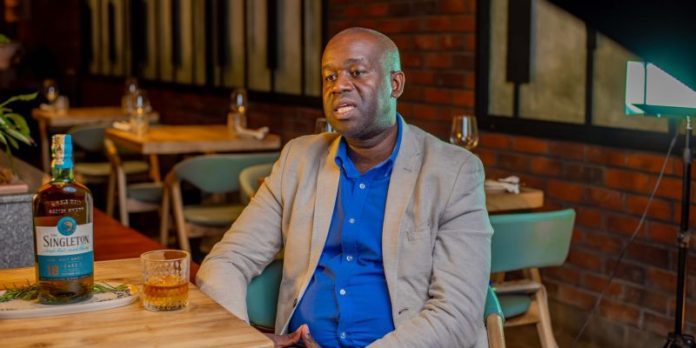
To explore this landscape, we sat down with Paul Gachoi, whose journey from bar counter to Reserve Brand Ambassador for Diageo offers a unique lens on tradition, flavour, and the evolving Kenyan palate.
Gachoi’s path began not in a distillery, but behind a bar, a background he credits with shaping his sensory approach.

“Working behind the bar teaches you the universal language of flavour,” he notes. “Every cocktail is a lesson in balance. That foundation is directly applicable to identifying and appreciating the intricate layers in a single malt.”
Our conversation naturally turned to the source: the distilleries themselves, each imparting a distinct signature to one of his favourite whiskies, The Singleton.
“First, there’s Dufftown,” Gachoi begins, painting a picture of the Speyside region. Founded in 1895, this distillery employs a slow distillation process, a method that allows for the development of a rich, complex spirit, later rounded out by maturation in both American and European oak casks.
He then describes the Highland’s Glen Ord Distillery, established in 1838. “It’s one of the last distilleries that still malts its own barley on site, a true ‘grain-to-glass’ process,” he explains.
This hands-on approach, he says, is key to crafting a full-bodied whisky with distinct notes of ripe pear, mandarin, and honey.
Finally, there is Glendullan, built in 1897 on the banks of the River Dullan.
“The river’s cooling effect and the distillery’s focus on a clean, crisp spirit give the finished product an elegant personality,” Gachoi observes, highlighting notes of citrus zest and herbs with a refreshingly smooth finish.
For Gachoi, the overarching philosophy across single malt whisky is a commitment to patience. “It’s about savouring the moment. A slow distillation and maturation process is non-negotiable for achieving a truly great, smooth, and refined taste.”
This character is deeply influenced by the casks. A single malt like The Singleton utilises both American oak, formerly holding bourbon, and European oak, former sherry casks.
“The American oak forms the signature base,” Gachoi details, “imparting vanilla, honey, and orchard fruit. The European oak adds depth with dried fruits, nuttiness, and a soft spice finish.”
When asked how he would introduce a curious newcomer to the brand, his advice is simple and deliberate.
“Start neat or with just a drop of water. Sip slowly and let the layers unfold. It’s about slowing down.”
He also suggests culinary exploration, noting that a dash in a marinade or sauce can instantly elevate a dish.
Looking at the local market, Gachoi sees a clear alignment. “Kenya has a growing appreciation for premium spirits,” he says, pointing to the interest in aged expressions like The Singleton 21-Year-Old, which attracts connoisseurs with its smooth, layered profile from double maturation.
His current conversations often happen with fellow bartenders. Through initiatives like the World Class Championships, Diageo hosts community days for mixologists to immerse themselves in the brand’s heritage.
“They then express their creativity by crafting incredible serves,” Gachoi says.
Through Gachoi’s eyes, the story of single malt whisky emerges as a testament to place, process, and a mindful approach to consumption.