

Gamification is the practice of applying game mechanics to non-game contexts. Points, levels, streaks, and rewards are no longer exclusive to video games. They appear in fitness apps, learning platforms, banking interfaces, and entertainment services used by millions of people across Nigeria and Kenya every day.
The growth of this approach is not accidental. It is the result of companies learning, through years of user data, that these mechanics change how people interact with digital products in measurable and repeatable ways.
What Is Gamification?
Gamification strategies borrow the structural elements that make games compelling and apply them to products where the primary purpose is something other than entertainment. A banking app that gives users a badge for saving consistently is using gamification. A fitness tracker that shows a 14-day streak is using gamification.

The core elements are simple: a goal, a way to measure progress toward that goal, feedback when progress is made, and a reward when the goal is reached. That loop, which game designers have refined over decades, is now embedded in products across every digital sector.
Why It Works So Well
The psychological mechanism behind digital gamification connects to how humans process progress and reward. When a user sees a progress bar move, a level increase, or a streak number climb, the brain registers a small but real sense of achievement.
Chicken Road Kenya: Why Crash-Style Casino Games Are Popular Among Mobile Players in Africa
This response does not require a large reward. Research shows that visible progress toward a goal motivates continued behavior more effectively than the reward itself. The anticipation stage, not the completion stage, is where most of the motivational energy sits.
User engagement data from platforms that added gamification elements shows consistent patterns: session length increases, return visit frequency increases, and users who engage with gamified features are significantly more likely to recommend the platform to others.
Examples Beyond Video Games
Gamification appears in contexts that most users do not immediately recognize as game-like. The following examples show how widely the approach has spread across different sectors:
- Duolingo uses daily streaks and experience points to teach languages, making study sessions feel like game sessions.
- Strava gives runners achievement badges and places them on leaderboards against their own previous performances.
- Revolut and other banking apps reward users with cashback multipliers tied to spending milestones.
Each of these products serves a practical purpose, but the gamification layer is what drives the habit. Without it, the underlying product would still function, but user retention numbers would look significantly different.
How Businesses Use Gamification
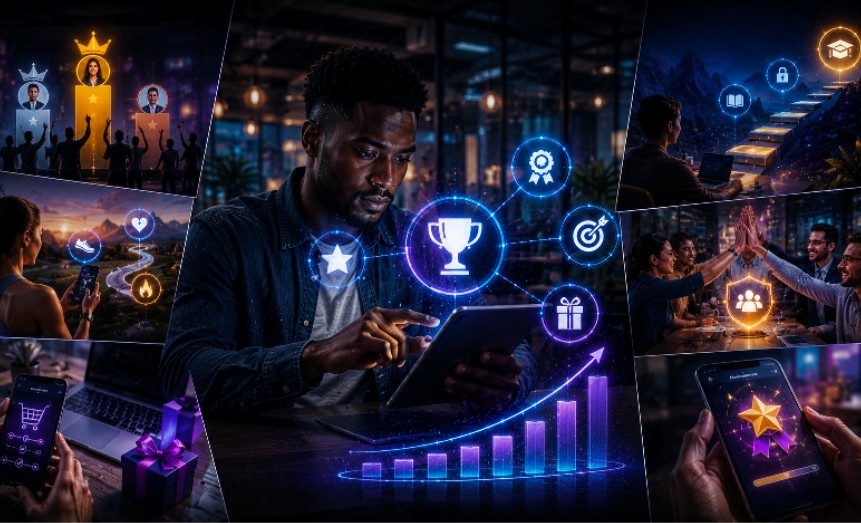
Reward systems are the most visible gamification tool, but the deeper application is in how platforms structure the entire user journey. Every decision about when to show a notification, how to display a progress indicator, or when to unlock a new feature is a gamification decision, whether the product team labels it that way or not.
Online entertainment platforms have applied these mechanics with particular effectiveness. Platforms like Pin-Up, alongside other digital entertainment services, use loyalty points, level progression, and achievement systems to create interactive experiences that give users reasons to return beyond the core content itself.
The table below shows how different platform types apply gamification mechanics in 2026:
| Platform Type | Core Mechanic Used | Primary Effect |
| Language learning apps | Streaks and experience points | Daily habit formation |
| Fitness trackers | Achievement badges and rankings | Long-term retention |
| Online entertainment | Loyalty tiers and reward missions | Increased session frequency |
| Banking and fintech | Savings milestones and cashback levels | Behavioral change |
The consistency across sectors shows that the mechanics work regardless of the product category, as long as the underlying experience is solid enough to warrant return visits.
Future Trends in User Engagement
Gamification will become more personalized as platforms collect more data about individual behavior patterns. A user who responds to competitive leaderboards will see more of those elements, while a user who prefers solo progress tracking will experience a different version of the same product.
This personalization layer removes one of the main criticisms of gamification: that the same mechanics do not work equally for all users. When the system adapts to the individual, the relevant mechanics surface for the right person at the right time.
In conclusion, gamification works because it aligns with how people are wired to respond to progress, reward, and challenge. Platforms that understand and apply these mechanics thoughtfully will continue to outperform those that rely on content alone to retain their users.