

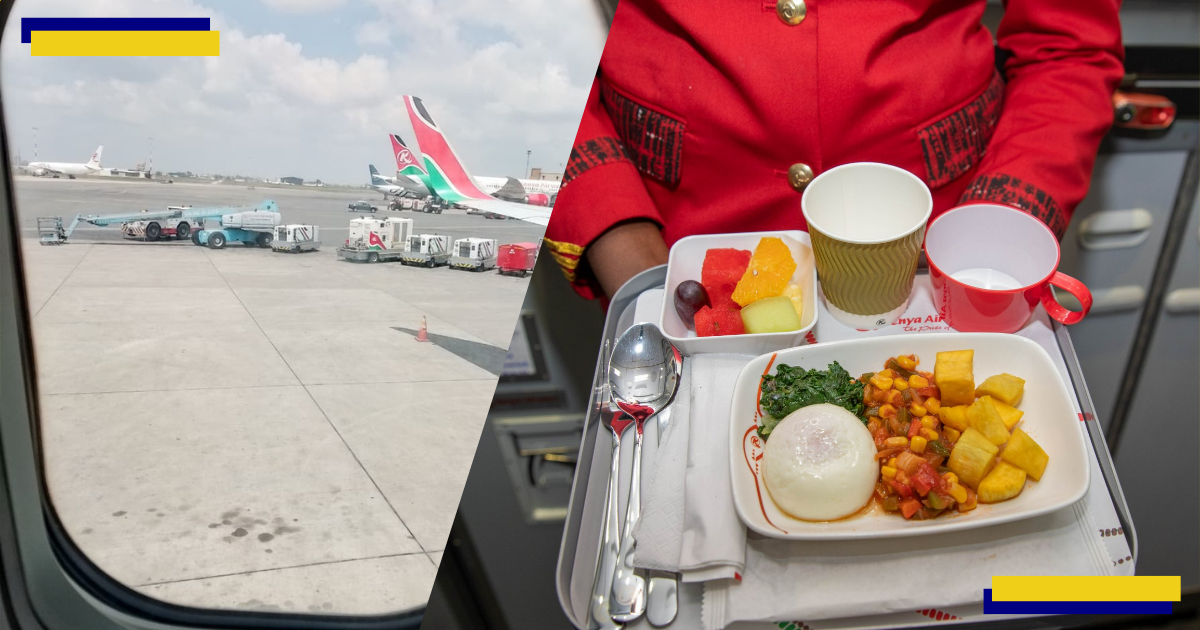
A few weeks ago, I boarded a Kenya Airways (KQ) flight to Mauritius. I’m not a frequent flier, and to be frank, this was my first time in an aircraft as an aviation journalist. Several things stood out.
First was the efficiency with which the flight attendants settled travelers in and made them comfortable. Then there was the variety of food and drinks available and the very cold in-flight temperature, which I’ll cover in a separate article.
About ten minutes after takeoff from JKIA, after the aircraft had climbed to its cruising altitude of 35,000 feet, the pilots turned off the seatbelt sign, allowing passengers and flight attendants to move freely.

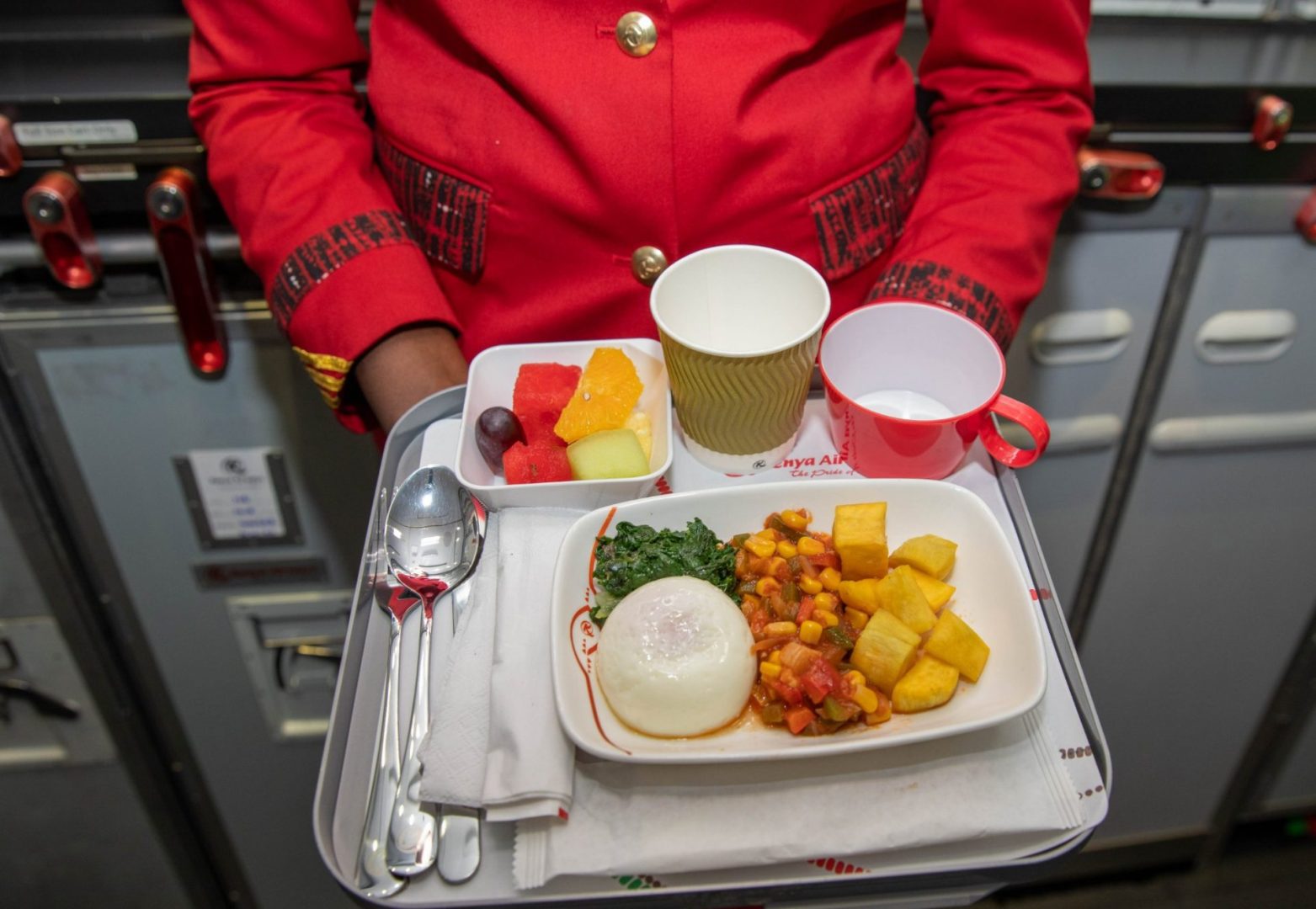
Moments later, an announcement beamed through the speakers: it was meal time. Excitement filled my heart, the moment I’d been waiting for. Due to the excitement of boarding for the first time, I’d skipped breakfast at home despite my spouse, whom I was travelling with, insisting that I needed to “bite something.”
All I could think about was being in the air. The wait to board would, however, turn out to be longer than expected, due to some technical issues with the aircraft.
Now the moment was here. Soon, the attendants started walking along the aisle, pushing trolleys that I knew contained sumptuous food. The aroma had already filled the cabin, and I knew it was going to be delightful.
Inside Kenya Airways newly leased Boeing 737-800 plane
Seated at the back of the plane, just adjacent to the galley where the food was prepared, I was sure I’d be among the first to eat. But shock on me, the trolleys zoomed past, and serving started from the first seats of the economy section toward the back. The business class section had one attendant, while two served economy.

After about 20 minutes, the trolley with the food arrived, and the flight attendant posed the question: “Beef or chicken?” I went for chicken, and he served me vegetable rice, chicken with thick stew, bread, and cheese. The second attendant serving drinks also passed by: “We have drinks. What would you like to have today? There’s Coke, fresh juice, coffee, soda, wine, and other alcoholic drinks, as you can see atop this trolley.”
I’ll let you guess what I went for, and your guess is right.
While dining, I realized that despite the food taking about 20 minutes to arrive, it landed on my plate very hot.
Who prepares meals served in KQ planes
Having visited NAS Servair, the facility where Kenya Airways sources its in-flight meals, I’d learned that the meals are cooked and frozen before being loaded into the galley of the plane. As such, I didn’t expect a very hot meal.
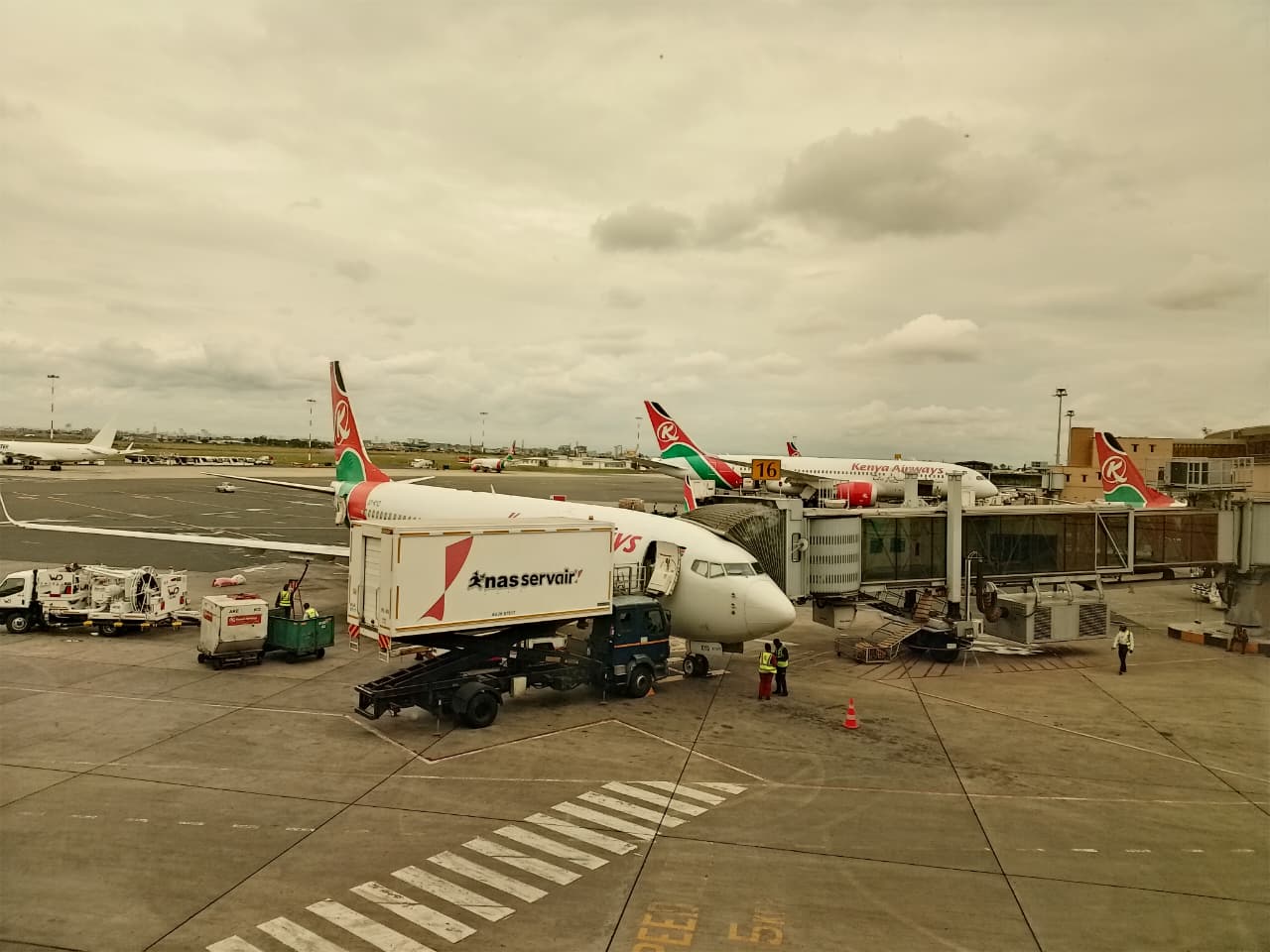
If the plane’s making a short stop and a return journey, it’s usually equipped with food that’ll serve both the outbound and return routes. The foods are well labeled to indicate which batch will be served on the immediate flight and which will be catered for the return.
The temperature of the food led me on a fact-finding mission, trying to establish how the meals are heated in-flight and what temperatures are maintained.
I’d assumed that the meals were heated in a microwave in the galley, but after seeing that metallic foil had been used to wrap the food, I knew a microwave wasn’t the option.
I spoke to one of the technicians at KQ, who explained they used ovens.
“We don’t use microwaves on the plane. The food comes in chilled, and to heat it, the engines play a pivotal role. The plane is equipped with specialized conventional ovens. The ovens receive a blast of hot air from the jet engines that reheats the precooked food. Different foods have different sets of reheating instructions, and the attendants are well-trained to know where to place each type of meal. For most food served in the economy class, reheating takes place in the trays. The trays are loaded into the ovens and heated; it takes about 20 minutes. The serving takes place in batches,” he explained.
Food preparation at NAS Servair
NAS Servair, which also prepares food for other airlines, is a heavily guarded facility with high standards of hygiene.
During my visit to the facility, I witnessed the delicate balance airlines have to establish. The safety of travelers being key, anyone entering the facility, whether visitor, staff, or inspector, is required to sanitize their hands and wear PPE covering their hair, nose, and even mouths. Even watches, bracelets, and rings aren’t allowed.
“We do this to ensure there’s no contamination. Contamination can be very costly for an airline. Imagine if there’s an incident of food poisoning during the flight. It means the plane has to be diverted to the closest airport for the affected person to receive treatment. What does this mean? Delays for other passengers, costs to the airline, which has to pay unplanned airport fees, and in other cases, book passengers in hotels if the delays take longer than expected. That’s why this facility upholds high standards of hygiene. And it doesn’t start at the facility, even where we source our fresh produce, we have inspectors who visit the farms to check the growing conditions,” an official at NAS Servair explained.
To ensure freshness, the fresh food transported to the facility must be in trucks with air conditioning. Their temperatures are recorded and catalogued at arrival. Other ingredients, for instance, flour, sugar, and spices, are all stored in batches, and their batch numbers are well catalogued.
“We do this so that in case of any issue, we can be able to trace the source of a problem. If it’s an onion or tomato that’s problematic, we’ll be able to know which farm it came from,” she continued.
How KQ decides to buy new planes, process and cost
All the meals are weighed before being packed to ensure that they’re of the same size. For airlines, weight’s an essential aspect since the more weight you carry, the more fuel you’ll burn, increasing operational costs. According to KQ, at least one ton of vegetables is served on its flights every day.
So, every time you dine in a commercial aircraft, know that it takes intensive effort, a lot of care, and technology for that meal to land on your table. The jet engines provide the hot air that warms the food to the right temperatures (not microwaves), ensuring you relish each time you sink your teeth into the meals.
And before you start complaining about how hungry you are and that the meals have been delayed, give the attendants some grace. It takes about 20 minutes to heat the meals, and they’re served in batches.

