

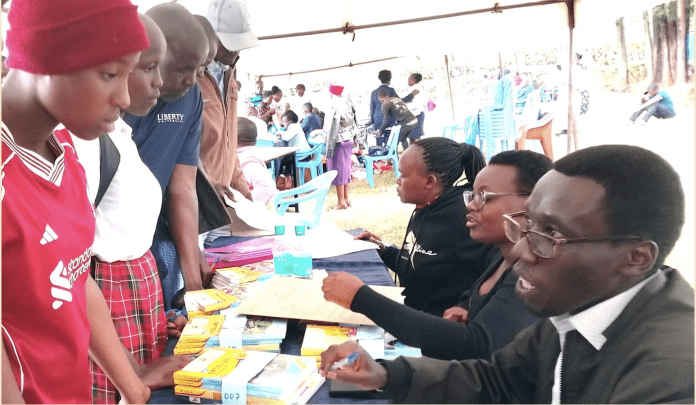
Kenya’s education system is at a defining moment. As the first cohorts transition into Senior School under the Competency-Based Curriculum (CBC), uncomfortable truths are emerging. Many learners entering Grade Ten are not academically prepared for the demands placed upon them. Across subjects, entry behaviour reflects gaps in foundational competence rather than mastery. This is not a failure of learners. It is a systemic failure that calls for an equally systemic response.
Converting the current Grade Tens into Form Ones should therefore be understood not as regression, but as curriculum justice. It is a corrective intervention designed to give learners the time, structure, and support required to master foundational knowledge and thrive in Senior School.

At its core, education is not about speed or policy timelines. It is about competence, mastery, and opportunity. When learners advance without the requisite skills, the system merely postpones failure rather than preventing it.

How we got here: A system ahead of its capacity
The CBC was introduced with sound intentions: to shift education from rote learning to skills, values, and applied competence. However, implementation has consistently outpaced system readiness. During national consultations by the Presidential Working Party on Education Reforms, educators raised concerns about infrastructure gaps, teacher preparedness, and resource constraints—particularly at Junior Secondary level.
How 11-year-old boy turned his CBC assignment into a thriving company
One practical proposal was to introduce a “curriculum cushion” by temporarily allowing certain cohorts to progress through a familiar structure while the system prepared for full CBC implementation. That pause never happened. Instead, learners were advanced through an under-resourced and unevenly implemented Junior Secondary experience. The consequences are now visible in Grade Ten classrooms.
The reality in Junior Schools
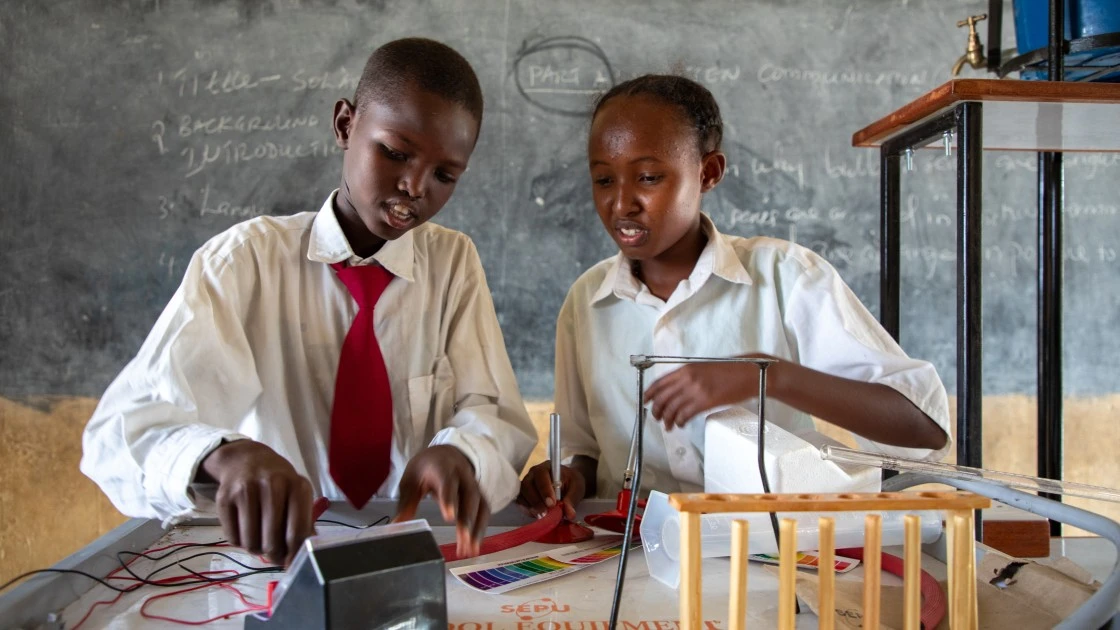
Across the country, Junior Secondary Schools face acute teacher shortages and subject mismatches. Teachers are routinely assigned outside their areas of specialization. In some cases, entire schools with nine learning areas across three grades operate with only two teachers. This reality is compounded by inadequate laboratories, limited textbooks, and scarce learning materials for Science, Technology, Pre-Technical Studies, Creative Arts, and Sports.
While recent government efforts to recruit teachers and expand infrastructure are necessary and commendable, they arrived too late for the current Grade Ten cohort. These learners navigated their formative years in a fragmented curriculum environment. Advancing them further without remediation undermines both learner confidence and academic integrity.
Why converting Grade Tens to Form Ones makes sense
The proposal to convert Grade Tens into Form Ones is simple and defensible. Form One content assumes less prior knowledge and is structured to build foundational competence progressively. This allows learners to consolidate literacy, numeracy, scientific reasoning, and learning discipline—skills essential for success in Senior School.
Grace Akinyi: Why CBC system is bad for Kenyan children
Critics argue that this adds an extra year to the academic journey. That argument misses the point. One additional year of structured learning is a modest investment compared to the long-term cost of producing graduates ill-prepared for higher education, the labour market, or entrepreneurship. The real risk lies not in delay, but in advancing learners who are not ready.
System-Level benefits beyond the learner
This intervention would also serve the wider education system. Reverting Grade Tens to Form Ones creates critical time for Kenya to align curriculum delivery with teacher capacity, infrastructure development, and learning resources. It allows Junior and Senior Schools to establish authentic competence-based practices rather than improvised compliance.
By the time subsequent cohorts enter Senior School, the system would be better prepared, learning gaps reduced, and outcomes improved. In human capital terms, this is a strategic reset, not a retreat.
Global lessons on Competence-Based Education
International experience shows that successful competence-based systems include clear remedial and transition pathways. Learners’ progress based on demonstrated mastery, not age or calendar pressure. These systems record lower dropout rates and stronger long-term outcomes. Kenya has the opportunity to localize this principle by adopting a deliberate, learner-centred corrective pathway.
Aviation among 40 subjects to be offered at CBC Grade 10 curriculum
Leadership, responsibility, and national interest
Ultimately, this is a question of leadership. We cannot claim commitment to CBC while ignoring the structural conditions that prevent its success. Converting Grade Tens to Form Ones is not an admission of failure; it is an act of foresight and accountability. It signals that Kenya values learning outcomes over administrative convenience.
What would the country lose by taking this step? Nothing of substance. What would it gain? A redeemed cohort of learners, a more credible education system, and a stronger foundation for national productivity.
Education policy must be judged not by how quickly it moves learners through grades, but by how well it prepares them for life, work, and citizenship. Curriculum justice demands that we give every learner a fair chance to succeed. For the current Grade Tens, that chance begins with the courage to reset, correct, and lead with principle.
About the author
Dr Charles Nyandusi, PhD, is a curricularist and teacher educator at Moi University specializing in curriculum development, instructional design, and competence-based education implementation in Kenya.