

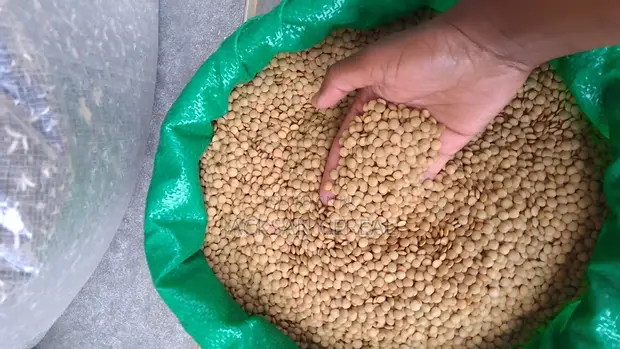
As farmers across Kenya search for crops that can withstand harsh weather, deliver quick returns, and tap into growing food demand, lentils, locally known as Kamande stands out as one of the most promising yet underutilised agribusiness opportunities.
Despite being widely consumed in many Kenyan households, Kamande farming remains largely unexplored compared to maize, beans, and green grams.
Yet, the crop has proven commercial value across Africa, especially in Ethiopia, Sudan and South Sudan, where it is grown at scale for both domestic and export markets.

For Kenyan farmers willing to venture into drought-resilient agribusiness, Kamande farming presents a realistic pathway to good yields and strong profits within a short period.
The crop is said to have superior characteristics that make it worth investing in. Kamande is fast-growing, drought-tolerant, and require relatively low production costs compared to many staple crops.
According to agronomists, the crop the crop matures in about 80 days in hot areas while in cooler regions it may take up to 110 days.
This means a farmer can potentially harvest and earn income within three to four months, making it suitable for both small-scale and commercial farming.
Another advantage is that the crop has a ready market in Kenya, in supermarkets and cereal shops. In fact, the lentils sold in local markets are the same seeds farmers can use for planting, making access to seed simple and affordable.
Ideal growing areas and climate requirements
Kamande grows best in hot areas, and thrives in sandy or sandy-loam soils that drain water quickly.
Due to its high tolerance to drought conditions,the crop is suitable for growing in Kenya’s arid and semi-arid regions such as Makueni, Machakos, Kitui, Kajiado, Narok, Siaya,and the coastal region.
Land Preparation
Good land preparation is critical because lentil seeds are small and require fine soil for proper germination. Farmers should plough thoroughly to achieve a fine tilth, removing clods and weeds.
Well-prepared land improves seed-to-soil contact, boosts germination rates, and promotes healthy root development.
Seed Selection and Planting
One of the unique advantages of kamande farming is that the seeds purchased from cereal shops can be used as planting seeds. However, farmers should ensure they select clean, mature, and disease-free grains for planting.
An acre of land requires approximately 12 to 15 kilograms of seed. When planting, a farmer should drill planting lines 1 to 2 inches deep and maintain a spacing of 45 centimetres between rows.
The best time to sow lentils is at the onset of rains. Since the crop does not require a lot of water, it performs well in both the long rains and the short rains seasons.
After planting, seeds typically germinate from the 10th day, depending on soil moisture and temperature.
Crop Management and Pest Control
Lentils are generally easy to manage, but farmers should monitor the crop closely for pests, especially during early growth stages. Kamande plants are susceptible to common bean pests such as aphids, thrips, and worms.
These pests can reduce yields significantly if not controlled early. Farmers are advised to practice regular scouting and consult agricultural extension officers for recommended pesticides and safe application procedures.
Weeding should also be done early to prevent competition, especially during the first few weeks when the plants are still establishing.
Harvesting and yield per acre
Lentils are ready for harvesting when the plants turn brown and dry. A key indicator is the rattling sound produced by the dry pods when shaken. At this stage, delaying harvesting can lead to pod shattering and losses.
Harvesting should be done when the crop is fully mature, then dried further before threshing to separate the grains.
According to experts, under proper management, lentil farmers in Kenya can expect an average yield of 600 to 800 kilograms per acre.
Assuming a yield of 600kg and a selling price of Sh150 per kilo, this translates to a turnover of approximately Sh90,000 from one acre in about three months.
The crop has a ready market in local cereal shops, supermarkets, and institutions such as schools and hospitals.
Did you love the story? You can also share YOUR story and get it published on Bizna Click here to get started.