

Family Legacy: From retail job to full-time farming
In 2021, South African-based farmer Tlhalefo Dithebe made a decision many would consider risky. She resigned from her permanent job in the retail sector and invested her pension into livestock farming.
Today, that decision has paid off. She runs Agro Queen, a growing livestock enterprise with 133 cattle and 147 goats, supplying both meat and milk to local markets. Farming was not new to Dithebe. She comes from a family with a strong agricultural background, with both her grandfather and father actively involved in farming.
Her entry into agribusiness was supported by early financial discipline. While in college, her father saved 80 percent of her semester allowance, creating a pool of capital that she later used to buy her first livestock.

Growing from 31 cattle
Dithebe started her livestock journey with just 31 cattle in 2021. She adopted a simple but effective model:
- Sell male calves at auction once they reach 180kg–220kg
- Retain heifers to grow the herd
- Reinvest proceeds into acquiring more breeding stock
Farmer’s Guide: Intensive livestock farming benefits and shortcomings
This approach has enabled her to steadily grow her herd to over 130 cattle without relying heavily on external financing.
Operating in a dry region influenced her production decisions. She focuses on:
- Bonsmara cattle, known for drought resistance and fertility
- Boer goats, valued for fast growth and meat production
To further improve productivity, she has adopted artificial insemination, which has enhanced genetics while reducing the cost of maintaining bulls.

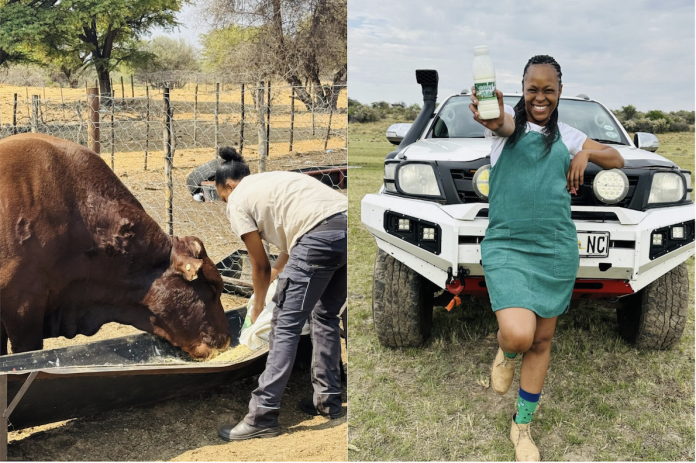
The owner of Agro Queen, Tlhalefo Dithebe. Photo: Supplied
Livestock business
Like many farmers in arid areas, Dithebe relies on natural grazing supported by supplements. She uses seasonal licks and adjusts feeding depending on whether animals are pregnant, lactating or growing. To manage costs, she also produces her own feed using maize residues mixed with molasses, reducing reliance on commercial feeds.
One of the standout ventures in her business is goat milk production.
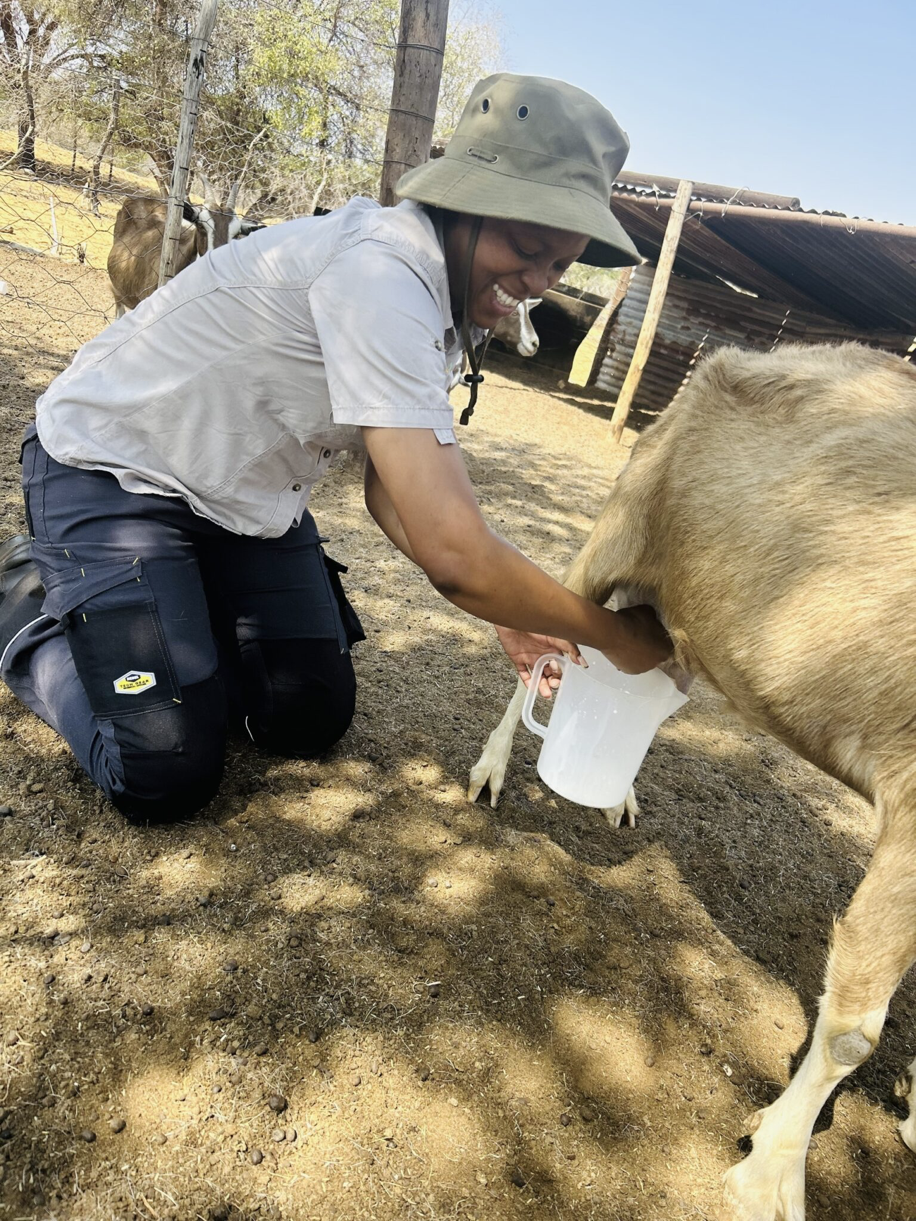
The idea emerged after she noticed health improvements in her son after consuming goat milk. She has since commercialised the product, supplying local markets. Currently, the farm produces about 126 litres per week against a target of 210 litres, with production affected by breeding cycles.
Multiple revenue streams
Dithebe sells her products through different channels to ensure consistent income:
- Weaners sold through auctions and to feedlots
- Slaughter-ready animals sold within the community
- Breeding livestock sold to other farmers
- Goat milk sold locally for consumption
This diversified approach allows her to respond to market demand while maintaining steady cash flow.
How I made my first million at 24 from Black Soldier Fly farming
Building a modern agribusiness
She maintains a strict animal health programme that includes vaccination, parasite control and nutritional supplementation. Her approach is preventative, aimed at reducing losses and maintaining productivity in a challenging environment.
Beyond farming, Dithebe has invested in building her business skills. She has participated in enterprise development programmes and adopted digital tools to improve planning and efficiency. She is also focused on branding Agro Queen as a professional and scalable agribusiness.
A Growing legacy
Her message to those looking to enter farming is straightforward: start small and take action. She encourages new farmers to seek knowledge, join support programmes and learn from others in the industry.
Dithebe’s journey reflects a broader shift across Africa, where young entrepreneurs are entering agriculture with a business mindset. With her daughter already showing interest in farming, Agro Queen is positioning itself not just as a business, but as a legacy.
Final Word
Dithebe’s story underscores a key reality in African entrepreneurship: success is rarely driven by a single bold move. It is built through disciplined execution, reinvestment, and a clear understanding of local conditions.
In sectors like agriculture, where volatility is constant, the advantage lies with founders who combine patience with structured decision-making—and who treat business not as a gamble, but as a long-term responsibility.