

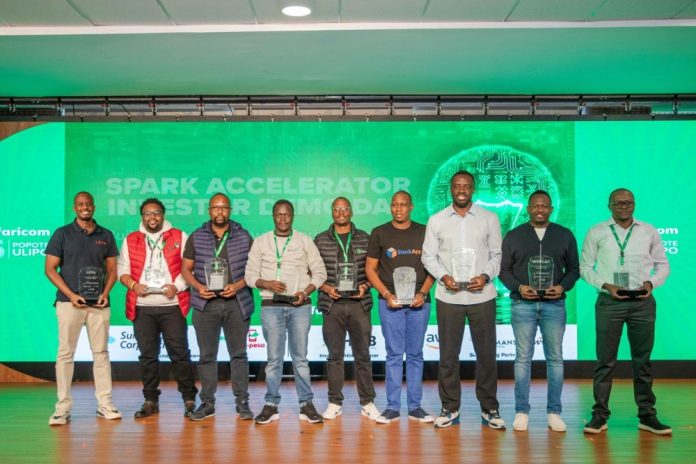
The Spark Accelerator program, launched in 2024 after the restructuring of Safaricom’s Spark Fund, has quickly become a leading platform for bold founders looking to grow their businesses. Centered on Safaricom’s main goal of transforming lives, this initiative aims to empower early-stage startups by giving them the access they need to thrive in tough markets. By using a strong network of corporate resources, industry experts, and technical advisors, the program sets emerging companies up for long-term success.
The execution of the accelerator relies on a strong partnership among multiple organizations. Safaricom, M-PESA Africa, and Sumitomo Corporation are the main supporters of the initiative, while iHub is the primary partner responsible for the daily operations of the acceleration process. Understanding that early-stage ventures need complete support, the program includes a network of specialized corporate partners. Key industry players like PwC, AWS, Bowmans Law, and Vodacom are involved, providing essential technical advice, legal support, cloud infrastructure guidance, and strategic mentorship to the participating founders.
Designed for startups in the Fintech and Digital Content sectors, the accelerator takes a thoughtful, ecosystem-based approach. Instead of giving generic business advice, the program has a dedicated team of experts who understand market dynamics and emerging technologies. This allows for continuous innovation among the participating companies. To support growth, the accelerator offers a mix of training, mentorship, funding, and go-to-market support. This structure tackles the three main challenges faced by early-stage innovators: securing product and technology support, gaining reliable market access, and obtaining necessary corporate funding.

Inside Safaricom’s Sh95.6 billion record-breaking net profit in 12 months
Since it started, the Spark Accelerator has successfully boosted growth for 18 startups across two cohorts. The first cohort included a remarkable group of innovators such as Chumz, Chpter, Faidi HR, HealthX, Churpy, VunaPay, Twiva, BlackRhino, and Nobuk. Maintaining this momentum, the second cohort introduced an additional diverse set of tech ventures: Mediakits, StockApp, Leta, Weplay, FlexPay, DigiTax, Oye, QuePay, and GoPay. Through the accelerator’s specialized tracks, these businesses have been able to improve their products and significantly increase their consumer reach.
The program concludes with the Investor Demo Day, which acts as both a graduation and an important launchpad for the founders. This day provides startups with a valuable chance to pitch their improved business models to a selected audience of local and international investors. The main goal is to help these businesses secure the seed or follow-on funding they need to grow. For investors, the Demo Day has become a key event for discovering high-potential, well-evaluated startups that are ready to scale. As the current cycles wrap up, the platform is already preparing for its next phase, with applications for Cohort 3 expected to open later this year.