

As rainfall-dependent agriculture becomes increasingly unreliable, farmers in Kenya’s arid and semi-arid lands (ASALs) are being forced to rethink what they grow and how they earn a living.
With prolonged dry spells and unpredictable rainfall threatening harvests, the government has continued to urge farmers to adopt drought-resistant crops that can withstand harsh climatic conditions while sustaining household incomes.
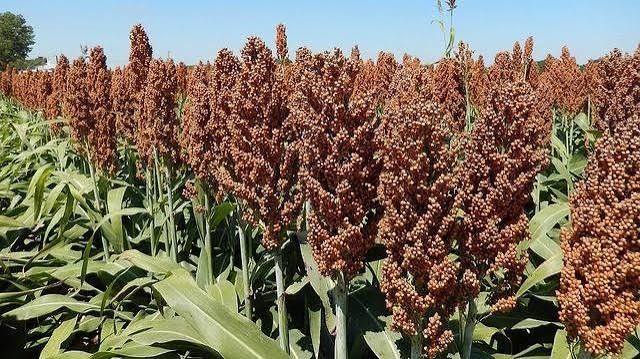
A good example of such crops is sorghum, a less demanding crop known for its ability to thrive in relatively dry conditions.

Unlike crops that require consistent rainfall to perform well, sorghum has a deep root system and uses water efficiently, enabling it to withstand dry conditions better than many conventional cereals.
Also Read:How Black Soldier Fly farming is reshaping animal feed business
Beyond its ability to survive drought, sorghum presents several commercial opportunities that could make it a valuable source of income for smallholder and commercial farmers alike.
One of its biggest attractions is the potential for a ready market. Breweries, commercial bakeries and animal feed manufacturers use sorghum as a raw material, creating opportunities for farmers to supply processors in bulk.
Where buyers offer formal contracts, farmers can plan production around agreed quality requirements, quantities and delivery schedules, reducing the uncertainty associated with selling produce after harvest.
However, farmers are advised to look for market before planting to avoid losses.
Sorghum is also easy to manage, which translates to low production costs. Compared with some conventional cereals, it requires less fertiliser and fewer chemical treatments under suitable growing conditions.
This, however, depend on the variety planted, soil fertility, pest pressure and farming practices. The crop’s relatively short growing season offers another advantage.
Early maturing varieties allow farmers to plan subsequent planting activities or diversify into other crops where rainfall and soil conditions permit. .
Sorghum also offers value beyond its grain. The stalks, leaves and other crop residues can be used as livestock feed, including as material for silage when properly harvested and preserved.
In livestock-producing areas, farmers may sell these by-products to dairy and beef producers, creating an additional source of revenue from the same field.
Additionally, the crop’s grain can be stored for extended periods when properly dried and kept under suitable conditions. This allows farmers to sell their produce when market prices are good instead of disposing of their harvest immediately after threshing.
Importantly, sorghum farmers are not limited to one market. Depending on grain quality, location and prevailing prices, sorghum can be sold to industrial processors, local food markets, poultry feed manufacturers and regional processing enterprises.
Also Read: Azolla farming offers Nyeri farmer a low-cost feed alternative