


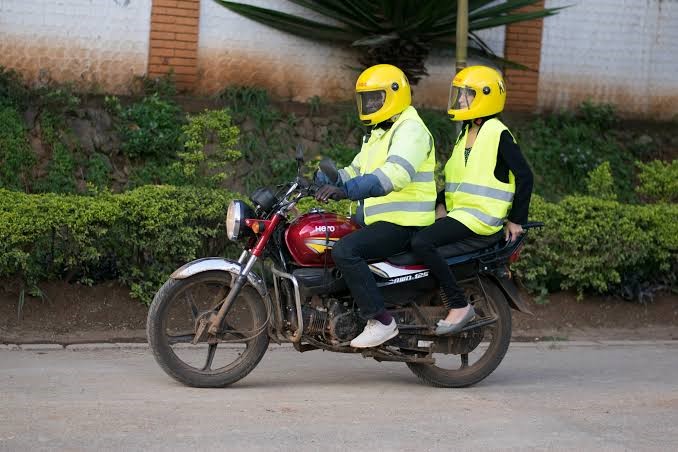
Boda bodas play a crucial role in Kenya’s transport sector, offering a quick alternative to cars and public transport for short-distance commuters.
At busy junctions, outside office blocks, near matatu stages and along residential streets, boda bodas weave through traffic, ferrying passengers and parcels while helping commuters beat traffic congestion.
But the convenience comes with significant risks. Motorcyclists remain among the most vulnerable road users, and the number of crashes involving motorcycles continues to raise concern among road safety authorities.

Data from the National Transport and Safety Authority (NTSA) showed that 2,150 people had died in road crashes by mid-June 2026, representing an increase of about 11 per cent from the comparable period a year earlier.
Motorcyclists were the second-largest category of fatalities after pedestrians. NTSA Director-General Nashon Kondiwa said about 836 of the deaths were pedestrians, while motorcyclists accounted for a significant share of the remaining fatalities.
The Authority has identified factors including speeding, poor road-user behaviour, inadequate compliance with traffic rules and weaknesses in enforcement as part of the wider road-safety challenge.
For boda boda riders, the consequences of a crash can extend well beyond physical injuries. Thousands of riders rely on the boda boda business as a source of income for their families.
This means a damaged motorcycle can immediately interrupt a rider’s livelihood, while medical bills, third-party claims, and the cost of repairing or replacing the machine can create additional financial pressure.
It is within this reality that insurance providers have stepped up with insurance products designed around the particular risks faced by motorcycle owners and operators.
Among financial institutions responding to this need is Co-operative Bank of Kenya, which has an insurance product aimed at both private motorcycle owners and commercial boda boda operators.
The cover combines protection for the motorcycle with optional personal accident benefits for the rider.
For commercial operators, the product provides a six-month option at Sh6,000 and a 12-month option at Sh12,108. Private motorcycle owners can obtain 12 months of cover for Sh7,081.
The comprehensive motorcycle cover is priced at five per cent of the motorcycle’s insured value, subject to a minimum premium of Sh5,000, inclusive of applicable levies.
Customers can also add personal accident protection for Sh2,000, providing benefits for death and permanent total disability of up to Sh250,000, alongside medical expenses of up to Sh50,000 arising from motorcycle accidents.
The policy also provides protection against third-party risks. Third-party bodily injury liability is unlimited, while property damage is covered up to Sh2 million.
Passenger legal liability is capped at Sh3 million per person and Sh20 million for an event. Other provisions include towing costs of up to Sh10,000, repair authority of Sh20,000 and accidental medical expenses of up to Sh20,000.
The cover extends across Kenya and includes a number of additional protections, including specified special perils, riots, strikes, civil commotion, terrorism and political violence, subject to the applicable terms and extensions.
For riders, the personal accident component can provide up to Sh100,000 each for death and permanent total disability, as well as medical expenses of up to Sh20,000.
The product also sets out specific excesses and conditions. For example, material damage attracts an excess of 2.5 per cent of the sum insured, subject to a minimum of Sh7,500.
Theft and recovery claims carry a similar excess, while total theft attracts an excess of 10 per cent of the motorcycle’s value, subject to a minimum of Sh15,000.
Requirements for Co-op Bank boda boda insurance
The policy requires a rider to be authorised by the insured and to hold the appropriate riding licence prescribed by NTSA.
Riders with less than one year of experience attract an additional Sh5,000 novice-rider excess, while motorcycles being operated by unlicensed riders are not covered.
Additional benefits available under the product are tracking devices, occupational group personal accident protection for drivers and loaders, carriers’ liability, loss-of-use protection and cover for personal effects.
Other benefits include replacement of damaged or lost keys, accommodation following an accident, daily hospitalisation allowances, a courtesy car and protection against political violence and terrorism, subject to the policy’s terms.
How to apply
Eligibility is open to people aged 18 and above who hold a valid driving licence.
Applicants are required to provide the motorcycle’s logbook, a valid driving licence, identification documents, a KRA PIN certificate and the applicable premium.
Customers interested in the Co-op Bank motorcycle insurance product can visit a Co-op Bank branch countrywide or access the bank’s insurance services online.
Also Read: Co-op Bank targets young Kenyans with 100pc home financing facility