



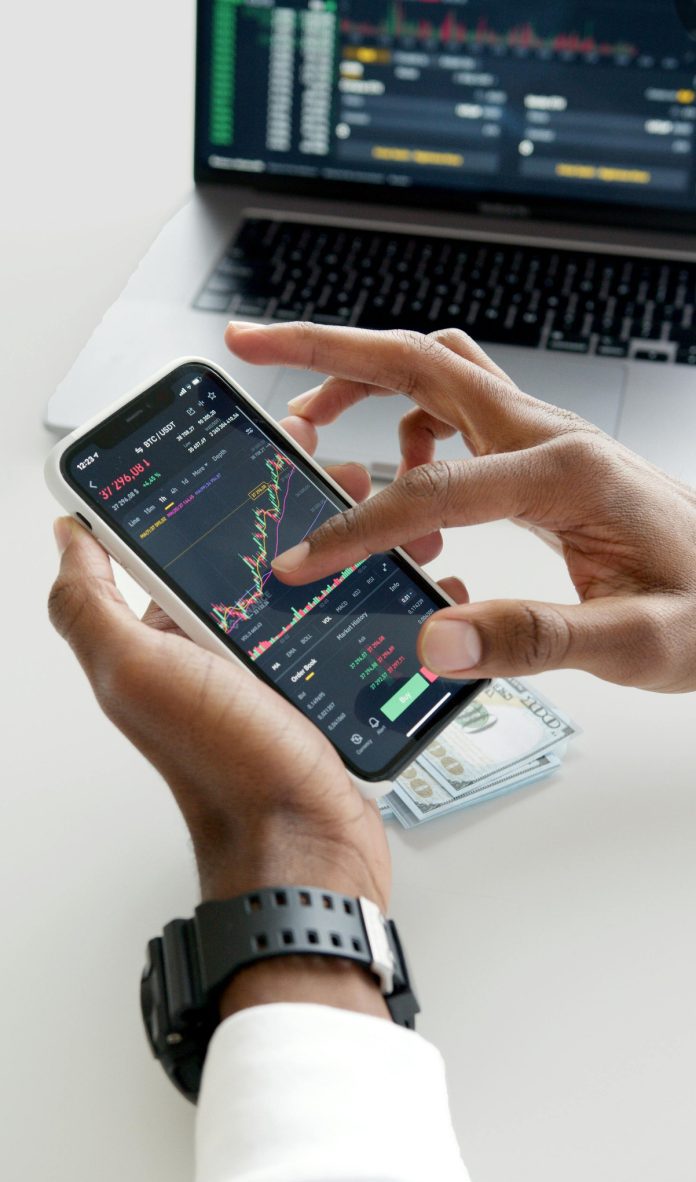
Kenya had 47,720,195 mobile money subscriptions by end-June 2025, according to the Communications Authority of Kenya (CA) Sector Statistics Report for Q4 FY 2024/2025. When that’s your baseline, it makes perfect sense that Kenyan traders often judge a broker by one simple thing first: how smoothly money gets in, and how reliably it comes back out.
If you’re exploring the best brokers in Kenya, you’ll notice many brands talk about speed and convenience, so it helps to know what to compare and how to verify it. In this article, we’ll focus on funding methods as a practical way to compare brokers, using verified Kenyan infrastructure signals from CA and Central Bank of Kenya (CBK) reporting to keep the guidance grounded.
Your Broker’s Payment Menu Tells a Story
Start with the broker’s funding options because they reveal how well the broker fits into your real routines. Kenya had 76,690,718 active mobile (SIM) subscriptions as of 30 June 2025 (146.3 penetration), and CA explicitly links that growth to demand for services such as mobile broadband, mobile money, and mobile banking.

That matters because a broker can be excellent on charts and analysis, yet still feel frustrating if deposits are clunky or withdrawals keep bouncing between steps. The good news is that funding is one of the easiest parts to test early, without needing deep trading knowledge.
How Kenyans are using online marketplaces to save on cars
A quick credibility note that also helps you as a reader: CA states its quarterly sector statistics are based on data provided by licensees as per their obligations, subject to later review, and prepared in line with International Telecommunication Union standards for administrative or supply-side data. So,when you use these numbers to shape how you compare brokers, you’re matching your decision to how Kenya actually connects, pays, and verifies transactions at scale.
Speed Dating for Payments
If you want a simple mindset shift, here it is: deposits are important, but withdrawals are the real test of day-to-day comfort. In Kenya, a large share of people will experience these steps on a phone, and CA reports smartphone penetration of 83.5% by end-June 2025.
Treat speed as something you measure, not something you assume from marketing. You can do this with two timers, one for how long a deposit takes to become usable, and one for how long a withdrawal takes to land where you need it.
Use one clean scorecard across brokers, then keep it consistent. This is the only list you need:
- Confirm which rails are supported for your account (mobile money, bank transfer, card), and whether the steps are clearly explained in-app and on the website.
- Test a small deposit and note the full timeline from initiating the payment to seeing funds available to trade.
- Request a small withdrawal and time the process from request to completion; record any manual checks you were asked to do.
- Check the fee and limit details at the point of action (not just a general FAQ); note whether fees, limits, and timelines are stated in plain language.
- Contact support once with a specific question about withdrawals (limits, verification, or delays) and judge the helpfulness and clarity of the answer.
That’s it. No complicated spreadsheets, and no pretending you can predict every edge case.
One more detail that often gets overlooked: Kenya’s payments ecosystem is built for reach, not just speed. CA reports 453,480 registered mobile money agents as at end-June 2025, which hints at why many people expect cash-out to be straightforward when they need it. A broker that respects that expectation usually makes the whole experience feel calmer and more predictable, even when markets are moving fast.
Trust Signals Live in the Cash-Out
Trust doesn’t come from a broker saying the right words. It comes from consistency: clear rules, clear timelines, and clear communication when something needs checking.
This is where the broader Kenyan financial system gives you a helpful lens. CBK reports that integration of the CBK data warehouse to supervised financial institutions with the system for Payment Service Providers went live on 29 May 2024, enabling real-time oversight. You don’t need to be a compliance expert to benefit from that direction of travel; it supports a market where transparency and traceability become more normal expectations.
There’s also a simple cultural signal: Kenyans are already getting used to digital-first access for investing. CBK reports the Dhow Central Securities Depository (DhowCSD) went live on 31 July 2023 and was launched on 11 September 2023, with access through a mobile app and web portal. CBK also reports total CSD accounts grew to 83,259 by end-June 2024, and that households (individuals) made up 79% of investors in its categorisation. When a country’s mainstream investment access is moving in this direction, it’s reasonable for traders to look for brokers that make payment status, verification steps, and withdrawal expectations easy to understand.
And if a broker can’t explain, in plain language, what slows a withdrawal and what you should do next, is that a relationship you want to depend on?
Choose the Broker That Makes Money Movement Boring
If you take one thing away, let it be this: comparing brokers on funding methods is a smart way to protect your time and build confidence, especially in a mobile-first Kenya supported by the connectivity and payment access CA measures each quarter. When you treat deposits and withdrawals as a feature you can test, you stop guessing and start choosing based on what you can verify.
Kenya’s official signals point toward more digital access and stronger oversight, which is good news for everyday traders who want clear processes and predictable outcomes. So go ahead and raise your standards: pick the broker that makes funding and cashing out feel almost boring, then focus your energy where it belongs, on learning and making better decisions.