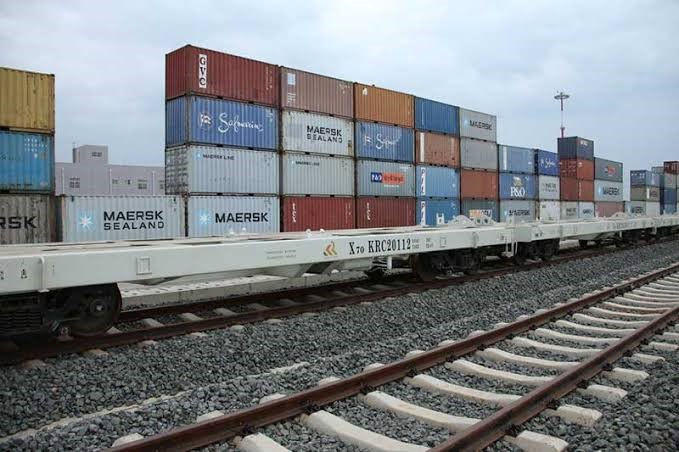
Kenya Railways has cut the cost of moving cargo from the Inland Container Depot (ICD) to the Boma Line de-consolidation centre by more than 80 percent, in a move expected to ease logistics costs for traders handling consolidated imports.
In a communique after a meeting between President William Ruto and MSME traders on Wednesday, September 2, 2026, the government noted that the charge has been reduced from Sh58,000 to Sh10,000 with immediate effect.
“As an immediate intervention to lower the cost of moving goods, Kenya Railways will reduce the charge for transporting cargo from the Inland Container Depot (ICD) to the Bomaline De-consolidation Centre from Sh58,000 to Sh10,000, with immediate effect,” the communiqué reads.

The reduction is part of a broader package of measures agreed during the meeting that are aimed at reducing the cost of importing and clearing goods.
The measures are expected to particularly benefit small traders who combine their shipments with those of other importers to lower transportation and clearance costs.
Alongside the railway tariff cut, the Kenya Revenue Authority (KRA) will lower the benchmark applicable to general consolidated cargo from Sh2.5 million to Sh2 million.
Traders had raised concerns that the higher threshold was increasing the cost of doing business and placing additional pressure on MSMEs that depend on consolidated shipments.
The government said the changes are intended to address the concerns while improving compliance and accountability within the cargo consolidation business.
As part of the reforms, KRA will conduct a fresh vetting and registration of all cargo consolidators. The firms will also be required to provide detailed information on the individual traders and importers whose goods they consolidate.
“All cargo consolidators will be vetted and registered afresh by KRA and will be required to submit a comprehensive list of the individual traders and importers whose goods they consolidate,” the government said.
The registration, vetting and submission of trader information must be completed by October 15, 2026.
The government will also remove the Advance Cargo Declaration requirement, a move aimed at simplifying the clearance process and reducing administrative hurdles for legitimate importers.
KRA will further prepare and publish a list of goods that will be excluded from the general consolidated cargo framework.
The exclusions will be determined based on factors including the value and nature of the goods, specific tax rates, excise requirements and other customs and revenue considerations.
The government said the exclusion list is intended to give traders and consolidators greater clarity on the types of goods that can be processed under the consolidation arrangement and ensure uniform application of the rules.
Meanwhile, existing charges applicable to ready-made clothes, footwear and fabrics will remain in place, while previously negotiated charges for air cargo will also continue to apply.
Also Read: Why Asset Finance Is the Smartest Growth Strategy for Your Business