

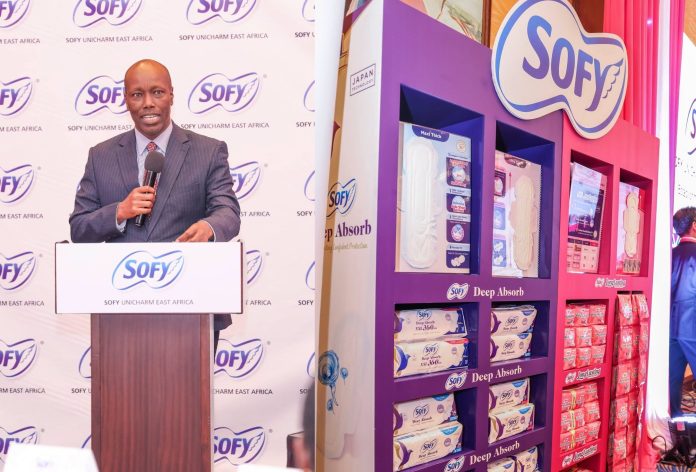

SOFY Unicharm East Africa Limited has now officially begun operations in Kenya as a result of an investment of KSh 2 billion intended for expanding access to affordable menstrual hygiene products, for boosting local manufacturing and for supporting women’s health throughout East Africa.
The joint venture unites Unicharm Corporation from Japan, Toyota Tsusho Corporation and CFAO Kenya Limited, combining international hygiene technology with local market knowledge and existing distribution networks.
The company, which is based in Nairobi, started its operations in September 2026 and intended to enhance the production, sale and distribution of sanitary products and disposable diapers in Kenya and in other neighbouring East African countries.
Takahisa Takahara, president and chief executive officer of Unicharm Corporation, stated that including the SOFY brand in the company’s corporate name showed its dedication to understanding women’s needs and helping them realize their potential.
He also mentioned that the company would draw upon Unicharm’s global experience in personal hygiene products, such as those for babies, while adjusting its technologies to meet the needs of consumers in East Africa.
Daigo Fujiwara, Managing Director of SOFY Unicharm East Africa, stated that the company would concentrate on improving people’s quality of life by tackling hygiene problems, reducing period poverty, and promoting women’s health and dignity.
“As Fujiwara said, our aim is to enable women to live with greater confidence and to take full part in society by offering reliable feminine care products, promoting better hygiene habits, and tackling period poverty.”
The launch follows SOFY’s entry into the Kenyan market in 2023 when it launched its premium Deep Absorb sanitary pads; in January 2025 the company introduced its locally produced SOFY Long Lasting pads, an affordable product which was developed to meet the needs and purchasing power of Kenyan consumers.
The company has also launched single-pad sachets in order to overcome the affordability barriers which stop some women and girls from being able to obtain sanitary products.
At the time of the launch, a government representative welcomed the investment, calling it an opportunity for Kenya to increase its manufacturing capacity as well as to improve access to essential hygiene products.
What is blocking your customers’ path through the sales funnel?
The representative asked the company to create a practical strategy aimed at increasing local content by obtaining the raw materials, packaging and other inputs from Kenyan suppliers when it was commercially viable.
The government also encouraged the joint venture to collaborate with small and medium-sized enterprises in Kenya, to carry out technical training and to pass on to local workers—especially women and young people—skills relating to production and quality management.
The representative also urged cooperation with the Kenya Bureau of Standards and with other appropriate agencies to guarantee product safety and consistent quality as the business grows.
In addition to manufacturing, SOFY has made investments in menstrual health education within schools and communities by working with organisations such as the Japan International Cooperation Agency (JICA), the United Nations Population Fund (UNFPA) and UN Women Kenya.
The aim of these initiatives is to increase people’s knowledge of menstrual health, promote open talks regarding menstruation, and overcome the stigma and taboos which can stop girls and women from obtaining information and assistance.
The company referred to estimates showing that about 54 per cent of girls in Kenya have had difficulties in obtaining sanitary products, stressing the ongoing need for affordable products, education and supportive environments.
The government representative emphasized that access to sanitary products should be coupled with adequate sanitation facilities and menstrual health education in order that girls may stay in school and take full part in society.
It is also expected to enhance Kenya’s standing as a manufacturing and export centre for the rest of the East African Community and for the markets within the African Continental Free Trade Area.
Sustainability will be included in the company’s strategy for growth, with a focus on local production, supporting Kenya’s manufacturing ecosystem and adopting responsible methods when it comes to the use of products, waste management and the circulation of resources.
SOFY Unicharm East Africa states that its aim is to build a sustainable business and make contributions to the United Nations Sustainable Development Goals, based on Unicharm’s corporate philosophy of “Love Your Possibilities”.
The launch marks a new phase in cooperation between Japanese innovation and Kenyan expertise, with the partners seeking to expand regional access to quality hygiene products while creating opportunities for local enterprises, workers and communities
Did you love the story? You can also share YOUR story and get it published on Bizna Click here to get started.