

Organic farming is gaining attention among farmers seeking to produce healthier food, protect the environment, and reduce rising agricultural input costs.
The shift to organic farming has been supported by rising consumer demand for organic produce.
By limiting the use of synthetic chemicals, farmers can help preserve soil health, protect beneficial insects, and reduce the risk of chemical residues on food and contamination of water sources.

For smallholder farmers in particular, organic approaches can also provide an opportunity to cut production costs by making use of locally available materials.
According to agribusiness experts, some plants and household by-products that are often overlooked can be turned into simple pest-control solutions, offering farmers an alternative to spending heavily on commercial pesticides.
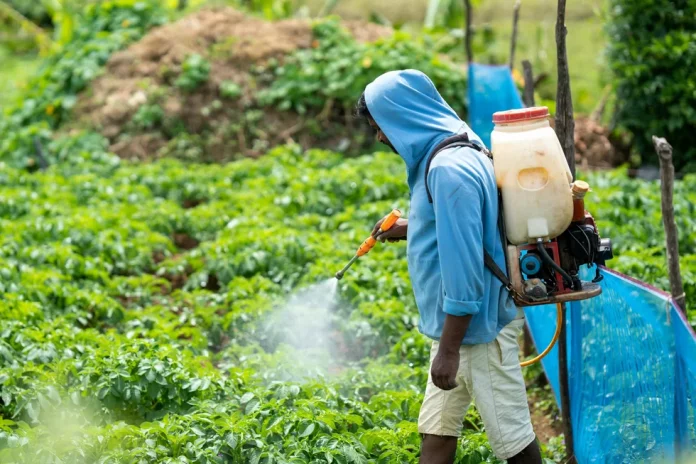
However, farmers should use such preparations carefully and apply them at the right time. Experts note that homemade organic pest-control solutions are best sprayed during the cooler hours of the morning or in the late afternoon to minimise the risk of scorching or damaging crops.
Among the readily available options are garlic, tithonia, thorn apple, pawpaw leaves, wood ash, hot pepper and lantana camara.
Garlic can be used to manage aphids. Crush garlic, mix it with hot water, and allow the mixture to cool and stand for about two hours before spraying it on affected plants.
Tithonia, commonly known as Mexican sunflower: Prepare about 2kg of leaves by crushing and soaking them in 4 litres of warm water for two to three hours.
Alternatively, the leaves can be soaked in cold water for two days. The resulting solution can be used against caterpillars.
Thorn apple (Datura stramonium) is another option for controlling several crop pests. Use 1kg of the plant’s leaves, fruits and stems, boil them in 4 litres of water for 20 minutes and allow the mixture to cool before application.
The mixture is used against aphids, scale insects and leaf miners, including Tuta absoluta.
Pawpaw leaves can also be used to prepare a pest-control solution. Crush about 1kg of fresh leaves and boil in 4 litres of water for 20 minutes. Once cooled, apply the solution to crops affected by aphids and scale insects.
For farmers dealing with cutworms, wood ash provides a simple and inexpensive option. Ash obtained from burning maize cobs is applied around seedlings to help control the pests.
Hot pepper offers another readily available alternative. About 500g of ripe peppers can be crushed and boiled in 5 litres of water for 20 minutes. After cooling, dilute with another 5 litres of water and add 50 ml of mild soap. Use the preparation against ants, aphids, flies and caterpillars.
Farmers can also make use of Lantana camara by burning its leaves and branches to produce ash. Broadcast the ash over the affected area to help control ants and worms.