Home Blog Page 100

Emurua Dikirr MP Johana Ng’eno dies in Nandi chopper crash

0

Emurua Dikirr MP Johana Ng’eno is dead. The member of parliament was among six people who died following a plane crash that occurred in Nandi on Saturday, February 28, 2026.

The chopper crash occurred at Chepkiep in Mosop Constituency, Nandi County. According to Nandi North OCPD Simon Muli, a recovery of documents belonging to a Kenya Forest Services ranger were also recovered at the site.

According to a post on his official page, MP Ng’eno had travelled to Kapkugo, Tulwop Kony, and Endebes, where he joined friends, fans, and fellow leaders in celebrating Artist Kim Kim’s 35th anniversary in the music industry.

Earlier on, Ng’eno had shared a photo and video clip of himself aboard the chopper while over the Mara River area. The late member of parliament had joined families and rescue teams at Mara Rianta in the search for two young men who were swept away by the river.

Apart from the member of parliament, the identities of the five other occupants who perished in the Nandi chopper crash were not immediately identified at the crash site.

Later on, it emerged that they included a veteran pilot with an impeccable flying career, a photojournalist who was attached to the MP’s office, a KFS ranger, and two other individuals who were traveling with the MP.

Reports claimed that the chopper that was involved in the crash was registered as 5Y-DSB and belonged to a company that is based at the Wilson Airport. The chopper has been used previously by senior ranking government officials.

Read More…

Bodaboda riders turn to welfare groups to unlock credit and build wealth through Equity bank

0
Bodaboda riders in Githurai have turned to registered welfare groups and cooperative structures to access affordable credit and unlock long-term economic opportunities.
During a flag-off ceremony for 12 new motorcycles, a seven-seater van and land purchases for members of Githurai 45 Kimwi Welfare, a sub-unit under the Githurai Bodaboda Welfare Association, said group structures are helping them move from daily earners to asset owners.
The Sh5.4 million asset financing package was facilitated in partnership with Equity Bank, Githurai branch.
Githurai Bodaboda Welfare Association Sub County Chairman John Macharia said collective borrowing has enabled members to acquire assets while strengthening accountability within the sector.
“Today we have received 12 motorcycles and a van that will expand business opportunities and create employment. We repay these facilities as a group, which allows us to spread risk and make credit affordable. Previously, many of our members faced frustration accessing loans, but structured group models have opened doors to sustainable financing,” he added.
James Githinji Kingori, a beneficiary and bodaboda operator, said joining the group had transformed his financial prospects.
“For three years, I have been operating someone else’s motorbike, and that meant a significant portion of my daily income went directly to the owner before I could meet my own needs,” said Kingori. “Despite working long hours, what remained for my family and savings was very little.
Through joining Githurai 45 Kimwi Welfare, I am now able to access my own motorbike at a fair market rate under structured financing. This gives me dignity and stability because I am now building my own asset and securing my future.”
He added that organised groups are also restoring order within the sector.
“Through registered groups, we are able to regulate ourselves and ensure accountability among members. We know each other and we monitor conduct within our ranks. This has helped us weed out criminal elements that infiltrate the bodaboda sector and tarnish the image of hardworking riders,” he said.
Githurai Bodaboda Welfare Association brings together 3,600 members across Githurai and Roysambu sub-counties, with members contributing Sh100 daily throughout the year to build a sustainable savings pool.
The association has also established Githurai Limited Company, an investment arm comprising 50 members, which has acquired two parcels of land valued at Sh9 million with Sh15 million financing support. Additionally, Githurai 45 Transport Cooperative Society Sacco, with 300 members, has secured Sh6 million worth of land to develop housing units.
Kennedy Muguna, Nairobi West Regional Manager at Equity Bank, reiterated the importance of group structures saying riders are able to scale up progressively.
“The objective of joining a group is to foster economic advancement in a structured and sustainable manner,” Muguna said. “An operator who starts with one motorcycle can progressively grow to two or three and eventually diversify into other assets such as vehicles. Through partnerships with organised and registered groups, financial institutions are better positioned to extend asset financing efficiently and responsibly.”
Benignas (Nduku) Muema, General Manager for Pamoja Banking at Equity Bank, collective structures and financial literacy enhances partnerships such as one with the Githurai Bodaboda Welfare Association.
“By joining registered groups, bodaboda operators gain the collective strength required to access facilities at affordable rates,” said Muema. “The financing model allows risk to be shared at the Sacco or group level, which enhances repayment discipline and sustainability. However, before extending credit, we prioritize financial education because knowledge is the foundation of long-term success.”
She emphasized the need to cultivate a savings culture among youth.
“Many young riders generate daily income but lack structured systems that compel them to save and invest. Through group-based models, we provide financial literacy training to empower them to plan, save and invest consistently. Our clarion call remains clear: save something for tomorrow, whether it is Sh50, Sh100 or Sh200. Consistent saving is the pathway to financial security and wealth creation,” she said.
The partnerships, Muema said, enables operators to transition from daily earners to asset owners.

Driving Sustainable Homeownership: NCBA Unveils Solar Leasing on Electric Powered Property Tour

0

NCBA Bank has reinforced its commitment to sustainable and affordable homeownership by hosting its annual Property Investment Tour using fully electric buses and unveiling its innovative Solar Leasing Solution, designed to make clean energy more accessible for Kenyan households.

This year’s tour comes at a crucial time: home ownership rates in Kenya continue to decline, with national ownership dropping from 64% in 2013 to 61% in 2024, and urban home ownership sliding from 30% to 23%, driven by rising property prices, stagnant incomes, and limited access to long‑term financing. In Nairobi specifically, only 7.7% of households own the homes they live in, underscoring the affordability challenge for urban families.

The tour showcased key residential and commercial developments across the city, enabling customers to interact directly with developers, explore financing options, and understand the full home-buying journey. Participants interact with developers, learn about financing options, and experience the full home-buying journey with a new emphasis on sustainable living.

“Owning a home remains a major aspiration for most Kenyans. Our mission at NCBA is to remove barriers, guide customers with clarity, and provide innovative solutions that align with both financial and environmental sustainability.” Dennis Njau, Group Director, Retail Banking

NCBA brings homeownership dreams closer with exclusive Mombasa property tour

“From our green energy financing to electric buses for this tour, we are walking the talk on sustainability while empowering more Kenyans to take confident steps toward homeownership.”

Beyond property tours and financing education, NCBA showcased its complete suite of Property Finance solutions, ensuring customers can secure, insure, power, and improve their homes all under one roof. These include:

Home Financing Solutions

  • Mortgage for completed properties
  • Plot purchase loans
  • Construction loans
  • Buy‑and‑build packages
  • Mortgage transfers & top‑ups
  • Equity release
  • 105% Own-Your-Own-Home Mortgage, eliminating traditional upfront costs

Home Protection & Enhancement Solutions

  • Home Insurance(house + contents)
  • Home Improvement Loansfor renovations, upgrades, or extensions
  • Solar Leasing (Green Energy Financing)
  • Insurance premium financing options

With this ecosystem, NCBA continues to champion a holistic approach to homeownership providing financing, protection, and sustainable energy solutions in a single, seamless offering.

According to the Kenya Property Index report 2025, Kenya faces an annual housing shortfall of over 200,000 units, with only about 50,000 new units delivered per year against a demand of 250,000. Urban dwellers also remain predominantly renters, with 73% renting and only 23% owning.

Against this backdrop, NCBA’s Property Investment Tour provides practical exposure and financial empowerment, helping customers make informed decisions at a time when many feel locked out of the market.

Through education, access, and innovative green financing solutions, NCBA continues to position itself not only as a lender but a leader in driving inclusive, sustainable, and climateresilient communities across Kenya.

Africa’s capital markets showing signs of renewed momentum

0

Kenyan beverages giant East African Breweries recently refinanced an existing Sh11 billion corporate bond through a medium-term note priced at 11.8 percent, marking the first issuance under its newly approved Sh20 billion programme.

The timing mattered. Kenya’s 10-year government bond yield had eased to around 13.3 percent, its lowest level since mid-2022, which made the economics of refinancing workable again. The offer received strong demand, driven by active participation from banks, fund managers, pension schemes, and retail investors. This resulted in an oversubscription of 152.4 percent, which in turn allowed EABL to upsize the issuance to Sh16.7 billion.

What that deal underlined is a point many practitioners make when they look at Africa’s capital markets: liquidity does exist for the right opportunities. The market has grown, rates have started to come off their post-pandemic highs, and that shift is beginning to change borrower behaviour.

As the cost of funding becomes less punitive, investment decisions that were previously deferred are returning to the table, including acquisitions and expansion activity where financing plays a critical role.

This opens the space to think more creatively about funding structures and where capital is best deployed.

As most businesses grow and their funding requirements evolve, borrowers begin to look beyond traditional bank funding towards a broader range of available funding sources. Borrowers increasingly challenge pricing, terms and conditions, the funding purpose, and the level of security they are willing to provide. At this stage, transactions often shift into the syndicated loan space.

According to the OECD, syndicated lending in Africa has expanded significantly over the past two decades, with issuance and outstanding volumes almost doubling. These types of transactions are often more nuanced and require a higher level of sophistication.

Accessing the continent’s bond market, however, is far more involved.

Issuers need to prepare an issuance programme, appoint arrangers, external legal counsel, trustees, paying agents, and calculation agents, engage with investors, comply with listing rules, and meet ongoing disclosure requirements around financial reporting.

It is no wonder then that Africa’s corporate bond issuance has been particularly weak, with outstanding amounts falling from USD 52 billion in 2010 to USD 38 billion in 2024, according to the OECD. It also found that despite Africa contributing 2.5 percent of global GDP, it only contributed 0.1 percent of the global Corporate Bonds outstanding.

Yet there is significant room for development.

Regulation itself is not the constraint; most African markets have straightforward issuance and listing requirements. What differentiates outcomes is scale, understanding, and flexibility. Those factors ultimately shape whether an issuer accesses the bond market or remains in the loan market, which is typically easier to navigate and more adaptable.

In some cases, issuers can access the bond market at a significantly lower cost, sometimes at levels the loan market cannot match. In practice, this usually applies to specific parts of a transaction rather than the entire structure.

As a result, blended financing then becomes more common, allowing borrowers to combine lower-cost market funding with loans or other instruments that provide the flexibility, tenor, or risk coverage. And this is starting to feature more prominently on the continent.

According to research by Convergence, Africa accounted for around 40 percent of global blended finance transactions in 2024, representing roughly a third of total volumes transacted, and reflecting  the evolution of capital  markets towards more structured solutions rather than reliance on a single instrument

Looking ahead, innovation in Africa’s capital markets is likely to focus on developing new products and demonstrating the ability to execute transactions. When East African Breweries first accessed the Kenyan bond market in 2021, it marked the first corporate issuance in that market in nearly five years. The transaction helped reopen the market and signaled to other issuers that investors were active, execution was achievable, and that pricing could be made to work.

READ MORE: Absa Group picks Sitoyo Lopokoiyit for top Africa banking role 

Outside South Africa, capital markets across much of the continent are relatively shallow. That limits how effectively domestic savings can be channeled into long-term investment. Equity markets are small and thinly traded, and bond markets lack the depth and reference points that make pricing and secondary activity easier. To foster real development across the continent, this is where the focus must be.

Warning signs of postpartum complications you shouldn’t ignore

0

Postpartum experiences are as unique as the pregnancies that come before them. Because of this, it can be difficult to recognize what’s normal and what could be a complication — even if you’ve given birth before.

The postpartum period is generally defined as the first six weeks after birth. “Postpartum begins immediately following birth and extends through the time when your body and mind are recovering from pregnancy and delivery,” says Kylie Cooper, M.D., a maternal-fetal medicine specialist at Mayo Clinic.

Recovery isn’t the same for everyone, and for some people, the postpartum timeline can be longer. While the spectrum of what is considered typical postpartum is wide, there are warning signs of complications you should never ignore.

Dr. Cooper discusses postpartum complications, how to recognize them and when to seek care.

The signs you shouldn’t ignore

Dr. Cooper says consistent improvement is the best indicator of typical recovery. “In general, recovery should tend toward improvement. So, if you feel like things are getting worse, or new symptoms come up, we definitely want you to reach out for care,” says Dr. Cooper.

The first two weeks after delivery carry the highest risk for serious postpartum complications, though they can sometimes occur later. “The most common postpartum complications we see in that time frame are high blood pressure, hemorrhage or bleeding complications, infection, anxiety and postpartum depression,” says Dr. Cooper.

While many postpartum concerns are common and treatable, some rare but serious complications can develop during this time, which is why new or worsening symptoms should never be ignored.

“These include blood clots, like deep vein thrombosis or pulmonary embolism, as well as postpartum heart issues like cardiomyopathy,” says Dr. Cooper.

If you experience any of these symptoms, you should seek care as soon as possible because they can indicate serious complications:

  • Worsening pelvic or incision pain, or pain that doesn’t improve.
  • New, heavy or increased bleeding.
  • Headaches that don’t improve with medication.
  • Confusion or behavior changes.
  • Fever or flu-like symptoms.
  • Mood changes, anxiety or depression.
  • Extreme fatigue that doesn’t improve with rest.
  • Shortness of breath, trouble breathing or chest pain.

“Symptoms related to pain, mood changes and energy levels can be dismissed as normal postpartum symptoms. While the postpartum time frame can be a challenging time, these symptoms shouldn’t be dismissed,” says Dr. Cooper.

Mental health-related postpartum complications

After delivery, your body undergoes a significant hormonal shift that can affect your mood and emotions in various ways. While this is expected, symptoms usually improve in a couple of weeks. When these feelings linger or cause depression or anxiety that doesn’t improve, it could indicate postpartum depression. In rare cases, a serious and life-threatening condition called postpartum psychosis can develop.

She says these feelings can improve with treatment and support. “It’s certainly not a failure to seek help. We want people to know there are resources and support available for them,” she says.

After the six-week postpartum visit

After your six-week postpartum visit, your care will transition back to your primary care team. But this shouldn’t mean the end of postpartum care.

“It’s becoming increasingly recognized that this is a much longer process, extending up to a year after delivery. I think it’s important that we acknowledge that many people are not done recovering at the six-week mark,” says Dr. Cooper.

If you had physical or mental health complications during the postpartum period, this transition is crucial to ensure your long-term wellness. “This is a really important time frame to ensure we help patients establish their preventive care because pregnancy complications can impact long-term health,” says Dr. Cooper.

READ MORE: Why Deep Vein Thrombosis is a silent killer; risk factors and prevention

As you continue to monitor your health and well-being during this period, it’s important to pay attention to symptoms that may arise or persist beyond the initial recovery phase, as these can often be treated. “Pelvic floor symptoms are often dismissed. For example, there’s this misnomer that once you have children, you will have pelvic floor issues. And that’s an accepted part of your future, but it shouldn’t be,” says Dr. Cooper. “These are issues that can be treated and improved.”

Getting the support you need postpartum

Support plays an important role in recognizing postpartum complications. Partners, family members and caregivers may notice subtle changes before you do, especially during a time marked by sleep deprivation and physical recovery.

“Sometimes partners or family members are the first to recognize that something isn’t right,” says Dr. Cooper. “If you notice changes that concern you about your loved one, it’s important to speak up and help them seek care.”

Bizna Kenya launches Bizna Prime prize competition to expand SME support

0

Digital business media platform Bizna Kenya has unveiled the Bizna Prime Prize Competition, a new consumer promotional campaign aimed at accelerating adoption of its recently introduced Bizna Prime subscription service while deepening support for entrepreneurs.

The 90-day campaign running from February 26 is designed to reward Bizna Prime Subscribers with non-cash prizes ranging from shopping vouchers, dining vouchers and airtime.

The campaign will feature 12 weekly draws, each valued at Sh75,000, followed by a grand draw on 22 May 2026 worth Sh300,000. Weekly rewards include shopping, dining, and airtime vouchers.

The draws will be conducted using a certified Random Number Generator (RNG), supported by filters to remove duplicate or invalid entries. Processes will be documented for auditability and overseen internally to ensure integrity.

All prizes will be disbursed through M-PESA and are non-transferable. Winners will be notified via SMS and platform alerts and announced publicly in line with data protection requirements.

About Bizna Prime

Bizna Prime is a monthly-based subscription service designed to unlock curated tools, expert insights, and structured growth opportunities for business owners who often struggle to access such resources in a fragmented market.

The platform targets entrepreneurs, startup founders, SME owners and managers, agribusiness operators, professionals, job seekers and individuals running side hustles, as well as existing members of the Bizna community.

Subscribers gain access to premium business content, including in-depth articles, case studies, guides and practical playbooks covering finance, leadership, survival strategies and market expansion.

“Bizna Prime is not a paywall. It is an access pass to a curated ecosystem that integrates content, opportunities, expertise, and networks. The prize competition accelerates trial, retention, and repeat subscription without compromising trust or compliance,” Bizna Kenya CEO Tonnie Mello said.

The subscription also unlocks a range of services such as curated partner offers under Bizna Deals, marketplace exposure through Bizna Soko, networking via Meet & Greet sessions, industry tours under Bizna Club, masterclasses and workshops, job and opportunity listings, and learning resources through Bizna Academy.

In addition, the Bizna Experts Forum connects users with specialist insights across finance, legal, human resources, marketing, operations, and strategy.

How to subscribe

Users subscribe by paying Sh100 via Bizna’s M-PESA Till Number 3329485

After payment confirmation, subscribers will be able to either log into an existing account or create a basic profile using their full name, mobile number, email address, and password.

Once validated, users will receive confirmation that their Bizna Premium access is active for 30 days, alongside a dashboard showing subscription status, expiry countdown, and renewal prompts.

Active subscriptions immediately unlock premium content and services, and provide automatic access to the Bizna Prime Prize Competition. Expired accounts will be redirected to renewal pages with preview-only access until payment is made.

Also Read: Top 10 Reliable Bulk SMS Service Providers in Kenya -Ultimate Guide

Meaning of new green number plates and distinctive features

0

The Ministry of Transport has rolled out new generation of green number plates exclusively for electric vehicles (EVs).

The new plates were unveiled earlier this month by Transport Cabinet Secretary Davis Chichir. They are specialized identifiers meant solely for electric cars, buses, motorcycles and other battery-powered vehicles.

Electric vehicles will display green plates on both the front and rear, making them easily identifiable as zero-emission vehicles.

The green number plates feature enhanced visual functions. They are reflective, enhancing visibility at night and in poor weather.

Additionally, they have a distinctive green background to clearly differentiate electric vehicles from fossil-fuel-powered vehicles.

Each plate has a unique serial number linked directly to the vehicle’s chassis, making duplication difficult. Additionally, the embedded microchip provides critical vehicle data, including the chassis number, manufacture details, color, and engine number.

Other security features include anti-counterfeit elements, including holograms, a watermark, and a specially imprinted national flag.

The plates feature unique lettering with prefixes “EVA” for electric cars and “EMAA” for electric motorcycles.

Motorists are cautioned not to confuse the new plates with the older green Kenya Dealers (KD) plates reserved for vehicle dealers.

The introduction of green number plates is anchored in Kenya’s National Electric Mobility Policy, officially launched on February 3, 2026, which provides a long-term roadmap for transitioning the country’s transport sector away from fossil fuels across road, rail, air and maritime systems.

A key policy target is for electric vehicles to account for at least 5 per cent of all newly registered vehicles by 2025, with a long-term vision of achieving full electrification and net-zero emissions by 2050.

Industry data shows that the number of electric vehicles in Kenya rose to 35,000 at the end of 2025, from 5,294 in 2024, driven by increased adoption of electric two-wheelers (motorcycles) and electric buses used in public transportation for commuters.

Kenya Power noted that the e-vehicles consumed 8.43 million kilowatt hours (KWh) of electricity.

This represents a 188 percent increase in electricity consumption by the electric mobility industry compared to 2.92 million KWh consumed by customers in 2024.

Also Read: Charges, process of getting customized car number plate

KMTC announces fully funded scholarships for select courses; how to apply

0

The Kenya Medical Training College (KMTC) has announced scholarship opportunities for learners pursuing nephrology-related courses.

In a statement on Thursday, February 26, KMTC said the scholarship programme will be rolled out in partnership with the Ministry of Health, the East Africa Centre of Excellence in Urology and Nephrology (EACE-UN).

“KMTC, in partnership with the Ministry of Health and the East Africa Centre of Excellence in Urology and Nephrology, is officially inviting applications for the March 2026 intake,” read part of the announcement.

Additionally, the programme, funded by a loan from the African Development Bank will see successful applicants receive training in 10 courses on a full-time basis. The scholarship covers tuition fees and a stipend during the study period.

The programmes under the scholarship scheme include Higher Diplomas in Medical Engineering with specialisations in Dialysis Equipment, Therapeutic Equipment, and Diagnostic Equipment; Higher Diploma in Clinical Medicine and Surgery (Nephrology), and Higher Diploma in Nephrology Nursing.

Others are Higher Diploma in Nutrition and Dietetics (Renal Nutrition), Higher Diploma in Medical Laboratory Sciences, Higher Diploma in Occupational Therapy, and Higher Diploma in Renal Pharmacy.

A six-month short course in Renal Transplant Nursing will also be offered under the programme.

Eligibility and how to apply

Interested candidates have been advised to visit the Kenya Medical Training College admissions portal to download and complete the application forms, with submissions required no later than March 15, 2026.

To qualify, applicants are expected to attach a handwritten essay of not more than two hundred (200) words explaining why they feel that they deserve the scholarship and the contribution they will make to the community upon graduation.

County government employees, KMTC employees, and applicants who have three years of work experience will be prioritised during the selection process.

“To be awarded a scholarship, you must get an unconditional offer for one of your course choices. Please note that the scholarships are subject to the availability of funding,” reads part of the announcement.

Also Read: How to apply for diploma in Law at Kenya School of Law as KUCCPS opens May intake

Business fraternity mourns death of Easy Coach founder Azym Dossa

0

Renowned bus company Easy Coach has announced the passing of its founding director and former Managing Director, Azym Dossa.

In a statement on Thursday, February 26, the company said it was deeply saddened by his passing, describing him as a visionary leader whose guidance and dedication shaped Easy Coach from its earliest days.

The company did not provide details of his death, including the time of passing and the cause of the death.

Dossa, a renowned businessman, has been at the helm of Easy Coach for the past 23 years. His journey in the transport industry started with a humble beginning.

After working as a chief financial officer on a contract for 17 years, Dossa decided to pursue his passion and venture out on his own.

Along with a few friends who shared his vision, he founded Easy Coach in 2003 with just seven buses operating between Nairobi and Kisumu.

Right from the start, Dossa had a clear vision for his bus company – to provide safe, comfortable, and convenient travel options for passengers.

He believed in putting customer satisfaction at the forefront, even if it meant incurring short-term losses. Dossa focused on providing a superior travel experience for passengers, and he paid attention to every detail, from the seating configuration to the facilities provided on boar

One of the unique features that set Easy Coach apart from other bus companies was the seat configuration. Dossa chose buses that offered ample legroom and comfort, ensuring that passengers had a comfortable journey, especially on long-distance routes.

In addition to the seating, Easy Coach also provided facilities like waiting lounges and washrooms, which were not common in the industry at that time. These efforts to prioritize customer satisfaction quickly earned Easy Coach a reputation as a reliable and customer-centric bus company

Today, the company operates a fleet of over 100 buses plying various routes within the country, including Nairobi, Malaba, Kitale, Sirare, Mumias, and Busia.

Easy Coach also offers letters and parcels courier services to each of the over 30 branches where it operates.

The company’s Board of Management stated that Dossa’s contribution to the transport sector and his role in building Easy Coach into a recognised brand will remain a lasting part of its history.

“Mr. Dossa’s vision, integrity, and unwavering dedication were instrumental in shaping Easy Coach from its earliest beginnings. His leadership laid the foundation of the organization we are today, and his legacy will continue to guide and inspire us for years to come,” the statement reads.

“On behalf of the Board, Management, and the entire Easy Coach family, we extend our deepest condolences to his family, friends, and all who had the privilege of knowing and working with him,” it added.

Also Read: Easy Coach parcel delivery charges, routes and fares

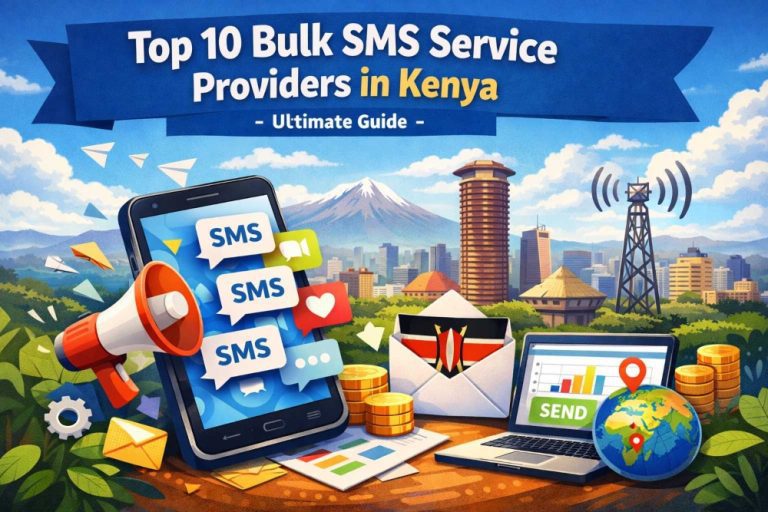
Top 10 Reliable Bulk SMS Service Providers in Kenya -Ultimate Guide

0

The top 10 bulk SMS service providers in Kenya are Celcom Africa, Africa’s Talking, Advanta Africa, Oramobile, SMS Leopard, Uwazii Mobile, AirTouch Connections, Mobitech (MoveSMS), YuDigify, and Africala.

In a mobile-first nation like Kenya, where smartphone penetration has reached 85% and active mobile subscriptions exceed 78 million as of early 2026, bulk SMS remains a powerhouse for instant, reliable communication. With open rates consistently hitting 98% and delivery in seconds, it’s far more effective than email (20% open rate) or social media for businesses, NGOs, schools, and SACCOs.

Whether you’re running promotional campaigns, sending transactional alerts, or appointment reminders, the right bulk SMS provider can supercharge your outreach.

This updated guide ranks the top providers based on pricing, features, delivery reliability, user reviews, and scalability, helping you choose wisely in a competitive market.

Key Takeaways – Top 10 Bulk SMS Providers in Kenya

✅ SMS Still Wins in Kenya — 98% open rate, 78M+ subscriptions, 85% smartphone penetration, instant delivery.

✅ Highly Affordable Channel — Rates start from KES 0.25 per SMS with strong volume discounts.

✅ Celcom Africa Ranks #1 Overall — Lowest pricing, 99.9% delivery, 2-second speed, APIs, WhatsApp/USSD integration, scalable for SMEs to enterprises.

✅ Strong Specialized Alternatives — Africa’s Talking (developer APIs), Mobitech (low-cost API), Oramobile (multi-channel), AirTouch (nationwide coverage), Uwazii (high uptime).

✅ Compliance Is Critical — CAK Sender ID registration, opt-in consent, DND filtering, and 7 AM–7 PM promotional window.

✅ Proven ROI Across Sectors — Drives promotions, OTPs, reminders, debt reduction, NGO outreach, and e-commerce conversions.

What is Bulk SMS?

Bulk SMS allows organizations to send thousands of text messages simultaneously to targeted recipients. It’s ideal for:

  • Marketing Campaigns: Promote sales, events, or new products.
  • Customer Notifications: Deliver order confirmations, delivery updates, or OTPs.
  • Internal Communication: Share alerts with employees or stakeholders.
  • Reminders: Notify about appointments, payments, or events.

Regulated by the Communications Authority of Kenya (CAK), bulk SMS requires Sender ID registration for branded messages, opt-in consent, and adherence to promotional timing (7 AM to 7 PM). Providers integrate seamlessly with networks like Safaricom, Airtel, and Telkom for high deliverability.

Why Bulk SMS is Essential in Kenya

Kenya’s mobile ecosystem is booming, with over 78 million subscriptions driving instant connectivity. Here’s why bulk SMS stands out:

  • Instant Delivery: 98% of messages are read within 3 minutes.
  • Cost-Effective: Rates start at Shs 0.25 per SMS, cheaper than ads.
  • High Engagement: Personalized texts boost responses 3x over email.
  • Wide Reach: No internet needed, ideal for rural areas.

From Nairobi e-commerce to Kisumu SACCOs, bulk SMS enhances customer connections in a market where 149% mobile penetration enables targeted outreach.

How to Choose the Best Bulk SMS Provider in Kenya

Focus on these key factors:

  • Pricing: Seek volume discounts and transparent rates (Shs 0.25–1.00 per SMS).
  • Reliability: Aim for 99%+ delivery with real-time reports.
  • Features: Custom Sender IDs, APIs, scheduling, multi-channel (e.g., WhatsApp/USSD).
  • Compliance: CAK-approved with DND filters and opt-in tools.
  • Support: 24/7 assistance and scalability.
  • User Reviews: High ratings for uptime and ease.

Our rankings are based on industry reports, user feedback, and provider updates.

Top 10 Bulk SMS Service Providers in Kenya

1. Celcom Africa

Best Overall Bulk SMS Service Provider in Kenya

Celcom Africa leads the pack with enterprise-grade solutions, serving over 10,000 businesses across Kenya and Africa since 2012. Trusted for its 99.9% delivery rate, instant 2-second turnaround, and affordable rates starting at KES 0.25 per SMS, it’s ideal for SMEs, NGOs, schools, and enterprises needing reliable, scalable messaging.

Pricing: KES 0.25–0.60 per SMS; non-expiring credits; wholesale for resellers.

Features:

  • Custom Sender ID with CAK compliance support.
  • REST/SMPP APIs with SDKs (Python, Java, PHP, Node.js).
  • Real-time analytics, webhooks, and segmentation.
  • Multi-channel: Bulk WhatsApp, Email, USSD, shortcodes.
  • A2P for OTPs; surveys via SMS/USSD/WhatsApp.
  • 99.9% uptime; pan-African reach.

Pros: Lowest rates, high deliverability, 24/7 support, intuitive dashboard.

Cons: Sender ID fees per network.

Best For: SMEs, NGOs, startups, developers, resellers, and automated systems.

Testimonial: “Celcom’s affordability, timely delivery, and reliability are unmatched after 6 years.” – Reuben Kimani, Username Investment.

2. Africa’s Talking

Best for Developers and API Integration

Founded in 2010, Africa’s Talking excels in scalable APIs for SMS, USSD, and payments, serving tech-savvy businesses.

Pricing: Shs 0.40–0.60 per SMS.

Features:

  • Free Sender ID setup (CAK-approved).
  • Comprehensive docs for Python, Java, and PHP.
  • Two-way messaging, shortcodes, analytics.
  • Safaricom/Airtel integration.

Pros: Developer-focused, high scalability.

Cons: Slightly higher rates.

Best For: Tech startups, automation.

3. Advanta Africa (AdvantaSMS)

Best for Budget and Global Reach

Advanta offers affordable packages with coverage across 800+ networks.

Pricing: Shs 0.80–1.00 per SMS.

Features:

  • Free API for web/app integration.
  • Dashboard, mobile app, bulk software.
  • Sender ID and scheduling.
  • Free trial.

Pros: Intuitive, global sends.

Cons: Higher per-SMS costs.

Best For: Startups, international campaigns.

4. Oramobile

Best for Multi-Channel Strategies

Oramobile combines SMS with WhatsApp, USSD, and shortcodes for versatile campaigns .

Pricing: Shs 0.75–1.00 per SMS.

Features:

  • Free platform with credits.
  • Sender ID, scheduling, and integrations.
  • 24/7 support in major cities.

Pros: Multi-channel options, easy dashboard. Cons: Higher costs. Best For: Businesses blending SMS/WhatsApp.

5. SMS Leopard

Best for Simple Marketing Campaigns

SMS Leopard focuses on personalized, instant delivery for marketing.

Pricing: KES 0.40–0.60 per SMS (estimated from reviews).

Features:

  • Personalized SMS and group messaging.
  • Branding with Sender IDs.
  • Instant delivery reports.

Pros: Straightforward, reliable.

Cons: Limited advanced analytics.

Best For: Marketing-focused SMEs.

6. Uwazii Mobile

Best for Scalable Solutions

Uwazii offers innovative, pay-as-you-go messaging with high uptime.

Pricing: Shs 0.50–0.80 per SMS.

Features:

  • Mail merging, duplicate checker.
  • Real-time analytics, 99.99% uptime.
  • Flexible pricing.

Pros: Scalable, user-friendly.

Cons: Mid-range pricing.

Best For: Growing businesses.

7. AirTouch Connections

Best for Nationwide Coverage

AirTouch ensures 100% reach across Kenyan networks with competitive pricing.

Pricing: Shs 0.50–0.80 per SMS.

Features:

  • Personalization, APIs, tracking.
  • Supports SACCOs, schools, and corporates.

Pros: Broad coverage, affordable.

Cons: Fewer advanced features.

Best For: Marketing and wide-reach operations.

8. Mobitech (MoveSMS)

Best for API Simplicity

Mobitech provides easy gateways for app/website integration.

Pricing: Shs 0.30–0.35 per SMS.

Features:

  • Free APIs (Java, Python, PHP, C#).
  • Custom Sender IDs, scheduling.
  • Reseller options.

Pros: Low rates, no monthly fees.

Cons: Basic analytics.

Best For: Developers, resellers.

9. YuDigify

Best New Entrant for Reliability

YuDigify emphasizes fast delivery and affordability for businesses.

Pricing: KES 0.35–0.70 per SMS (estimated).

Features:

  • Custom Sender IDs, APIs, reports.
  • High-speed routing, compliance tools.

Pros: Competitive pricing, strong support.

Cons: Newer with fewer reviews.

Best For: E-commerce, growing SMEs.

How to check 2025 KCSE results via SMS, online

10. Africala

Best for Local Support

Africala focuses on speed and compliance for enterprises.

Pricing: Shs 0.60–0.90 per SMS.

Features:

  • Sender IDs, analytics, opt-outs.
  • Bulk tools for Kenya/Africa.

Pros: Compliant, local support.

Cons: Pricier for small volumes.

Best For: Corporations, NGOs.

Bulk SMS Service Pricing/Cost Comparison in Kenya

Provider Price per SMS (KES) Free Trial Sender ID Fee (KES) API Integration Delivery Rate
Celcom Africa 0.25–0.60 Yes (50) ~6,500 per network Yes 99.9%
Africa’s Talking 0.40–0.60 No Varies Yes 98%
Advanta Africa 0.80–1.00 Yes Varies Yes 97%
Oramobile 0.75–1.00 Yes Varies Yes 97%
SMS Leopard 0.40–0.60 Yes Varies Yes 98%
Uwazii Mobile 0.50–0.80 No Varies Yes 99.99%
AirTouch 0.50–0.80 No Varies Yes 99.99%
Mobitech 0.30–0.35 Yes Varies Yes 98%
YuDigify 0.35–0.70 Yes Varies Yes 99%
Africala 0.60–0.90 Yes Varies Yes 98%

How to Send Bulk SMS Online in Kenya

  1. Choose a Provider: Select a CAK-compliant Bulk SMS Service Provider option like Celcom Africa.
  2. Register: Create an account and buy credits (prepaid/postpaid).
  3. Upload Contacts: Import lists or add manually.
  4. Compose Message: Keep under 160 characters with personalization and CTA.
  5. Send or Schedule: Immediate or timed delivery.
  6. Track Performance: Monitor reports for engagement.

Tip: Personalization (e.g., “Hi [Name]”) triples responses.

Benefits of Bulk SMS Service for Kenyan Businesses

  • Retail & E-commerce: Send promo alerts like “50% off now!”
  • Banks & SACCOs: Transaction reminders, reducing defaults by up to 25% .
  • Healthcare: Appointment/vaccination notices.
  • Education: Fee/event updates.
  • NGOs: Community/fundraising engagements.

Final Thoughts

In Kenya’s digital landscape, bulk SMS delivers unmatched engagement at low cost. While many providers excel, Celcom Africa’s blend of affordability, reliability, and features makes it a standout choice for scalable results.

Ready to boost your communication? Sign up for Celcom Africa’s free 50-credit trial today. Compare options, test platforms, and stay ahead with bulk SMS!

People Also Ask- About the Top 10 Bulk SMS Service Providers in Kenya

What is the best bulk SMS provider in Kenya?

Celcom Africa stands out for its low rates (KES 0.25–0.60), 99.9% delivery, developer-friendly APIs, and multi-channel options, trusted by 10,000+ businesses.

How much does bulk SMS cost in Kenya?

Rates range from KES 0.25 (Celcom Africa high-volume) to KES 1.00 per SMS; discounts for bulk SMS.

Is there a free bulk SMS service in Kenya?

No unlimited free options, but trials like Celcom’s 50 credits are available.

How do I send bulk SMS in Kenya?

Sign up, buy credits, upload contacts, compose, send via dashboard/API; ensure CAK compliance.

What are the regulations for bulk SMS in Kenya?

CAK mandates Sender ID registration, opt-in, DND respect, and promotional hours (7 AM–7 PM).

Which bulk SMS provider has the best API in Kenya?

Celcom Africa with REST/SMPP, multi-language SDKs, and easy OTP/alert integration.

What are the best bulk SMS providers?

Top Bulk SMS Service providers in Kenya for include Celcom Africa (best overall for low rates KES 0.25+, 99.9% delivery, Developer-friendly APIs), Africa’s Talking (developer APIs), Advanta Africa (global reach), Oramobile (multi-channel), and AirTouch (nationwide coverage). Celcom Africa often ranks #1 for value and reliability.

How to send 5000 SMS at once?

Sign up with a CAK-compliant provider like Celcom Africa, purchase credits (e.g., via dashboard or API), upload contacts (CSV/import), compose a message (<160 chars, personalize), and send/schedule via web panel or API. Delivery is instant; monitor reports. Takes minutes for 5000+.

Which SMS service is best?

Celcom Africa is frequently the best bulk SMS service in Kenya due to competitive pricing (from KES 0.25), 99.9% delivery, robust APIs/multi-channel (WhatsApp/USSD), and strong support—ideal for businesses needing reliability and affordability.

How much is bulk SMS in Kenya?

Bulk SMS pricing in Kenya ranges from KES 0.25 (high-volume with Celcom Africa) to KES 1.00 per SMS. Volume discounts apply: e.g., Celcom tiers drop to KES 0.30 for 300K+; average KES 0.40–0.80 for mid-range.

Is bulk SMS really free?

No, true unlimited free bulk SMS does not exist due to CAK regulations and costs. Providers offer free trials (e.g., Celcom Africa 50 credits) or limited demos, but paid credits are required for real campaigns.

Is text blasting illegal?

Bulk SMS (text blasting) is legal in Kenya if compliant with CAK rules: obtain opt-in consent, respect DND lists, register Sender IDs, and limit promotional sends to 7 AM–7 PM. Non-compliance risks fines.

How do I text 100 people at once?

Use a bulk SMS platform like Celcom Africa: register, buy credits, upload contacts (manual/CSV), craft a message, and send via dashboard or API. Instant for small groups; scales to thousands.

Is cold WhatsApp illegal?

Cold WhatsApp messaging (unsolicited) violates Meta’s policies and Kenya’s Data Protection Act—requires explicit opt-in. Use opt-in lists only; promotional WhatsApp needs consent to avoid blocks/fines.

How much do text blasts cost?

Text blast costs in Kenya: Shs 0.25–1.00 per message (volume-dependent). For 1,000 SMS: ~Shs 250–1,000; high-volume (e.g., Celcom) drops significantly with discounts.

Is bulk SMS still effective?

Yes, bulk SMS remains highly effective in with 98% open rates, instant delivery, and no internet access, outperforming email/social for alerts, promotions, and reminders in Kenya.

How do I send 10,000 messages on WhatsApp?

Use official WhatsApp Business API via providers like Celcom Africa (Bulk WhatsApp integration). Requires opt-in templates, Meta approval, and paid credits—avoid unofficial tools to prevent bans.

What is replacing SMS?

RCS (Rich Communication Services) enhances SMS with rich media/interactivity but won’t fully replace it in; SMS remains a universal fallback (no data needed). WhatsApp/RCS complement for richer engagement.

What is the best time to send bulk SMS?

Best times in Kenya: 8–10 AM (morning alerts), 12:30–2 PM (lunch), 6–8 PM (evening promotions). Mid-week (Tue–Thu) highest engagement; avoid late nights per CAK rules.

What is SMS called now?

SMS (Short Message Service) is still the standard term . Enhanced versions include RCS (Rich Communication Services) or A2P (application-to-person) messaging.

Will RCS completely replace SMS?

No,RCS enhances SMS with media/typing indicators but relies on SMS fallback. In Kenya, RCS grows for rich experiences, but SMS persists for universal reach, especially in Kenya/Africa.

Is there an alternative to SMS?

Yes: WhatsApp Business API (rich media, conversations), RCS (enhanced texting), email, push notifications, or USSD. For bulk in Kenya, Bulk WhatsApp via Celcom Africa offers strong opt-in alternatives.

What is the best SMS platform?

Celcom Africa ranks highly as the best Bulk SMS platform in Kenya low cost (Shs 0.25+), 99.9% delivery, APIs, multi-channel (WhatsApp/USSD), and trusted support.

What is the most reliable number verification service?

For OTP/verification in Kenya: Celcom Africa (A2P OTPs, high delivery), Africa’s Talking, or Twilio. Celcom excels locally with 99.9% reliability and fast routing.

How to get OTP without SMS?

Alternatives: Email OTP, WhatsApp/voice call verification, authenticator apps (TOTP), push notifications, or biometrics. Many services (e.g., banking apps) now support WhatsApp or in-app for no-SMS options.