

Home Blog Page 101

FarmBizAfrica launches AI tool to help Kenyan farmers choose survival crops for 2026 planting

0

As Kenya braces for another volatile planting season marked by floods in some regions and drought in others, agricultural information service FarmBizAfrica has launched a new AI-driven tool designed to help farmers make safer, more profitable crop choices for the 2026 long rains.

The launch comes amid rising food prices and mounting shortages following a farming season heavily disrupted by extreme and uneven weather. According to FarmBizAfrica, future food security will increasingly depend not on acreage alone, but on whether farmers plant crops suited to their specific location, soils, and expected rainfall patterns.

“With nearly all our crops still rain-fed, planting the same crops regardless of weather conditions is wrecking farmers’ incomes and pushing up food prices for everyone,” said Antynet Ford of FarmBizAfrica. “The last short rains showed just how risky this has become.”

During the previous season, highly uneven rainfall left maize farmers at the Coast without a harvest, while farmers in higher rainfall areas lost tomatoes, beans, and avocados to waterlogging. These losses have fed directly into higher market prices and reduced household food availability.

PANG signals expansion drive as Turkana DTT pilot opens new broadcast Frontier

0

Th Pan African Network Group (PANG) is spearheading the rollout of a Digital Terrestrial Television (DTT) Pilot Project in Kakuma Ward, Turkana County, in a move expected to deepen digital inclusion and expand Kenya’s broadcast infrastructure footprint.

The project, funded through the Universal Service Fund (USF) and overseen by the Communications Authority of Kenya (CA), targets underserved regions where commercial broadcasting expansion has remained limited due to high infrastructure costs.

2025 KCSE Exam Results: List of Kenya’s top 30 best performing schools

County officials last week hosted a stakeholder engagement exercise bringing together national government administrators, education officials, local leadership, and community representatives to discuss the implementation framework and potential economic impact of the project.

Speaking during the engagement, Tamima Ibrahim, General Manager of Pan African Network Group (PANG), said the pilot marks a strategic milestone in extending broadcast signal distribution to frontier markets.

“Infrastructure investment in underserved regions like Turkana creates long-term value for the entire broadcast ecosystem. By expanding signal reach, we are laying the groundwork for increased content access, advertising growth, and broader participation in the digital economy,” said Tamima

She noted that beyond improving access to free-to-air television, the project is expected to stimulate local economic activity by improving information flow, education access, and connectivity.

She noted that once operational, the DTT pilot is projected to provide residents with access to over 500 television and radio broadcasting services, significantly enhancing access to news, learning materials, government communication, and public service programming.

Kenya Association of Manufacturers, Kenya Revenue Authority eTIMS enforcement

0

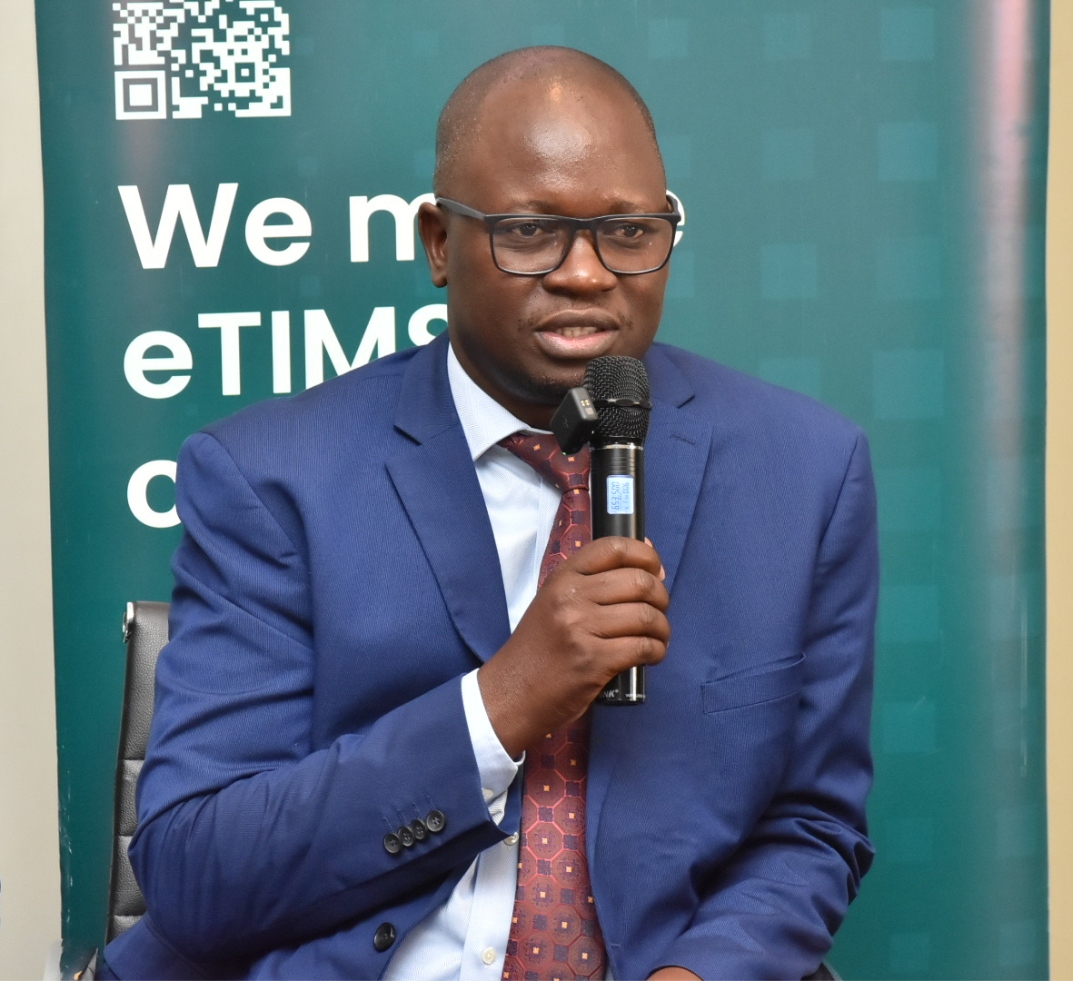
Nairobi, Kenya – 26 February 2026: Kenya Association of Manufacturers (KAM), in partnership with DigiTax, hosted a high-level industry seminar on VAT compliance under KRA’s Tax Invoice Management System (TIMS) and Electronic Tax Invoice Management System (eTIMS).

The forum, themed Operational Impact and Issues Affecting VAT Compliance Through TIMS/eTIMS, comes at a critical moment as KRA intensifies enforcement through automated, real-time invoice validation.

While eTIMS was introduced to strengthen transparency and seal revenue leakages, its rollout is reshaping day-to-day operations across procurement, supplier management, and financial reporting.Kenya Association of Manufacturers, Kenya Revenue Authority eTIMS enforcement

With KRA now validating income and expenses declared in tax returns against data transmitted through eTIMS alongside customs and withholding tax records, VAT compliance has become an operational risk, not just a tax function.

Speaking ahead of the forum, Thuku wa Thuku, Chief Operations Officer of DigiTax, said the shift to data-driven enforcement has fundamentally changed how businesses must think about compliance. “eTIMS has moved tax compliance from an annual or monthly exercise to a real-time operational process. Manufacturers can no longer afford manual workarounds or fragmented systems. This forum is about helping businesses understand what KRA is validating, where the risks lie, and how technology can turn compliance from a disruption into a strategic advantage,” said Thuku.

Kenya missing out on USD 5.3 Billion in exports, KAM Study reveals KAM launches Export Competitiveness Study

Manufacturers are grappling with challenges, including real-time invoice validation and system downtimes, ERP and accounting system integration complexities, and supplier compliance alignment across fragmented supply chains.

The seminar provided a structured platform for manufacturers, tax specialists, and technology providers to interrogate these challenges, clarify regulatory expectations, and explore practical solutions that protect compliance without disrupting production  cycles.

Kenya Association of Manufacturers emphasized the need for sustained engagement  between industry and regulators.

“E-TIMS implementation needs to reflect the complex operational realities of production and supply chains. Continuous dialogue is essential to ensure that compliance  frameworks do not unintentionally penalize legitimate businesses or undermine  competitiveness,”

Under KRA’s expanded validation framework, only expenses supported by properly transmitted eTIMS or TIMS invoices will be recognised for tax purposes, significantly  raising the stakes for VAT input claims and audit preparedness. As manufacturers file returns for the 2025 year of income in 2026, errors or gaps in eTIMS data could directly  translate into tax adjustments and penalties.

Industry leaders say proactive engagement is critical to aligning regulatory intent with operational feasibility, particularly for manufacturers working with large supplier bases, informal value chains, and legacy systems.


TSC announces open vacancies in ICT and other fields; how to apply

0

The Teachers Service Commission (TSC) has advertised various job opportunities for professionals across its departments.

In an advertisement published in the government newspaper, MyGov, on Tuesday, February 24, 2026, TSC invited applications for various senior roles in ICT and fleet management.

The commission said it is seeking to recruit Principal officer Information, Communications and Technology (ICT) – systems developer, Principal officer ICT – information security administrator (2 positions), Principal officer – fleet management, and Officer I – fleet management.

Interested and qualified candidates are requested to visit the commission’s website for the full job description and specifications. Applications must be submitted online via the TSC career portal by Monday, March 9, 2026.

“The Teachers Service Commission (TSC) is a constitutional commission established under Article 237 of the Kenya Constitution 2010. The commission invites applications from qualified, result-oriented and highly motivated Kenyans to fill the positions below,” TSC stated.

The commission maintained that it is an equal employer and invited applications from all Kenyans including people with disabilities, marginalized individuals, and all genders.

“At no point during the hiring process does TSC charge for an application, processing, interview, or other cost.”

The commission warned that providing false information would lead to automatic disqualification. Only shortlisted candidates will be contacted for interviews.

Also Read: IEBC announces over 12,500 temporary jobs; how to apply

DCI arrests suspected human trafficker “recruiting” Kenyans for Russia’s war

0

The Directorate of Criminal Investigations (DCI) has apprehended the main suspect behind a string of human trafficking allegations, including recruiting Kenyans into Russia’s military.

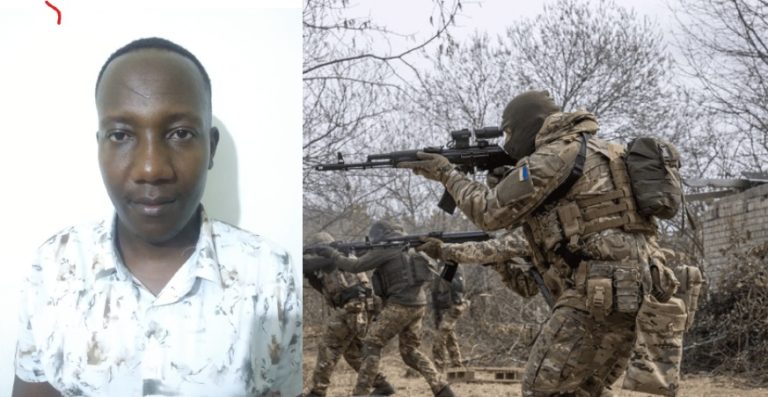
In a statement on Wednesday, February 25, DCI said 33-year-old Festus Arasa Omwamba who has been on the radar of police and intelligence agencies, was arrested in Moyale.

The suspect is accused of running an unlicensed recruitment agency that is luring vulnerable and unsuspecting job seekers with fake job opportunities in European Countries before finding themselves trapped in illegal and life-threatening jobs.

“Festus is believed to be a key player in a more extensive human trafficking syndicate that exploits vulnerable individuals by promising them legitimate employment opportunities in European countries. However, upon arrival, these unsuspecting victims find themselves trapped in illegal and perilous jobs, stripping them of their dignity and safety,” DCI stated.

The suspect is currently in police custody, undergoing processing in preparation for his impending arraignment.

The arrest comes amid heightened concern over the growing number of Kenyans travelling to Russia to join the Russian army. Some of the victims claim they were promised lucrative civilian opportunities, including driving and security jobs, but found themselves in the Russian army.

A National Intelligence Service (NIS) dossier tabled before MPs on February 18 linked Omwamba to the illegal recruitment through his company, Global Face Human Resources Ltd, which has allegedly recruited at least 1,000 Kenyans to fight in the Russia-Ukraine war, with 89 currently on the front line, 39 hospitalised and 28 missing in action.

According to a report on the Daily Nation, the recruits were allegedly promised signing bonuses ranging between Sh910,000 and Sh1.2 million, sums that reportedly attracted even former police and military officers.

The report further alleged that Omwamba facilitated accommodation, bank account openings and travel logistics, often routing recruits through Turkey or the UAE before entry into Russia. He, however, denied the allegations, insisting those who enlisted did so willingly.

Dancan Chege from Kimende in Kiambu County is one of the victims who found himself on the front lines of the Russia-Ukraine war.

Chege who managed to return home safely, revealed he left Kenya last year after being promised a job as a truck driver in Moscow through a local recruitment agent.

Things, however, changed unexpectedly when they arrived in Moscow in November 2025. Chege claimed that instead of being placed in a driving job, he, alongside other Kenyans were taken to a military camp and pressured to sign contracts to fight for Russia in its war against Ukraine.

“I knew I was going to be a driver, but when we reached Moscow, things changed. We were taken into the camp and made to sign contracts to fight for Russia,” he claimed.

The group, which consisted of 11 Kenyans were subjected into a one-month intense military training before being released to the battlefield. The day and night training covered the use of military equipment, including weapons, tanks, drones, and other equipment.

“The training itself was torture. It was like they wanted to kill us,” he alleged.

In December 2025, just one month after leaving Kenya, Chege claimed he was deployed to the frontlines. He was promised to be paid Sh3 million for the work but he claimed he never received anything.

Within a week of entering Ukrainian territory, he claimed that all 10 of his fellow Kenyans were killed in action.

After witnessing what had happened, Chege began planning his escape by pretending to be mentally challenged. He claimed that he deliberately opened fire aimlessly while screaming until his commanding officer sent him to a military hospital for evaluation.

Through help from a Russian soldier who was a patient at the facility, Chege got access to a phone to contact his family. He asked them to send fake car accident photos from his mother’s phone, explaining that his wife and three children had been killed and he was needed back in Kenya.

“That made the doctor give me permission to go to the commander,” he said, “and that is how I went to the Kenyan embassy and flew back home.

Chege returned to Kenya in January 2026 at a time when more reports were surfacing of Africans trapped or killed on the front lines of the Ukraine war.

Prime Cabinet Secretary (PCS) Musalia Mudavadi announced that the government has repatriated more than two dozen Kenyans from the war zone.

“We have facilitated 27 Kenyans to come back home away from the front line and from what they thought were different jobs but ended up being lured into battle,” he said.

Also Read: How Kenyan men are sneaked out of Kenya via JKIA to Russia for war

                Shock tales of Kenyan men dying while fighting for Russia in Ukraine

NTSA lists 37 traffic offences and their instant fines [Full List]

0

The National Transport and Safety Authority (NTSA) has published traffic offences that could lead motorists on Kenyan roads into trouble.

The authority also published fines that motorists will be subjected into should they fail to comply with traffic rules. The fines range from Sh500 for minor offences to Sh10,000.

Below is the full list of the published traffic offences and their fines:

  1. Driving without identification plates affixed or plates not fixed in prescribed manner (Sh10,000)
  2. Driving a vehicle without a valid inspection certificate (Sh10,000)
  3. Driving without a valid driving license endorsement for vehicle class (Sh3,000)
  4. Failure to renew a driving license (Sh1,000)
  5. Driving a PSV while being unqualified (Sh5,000)
  6. Failing to carry and produce a driving license on demand (Sh1,000)
  7. Exceeding speed limit prescribed for class of vehicle (graduated) (Sh10,000)
  8. Exceeding speed limit of 50 kph or as prescribed by traffic sign (Sh10,000)
  9. Driving on or through a pavement or pedestrian walkway (Sh5,000)
  10. Failure to obey directions given by police officer in uniform (Sh3,000)
  11. Failure to conform to indications given by any traffic sign (Sh3,000)
  12. Failure to stop when required by police officer in uniform (Sh5,000)
  13. Causing obstruction by allowing vehicle to remain in obstructing position (Sh10,000)
  14. Failure to display reflective triangles or lifesavers when vehicle remains on road (Sh3,000)
  15. Motorcycle rider carrying more than one pillion passenger (Sh1,000)
  16. Driving a vehicle on a footpath (Sh5,000)
  17. Pedestrian wilfully obstructing free passage of vehicles (Sh500)
  18. Unlicensed person driving or acting as conductor of a PSV (Sh5,000)
  19. Owner or operator of PSV employing unlicensed PSV driver or conductor (Sh10,000)
  20. Failure to refund fare paid for incomplete journey (Sh3,000)
  21. Touters (Sh3,000)
  22. Failure of PSV driver or conductor to wear special badge and uniform (Sh2,000)
  23. Motorcycle rider riding without protective gear (Sh1,000)
  24. Person not designated driver driving a PSV (Sh3,000)
  25. PSV driver letting unauthorized person drive the vehicle (Sh3,000)
  26. Learner failing to exhibit ‘L’ stickers on front and rear of vehicle (Sh1,000)
  27. Failure by owner to have seat belts in motor vehicle as prescribed (Sh1,000 per unfitted seat)
  28. Failure to wear seat belt while vehicle is in motion (Sh500)
  29. Failure of PSV conductor to keep seat belts clean and wearable (Sh500)
  30. Failure of vehicle to carry reflective warning signs (lifesavers) (Sh2,000)
  31. Failure to fit prescribed speed governor in PSV and Commercial Vehicle (Sh10,000)
  32. Driving or operating a PSV with tinted windows or windscreen (Sh3,000)
  33. Failure of PSV to carry functional fire extinguishers and fire kits (Sh2,000)
  34. Driver using mobile phone while vehicle is in motion (Sh2,000)
  35. PSV driver picking or setting down passengers at unauthorized place (Sh3,000)
  36. Passenger alighting or boarding at unauthorized bus stop or terminal (Sh1,000)
  37. Travelling with part of body outside moving vehicle (Sh1,000)

Also Read: KRA announces attachment opportunities for diploma and degree students; how to apply

Mourinho’s return to Madrid, a battle between Ligue 1 giants and more: follow the key Champions League matches!

0

Champions League matches: On February 24 and 25, the knockout phase return legs of Europe’s most prestigious club tournament will take place. The best sports betting site 1xBet offers a wide selection of markets and the highest odds for these games. Find more information via this link and get the most out of these intriguing clashes!

Inter Milan vs Bodø/Glimt, February 24

The runners-up of last season’s Champions League are in danger of being knocked out of the competition in the knockout phase play-offs. In Bodø, Cristian Chivu’s team lost 1-3 on artificial turf, which Inter aren’t used to playing on. According to the Nerazzurri coach, the poor condition of the pitch was to blame.

Inter are in a difficult situation. However, the team has scored 11 goals in their last 3 home games and is quite capable of making a comeback. The bad news is that Lautaro Martínez will miss the match due to an injury sustained in Norway.

Bodø/Glimt are certainly not in a state of euphoria. After the match, head coach Kjetil Knutsen said that his team had delivered an average performance. If the Norwegians manage to maintain their lead in the return leg, this story will one day be made into a TV series.

W1 – 1.302, X – 6.96, W2 – 9.65

Paris Saint-Germain vs AS Monaco, February 25

0-2, a missed penalty and an injury to the team’s leader by the middle of the first half – it’s difficult to get back into the game after such a start, but not for Paris Saint-Germain, an official partner of 1xBet. In the first match against Monaco, the Parisians equalized before the half-time break and snatched victory in the second half.

Two African players in top 5: biggest transfers of January

Monaco showed that they can surprise any opponent, but in the 2nd leg, the home side will take to the pitch with maximum concentration from the very first minutes. The statistics don’t favor the Monégasques: they’ve only managed to win at PSG’s home ground once in the last 9 years.

Luis Enrique’s team is the clear favorite in the 2nd leg and will try to take another step towards defending its title.

W1 – 1.29, X – 6.55, W2 – 11.4

Real Madrid vs Benfica, February 25

José Mourinho returns to Madrid, but we won’t see him in the technical area. The Portuguese manager got a red card in the emotional match in Lisbon, but even that didn’t make him the star of the show. The glory went to Vinícius Júnior. The Brazilian scored a spectacular goal in the second half, danced provocatively around the corner flag with the Benfica crest, got insulted, and in the end, these events were discussed more than the game itself.

Despite the victory, Real Madrid didn’t look significantly stronger than their opponents. Every now and then, the Eagles took control of the ball and forced Thibaut Courtois to make some incredible saves.

Before the 1st leg, José Mourinho said he wanted the score in the first match to allow his team to fight for a spot in the next stage in Madrid. He got what he wanted, but there’s a feeling that most of his football magic went into Anatoliy Trubin’s goal in the league phase.

W1 – 1.494, X – 5.08, W2 – 6.7

Juventus vs Galatasaray, February 25

Luciano Spalletti had said that his team was going to Istanbul to win, but the final score of 2-5 leaves them with almost no chance of advancing to the round of 16. Barış Yılmaz utterly destroyed the opposition’s left wing, which is where most of the threats to Juventus’s goal came from.

Galatasaray won’t have a fiery support of the stands in Turin. However, the team is in excellent form: in their first 5 matches in February, the Lions have scored 20 goals.

Many believe that Juventus advancing to the next stage would be a miracle. However, in this Champions League campaign, Galatasaray have already lost 1-5 to Eintracht Frankfurt, who are far from being the strongest team, and the Bianconeri must have faith in their abilities.

W1 – 1.564, X – 4.925, W2 – 5.78

We hope that our preview will help you pick your favorites. Follow the principles of responsible gambling, learn more about the matches via this link and enjoy the football show with the best sports betting site 1xBet!

IEBC announces over 12,500 temporary jobs; how to apply

0

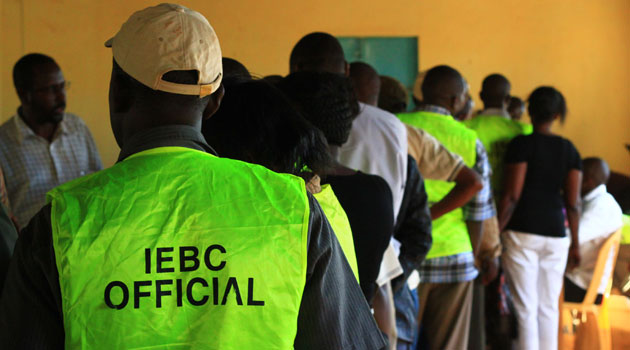
The Independent Electoral and Boundaries Commission (IEBC) has announced temporary job opportunities for Kenyans across various disciplines.

In a notice on Wednesday, February 25, IEBC invited interested applicants to submit applications for the positions, which include Voter Registration Assistants, Voter Registration Clerks, and ICT Clerks.

Below are the advertised positions and requirements:

  1. Voter Registration Assistants (1,450 vacancies)
  • Supervising Voter registration clerks at the ward
  • Assisting in planning the KIEMs kit movement schedule
  • Collating and submitting voter registration data
  • Ensuring the security of materials and equipment
  • Reporting Voter registration progress

Requirements

  • Must be a Kenyan citizen and a registered voter.
  • At least 21 years old, and residents of the constituency/ward they are applying for.
  • A minimum of a Diploma in ICT or a related field is required.
  • Availability for the entire registration period.
  • Ability to communicate effectively in English and Kiswahili; knowledge of local languages is an added advantage.
  • Demonstrated integrity, impartiality, and respect for diversity.
  • Willingness to work long hours and under field conditions.
  1. Voter Registration Clerks (10,780 vacancies)
  • Operate biometric registration kits (KIEMS/VIU tablets).
  • Verify eligibility of applicants as per electoral laws.
  • Guide applicants on voter registration requirements and procedures.
  • Assist applicants in filling registration forms accurately.
  • Ensure safe custody of registration equipment, materials and Data.
  • Report and transmit voter registration data daily to Registration Officers.
  • Uphold IEBC’s code of conduct, data protection and confidentiality.

Minimum Qualifications and Requirements

  • Be a Kenyan citizen aged 19 years and above.
  • Hold a minimum KCSE C- (minus) or its equivalent.
  • Possess computer literacy and ICT skills;
  • Diploma in ICT, Statistics, Education, Business Administration, or related field will be an added advantage.
  • Demonstrate integrity, accountability and confidentiality
  1. ICT Clerks (290 vacancies)
  • Set up, configure and operate KIEMS kits and related ICT equipment for voter registration.
  • Provide first-level technical support and troubleshooting for hardware, software and connectivity issues.
  • Support secure transmission, synchronization and backup of voter registration data.
  • Ensure proper custody, accountability and maintenance of ICT equipment.
  • Maintain ICT logs, incident reports and equipment handover records.
  • Assist in training and supporting voter registration officials on basic ICT operations.

Minimum Qualifications and Requirements

  • Certificate or Diploma in Information Technology, Computer Science, Information Systems, or a related field from a recognized institution.
  • Basic knowledge of computer hardware, software applications and networking.
  • Ability to troubleshoot common ICT issues under pressure.
  • Good communication and interpersonal skills.
  • Demonstrated integrity, neutrality and confidentiality.
  • Must be a Kenyan citizen and a registered voter.
  • Availability to work long hours, including weekends and public holidays.

How to apply

Interested and qualified applicants can visit the official IEBC portal and navigate to the jobs section to view the available openings and apply. The deadline for submitting applications is 3rd March 2026.

Successful candidates will be required to present a copy National Identification Card, copies of academic certificates, and copy(ies) of any other relevant testimonials.

Additionally, successful applicants will be required to undergo training and take an oath of secrecy.

Also Read: “Can you share your payslip?” How to professionally answer this question in job interview

Meet little-known Edwin Sifuna’s wife and the businesses she runs

0

Nairobi Senator and former Orange Democratic Movement (ODM) Secretary General Edwin Sifuna is one of the most outspoken politicians in the country.

A lawyer by profession, Sifuna has become a key figure for ODM and is currently one of the public faces of ODM during politically charged moments.

Away from politics, Edwin Sifuna is a husband and a father. He is married to Didi Wamukoya Watenya, an environmental lawyer who has managed to stay away from politics despite growing up in a political family.

Didi is the daughter of the former Member of Parliament for the Matungu constituency and the former Minister of Lands, Joseph Wamukoya.

She grew up in Loresho and holds a Bachelor of Laws and a Master of Environmental Law, both from the University of Nairobi. She also holds a Post Graduate Diploma in Law from the Kenya School of Law.

She is a trained wildlife crime investigator having undergone training at Kenya Wildlife Service Law Enforcement Academy and the International Law Enforcement Academy.

She has previously held several roles, including as the Head of Prosecution at the Kenya Wildlife Service for 7 years.

Currently, she serves as the Wildlife Law Enforcement Manager at African Wildlife Foundation (AWF), a journey that began in 2015 when she set out to establish a new unit focused on improving wildlife law enforcement.

The Wildlife Trafficking Law Enforcement Unit is tasked with implementing the organization’s action plan for bolstering wildlife law enforcement efforts across the continent. It also serves as the technical lead for all AWF efforts aimed at halting illegal trafficking of wildlife products.

As part of this work, Didi has helped train judicial officers, prosecutors, investigators and wildlife managers through a series of national and regional workshops

She has co-authored a Book on Natural Resources and Environmental Justice in Kenya (Muigua K., Wamukoya D., Kariuki F., Natural Resources and Environmental Justice in Kenya (Glenwood Publishers Ltd, 2015)).

Didi is also an Advocate of the High Court of Kenya, having been admitted to the bar in 2007.

Also Read: Edwin Sifuna: I earned more when I was an advocate than as a senator

Millionaire under 30: How I made wealth from dairy farming from just 2 cows

0

In the rolling hills of Njambini in Nyandarua County, dairy farmer Paulito Kamau is quietly building a success story rooted in passion and careful planning.

Four years ago, Kamau began his dairy venture with just two cows. Today, his herd has grown tenfold to 20 cows a transformation he attributes to strategic feeding, proper animal husbandry and lessons learned from his father, who was also a dairy farmer.

“I was motivated to venture into dairy farming by my father who is also a dairy farmer. I grew up watching him make profit from selling milk and that experience shaped my interest in farming,” he said in an interview with Kilimo Faida.

Structured Feeding Programme

At the heart of Kamau’s success is a strict feeding regime designed to maximise production while maintaining animal health.

His cows are fed daily on a combination of forage and concentrates. The forage includes silage and hay, while concentrates consist of dairy meal and supplements such as sunflower, soya, cotton, canola and fish meal blended together to provide balanced nutrition.

Each cow receives 20 kilogrammes of silage mixed with super Napier grass and supplements every day. Dairy meal rations are adjusted based on milk production levels.

“A cow producing 30 litres a day is given between 8 and 10 kilograms of dairy meal daily. Those averaging 20 litres we feed them 6kgs while those producing less than that are fed 4 kgs,” he explained.

Managing Heifers and Future Stock

Kamau is equally deliberate in managing his replacement stock. He begins steaming at seven months in-calf.

Steaming is the practice of feeding in-calf dairy cows higher amounts of energy-rich concentrates. It is done to prepare the cow for lactation, boost colostrum quality, ensure healthy calf growth, and prevent metabolic diseases like milk fever.

Kamau explains that each heifer is given three kilograms of dairy meal in the morning and two kilograms in the evening, alongside ample forage and plenty of clean water.

Of his 20 cows, 10 are currently lactating. The highest producer yields 30 litres per day, while the lowest among the milking cows produces 20 litres daily.

Most of his produce is destined for Co-operative Societies and fetches Sh50 per litre. He admits that dairy farming is not without its hurdles. Disease outbreaks remain a constant threat, while fluctuating and sometimes low milk prices can make farm management challenging.

Even so, he maintains that dairy farming remains one of the most profitable agricultural ventures when approached professionally.

“With the right breeds, proper feeding, and good management, dairy farming pays. Anyone thinking of venturing into it should go for it,” he advises.

How much feed does a cow need to produce 1 liter of milk?

According to dairy experts, a cow needs an average of 1.25 to 1.44 kilograms of feed to produce 1 liter of milk. This translates to approximately 0.63 to 0.72 kilograms of dry matter, which represents the nutrient content of the feed with all water removed.

The exact feed-to-milk ratio depends on factors such as the cow’s lactation stage, breed, health, and the quality of the feed provided.

Experts note that dairy cows experience their highest milk production levels in early lactation, which occurs within the first 100 days after calving. During this period, a cow can produce an average of 40 liters of milk per day.

This means the animal would need 50 kilograms of feed daily, half of which is dry matter, resulting in a feed-to-milk ratio of 1.25 kilograms of feed per liter of milk and a milk-to-dry matter intake ratio of 1.6 liters per kilogram.

In late lactation, typically over 200 days into the milking period, milk production declines to an average of 25 liters per day.

Correspondingly, feed intake reduces to about 36 kilograms per day. The feed-to-milk ratio during this stage is approximately 1.44 kilograms of feed per liter of milk, with a milk-to-dry matter intake ratio of 1.4 liters per kilogram.

Tanalope Consultancy Limited CEO Alex Gathii says for a dairy cow to produce optimally, it needs dry matter equivalent to at least 3 percent of its body weight. For instance, if the cow weighs 600kg then its total feed should amount to at least 18kg of dry matter per day.

Also Read: John Kiehia: Amount of money I make after investing Sh1 million in mushroom farming