
Home Blog Page 134

Kenya missing out on USD 5.3 Billion in exports, KAM Study reveals KAM launches Export Competitiveness Study

0

Kenya Association of Manufacturers (KAM), in partnership with the German Embassy in Nairobi and Deutsche Gesellschaft für Internationale Zusammenarbeit (GIZ Kenya), today released a new Exports Competitiveness Study. The study findings show that Kenya has been missing out on USD 5.3 billion annually in unmet export
potential and nearly USD 10 billion in broader export opportunities that remain unrealised. The report comes at a time when the country continues to grapple with a widening export deficit, despite the availability of regional and global markets ready to absorb more Kenyan products.

Launching the report, Peter Njoroge, Director of External Trade at the State Department for Trade, reaffirmed government commitment to advancing reforms that boost Kenya’s competitiveness. He said, “We are strengthening the National Export Strategy to promote value
addition and fully access and utilise existing preferential markets. Key reforms include upgrading logistics infrastructure, digitising approvals and trade documentation, enhancing the National Electronic Single Window System, and reducing regulatory overlaps. We are also expanding MSME financing and promoting value addition across tea, coffee, textiles, edible oils, fisheries and livestock,” he said.

Building on this, Miriam Bomett, Head of Policy and Regulatory Advocacy at KAM, emphasized that Kenya needs to urgently act on the study findings to reverse the export gap. She said, “This report goes beyond analysis as it offers a clear roadmap. Kenya’s markets exist, demand exists, but we must strengthen our competitiveness to seize our share. With predictable regulation, stronger value chains and sustained reforms, we can narrow the export deficit and grow our footprint across Africa and globally.”

Ms Bomett also highlighted proposals to drive Kenya’s export competitiveness, saying, “To unlock this potential calls for accelerating ongoing reforms aimed at streamlining regulations, reducing overlapping mandates, and expanding digital trade systems to make approvals faster and more predictable. It also calls for enhanced efficiency at Mombasa and Lamu ports, along with improvements along the Northern Corridor to ensure seamless regional movement of goods. Strengthening SME capabilities, given that they are under-represented in export markets despite high entrepreneurial capacity is essential.”

Adding an international perspective, Friederike Hemker, Deputy Head of Cooperation at the German Embassy in Kenya, highlighted the scale of untapped opportunity and the need to address
longstanding bottlenecks.

Kenya signals major shift toward local pharmaceutical manufacturing

“Kenya has a USD 5.2 billion untapped export opportunity. High energy costs, complex procedures and long processes add significant burdens, but Kenya also has remarkable strengths: a vibrant entrepreneurial base, innovation and resilience. If these are matched with targeted reforms, trade can grow rapidly. Germany is committed to supporting Kenyan firms through frameworks such as the Kenya EU-EPA and Africa Free Continental Trade Area (AfCFTA), while also improving regional logistics through enhanced port efficiency and Northern Corridor upgrades,” she explained.

Speaking on behalf of GIZ Kenya, Dr. Christoph Zipfel, Director for Sustainable Economic Development, emphasized the importance of strengthening value chains as the backbone of competitiveness, saying, “The study was informed by the need for Kenya to look at opportunities that lie within intra and extra Africa Trade. It identifies clear opportunities to enhance competitiveness through improved regulatory efficiency, technology adoption, and strengthened skills development.”

With renewed collaboration between industry, development partners and government, the report positions itself as a practical roadmap for strengthening Kenya’s export competitiveness. With targeted interventions and coordinated action, Kenya can significantly expand manufacturing-led exports, reduce the export deficit and secure a stronger position in regional and global value chains.


From 99 bob to KSh 20.7M – Nairobi tailor becomes newest SportPesa Mega Jackpot winner

0

A Nairobi tailor has become Kenya’s newest millionaire after turning a simple 99-bob prediction into an astonishing KSh 20.7 million win, a story now sweeping across the country and inspiring thousands of Kenyans to believe again in the power of the SportPesa Mega Jackpot.

Christmas came early for a quiet, hardworking tailor from Nairobi whose life changed overnight after hitting the Mega Jackpot Pro. With a modest KSh 99 stake, he predicted all 13 matches correctly and walked away with KSh 20,744,582, officially joining the ranks of Kenya’s most unforgettable SportPesa Mega Jackpot winner stories.

His win is already trending on social platforms and Google Discover not just because of the money, but because it feels like a pure, relatable Kenyan dream: humble beginnings, bold belief, and a stroke of brilliance that turned a weekend prediction into a life-changing victory. Now, thousands of fans across the country are following the Mega Jackpot with renewed excitement… wondering if they might be next.

A christmas win that changed everything for a Nairobi tailor

A Nairobi-based tailor is celebrating a life-changing moment after turning a modest 99-bob stake into a massive KSh 20,744,582 prize, emerging as Kenya’s newest SportPesa Mega Jackpot winner. His remarkable victory in the Mega Jackpot Pro 13 KSh 20 million pools has quickly become one of the most inspiring SportPesa Mega Jackpot success stories, capturing the attention of fans across the country. The win was officially unveiled at a handover ceremony in Nairobi, where emotion, disbelief, and gratitude filled the room.

How a perfect 13/13 prediction unlocked millions

The tailor’s journey began with a quiet weekend bet, a careful analysis of fixtures and a 99-shilling ticket.  As the decisive Napoli vs Roma match concluded, it became clear that he had achieved the rarest outcome: a flawless 13-match prediction.

SportPesa Kenya launches one wallet – the upgrade that will forever change how Kenyans bet

“I never expected this,” he said. “When I checked the slip and saw everything was correct, I froze. I couldn’t believe it.” His success adds credibility to the growing interest in how to win SportPesa Mega Jackpot, proving that informed prediction, patience, and a little luck can produce extraordinary results.

A win that strengthens community, not just one person

Beyond personal celebration, the winner sees this as an opportunity to uplift others. Before the win, he made bespoke suits and uniforms to support his family. This reflects the deeper purpose behind a SportPesa Kenya life-changing win impact that goes beyond individual success and resonates through families and communities. With millions now in his account, he intends to-

• Expand his tailoring workshop
• Invest in modern sewing equipment
• Train young tailors needing skills and mentorship

Verified proof that real Mega Jackpot payouts in Kenya are happening

In a gaming environment where doubt can arise, this win stands as documented proof of real Mega Jackpot payout Kenya success. SportPesa continues to publish winners, conduct transparent handovers, and maintain strict verification processes ensuring that every payout is authentic. This tailor’s journey is now the latest addition to Kenyan folklore: a 99 bob to millions Kenyan jackpot outcome rooted in real events and real transformation.

A nation inspired, a new chapter begins

This December win is more than a moment of luck; it is a powerful reminder of what is possible.

A 99-bob ticket changed the life of a tailor, strengthened his family’s future, and opened doors for the young people he hopes to mentor. And across Kenya, countless fans now watch the next fixtures with renewed belief because the next SportPesa Mega Jackpot winner could rise from anywhere.

What the win means for fans preparing for the next Mega Jackpot

As more players follow jackpot updates, searches for terms such as SportPesa Mega Jackpot winner, SportPesa jackpot success stories, and how to win SportPesa Mega Jackpot continue to surge. For those eager to try their luck, options remain open to-

• Explore past winners
• Learn strategies behind accurate predictions
• Join upcoming fixtures and play SportPesa Mega Jackpot now

SportPesa encourages all players to participate in responsible gaming as entertainment.

Why Kenya’s punters are moving to ImaraBet, and riding the Imara Streak revolution

0

Kenya’s betting industry is shifting and this time, it’s not because of louder bonuses or bigger promises. It’s because punters are finally choosing platforms that reward discipline, consistency, and intelligent play. At the center of this shift is ImaraBet Kenya, a licensed and fast-growing platform winning over serious bettors with transparency, competitive odds, and the now-famous Imara Streak.

For years, Kenya’s betting market has been dominated by noise flashy promotions, complicated wagering rules, and bonuses that disappear the moment you try to withdraw. But a new wave is rising. Across Nairobi, Eldoret, Kisumu, Mombasa and Nakuru, punters are quietly moving to ImaraBet Kenya, recognizing it as a trusted online betting site in Kenya that understands how real bettors think.

This shift is being driven by one breakthrough-
Imara Streak is a promotion that rewards consistency, not one-off luck, and elevates disciplined players into long-term winners.

 A new kind of betting value, why punters are choosing ImaraBet

Many platforms shout about bonuses. ImaraBet delivers value. Instead of empty marketing noise, the ImaraBet sports betting site offers-

• Competitive odds-on Kenyan, African, and global leagues
• Clear and fair terms without hidden restrictions
• Fast M-Pesa payouts on a trusted betting platform
• Structured rewards including the Imara Streak, Imara Win Boost, and Weekend Bonuses

These features are why punters now describe ImaraBet as one of the best online sports betting sites in Kenya because every slip, every win, and every streak genuinely counts.

The Imara Streak, where smart betting turns into real rewards

The Imara Streak Kenya system flips traditional bonus culture on its head. Each day you place a qualifying bet, your streak grows. And with every milestone, your Imara Streak bonus climbs higher. Instead of rewarding random one-ticket miracles, it rewards-

• Consistency
• Planning
• Smart analysis
• Responsible deposits
• Consecutive participation

ImaraBet unleashes a casino tournament like no other — Kenya’s new arena for big winners

Layered rewards, the power of streak + multibet boost

ImaraBet didn’t stop at streak bonuses. On top of the streak structure sits the Imara Win Boost multibet bonus, one of Kenya’s most lucrative multibet bonus offers. Punters benefit when they combine-

• Imara Streak rewards
• ImaraBet Win Boost
• Sharp football analysis on high-odds matches

This pairing has made ImaraBet a high-odds football betting site in Kenya for players who value strong returns not flashy gimmicks.

Beyond football, a full betting & casino experience under one roof

Punters aren’t limited to sports. The ImaraBet online betting platform includes-

• Aviator and JetX crash games Kenya players love
• Slots, roulette and table games
• Fast mobile-first casino experiences
• Single wallet for both casino and sports

Players often switch between football slips and a quick round of Aviator on ImaraBet, all under one secure account.

Built in Kenya, for Kenya with serious responsible gaming standards

ImaraBet’s biggest advantage isn’t just value. It’s trust. Being a licensed betting site in Kenya, ImaraBet incorporates-

• Responsible gaming reminders
• Account limits and betting tips
• Clear terms and transparent promotions
• Fast M-Pesa withdrawals

This positions ImaraBet as a responsible betting site in Kenya, not a high-pressure platform.

How to get started and join the Imara Streak

Here’s how to join thousands of punters already riding the streak-

1. Sign up on ImaraBet Kenya – quick registration with your mobile number
2. Browse the promo hub – discover all the active ImaraBet promotions
3. Join Imara Streak Kenya – start your consecutive days of responsible betting
4. Place smart bets – build your streak with discipline
5. Download the ImaraBet app – unlock the KSh 50 ImaraBet app bonus and play faster

Why ImaraBet has become Kenya’s home for serious punters

The message is clear, if you’re disciplined, strategic, and consistent ImaraBet is the platform built for you. No gimmicks. No traps. Just-

• Strong odds
• Fair rewards
• Real streak bonuses
• A supportive responsible betting environment
• A community of players who take their betting seriously

This is why the market is shifting and why punters across Kenya are placing their long-term confidence in ImaraBet.

If you bet with strategy, ImaraBet rewards you

In a crowded market of shallow promos, Imara Streak stands out as a promotion that respects the player, not just the stake. It’s built for punters who understand the game, know the leagues, and trust the process.

If you’re ready to turn your consistency into a winning edge…

Start betting on ImaraBet today
Join Imara Streak
Build. Bet. Rise. Repeat.

ImaraBet Kenya.Win Smart. Stay Loyal. Keep Winning.

Gov’t to move smart driving licences from NTSA to private firm

0

President William Ruto’s government is set to take away the processing, printing and issuance of smart driving licences from the National Transport and Safety Authority (NTSA) and hand it over to a private entity.

This switch will allegedly be based on public-private partnership (PPP) terms and is being spearheaded by the State Department for Transport.

The department has based its decision on what it sees as the failure by the NTSA to meet annual targets.

“The uptake of smart driving licences has been slow. The project is under consideration for transitioning to PPP,” the Department of Transport stated in its budget proposal report to the National Treasury.

In this report, the department said that the transport authority had issued 2.1 million chip-based driving licences as at June 2025. This was lower than the target of 5 million licences, and means that overall, the NTSA has issued less than five million licences eight years since the program started.

In the year to June 2025, the NTSA printed some 342,492 smart driving licences. This was a shortfall of 57,508 licences on the target of 400,000. “The target was not achieved due to preference for a yearly electronic driving licences as opposed to the 3-year smart driving licences,” the transport authority stated.

In the year to June 2024, the authority had hit its target after printing 369,155 cards against the target of 350,000.

In 2017, the National Transport and Safety Authority entered into a deal with the National Bank of Kenya that was at the time worth Sh2.1 billion to supply, install and maintain five million second-generation licences. The bank then subcontracted the supply deal to another company and delivered four million blank cards.

Currently, the licences costs Sh3,050 and has a validity period of three years. It can be applied for at any NTSA station or at the Huduma Centre’s NTSA desks.

Ruto: New Thika-Nairobi Expressway to be built along Superhighway

Ruto: New Thika-Nairobi Expressway to be built along Superhighway

0

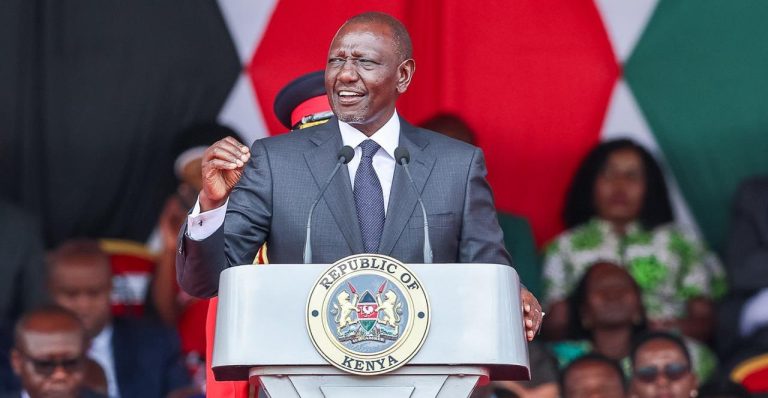
President William Ruto has announced that his government is planning to construct a new Expressway from Thika to Nairobi. Ruto announced the plans for the Thika Expressway during his address on Jamhuri Day.

The president, in his address, claimed that the Thika-Nairobi Expressway will be built along the Superhighway corridor, starting from Thika and terminating at Museum Hill to end traffic congestion.

“I know that many Kenyans reside in Thika and that Thika Road has become congested and crowded with constant traffic snarl-ups. I take this opportunity to announce that next year, just as we have the Expressway from Jomo Kenyatta International Airport, we will also construct an Expressway from Thika to Museum Hill,” said Ruto.

Although he did not mention how the Expressway will be funded, his claim that the road will mirror the current Nairobi Expressway has been widely interpreted as meaning that the new Expressway will also be built through public-private-partnership (PPP) and will be subjected to tolls.

At the same time, the president did not specify when construction would begin, and, or what types of agreements the government has entered into regarding the project.

The president made this announcement a day after it emerged that if Kenya cancelled the ongoing Nairobi Expressway contract prematurely, taxpayers would be forced to pay Chinese contractors Sh103 billion in compensation.

The termination charge that would be slapped on Nairobi Expressway accounts for more than half of the estimated Sh203 billion that is quoted by the National Treasury as the PPP cancellation fee for eleven infrastructure projects.

“As of the end of June 2025… total estimated exposure related to termination sum payments amounts to Sh203 billion. Assuming 5.0 percent probability of termination by the contracting authorities, contingent liability associated with PPP projects arising from project termination payments is Sh10.19 billion as of end of June 2025,” the National Treasury said in its Annual Public Debt Report for the financial year 2024/25.

The Nairobi Expressway is made up of around 27.1 kilometres covering the distance from Westlands in Nairobi to Mlolongo. It was constructed at a fee of around Sh70.78 billion. Initially, the road was estimated to cost some Sh65.2 billion. The least amount paid to use the road if Sh170 while the highest amount is Sh500.

Motorists: Why we’re in court opposing construction of Rironi-Mau Summit highway

Safaricom Shangwe@25: How to participate and become a millionaire

0

Telecommunication giant Safaricom PLC recently unveiled one of its most ambitious customer reward initiatives as it marks 25 years of operation in Kenya.

Dubbed Shangwe@25 to celebrate a quarter-century of innovation, connectivity and community impact, while rewarding loyal customers.

The initiative which runs from 31st October 2025 to 19th January 2026 further aims to empower micro and small enterprises and support community projects that drive local development.

As part of the promotion, 25 customers are set to become millionaires, each winning Sh1 million alongside an additional Sh250,000 to support a community project of their choice.

In addition, 25 Small & Micro business are set to win a Bajaj Tricycle each to power business mobility while 15 Large and Medium Enterprises will each receive Sh500,000 to support community projects of their choice.

So far, thousands of customers have benefitted from daily and weekly cash prizes, data bundles, devices, and business support tools.

Every week, customers cash prizes from Sh10,000, to Sh100,000, contributing to more than 50,000 winners weekly. Over the course of the promotion, more than 5 million customers are expected to win prizes worth Sh250 million.

How to participate

The promo is open to all registered Safaricom customers. Registered customers transacting on-net, including existing, inactive and new customers that will be registered during the promotion period are automatically opted in.

Customers can enter the promotion by simply transacting on M-PESA, including sending money, paying with M-PESA, redeeming or using Bonga Points, or purchasing any Safaricom product such as data bundles, voice bundles, digital products, integrated bundles, or Home Fibre subscriptions and renewals.

Merchants and M-PESA agents also qualify through Buy Goods, Pochi la Biashara, and transactions from Sh1,000 and above.

So far, about 13 customers have become millionaires through the campaign. Wellington Juma, the latest millionaire from Kisumu County, says he will use his winnings to expand his business and build a decent home for his family.

With the additional Sh250,000 community project fund, Wellington plans to support Kamiruga Widows’ Group in Ahero.

“These ladies hire out tents for functions. I’d like to support them with capital to expand their enterprise,” he says.

Sheila Cheptoo a poultry farmer from Bomet County also plans to use her winnings to expand her poultry farm into a fully developed commercial enterprise.

Other winners who have won millions include Yvone Wanjiku (Kiambu County), Josephine Wasya(Bungoma County), Bernice Mumo (Makueni County), Abdi Dahir (Garissa County), and Josephat Mwileria from Athi River, among others.

Also Read: Five more Kenyans become Millionaires in the ongoing Safaricom Shangwe @25 consumer promotion

2025 KJSEA Results: Girls outshine boys in 10 out of 12 subjects

0

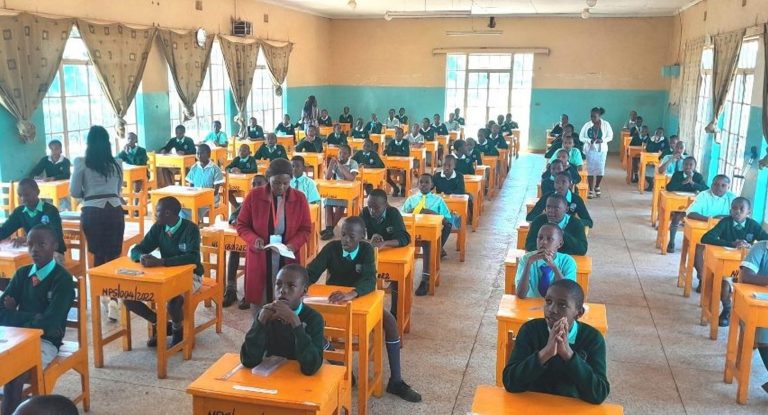
The Ministry of Education has released the 2025 Kenya Junior Secondary Education Assessment (KJSEA) examination results.

The 2025 KJSEA results were released by Education Cabinet Secretary Julius Ogamba on Thursday December 11. The results show that female learners outperformed male learners in nearly all subjects.

The girls emerged with better performance in ten subjects out of the twelve subjects that candidates were assessed.

According to CS Ogamba, the widest performance gap in the assessments was observed in Kiswahili. In this subject, girls had an overall performance and Meeting Expectation score of 64.86 percent compared to boys with 51.4 percent. This was followed by CRE in which girls had a 59.77 percent rate compared to 48.39 percent by the boys.

The performance and Meeting Expectation gap in English stood at 52.82 percent for the girls and 48.45 percent for the boys. In Social Studies, the girls had 62.89 percent while the boys came in with 54.35 percent.

The performance in Mathematics and the Kenya Sign Language had the lowest performing and Meeting Expectation scores, with Mathematics scoring 32.44 percent and the Sign Language 22.14 percent.

In total, 51.19 percent of the candidates who sat the exam were male and 48.81 percent were female.

The 2025 KJSEA results are the first to be released under the current Curriculum Based Education (CBE). The learners who sat for the exam was also the first grade to sit for the KPSEA examinations in 2022. These learners will be joining Junior Secondary schools in January 2026.

READ MORE: TSC follows Ruto order, refuses to promote 20,000 junior school interns

The KJSEA exam was taken by an estimated 1,130,459 learners. Out of these, 578,630 were boys while 551,829 were girls. 56.84 percent of the learners were aged 14 to 15 years. Among the candidates, 59.09 percent qualified for STEM pathways. 46.52 percent were found suitable for Social Sciences while another 48.73 percent were found to be a good fit for Arts and Sports pathway.

Out of the total twelve subjects that were assessed, seven subjects recorded a higher number of learners who achieved the Meeting Expectation and Exceeding Expectation levels.

These seven subjects were Hindu Religious Education with 84.62 percent, Integrated Science with 61.77 percent, Social Studies with 58.56 percent, Creative Arts and Sports with 58.04 percent, Kiswahili with 57.98 percent, Christian Religious Education with 53.96 percent and Agriculture with 52.26 percent.

Parents and students can check the 2025 KJSEA Results for the year 2025 through the official Kenya National Examinations Council website. They will be required to use their assessment number and at least one name of the candidate to search and access the results.

Understanding KJSEA grading system: What each point means

0

Grade nine learners who sat for the 2025 Kenya Junior School Education Assessment (KJSEA) examinations are set to transition to Grade 10 in 2026, marking the start of the senior school phase under the Competency-Based Curriculum (CBC).

According to the Ministry of Education, grade 10 placement will be based on pathways, accommodation and academic performance in the KJSEA exams.

The three pathways include Science, Technology, Engineering, and Mathematics (STEM); Arts and Sports Science; and Social Sciences, while accommodation is based on gender, day, and hybrid senior schools, and special needs.

Learners will select 12 schools for their chosen pathways in three different categories. In terms of academic performance, learners will be assessed based on points scored in the KJSE exam.

According to the Kenya National Examination Council grading system, learners will be classified in four categories based on the points they scored.

The categories are:

  1. Exceeding Expectations

This category features top performers in two sub-categories:

  • EE1 (AL 8): 90–100% = 8 points (Exceptional)- These are top-performing learners scoring 90-100 marks. They secure places in the traditional national schools such as Alliance, Mang’u, and Kenya High, among others.
  • EE2 (AL 7): 75–89% = 7 points (Very Good)- These are learners scoring between 75 and 89 marks. They qualify for promote national schools or institutions that have rapidly risen in performance, infrastructure and teaching quality.

2. Meeting Expectations

This category features steady achievers in two sub-categories:

  • ME1 (AL 6): 58–74% = 6 points (Good)- These are learners who scored between 58 and 74 marks. They qualify for top extra county schools.
  • ME2 (AL 5): 41–57% = 5 points (Fair)- Learners scoring between 41 and 57 marks qualifies for promoted extra county schools.

3. Approaching Expectations

  • AE1 (AL 4): 31–40% = 4 points (Needs Improvement)- Learners scoring between 31 and 40 marks fall under this category. They qualify for county schools; institutions with a balanced academic pressure.
  • AE2 (AL 3): 21–30% = 3 points (Below Average)- Those scoring between 21 and 30 marks also qualify for county schools for close mentorship.

4. Below Expectations

  • BE1 (AL 2): 11–20% = 2 points (Well Below Average)- With 11-20 marks, these learners qualify for boarding sub-county schools for close guidance.
  • BE2 (AL 1): 1–10% = 1 point (Minimal)- Learners scoring 1-10 points will be placed in day sub-county schools that allow for increased parental involvement and personalized teacher attention.

The grade 10 placement is guided by a structured combination system designed to balance student interest and academic ability.

Also Read: Intern teachers not assured of permanent and pensionable jobs – TSC

The ÁLKÈ ball unveiled: Redefining African luxury, heritage, and global influence

0

Africa is set to unveil a monumental, high-impact financial institution focused on transforming the continent’s creative industries with the introduction of The ÁLKÈ Ball.

Rooted in Art, Legacy, Knowledge, and Enterprise, The ÁLKÈ Ball is defined as an exclusive annual, high-net-worth Gala/Awards Night that prioritises prestige, financial networking, and investment. Reflecting the high-end consumption focus of prestigious local events like Nairobi’s renowned Tribal Chic, this premier gathering will serve as a critical bridge connecting ultra-high-net-worth individuals and corporate partners to Africa’s bespoke luxury market. Future editions are set to rotate among Africa’s major cultural hubs, bringing immediate exposure to trailblazers and cutting-edge brands.

The ÁLKÈ Ball is designed to reshape global understanding of African fashion, significantly deepen the value of African creative economies, and secure long-term cultural sovereignty. Joining the ranks of esteemed heritage brands like Ann McCreath’s KikoRomeo and globally celebrated luxury jewellery house Adele Dejak.

Derived from Alkebulan, one of the oldest known names for Africa, ÁLKÈ asserts a fundamental truth the world is only now beginning to recognise: African fashion was never merely decorative; it was and remains evidence of lineage, mastery, and thought. The ÁLKÈ Ball enters this lineage as a cultural institution and a continental benchmark for fashion, economy, heritage, and global influence.

The ÁLKÈ Ball is spearheaded by Lulu Shabell, Founder & CEO of Lulubell Group, one of Africa’s leading architects of luxury and cultural innovation. Working across more than twenty African countries, including Kenya. Shabell has supported designers, expanded the African fashion industry, and established international connections through strategic insight and cultural understanding.

Shabell notes: “ÁLKÈ is our declaration that Africa is not here to be discovered; Africa is here to be recognised. We are reclaiming authorship of our own cultural narrative, not as an act of nostalgia, but as a strategy for the future. Our designers, archives, makers, and knowledge systems are not peripheral to global luxury; they are central to it.”

Under her leadership, a pan-African collective of designers, archivists, curators, scholars, and creative strategists representing East, West, North, Southern, and Central Africa endorses a unified thesis:

Africa is not emerging, Africa is originating. We are not participating, we are authoring.

Central to ÁLKÈ’s mission is The ÁLKÈ Endowment, a permanent funding structure designed for long-term stability and global competitiveness. This mechanism directly addresses persistent market failures by offering dedicated financial support.

Currently, Africa’s creative economy is valued at an estimated $58 billion and accounts for around 2.9% of the continent’s total GDP. This vibrant sector accounts for 8.2% of all jobs in the region, a higher percentage than any other continent.

In Kenya, Local financial innovators have already validated this sector, with entities like the HEVA Fund having successfully committed over 40 million to creative industries and planning to commercially invest an additional 20 million by the end of 2025.

The launch of the ÁLKÈ Endowment is a calculated intervention justified by quantifiable economic potential and severe structural constraints facing the creative economy:

Why I walked away from a lucrative job that had doubled my salary, Jubilee CEO Njeri Jomo

Addressing the Financing Gap:

The Endowment provides a mechanism to counter the estimated $42 billion financing gap faced by women-led Small and Medium Enterprises (SMEs) across Africa. Since the fashion value chain is heavily dominated by women-owned small businesses, this lack of access to commercial funding is a critical constraint.

Unlocking Export Potential:

The African fashion industry generates approximately 15.5 billion annually in exports. Experts agree that this revenue could realistically triple over a decade, approximately 46.5 billion annually, provided sufficient capital and infrastructure are deployed.

Tackling the Infrastructure Deficit:

Despite Africa contributing around six per cent of the world’s total cotton production, the continent accounts for less than two per cent of global spinning, weaving, and knitting capacity. The Endowment specifically targets this deficit, aiming to localise textile production and capture the immense value currently lost through the export of unprocessed raw materials.

Reversing Brain Drain through Brain Circulation:

While talent migration, often called “brain drain,” occurs due to a lack of institutional support and infrastructure, the goal is to facilitate “brain circulation”. This involves creating institutional structures that incentivise globally exposed designers to convert the knowledge and high-value expertise gathered through international experience into assets that enrich the home industry.

The ÁLKÈ Endowment will focus its investment strategically across four critical areas essential for achieving scalable industry growth:

Production and Industrial Capacity:

Funnelling capital directly into strengthening local value chains and accelerating innovation in both artisanal and industrial systems. This aims to immediately address the deficit in spinning, weaving, and logistics needed for sustained export growth.

Talent and Skills Development:

Building clear pathways for the next generation of creative entrepreneurs, designers, and artisans. This ensures specialised knowledge is actively transferred, guaranteeing a globally competitive workforce.

Archives and Heritage Preservation:

Funding the safeguarding of Africa’s textile histories and indigenous knowledge systems. This critical step provides the foundation for intellectual property claims and authenticating provenance, which drives high market valuation in global luxury sectors.

Enterprise Scaling for Brands:

Dedicated funding to promote long-term operational stability and accelerate international expansion for African fashion labels.

This movement capitalises on the ongoing African creative renaissance, where prominent brands such as MaXhosa, Sarayaa, Odio Mimonet, The Cloth, Akire, Asantii, and Aaboux are blending tradition with innovation and sustainability with storytelling. African fashion is a living art form, where textiles and construction become mediums for sculpture, colour theory, and narrative. What unites these designers is a profound reverence for craftsmanship, reflecting a conscious departure from fast fashion by embracing made-to-order models and locally sourced materials

By design, the Endowment is a practical response to decades of underinvestment in Africa’s creative and cultural industries.

The inaugural edition will take place in Cape Town, with subsequent editions rotating among Africa’s cultural capitals, reinforcing ÁLKÈ’s pan-African mandate and promoting regional collaboration.


What tenants really get at Wojo’s fully furnished offices

0

The demand for fully furnished offices and working spaces is steadily increasing in Nairobi driven by multinational firms and an expanding pool of remote and hybrid professionals seeking premium work environments with minimal operational burden.

These new spaces, concentrated in areas such as Westlands, Riverside Drive, Kilimani and Upper Hill, are redefining what tenants can expect from a modern office in East Africa’s economic hub.

Unlike traditional office leases, today’s serviced offices package convenience and prestige into a single monthly fee. Operators are increasingly focused on delivering an experience rather than just a desk and internet.

This explains why these establishments are focusing on hospitality-inspired services, flexible contracts, and curated environments designed to appeal to global standards.

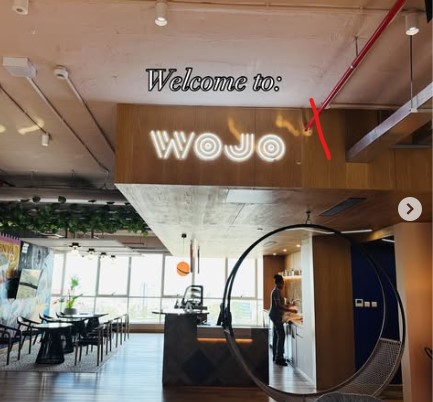
Among the service providers offering such services in Nairobi is Wojo, which prides itself as the leader of co-working.

Located in Upper Hill within the Mercure Hotel, the space is in the financial district, surrounded by banks, international companies, and embassies.

It features a vibrant reception area where guests are warmly received and directed to their respective areas. There is also an upscaled waiting lounge and café area where guests can sit and sip their drinks as they wait to be attended to.

Wojo Nairobi also features a fully furnished boardrooms equipped with teleconferencing systems for meetings, networking events and business workshops.

The private offices and co-working areas feature comfortable office desks and chairs and high-speed internet connection, ensuring customers perform their tasks without interruptions.

There are also soundproof call booths where guests can make their calls without worrying about background noise.

The hotel complex has a lounge bar, all-day dining restaurant, gourmet restaurant, gym and outdoor heated pool, as well as conference facilities.

Wojo provides flexible leasing terms that range from daily to monthly contracts. Cost vary depending on the type of workspace, contract length, and level of access.

Maureen Kinyanjui, a customer at Wojo lauded the facility for its reliability in terms of comfort, accessibility, security, and connectivity.

“The general work areas are comfortable, well-lit, and properly air-conditioned—another underrated but crucial feature in Nairobi’s heat. I’ve found it easy to stay focused for long stretches without feeling drained or stuffy,” she said.

“And then there are the discounts. Whether I’m grabbing lunch, or booking a quick stay for a weekend reset, the dining and accommodation discounts at Mercure have added a touch of affordability and comfort to my routine. It feels like Wojo extends beyond the workspace into a more holistic lifestyle ecosystem,” Maureen added.

Also Read: Wojo Upperhill: More than a workspace for remote workers, businesses and professionals